
A Pet Parent's Guide to Dog Diapers for Female Dogs

Realizing your female dog might need a diaper can feel strange, but it's the simplest, most effective way to handle everything from heat cycles to incontinence. Think of washable dog diapers for female dogs as a practical tool to protect your home and keep your friend clean and comfortable. This is about providing loving, dignified care when she needs it most.
Why Dog Diapers Are a Lifesaver for Pet Parents
Whether you're dealing with your dog's first heat, managing incontinence, or helping her recover from surgery, the constant worry about messes is stressful. This is when a quality diaper becomes more than a convenience—it provides real peace of mind. A diaper is a support tool that restores normalcy for both of you, containing accidents so you can focus on her comfort and well-being. It helps you replace frustration with consistent, loving care.
The Scope of the Problem
Urinary incontinence is more common than many owners realize, especially in spayed female dogs. Studies show that as many as one in five spayed females—that's 20%—may develop urinary leakage. House soiling is a major reason why some dogs are relinquished to shelters. For many pet parents, diapers are the key solution that allows them to manage the condition at home. You can learn more about the prevalence of canine incontinence from Proin ER.
This guide gives you the actionable information you need. We'll show you how washable diapers for female dogs offer a kind, effective, and dependable answer to these common challenges.
A diaper is a bridge to normalcy. It allows your senior dog to nap on her favorite rug without worry and lets your recovering pup heal in comfort, all while keeping your home clean and your mind at ease.
Choosing the right diaper is an act of compassion. It's about giving your dog a solution that lets her live a happy, dignified life as a beloved part of your family, no matter the health hurdles.
When to Use a Diaper for Your Female Dog
Knowing the exact moments a diaper can be a lifesaver makes a huge difference. Understanding when to use dog diapers for female dogs turns them into a practical tool for managing health, hygiene, and a peaceful home. Let's cover the real-world situations where a diaper is a necessity.
These scenarios range from predictable biological cycles to unexpected medical needs. By knowing what to look for, you can get ahead of the stress and mess, providing your girl with comfort and care right when she needs it.
Managing Messy Heat Cycles
A primary reason to use a diaper is for a female dog’s heat cycle (estrus). This natural process typically occurs every six months and involves a bloody discharge for about a week to 10 days. This can stain your floors, furniture, and her bedding. A washable dog diaper acts as a clean, reliable barrier. It contains the discharge so you aren't constantly cleaning, and more importantly, it allows your dog to roam freely instead of being confined.
Diapers during a heat cycle aren't just for cleanliness. They reduce stress for both you and your dog, allowing you to navigate this period calmly instead of with constant worry about stains.
Supporting Dogs with Urinary Incontinence
Urinary incontinence—the involuntary leaking of urine—is another key reason owners use diapers. It's especially common in middle-aged to senior dogs and spayed females. This isn't a potty-training issue; it's a medical condition where a dog leaks urine, often while sleeping or resting.
As urinary incontinence affects up to 20% of spayed female dogs, diapers are an essential management tool. The condition is often caused by a weakened urethral sphincter and can appear years after a spay surgery. Breeds like Boxers and German Shepherds are more prone to it. A high-quality diaper provides a dignified, leak-proof solution that protects your home and keeps your bond strong. You can find more details on female canine urinary incontinence from Merck Animal Health. A diaper restores dignity for a dog who may be distressed by her accidents, allowing her to keep her favorite resting spots without worry. To find the right option, check out our guide on the best dog diapers for incontinence.
Ensuring Clean Post-Operative Healing
After a procedure like a spay surgery, keeping the incision site clean and dry is critical for healing. A dog’s instinct is to lick wounds, which can introduce bacteria and pull out stitches. While a cone is standard, a diaper offers an additional layer of protection. A soft, breathable diaper can gently cover the surgical area, especially for abdominal surgeries. This accomplishes two things:
- It creates a physical barrier: This helps stop your dog from licking or scratching at stitches.
- It keeps the area clean: The diaper shields the wound from dirt, lowering the risk of infection.
Always consult your vet before using a diaper for post-operative care. They can confirm it’s appropriate for your dog's specific situation and won’t irritate the incision.
Preventing Accidents During Travel or New Situations
Even well-behaved dogs can have accidents when stressed or in a new environment. Travel can disrupt their potty schedule, while visiting a new place can trigger marking or stress-related urination. Using a diaper in these moments is a proactive measure. It's a safety net that protects your car, a friend's carpet, or a hotel room, allowing everyone to relax. It's especially useful for:
- Long car rides with infrequent stops.
- Stays in pet-friendly hotels or vacation rentals.
- Visits to homes of people unaccustomed to pets.
By planning ahead with a diaper, you ensure your adventures remain positive for everyone, without unexpected cleanup.
Choosing Between Washable and Disposable Diapers
Once you know your dog needs a diaper, the next question is: washable or disposable? This decision depends on your lifestyle, budget, and long-term needs. While disposables offer a quick fix, many pet parents find washable diapers are a smarter, more sustainable investment. It’s like choosing between paper plates and real dishes: paper is easy once, but real dishes offer better quality and long-term value.
The Case For Washable Diapers
Washable dog diapers are designed for repeated use, offering superior comfort, cost-effectiveness, and eco-friendliness. Made from soft, breathable fabrics, they are gentler on your dog's skin and fur, which helps reduce the risk of chafing or irritation with long-term wear. This comfort is a game-changer for dogs with chronic issues like incontinence. The soft materials feel more like clothing, helping your dog adapt faster.
The real value of washable diapers is their long-term performance. A single pack can replace hundreds of disposables, saving you significant money and reducing landfill waste.
Additionally, their absorbency and fit are often superior. High-quality washable diapers feature a multi-layer core that pulls moisture away from the skin and a waterproof outer shell to prevent leaks. Secure, adjustable fasteners ensure a snug fit that moves with your dog for reliable protection. To see what sets the best apart, our guide on the best washable dog diapers has the details.
The Convenience Of Disposable Diapers
Disposable diapers' main advantage is convenience. Their "use and toss" design is ideal for travel, short visits, or temporary needs like post-surgery recovery. With no laundry required, they can be a relief during busy or stressful times.
However, this convenience comes at a recurring cost. The expense of buying pack after pack adds up quickly. They also contribute to household waste and are often made with less breathable plastic materials, which may not be suitable for dogs with sensitive skin who require daily wear.
A Head-to-Head Comparison
To help you decide, let's compare them side-by-side. The practicality of reusable absorbent products is well-established in other fields, such as with Medline Washable Underpads Reusable in human healthcare, which demonstrates their durability and comfort. Here’s a quick breakdown for dog diapers.
Washable vs. Disposable Dog Diapers: A Quick Comparison
| Feature | Washable Diapers (e.g., Pet Magasin) | Disposable Diapers |
|---|---|---|
| Long-Term Cost | Lower overall cost; a one-time purchase lasts for hundreds of washes. | Higher overall cost; requires continuous purchasing. |
| Comfort | High; made with soft, breathable fabrics that prevent chafing. | Moderate; plastics can cause skin irritation with long-term use. |
| Environmental Impact | Low; significantly reduces landfill waste. | High; contributes to ongoing waste accumulation. |
| Absorbency | Excellent; multi-layered core and waterproof exterior for reliable leak protection. | Good; but can be less reliable for heavy flow without a perfect fit. |
| Fit & Adjustability | Superior; strong, adjustable fasteners create a secure, custom fit. | Fair; adhesive tabs can lose stickiness or pull on fur. |
| Convenience | Requires washing but is easy to maintain with a simple laundry routine. | Maximum; simply throw away when used. |
Ultimately, for short-term, occasional use, disposables can be practical. But for ongoing needs, washable diapers offer a comfortable, cost-effective, and eco-friendly solution that is hard to beat.
How to Measure Your Dog for a Perfect Diaper Fit
A diaper that leaks is useless. Just like clothing, a dog diaper for female dogs must fit properly to work. Too loose, and you'll have leaks. Too tight, and your dog will be uncomfortable and prone to chafing. A proper fit is the most critical step to ensure your dog is comfortable and your home stays clean.
The process is simple. You only need a flexible measuring tape and a calm dog. Your goal is to get an accurate waist measurement to select the correct size.
The Step-by-Step Measuring Process
For the best results, have your dog stand on all four paws. If she's wiggly, ask a friend to help with treats.
- Find Her Waist: Locate the narrowest part of her torso, usually just in front of her hind legs.
- Wrap the Tape: Gently wrap the measuring tape around that spot. Ensure the tape is flat against her body without any twists.
- Check for Snugness: The tape should be snug but not tight. You should be able to slide one or two fingers underneath it. This ensures the diaper is secure without digging into her skin.
- Jot it Down: Record the measurement. This number is the key to choosing the right size.
Pro Tip: Don't have a flexible tape measure? Use a piece of string or a phone charger cable. Wrap it around her waist, mark where the end meets, and then measure that length with a standard ruler.
This single measurement is all you need to find a diaper that stays in place and functions correctly.
Dealing with Unique Body Shapes and Fur
Not all dogs have a standard build. Fluffy coats and unique body types can affect your measurement.
- For Fluffy Dogs: For dogs with thick fur like a Pomeranian or Golden Retriever, do not compress the fluff when measuring. The diaper sits on top of the fur, so measure her with her coat in its natural state for an accurate fit.
- For Uniquely Shaped Dogs: Breeds like Greyhounds or Whippets have deep chests and narrow waists. Pay close attention to getting a snug measurement and choose diapers with highly adjustable fasteners.
The decision between washable and disposable options is key, as each offers different benefits for long-term use. The following infographic compares the two to help you choose.
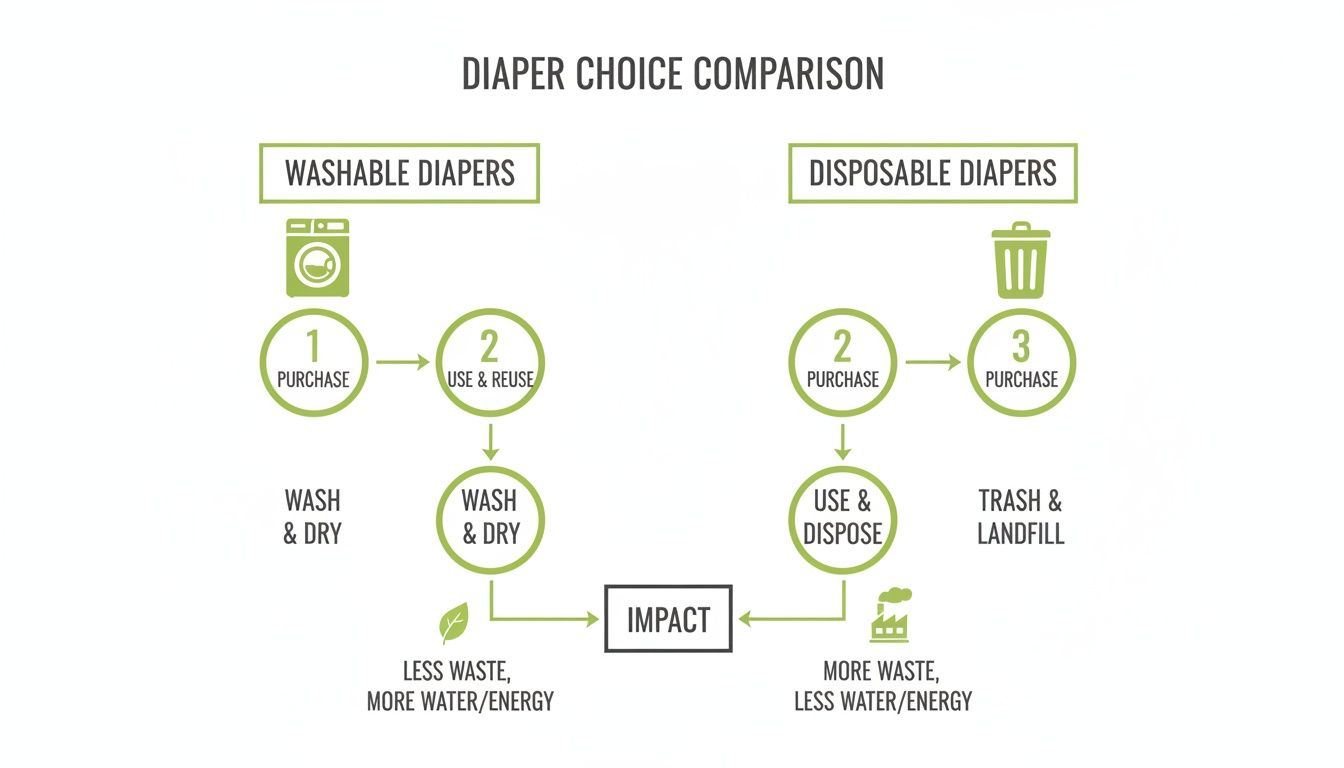
This visual highlights the environmental and economic advantages of reusable diapers versus the convenience of disposables.
Why a Proper Fit Is a Health Issue
A correct fit is more than just leak prevention—it's a health concern. Vets treat more spayed females for urinary incontinence than any other group. If a diaper leaks, the constant dampness can cause painful skin irritation and urinary tract infections (UTIs). For larger breeds like German Shepherds and Rottweilers, who are at higher risk, a perfectly fitting diaper is non-negotiable for maintaining their health. You can read the full research about these risks for more detailed information.
Practical Tips for Using and Washing Dog Diapers
You've chosen the perfect diaper. Now, integrate it into your daily routine. Using a dog diaper for female dogs should be simple. With a few practical tips, you can keep the process clean, comfortable, and stress-free. The key is to make the diaper a positive experience for your dog and maintain a consistent hygiene routine. This will protect her skin, extend the life of your washable diapers, and help her adjust without fuss.
Making the Diapering Process Positive
First, create a positive association with the diaper. Patience and treats are your best tools. Before putting it on, let her sniff the clean diaper. When she does, offer praise and a high-value treat. This builds a positive connection from the start.
When you're ready to put it on, remain calm and use a soothing voice. Offer another treat as you fasten it. Immediately after it's on, engage her in a fun activity—a quick game of tug or a favorite chew toy. This distraction shows her that wearing a diaper doesn't mean the fun stops.
Establishing a Critical Hygiene Routine
This step is crucial. Protecting your dog’s skin is the top priority. A simple, consistent routine prevents rashes, irritation, and infections. A dirty diaper is a breeding ground for bacteria, so change it frequently.
The most important rule is to change the diaper every 3 to 4 hours, or immediately once you know it's soiled. This is the most effective way to prevent urine scald, a painful skin condition caused by prolonged contact with urine.
Between changes, use a pet-safe, unscented wipe or a soft, damp cloth to clean the area. Crucially, ensure the area is completely dry before putting on a fresh diaper. This small step makes a significant difference in her comfort.
Best Practices for Washing Reusable Diapers
Proper washing extends the life and effectiveness of your reusable diapers. A good routine keeps them sanitary, preserves the waterproof layer, and maintains absorbency.
Here is a simple, effective method for machine-washing your dog diapers for female dogs:
- Secure the Fasteners: Close the Velcro tabs before washing to prevent snagging and maintain their grip.
- Pre-Rinse if Needed: For heavily soiled diapers, a quick rinse in a utility sink removes excess waste before the main wash.
- Go Gentle on the Cycle: Use a gentle or delicate cycle with cold or warm water. Avoid hot water, as it can damage the waterproof lining over time.
- Pick the Right Soap: Use a mild, pet-safe detergent. Never use fabric softeners or bleach, which can ruin absorbency and irritate your dog’s skin.
- Air-Dry for a Longer Life: Air-drying is the best method. Lay them flat or hang them up. If you must use a dryer, choose the lowest possible heat setting. High heat is the primary enemy of a long-lasting diaper.
Following these steps will create a simple and effective routine, ensuring your dog stays comfortable and your investment in washable diapers pays off.
Solving Common Dog Diaper Problems
Even with a perfect fit, you might encounter minor issues. Most challenges are easy to fix with simple adjustments. Use this as your troubleshooting guide for dog diapers for female dogs to get things right without frustration. A little know-how can turn a good solution into a great one.
What to Do if the Diaper Slips Off
A slipping diaper is the most common complaint and usually indicates a minor fit issue. First, re-check your dog's waist measurement against the sizing chart. A diaper that is even slightly too large will sag and shift as your dog moves.
If the size is correct, check how you're fastening it. The tabs should be snug but not tight—you should be able to slide one or two fingers between the diaper and her skin. You can also try these tricks:
- Crisscross the Tabs: For a more secure hold around the hips, fasten the bottom tabs pointing up and the top tabs pointing down. This creates a secure V-shape.
- Consider Dog Suspenders: For dogs with unique shapes, like a narrow waist and deep chest, suspenders are a game-changer. They clip onto the diaper and go over your dog's back, providing extra security for active dogs.
How to Stop Your Dog from Removing Her Diaper
If your dog tries to chew or pull off her diaper, it's usually because she isn't used to the sensation. The solution is to make wearing it a normal, positive experience. Immediately after putting the diaper on, distract her with something she loves, like a puzzle toy, a quick game of fetch, or a tasty chew. This teaches her that good things happen when the diaper is on. If you catch her trying to remove it, calmly redirect her attention back to the activity. Consistency is key.
A diaper should feel like a soft piece of clothing, not a punishment. The more you can associate it with positive activities like walks, treats, and playtime, the faster your dog will forget she's even wearing it.
Preventing and Managing Skin Irritation
Protecting your dog's skin is vital, especially with long-term diaper use. Diaper rash is almost always caused by moisture sitting against the skin. Your best defense is a strict hygiene routine. Plan to change her diaper every 3-4 hours, or immediately if you know it's soiled.
At each change, gently clean the area with a pet-safe, unscented wipe or a damp cloth. Then, pat the area completely dry before applying a fresh diaper. If you notice any redness or irritation, allow for supervised, diaper-free time in a protected area to let her skin breathe. For more tips, read our guide on treating and preventing dog diaper rash.
Even with precautions, accidents can happen. Knowing how to clean dog pee on hardwood floors correctly can save you a headache. By staying on top of these simple tips, you'll ensure the diaper experience is comfortable and healthy for your dog.
A Few Final Questions on Female Dog Diapers
Before we wrap up, let's answer a few common questions. Having these quick answers will help you feel fully prepared.
How Long Can a Dog Wear One Diaper?
For your dog's health, change her diaper every 3 to 4 hours, or immediately if you know she has soiled it. Leaving a wet or dirty diaper on too long can lead to painful skin irritation, rashes, and urinary tract infections (UTIs). Just as with a human baby, frequent changes are essential for keeping her healthy and comfortable.
Are Diapers a Good House-Training Tool?
While diapers prevent messes, they should not be your primary tool for house-training a puppy. Over-reliance on diapers can send mixed signals and confuse your puppy about where it is appropriate to go potty. It's better to view them as a temporary backup for overnight protection or long car rides, not a substitute for consistent, positive-reinforcement training.
Think of diapers as a safety net, not a training shortcut. They’re there to manage the inevitable accidents while you focus on teaching your puppy all the right habits.
High-quality washable diapers are highly effective for heavier flow, common during heat cycles or with moderate incontinence. They typically feature an absorbent inner core and a waterproof outer layer to lock in leaks. For exceptionally heavy flow, you can insert a disposable sanitary pad inside the washable diaper for an extra layer of protection.
Ready to give your dog the best in comfort and protection? Pet Magasin offers premium, washable dog diapers designed for a perfect, leak-proof fit. Take a look at our solutions and give your best girl the care she deserves at https://www.petmagasin.com.

Leave a comment