
Do neutered male cats spray: Proven steps to stop spraying today

So, you did the right thing and got your male cat neutered, but you're still finding those tell-tale urine marks on your walls or furniture. It’s frustrating, and you're definitely not alone.
The short answer is yes, neutered male cats can still spray. While getting your cat "fixed" is hugely effective, it doesn't always flip an off-switch on the behavior, especially if it was already a well-established habit before the procedure.
Why Some Neutered Cats Still Spray
It's a perplexing situation for any cat owner. You've taken the biggest step to curb the behavior, yet the spraying continues. The key is to understand that for a neutered cat, spraying is rarely about mating anymore. Instead, think of it as a form of communication—your cat is trying to tell you something is off in his world.
This kind of marking is almost always a reaction to stress, a deep-seated habit, or an underlying medical issue that needs a vet's attention.
The good news is that neutering is a massive first step in the right direction. For unneutered male cats, the procedure stops spraying in about 95 percent of cases, making it one of the most reliable solutions out there. But for that small percentage where the behavior hangs on, we need to dig a little deeper to figure out what’s really going on.
To give you a clearer picture, let's break down the major differences in spraying behavior before and after neutering.
Spraying in Neutered vs. Unneutered Male Cats at a Glance
This quick comparison highlights the dramatic impact of neutering on spraying behavior and the primary motivations behind it.
| Factor | Unneutered (Intact) Male Cats | Neutered Male Cats |
|---|---|---|
| Primary Motivation | Hormonal; driven by testosterone to mark territory and attract mates. | Behavioral; driven by stress, anxiety, or deep-rooted habits. |
| Frequency | Often frequent and widespread, especially with other cats nearby. | Typically infrequent and targeted at specific areas of stress. |
| Smell | Extremely pungent and strong due to hormones. | Less potent, though still distinctly smelling of urine. |
| Main Triggers | Presence of a female in heat, rival males, establishing dominance. | Environmental changes (new pet/person), seeing outside cats, feeling insecure. |
As you can see, the "why" behind the spraying changes completely after the procedure.
The Core Reasons for Post-Neutering Spraying
Figuring out why your neutered cat is spraying is the first real step toward finding a fix. The cause almost always falls into one of three buckets:
-
Environmental Stress: Cats are creatures of habit. Big changes like bringing home a new pet, a new baby, or even just seeing a strange cat through the window can make your cat feel insecure. This anxiety can easily trigger territorial marking as he tries to reclaim his sense of security.
-
Lingering Habits: If a cat was neutered later in life—after the spraying habit was already locked in—it can be much harder to break. The hormonal drive is gone, but the behavior itself has become a go-to response to certain situations.
-
Medical Problems: Never rule out a health issue. Conditions like urinary tract infections (UTIs), painful bladder stones, or even kidney disease can cause a cat to urinate outside the litter box. What looks like defiant spraying could actually be a sign of physical discomfort.
Once you can pinpoint the root cause, you can stop feeling frustrated and start creating a real action plan. The goal isn't to punish the behavior, but to address your cat’s underlying need for security, comfort, or medical care. You can learn more about the basics of this behavior in our general cat spraying article.
Spraying or Peeing? How to Tell the Difference
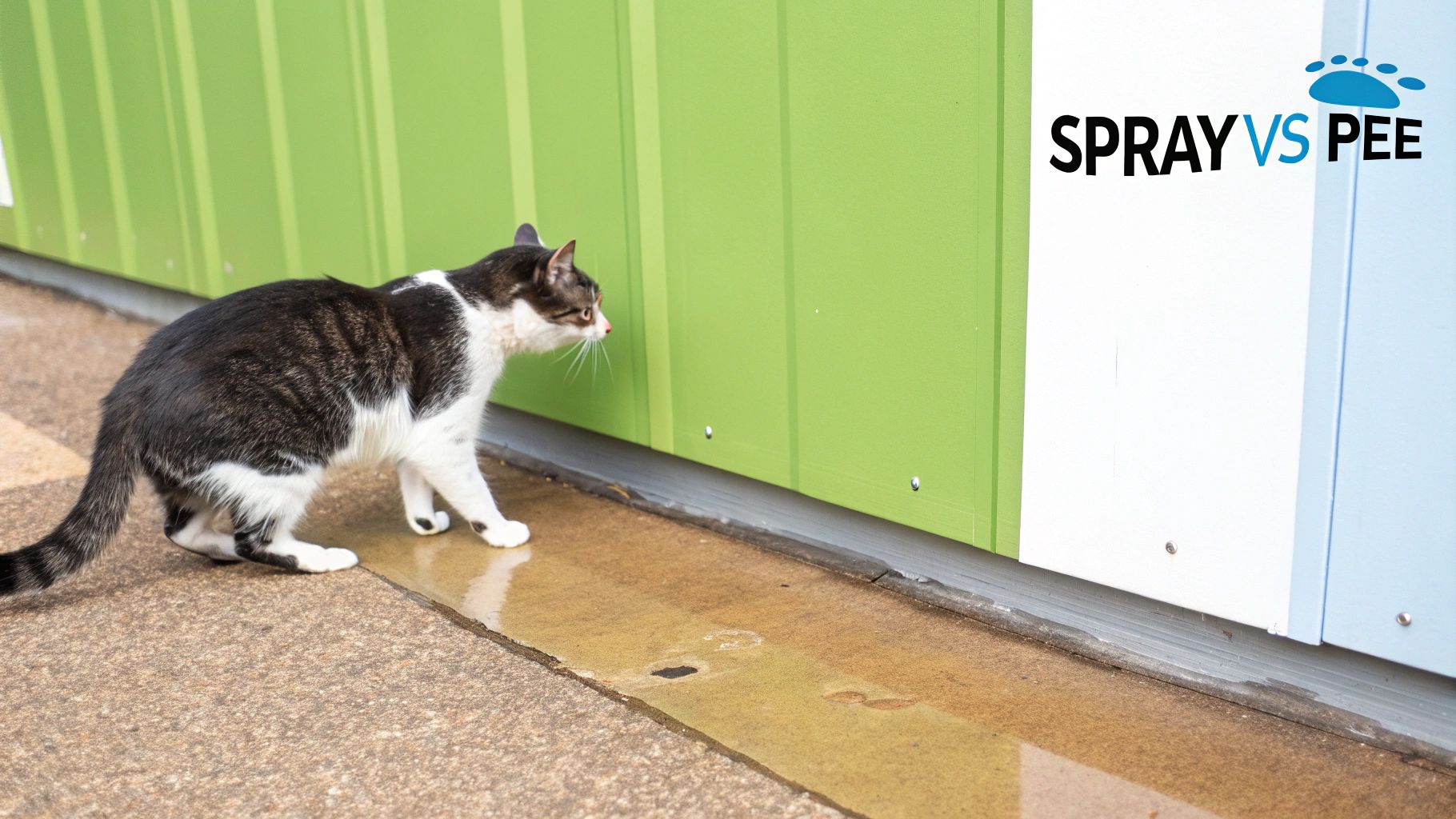
Before you can solve the problem, you have to be a detective. Is your cat actually spraying, or are they just peeing somewhere they shouldn't? This is a crucial first step because the solutions are completely different.
Getting this right is everything. Spraying is your cat leaving a pointed, strong-smelling message—like cat graffiti. Inappropriate urination, on the other hand, is just about emptying the bladder in the wrong spot. One is communication, the other is relief.
Reading the Physical Clues
Observe your cat’s posture and the location of the urine. These two clues will tell you what you're dealing with.
-
Spraying: A cat will stand with its rear end aimed at a vertical surface, like a wall, a speaker, or the arm of your sofa. Their tail will be straight up, often quivering, as they shoot a small amount of urine backward.
-
Peeing: This is the classic squatting position. Your cat will hunker down to pee on a horizontal surface, like a rug, the floor, or that pile of clean laundry you just folded. This usually leaves a much larger puddle.
The amount of urine is another big clue. Spray marks are often just small, streaky lines. A puddle from normal peeing is, well, a puddle—larger and more pooled.
Follow the Scent
The smell also tells a story. While no cat urine smells good, spray has a uniquely pungent, musky odor that is far more intense.
Why? Because spray is loaded with pheromones and chemical signals. It’s designed to be a potent message for any other cats in the area.
Regular urine is mostly waste. Spray is a chemical billboard announcing things like "this is my turf," "I'm stressed out," or "I'm looking for a mate." The extra-strong, acrid smell is a deliberate part of their communication system.
If you’ve determined your cat is just peeing outside the box, the fix could be simple. Check if the litter box is clean or if they suddenly dislike their litter. Our cat litter review can help you find an alternative. And if urination is happening outdoors, some homeowners explore options for pee-resistant grass to protect their lawns.
Once you know for sure that it’s spraying, you can move past cleanup and start addressing the real reasons your cat is sending these smelly messages.
So, What's Making Your Cat Spray?
Now that you can spot the difference between a spray and a regular pee, let's identify the trigger. Think of spraying as your cat's way of shouting—a clear sign that something in their world feels unstable, threatening, or out of control. For a neutered cat, this is purely about communication, not mating.
Pinpointing the trigger is how you solve the problem at its root. Nearly all spraying in neutered cats comes down to one of three things: territorial anxiety, environmental stress, or a hidden medical problem.
Territorial Anxiety and Outside Threats
At their core, cats are territorial. Their home is their kingdom, and any challenge to its borders can trigger an instinctual need to mark their space. This is one of the most common reasons a neutered male cat will spray.
Think of your window as your cat's TV. When a neighborhood cat strolls by, it’s not just a cute sighting—it’s a rival invading their screen. Since they can't go outside to confront them, they spray near windows and doors to send a loud message: "This territory is taken." They are creating a fortress of scent to feel secure.
This behavior isn't malicious—it's an instinctive response to feeling threatened. Your cat is essentially drawing a chemical boundary line to protect their home base from what they perceive as an invading force.
Even after neutering, a small percentage of male cats continue to spray. Studies show that about 10% of neutered males and 5% of females still do it. This risk increases in multi-cat homes, where there's more social competition for resources. You can get more great insights on this from the experts at International Cat Care.
Environmental Stress and Changes to the Routine
Beyond outside threats, stress inside the house is a huge trigger. Cats thrive on a predictable routine, so even small changes can feel like a major disruption.
Common household stressors include:
- A New Family Member: A new pet or a new baby completely changes the social hierarchy and creates competition for attention.
- Changes in Your Schedule: A new job, a vacation, or even different work hours can make your cat anxious because their reliable routine is gone.
- Home Renovations: Loud noises, strangers, and rearranged furniture can make a cat feel like their safe space has been invaded.
Under stress, a cat might spray on new items (like a suitcase) or in important social spots (like your bed). They're trying to cover everything in their own familiar scent. It’s a form of self-soothing—an attempt to regain control when their world feels chaotic.
Hidden Medical Conditions
This last one is critical: never assume spraying is just a behavioral issue without first ruling out a medical problem. What looks like a bad habit could be a cry for help because your cat is in pain.
Urinary tract infections (UTIs), bladder stones, or feline interstitial cystitis (a painful bladder inflammation) can make urination hurt. Your cat might associate their litter box with that pain and seek other places to go. The act of spraying could also be their way of signaling that something is medically wrong. If you see your cat straining to pee, crying out in the box, or find blood in their urine, it's a medical emergency.
Because health issues are so common and can be serious, your first action should always be to call your vet. You must rule out a physical cause before tackling this as a behavioral puzzle.
Your Action Plan to Stop the Spraying
Now that you know the potential triggers, it's time to take action and reclaim your home. This three-pronged attack will help you solve the root problem: deep clean all affected areas, enrich your cat's environment, and manage multi-cat household dynamics.
Erase the Scent with Deep Cleaning
First, you must completely eliminate the scent of old spray spots. A cat’s powerful sense of smell will draw them back to a previously marked spot to "refresh" it, creating a frustrating cycle.
Regular household cleaners won't work. Cleaners with ammonia can even smell like urine to a cat, encouraging them to spray again. You need an enzymatic cleaner. These products contain special enzymes that break down and destroy the uric acid and pheromones in cat urine, eliminating the odor for good. Saturate the spot thoroughly and let the cleaner soak in to do its work.
This cleanup step is non-negotiable. A lingering scent is a green light for your cat to re-mark. If you're dealing with tricky surfaces, learning how to effectively remove pet stains from hardwood floors can be a game-changer in making sure that scent is truly gone.
This flowchart lays out the common paths that lead a cat to spray, helping you pinpoint where the stress is coming from.
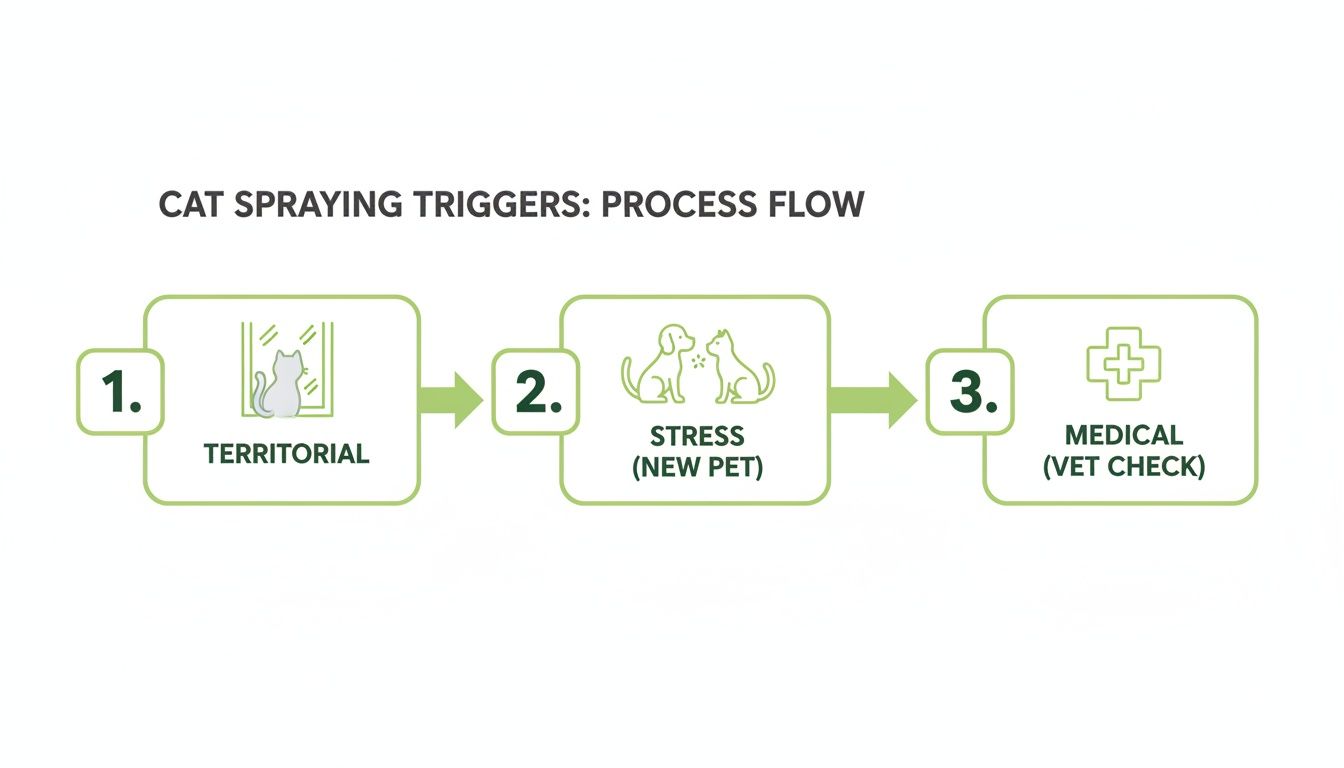
As you can see, spraying is always a response. It's your cat's way of reacting to an external threat, a change in their home life, or their own physical discomfort.
Reduce Anxiety Through Environmental Enrichment
A cat who sprays is often an insecure or bored cat. The solution is to make their indoor world so safe, secure, and engaging that they no longer feel the need to spray. This is called environmental enrichment.
Look at your home from your cat’s perspective and implement these changes:
- Go Vertical: Cats are climbers who feel safer viewing their territory from above. Add cat trees, wall-mounted shelves, and sturdy window perches to boost their confidence.
- Encourage Play: Engage their hunting instinct with interactive toys like feather wands and puzzle feeders. A mentally and physically tired cat is a happier, less anxious cat.
- Provide Safe Havens: Every cat needs a private spot to retreat. This could be a covered bed, a cardboard box, or a quiet closet nook. A personal sanctuary helps them decompress when feeling overwhelmed.
The goal is to build a world where your cat feels in control. When their basic needs for safety, territory, and stimulation are met, the compulsion to spray often diminishes significantly.
Create Peace in a Multi-Cat Home
If you have more than one cat, spraying is likely about turf wars or social stress. Even if your cats seem to get along, subtle competition for resources can cause one to mark their territory. The key is to create an environment of abundance.
Apply the "N+1" rule, where 'N' is the number of cats you have. Provide one resource for each cat, plus one extra.
- Litter Boxes: For two cats, place a minimum of three litter boxes in different, quiet, low-traffic areas. This prevents one cat from guarding a box and intimidating the other.
- Feeding Stations: Give each cat their own food and water bowl in separate locations. Mealtimes should not be a competition.
- Resting Areas: Ensure there are plenty of prime napping spots—sunny windowsills, soft beds, high perches—so no one has to fight for the best real estate.
Your Checklist for a Spray-Free Home
Feeling overwhelmed? Use this quick-reference table to start making your home more secure and less stressful for your cat.
| Action Item | Why It Works | Quick Tip |
|---|---|---|
| Use an Enzymatic Cleaner | Completely removes urine odor molecules, preventing your cat from re-marking the same spot. | Avoid ammonia-based cleaners; they can smell like urine to a cat and make things worse. |
| Add Vertical Space | High perches give cats a sense of control and security over their territory. | A tall cat tree near a window is a perfect combination of height and entertainment. |
| Schedule Daily Playtime | Burns off excess energy and reduces stress, mimicking natural hunting behaviors. | 15 minutes of interactive play with a wand toy twice a day can make a huge difference. |
| Follow the "N+1" Rule | Ensures there are enough litter boxes, food bowls, and beds to prevent resource competition. | If you have 2 cats, aim for 3 litter boxes in different locations around the home. |
| Provide "Safe Havens" | Gives cats a private place to retreat and decompress when they feel overwhelmed. | A simple cardboard box on its side in a quiet corner can be a perfect cat cave. |
Working through these steps addresses the most common behavioral triggers head-on. By creating a calm, resource-rich environment, you're helping your cat feel secure enough to stop spraying.
For some owners, managing the situation while working on these long-term fixes can be tough. In these cases, practical pet incontinence solutions can offer a temporary way to protect your home and reduce your own stress.
When It's Time to Call Your Veterinarian for Help
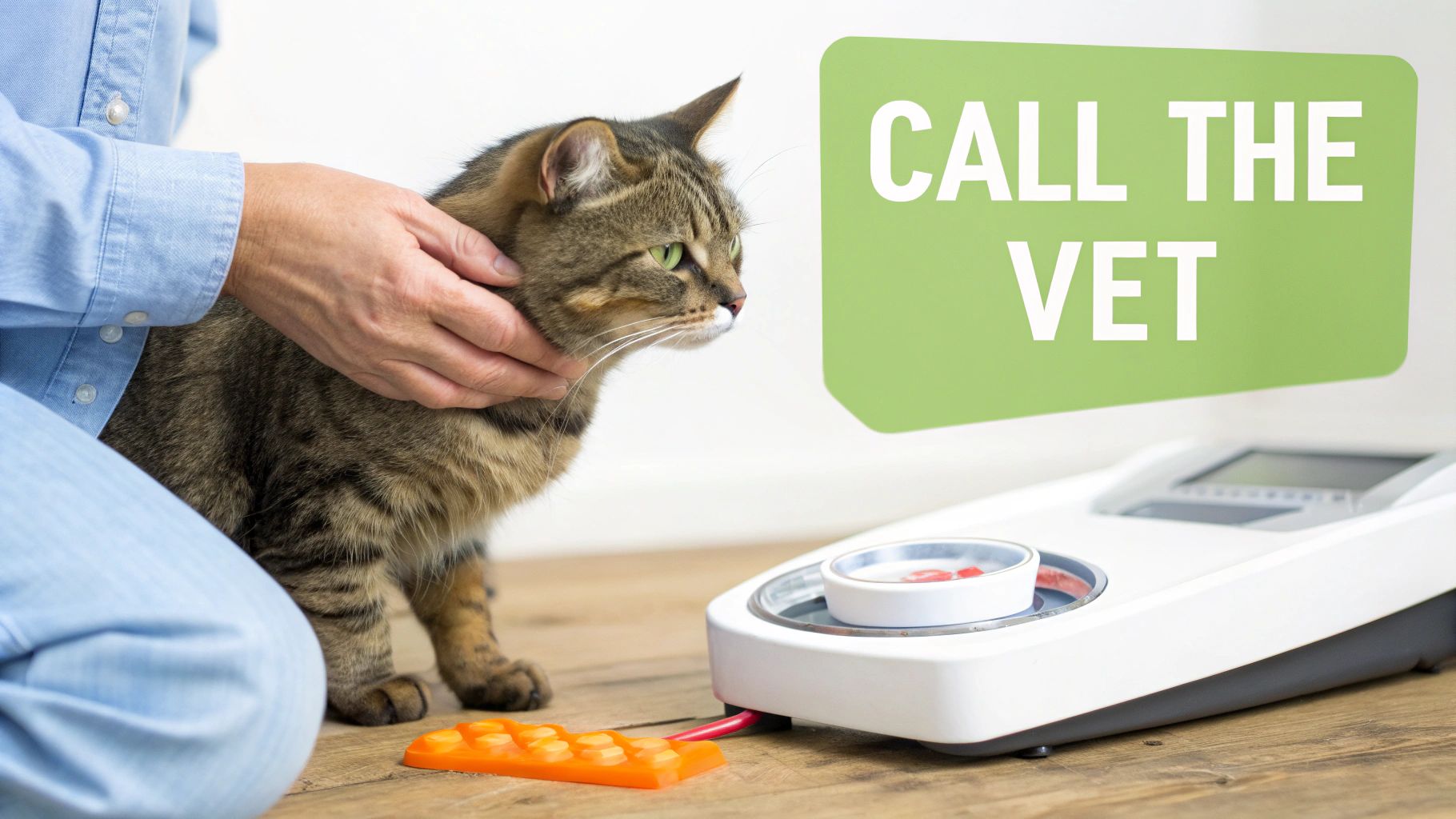
While environmental and behavioral changes are powerful tools, you can't assume spraying is just a bad habit. It can be a sign of a serious medical issue that requires immediate professional help.
Knowing when to call the vet is crucial. Your cat’s spraying might be driven by pain, not stress. Certain symptoms are red flags that indicate a potential emergency.
Spotting a Medical Emergency
Watch for these signs in and around the litter box. If you see any of them, get to the vet immediately:
- Straining to Urinate: Your cat is trying repeatedly to pee but only a few drops—or nothing at all—come out.
- Crying in the Litter Box: Any vocalizing or obvious signs of pain while trying to urinate is a major warning.
- Frequent Licking of Genitals: This is a classic sign of irritation or discomfort.
- Blood in the Urine: Even a hint of pink or red in the urine (hematuria) points to a significant problem.
These symptoms can signal a life-threatening urinary blockage, a condition especially common in male cats. A blockage is a veterinary emergency that can become fatal in less than 24 hours.
When in doubt, always call your vet. It is much better to be overcautious than to risk your cat's life. A quick phone call can provide peace of mind or be the first step in saving them.
Your Vet is Your Partner in This
Even if it’s not an emergency, your veterinarian is your number one ally. They can run tests to rule out other painful issues like urinary tract infections (UTIs), bladder stones, or feline interstitial cystitis.
Once medical causes are ruled out, your vet can help you explore advanced behavioral solutions. They might suggest calming pheromone diffusers, such as Feliway, which mimic a cat's natural facial pheromones to create a feeling of safety. For persistent cases, they may prescribe anti-anxiety medication to help break the cycle of stress and spraying.
The good news is that widespread neutering has made spraying far less common than it used to be. A 2023 study showed that 80% of U.S. household cats are neutered, and in some homes, that number climbs to over 90%! This has dramatically cut down on spraying incidents across the country. You can read more about these findings on neutering rates and see just how much of a difference it makes.
Still Have Questions About Cat Spraying?
Even with a game plan, you might still have questions. Here are actionable answers to some of the most common concerns about neutered cats who spray.
Will Neutering My Older Cat Stop Him from Spraying?
Yes, there's a very good chance it will. While it’s ideal to neuter a cat before sexual maturity, the surgery is still highly effective at stopping spraying in most older cats.
With a kitten, neutering prevents the behavior from starting. With an older cat, spraying is likely a learned habit. The surgery removes the hormonal drive, but you still need to address the habit itself. For the best results, combine the surgery with the deep-cleaning and environmental enrichment strategies discussed earlier to break the cycle for good.
Can Products Like Feliway Really Help with Spraying?
Yes, for many cats, pheromone products like Feliway can be a significant help, especially when spraying is driven by stress.
These products release a synthetic copy of the calming facial pheromones cats leave when they rub their cheeks on things, marking a space as safe. Plugging in a Feliway diffuser sends a continuous message that says, "You're safe here; you can relax." This can lower background anxiety and reduce the urge to spray. While not an instant fix, it is a powerful tool.
Keep in mind: Pheromone diffusers work best when you're also working to solve the root cause of the stress, whether that's a new cat in the house, a change in your daily routine, or neighborhood cats taunting him through the window.
What Should I Do If I Have Tried Everything and My Cat Still Sprays?
If you've cleaned with enzymatic solutions, enriched your cat's environment, managed multi-cat dynamics, and received a clean bill of health from your vet, it's time to call in a specialist.
Don't give up. The next step is to ask your vet for a referral to a certified animal behaviorist or a veterinary behaviorist.
These professionals are trained to uncover complex, deep-seated behavioral issues that go beyond typical stress reactions. They will develop a detailed, customized plan for your cat, which may include a discussion about anti-anxiety medications to help break the stubborn behavioral loop. Sometimes, an expert evaluation is the final piece of the puzzle.
At Pet Magasin, we get it—managing your pet's behavior isn't always easy. Our goal is to offer top-notch, practical solutions that make being a pet owner a more joyful experience. Check out our full line of pet care products, all designed with you and your furry family in mind, at Pet Magasin.

Leave a comment