


A Step-by-Step Guide to Cleaning Your Cat's Eyes at Home

Cleaning your cat's eyes is a vital part of their grooming routine that directly impacts their health and comfort. The process is straightforward: gently wipe away discharge from the corner of each eye using a soft cloth dampened with a vet-approved saline solution. Regular cleaning prevents the buildup of debris and discharge, which can lead to irritation, tear staining, and potential infections.
This simple action keeps your cat's vision clear and allows you to monitor their eye health closely.
Why Cleaning Your Cat's Eyes Is an Act of Care
Think of routine eye cleaning as preventative maintenance for your cat. A cat's eyes are sensitive and susceptible to irritation from common household particles like dust and pollen. If left uncleaned, this buildup can cause significant discomfort.
By regularly removing "eye boogers," crusts, and discharge, you eliminate irritants that cause your cat to paw at their face. This ensures they can see clearly and comfortably, free from itching and potential scratches.
More Than Just Hygiene
Beyond preventing irritation, the act of cleaning your cat’s eyes serves two practical purposes. First, it builds trust. Approaching the task with a calm, gentle touch reinforces your role as a caregiver, strengthening your bond.
Second, it makes you a more observant owner. A consistent routine helps you establish a baseline for what is "normal" for your cat's eyes. This allows you to quickly identify early warning signs of health issues, such as changes in the color, consistency, or amount of discharge.
Frame eye care not as a chore but as a crucial health check. This mindset turns the routine into a proactive habit that keeps your feline friend comfortable and helps you spot problems early.
A Growing Focus on Feline Eye Health
The increasing demand for pet eye care products reflects a broader shift toward proactive feline health. The global market for pet eye cleaners, valued at USD 500 million in 2023, is projected to reach USD 850 million by 2032. This growth is driven by owners seeking to prevent common issues like tear staining and infections, which can affect up to 20-30% of all cats.
This is especially critical for aging cats, as up to 70% of senior felines may develop excessive tearing (epiphora). You can find more insights about the pet eye care market to understand these trends. By incorporating eye cleaning into your routine, you are taking a simple yet powerful step to protect your cat's long-term health and daily comfort.
Setting Up Your Feline Eye Care Station
To ensure a smooth and stress-free cleaning session, prepare all your supplies before you get your cat. Having an organized station allows you to work efficiently, which helps keep your cat calm.
Your most critical item is the cleaning solution. Never use plain tap water, as its mineral and chlorine content can irritate a cat’s sensitive eyes. Always opt for a veterinarian-approved sterile saline solution or a dedicated feline eye wash. These products are pH-balanced to match your cat’s natural tears, ensuring they clean effectively without stinging. When selecting any product for your pet, it's wise to research safe cleaning products for pets to prevent accidental harm.
Getting the Right Wipes and Tools
Next, you need a soft, sterile applicator that won't leave behind fibers or debris. Here are your best options:
- Soft Gauze Pads: These are ideal. They are absorbent, durable, and won't shred or leave lint in the eye.
- Lint-Free Cotton Rounds: If using cotton, ensure it is specifically labeled "lint-free." Standard cotton balls can shed tiny fibers that will worsen eye irritation.
Actionable Tip: Never use cotton swabs (like Q-tips) near the eyeball. The rigid stick presents a high risk of accidentally poking and injuring the cornea, which would require an emergency veterinary visit.
Choosing the Right Cleaning Solution for Your Cat
Selecting the correct solution is essential for your cat's safety and comfort. Use this table to choose the right one for the job.
| Solution Type | Best For | Key Benefits | Cautions |
|---|---|---|---|
| Sterile Saline | Routine cleaning, flushing mild debris | pH balanced for eyes, gentle, widely available | Not medicated for infections, check for preservatives |
| Veterinary Eye Wash | Daily gunk removal, tear stain maintenance | Formulated specifically for pets, often contains soothing agents | Can be more expensive, some have extra ingredients |
| Warm Water (Boiled & Cooled) | Emergency use when nothing else is available | Inexpensive, readily accessible | Lacks sterility, must be cooled to body temperature |
| Medicated Drops | Treating diagnosed infections or conditions | Targets specific bacteria or inflammation | Requires a prescription, use only as directed by a vet |
For all routine cleaning, a commercial sterile saline or a vet-approved eye wash is the safest and most effective choice.
The Finishing Touches
Keep a clean, soft towel nearby. You can use it to gently pat the fur around the eyes dry after cleaning. For a squirmy cat, the same towel can be used to create a "kitty burrito" for secure, gentle restraint.
Finally, have high-value treats ready. Rewarding your cat immediately after the session creates a positive association with eye cleaning. Investing in the right supplies, similar to choosing quality pet grooming tools, makes the task safer and less stressful for everyone involved.
A Calm Approach to Cleaning Your Cat's Eyes
To execute a successful eye cleaning, your approach matters as much as your tools. Cats are highly sensitive to your mood, so project calm confidence. Choose a quiet, familiar room and attempt the cleaning when your cat is already relaxed, such as after a nap. Speak in a low, soothing voice and offer gentle pets before you begin.
Creating a Secure and Gentle Hold
Your cat must feel secure, not trapped. For a calm cat, sitting on the floor with them in your lap may be sufficient. For a more active cat, use the "kitty burrito" technique:
- Lay a large, soft towel flat.
- Place your cat in the center.
- Wrap the towel snugly around their body, leaving only their head exposed.
This method prevents wiggling and scratching, protecting both of you. Mastering a gentle but firm hold is also useful for other grooming tasks, like choosing the right nail clippers for cats.
Actionable Tip: Use a firm, steady hand. Hesitant or shaky movements can make your cat feel insecure. Your confidence is reassuring to them.
Once your cat is secure, dampen a fresh gauze pad or lint-free cotton round with your chosen solution until it is moist but not dripping.
The Correct Wiping Technique
The direction of your wipe is critical for effective and safe cleaning. Always wipe from the inner corner of the eye (near the nose) outward, moving away from the eyeball. This motion draws debris away from the sensitive tear duct and cornea.
Wiping inward can push discharge back into the eye, causing irritation or even scratching the surface. Use a clean section of the gauze for each wipe to prevent recontamination. If you encounter stubborn crust, do not scrub. Instead, hold the damp pad gently against the crust for 10-15 seconds to soften it before wiping it away.
This infographic breaks down the essential steps for a successful cleaning routine, from preparation to positive reinforcement.

This visual guide emphasizes that a successful routine combines the right tools with positive reinforcement.
Reinforcing Positive Associations
The moment you finish, reward your cat with a high-value treat, their favorite toy, or enthusiastic praise. This crucial step helps build a positive association with the process, making future cleanings easier. Consistency is key to turning tolerance into acceptance.
While the technique is specific to cats, the underlying principles of proper eye cleaning are universal, highlighting the importance of hygiene for all species. Proactive home care is not just a trend; it's a practical way to reduce vet bills. In North America, the pet eye care market reached USD 1 billion in 2023, and owners spend an estimated $1.2 billion annually on treating preventable eye infections.
What Your Cat's Eye Discharge Is Telling You
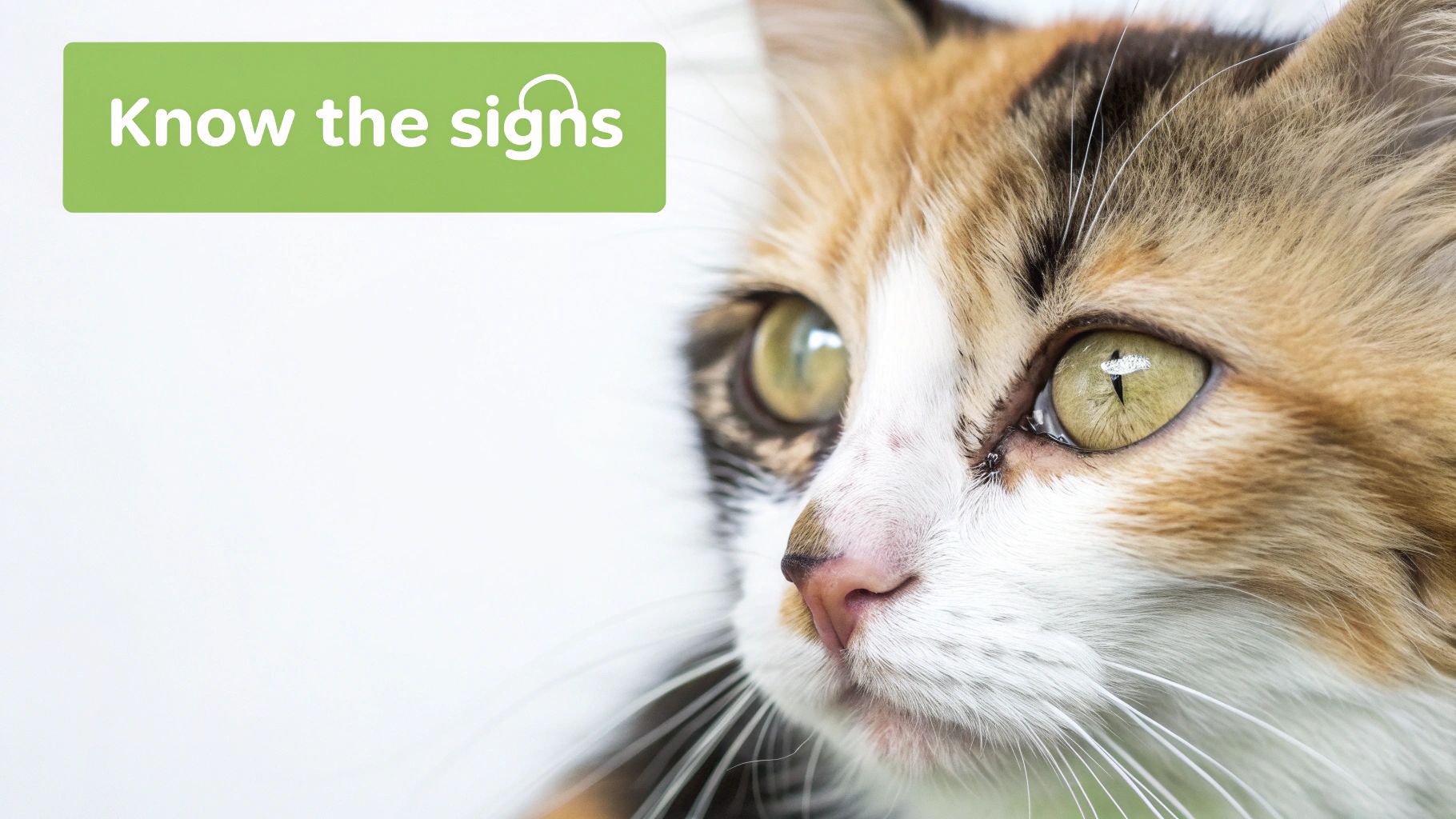
Eye discharge is a direct communication about your cat's health. Learning to differentiate between normal and abnormal discharge is a vital skill for any cat owner. A small amount of crust in the corner of the eyes after sleeping is normal ("sleep"), but any change in color, volume, or consistency warrants closer inspection.
Clear and Watery Discharge
Excessive tearing with a clear, watery discharge is called epiphora. It is often the eye’s natural response to flush out an irritant. Common causes include:
- Allergens: Environmental triggers like pollen, dust, or strong cleaning chemicals.
- Foreign Body: A speck of dust, an eyelash, or a piece of cat litter in the eye.
- Blocked Tear Ducts: The nasolacrimal ducts, which drain tears from the eyes, can become clogged.
For mild, occasional tearing, a gentle wipe is sufficient. If the tearing is persistent or accompanied by sneezing, investigate potential allergens in your home and consult your vet if it continues.
Brown or Reddish-Brown Tear Stains
The dark stains sometimes seen under a cat's eyes are not dirt. They are caused by porphyrins, iron-containing molecules in tears that turn reddish-brown upon air exposure. While often a cosmetic issue, they indicate chronic tearing.
This is particularly common in flat-faced (brachycephalic) breeds like Persians and Himalayans, whose facial structure can impede proper tear drainage.
Managing tear stains is a major driver of the feline wellness market. The global market for cat eye wipe pads reached USD 320 million in 2024, as an estimated 40% of light-coated cats are affected by tear staining. Since 2020, owner spending on feline eye care products has increased by 22%, reflecting growing awareness. You can explore these feline health consciousness trends for more context.
Yellow or Green Discharge
This is an immediate red flag. A thick discharge that is yellow, green, or cloudy in appearance almost always indicates an infection. The color is caused by white blood cells fighting off bacteria or a virus.
This symptom is often linked to conjunctivitis (pink eye) or an upper respiratory infection. Do not attempt to treat this at home. Contact your veterinarian promptly for a proper diagnosis and prescription medication, such as antibiotic eye drops. Delaying treatment can worsen the condition.
Knowing When to Call Your Veterinarian
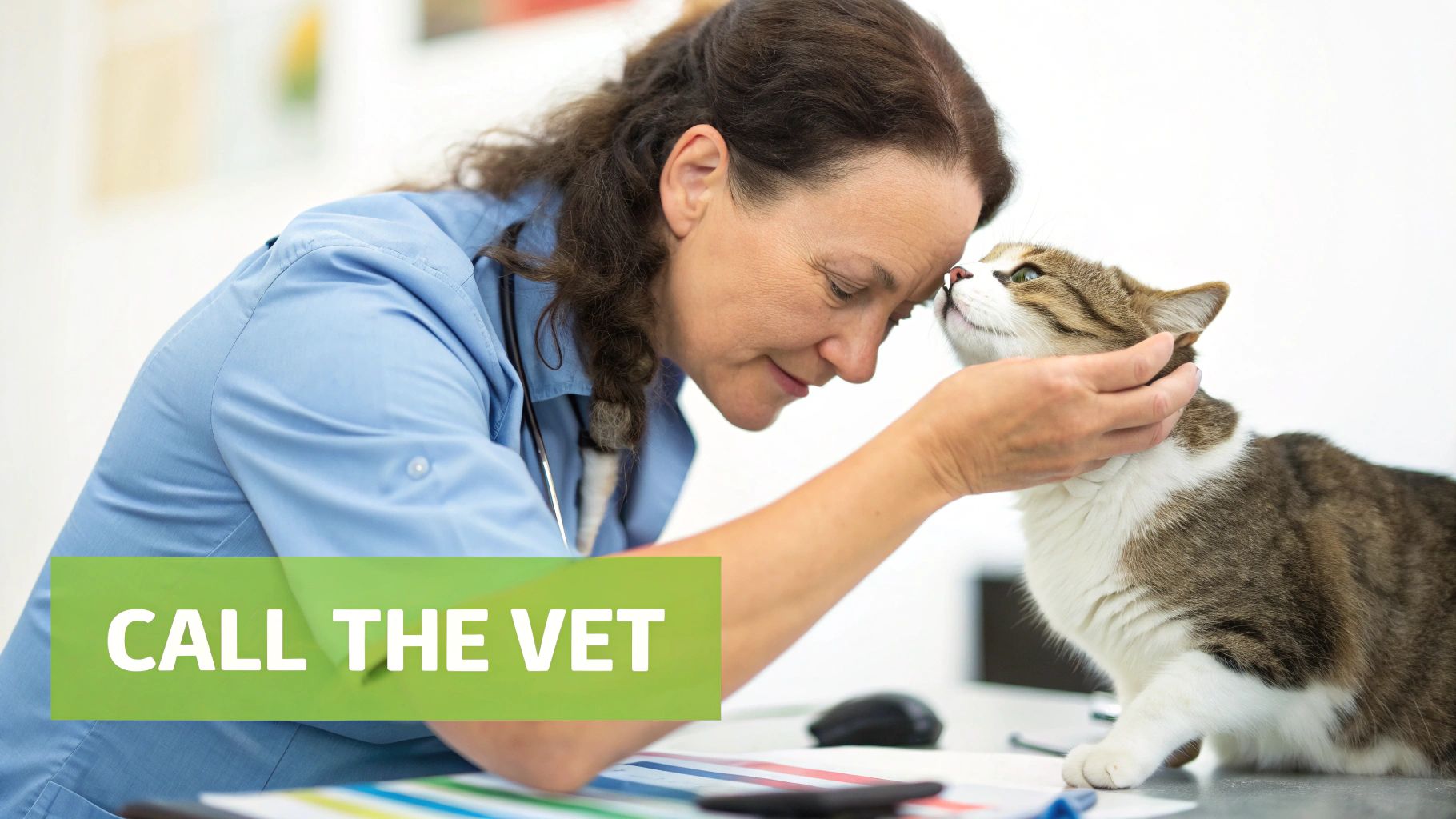
While routine at-home cleaning is beneficial, you must be able to recognize when a problem requires professional medical attention. Some eye issues can escalate quickly, and early veterinary intervention is key to preventing serious complications. If your cat appears to be in pain, it's always time to call the vet.
A primary indicator of eye pain is persistent squinting or holding one eye completely closed. This is a clear sign of significant discomfort and could indicate a serious problem like a corneal ulcer (a scratch on the eyeball) or a foreign object trapped under the eyelid.
Urgent Red Flags to Watch For
The following symptoms require immediate veterinary consultation. Do not "wait and see" if you observe any of these signs.
-
Pawing or Rubbing at the Eyes: Constant rubbing indicates severe irritation. This behavior can lead to self-inflicted scratches on the cornea, compounding the problem.
-
Redness and Swelling: A pink or red color in the whites of the eyes (sclera) or swollen eyelids are clear signs of inflammation, often associated with infections like conjunctivitis.
-
Cloudy or Discolored Eyeball: Any change in the clarity of the eyeball itself is an emergency. A hazy, blue, or cloudy appearance can signal severe conditions like glaucoma (increased eye pressure) or uveitis, both of which can lead to blindness if not treated promptly.
Actionable Tip: Monitor your cat's behavior. A normally active cat that becomes lethargic, hides, or avoids bright lights may be experiencing significant eye pain.
Don't Delay with These Symptoms
Review the types of eye discharge and act accordingly. While clear or crusty discharge can often be managed at home, others require a vet.
If the discharge is thick, yellow, or green, a bacterial infection is the likely cause and requires antibiotics.
Similarly, if you observe a sudden and significant increase in any type of discharge that does not improve after 24 hours of gentle cleaning cats eyes, seek a professional diagnosis. Your vet has the necessary tools to identify the underlying cause and prescribe the correct treatment to protect your cat's vision.
Common Questions About Cat Eye Care
Even with an established routine, questions about your cat's eye health will arise. Here are actionable answers to the most common concerns.
First, how often should you clean their eyes? This depends entirely on your cat's breed and individual needs. Brachycephalic (flat-faced) breeds like Persians often require daily wiping to manage tear overflow and prevent staining. For most other cats, checking daily and cleaning a few times a week is sufficient.
Handling Resistance and Product Safety
What should you do if your cat resists eye cleaning? The key is patience and positive reinforcement.
- Keep sessions very short, especially at first.
- Choose a time when your cat is calm or sleepy.
- Attempt one gentle wipe, then immediately offer a high-value treat.
- Use the "kitty burrito" method (wrapping them snugly in a towel) to provide security and prevent struggling.
The goal is to build trust over time, not to force compliance.
Regarding product safety, never use human eye drops (e.g., Visine) on your cat unless explicitly directed by a veterinarian. Many ingredients are toxic to felines. Stick to sterile saline solution or a product formulated specifically for cats.
Remember that cats are not small dogs or humans. Their physiology is unique, and they require products and grooming techniques tailored to their specific needs.
Overall Hygiene and Care Routines
Eye care is just one component of your cat's overall grooming. Understanding their complete hygiene needs, including whether you are supposed to give cats baths, helps you create a comprehensive and safe routine.
Finally, what causes reddish-brown tear stains? This condition, known as epiphora (excessive tearing), results in stains from a pigment in the tears called porphyrin, which darkens when exposed to air. While common, especially in certain breeds, it can sometimes signal an underlying issue like a blocked tear duct or allergies. Regular cleaning helps manage the staining, but if the tearing is new or worsens suddenly, consult your veterinarian to rule out a medical problem.
At Pet Magasin, we believe that informed pet parents are the best pet parents. Our grooming tools are designed to make tasks like eye care safe, simple, and stress-free for both you and your beloved cat. Explore our collection for veterinarian-approved solutions you can trust at https://www.petmagasin.com.

Leave a comment