
A Practical Guide to Litter Training Your Dog

Yes, you can absolutely litter train a dog. While it might sound unusual, it's a practical solution for many owners.
The real question isn't if it's possible, but if it's the right choice for your specific dog and lifestyle. For some, it’s a game-changer. For others, traditional outdoor training remains the best path.
Deciding If Litter Training Is Right for Your Dog
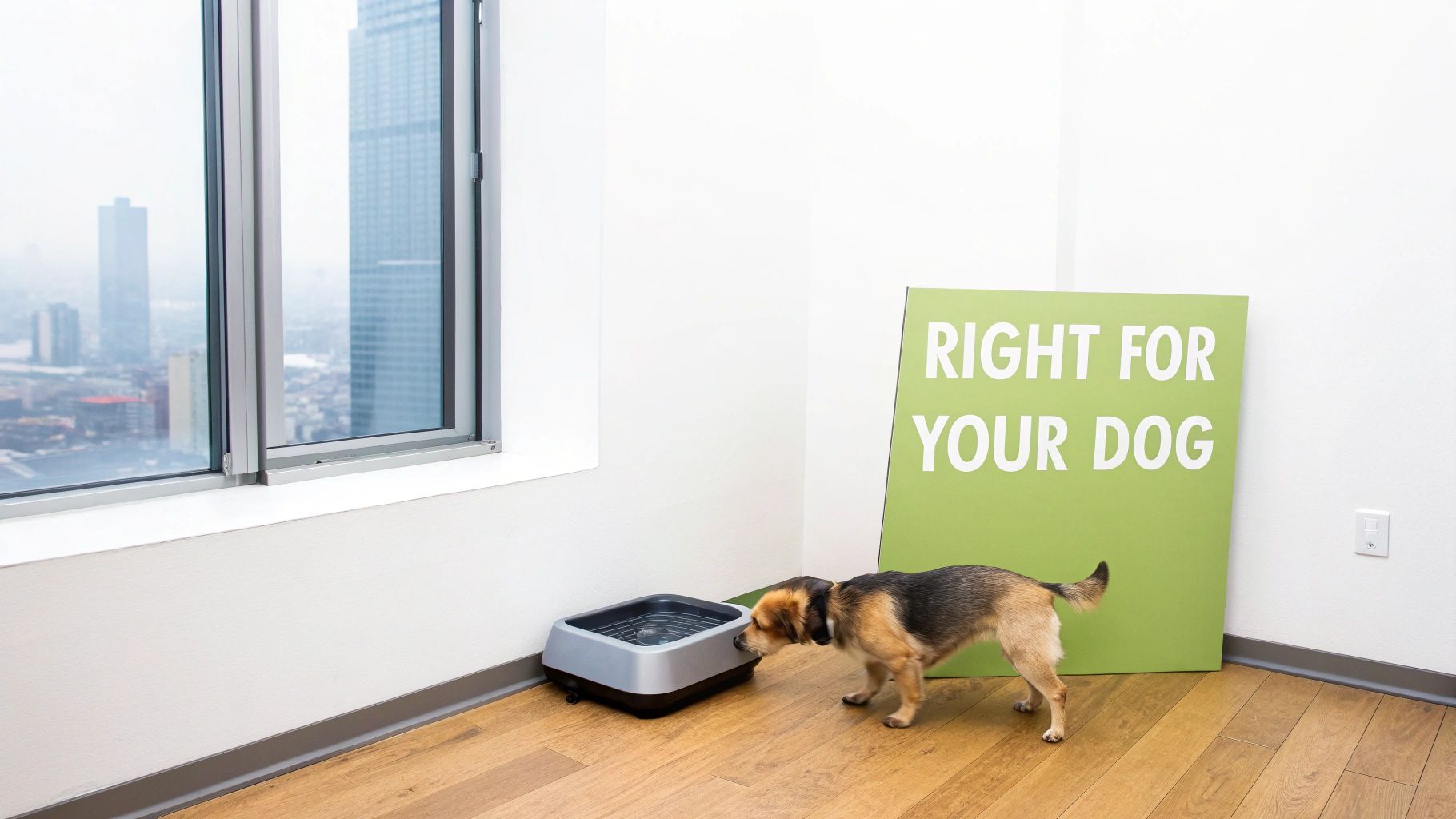
Most people explore indoor potty solutions out of necessity. Living in a high-rise apartment, dealing with harsh weather, or caring for a dog with special needs makes an indoor option a practical alternative to frequent walks.
This strategy is particularly effective for small breeds. Their higher metabolisms and faster digestive systems mean they need more frequent potty breaks. Research indicates that while approximately 95% of large dogs eventually achieve full house-training, smaller breeds often face more challenges. An indoor potty provides them with a much-needed, accessible option.
Of course, bringing a potty station indoors requires some consideration, especially if anyone in your home has sensitivities. This guide on understanding and managing pet dander and allergies is a great resource if that's a concern.
Who Benefits Most from an Indoor Potty System
Litter training provides significant relief in various real-world scenarios, offering convenience and comfort when outdoor access is impractical.
- Small Breed Dogs: Chihuahuas, Pomeranians, and other toy breeds have tiny bladders. An indoor box is a lifesaver between walks.
- Apartment Dwellers: Living on a high floor makes a quick midnight potty trip a major hassle. This solves that problem.
- Senior or Mobility-Impaired Dogs: Older pups or those recovering from surgery might find stairs and long walks painful. A nearby litter box reduces that physical strain.
- Owners with Busy Schedules: If you work long hours, an indoor potty provides a safe and comfortable option, eliminating the stress of wondering if your dog can hold it.
A common myth is that litter training will confuse a dog or make them refuse to go outside. In practice, many dogs learn to use both, giving their owners ultimate flexibility.
The main limitation is size. For a Labrador or German Shepherd, a standard litter box is impractical. The volume of waste they produce makes an indoor system difficult to manage hygienically.
To help you weigh the pros and cons, here is a quick comparison.
Indoor Litter Training vs. Outdoor Potty Training at a Glance
This table breaks down the key differences to help you determine which method fits your life and your dog best.
| Feature | Indoor Litter Training | Outdoor Potty Training |
|---|---|---|
| Convenience | Excellent for bad weather and late nights. | Requires trips outside regardless of conditions. |
| Best For | Small breeds, seniors, apartment living. | All breeds, especially medium to large dogs. |
| Odor Control | Requires daily scooping and regular cleaning. | Waste is removed from the living space immediately. |
| Cost | Ongoing expense for litter and liners. | Minimal costs (waste bags). |
| Socialization | Does not provide outdoor exposure. | Offers regular exercise and social opportunities. |
Ultimately, the best method is the one that keeps your dog comfortable and your floors clean. Both can work wonderfully when you match the training to your dog's needs.
Setting Up the Perfect Indoor Potty Station
Once you've decided to litter train, the key to success is your setup. Your goal is to create a private, comfortable, and convenient bathroom that your dog will choose to use. A proper setup makes the right decision the easiest one for them.
Start with the right equipment. A tiny Yorkie puppy or an older dog with arthritis will struggle with a high-sided box. To make it easy for them, choose a box with a low-entry point on at least one side so they can walk in and out without difficulty.
Picking the Right Gear for Your Dog
The litter you choose is as important as the box itself. You have several effective options.
- Paper Pellets: These are highly absorbent and offer good odor control. A major advantage is that they are generally safe if ingested.
- Artificial Grass Patches: Many dogs are naturally drawn to the feel of grass, which can make the transition from outdoor potty training easier. These systems typically include a tray that allows liquid to drain away.
- Dog-Specific Wood Pellets: If you choose wood pellets, ensure they are specifically made for pets. They must be kiln-dried and free of phenols, as some woods can be toxic to dogs.
Here’s a critical rule: avoid clumping cat litter. If a dog ingests it, it can cause dangerous, even life-threatening, intestinal blockages.
Actionable Tip: Place a washable pee pad under the entire potty station. It will catch any accidents or near-misses, protect your floors, and can be easily laundered.
Finding the Perfect Spot
The location of the litter box is as critical as its contents. Dogs are creatures of habit and will not feel comfortable using a potty spot that is loud, busy, or next to their food and water.
Choose a location that offers privacy and security. A quiet corner in a laundry room, a mudroom, or a low-traffic bathroom is ideal. The golden rule is to keep it far away from their food, water, and bed. This is common sense—dogs, like people, do not want to eat where they eliminate.
A dedicated spot helps them build a strong mental association, signaling that this specific area is their personal toilet. Creating a comfortable and accessible station from the start paves the way for a smoother, faster training process.
Your Action Plan for Successful Litter Training
With your potty station set up, it's time to train. Teaching a dog to use a litter box relies on positive associations and a predictable routine. Your goal is to convince your dog that the litter box is the most rewarding place to go.
This action plan is broken into three stages: creating a positive association with the box, actively training your dog to use it, and reinforcing the new habit.
This handy infographic breaks down those crucial first setup steps.
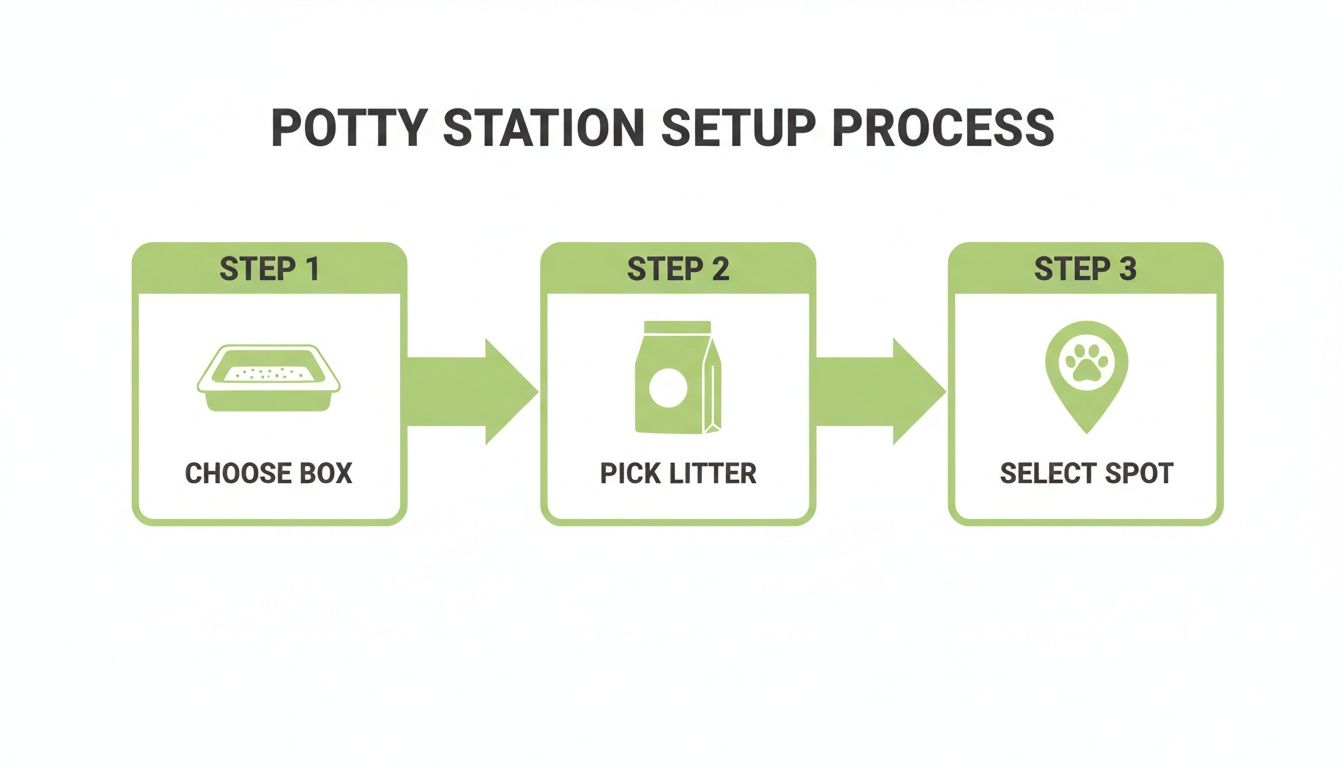
Getting these three elements right—the box, the litter, and the location—sets the foundation for success.
Step 1: Create a Positive Association First
Before your dog uses the box, they must feel comfortable near it. A new object can be intimidating, so your first mission is to make the litter box a positive place.
How to do it:
- Allow your dog to investigate the box on their own terms.
- Toss high-value treats near the box, then directly inside it.
- Do not push or force them; let their curiosity lead the way.
- Repeat this exercise for a few minutes, several times a day, until they eagerly approach the box looking for a treat.
This process builds a mental bridge connecting the litter box with positive rewards like treats and praise, making the next phase of training much easier.
Step 2: Active Training and Anticipating Needs
Once the box is a "friend," begin active training. The secret is to anticipate when your dog needs to go and guide them to the right spot before an accident happens.
Most dogs need to eliminate at predictable times:
- Immediately after waking up (from sleep or a nap).
- Within 15-30 minutes of eating.
- Right after a play session.
- Just before bedtime.
How to do it:
- At these key moments, calmly lead your dog to the litter box.
- Use a consistent, cheerful verbal cue like "go potty" or "use your box."
- Wait patiently for a minute or two.
- If nothing happens, take them away and try again in 10-15 minutes.
Step 3: Reinforcement: The Most Crucial Step
The moment your dog uses the box, it’s time to celebrate. As soon as they finish, immediately offer enthusiastic praise, pets, and a high-value treat. This positive reaction clearly communicates that they did the right thing.
Consistency is everything. Stick to regular feeding times and potty breaks to create a predictable rhythm. When you pair this routine with enthusiastic positive reinforcement, you're on the fast track to success.
If you see your puppy digging or playing in the litter, use a calm but firm "leave it" and redirect their attention to a toy. Patience is key. For more help with common challenges, check out our guide on puppy potty training tips.
Solving Common Litter Training Problems
Setbacks are a normal part of training, so don't get discouraged. Think of hurdles as feedback, not failures. An accident is often a sign of a communication breakdown, not stubbornness. Your job is to figure out what your dog is trying to tell you.
Diagnosing "Near Misses" and Accidents
If your dog eliminates right next to the box instead of in it, it's a good sign. They understand the general area is the bathroom, but something is preventing them from going inside.
Troubleshooting Checklist:
- Is the box clean enough? A dog's sense of smell is far more powerful than ours. Scoop waste daily and perform a full litter change and box scrub weekly.
- Is the box the right size? If the box is too small, your dog may feel cramped. A puppy may outgrow their initial box and need an upgrade.
- Does your dog dislike the litter? Some dogs are sensitive to texture. If you suspect this is the issue, try a different material, like switching from paper pellets to an artificial grass pad.
When accidents happen, clean them thoroughly with an enzymatic cleaner to eliminate odors that might attract your dog back to the same spot. For a complete guide, see this resource on cleaning up dog urine on carpet.
What to Do if They're Sleeping or Playing in the Box
If your dog treats the litter box like a bed or sandbox, it means its purpose isn't clear yet. This is common in puppies.
Action Plan:
- The moment you see lounging or digging, give a firm but calm "leave it."
- Immediately redirect their attention to an appropriate toy. This reinforces that the box has only one function.
- Increase positive reinforcement for correct use. Make the reward for pottying in the box so high-value that it becomes more appealing than playing. Our guide on the best dog treats for training can help you find something irresistible.
A dog sleeping in their litter box may also indicate stress or a search for a safe den. Ensure they have a comfortable bed or crate in a quiet area that feels like their own secure space.
Handling Sudden Backsliding
When a well-trained dog suddenly starts having accidents, it's called regression. This is typically triggered by a change in their environment or routine.
Ask yourself what has changed recently. Did you move the litter box? Have guests over? Change their food? Even small disruptions can cause a setback.
To fix it, go back to basics for a few days:
- Increase the frequency of guided trips to the box.
- Reinforce a strict schedule for feeding and potty breaks.
- Offer enthusiastic praise for every success. If regression continues or is accompanied by other symptoms like lethargy or straining, schedule a vet visit to rule out a medical issue like a UTI.
Exploring Smart Indoor Potty Alternatives
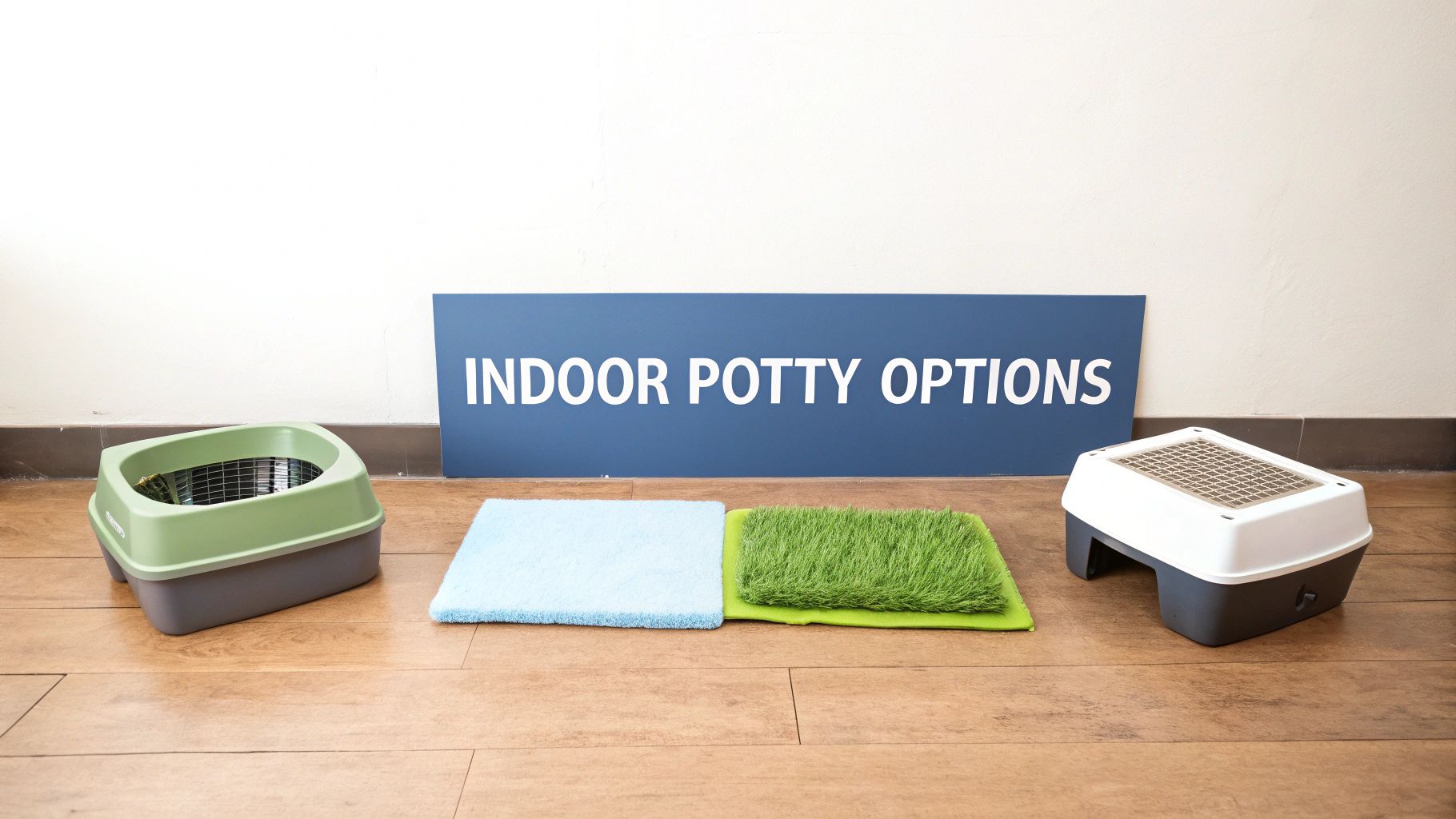
A bulletproof indoor potty system often involves more than just a litter box. The most successful owners create a flexible setup by combining different products to handle any situation. This approach provides a complete support system that adapts as your dog ages, from puppyhood to their senior years.
Washable Diapers for Seniors and Special Cases
As dogs age, some may develop incontinence. Washable diapers offer a comfortable and dignified way to manage leaks, providing a crucial backup to your indoor potty plan. They are also useful for female dogs in heat, protecting furniture and carpets from stains.
Unlike disposable options, reusable diapers are a more sustainable and cost-effective long-term solution. If you're exploring this option, our detailed guide on the best washable dog diapers can help you choose the right fit and features.
Getting Strategic With Pee Pads
While pee pads can serve as a primary potty spot for tiny breeds, they are most effective when used as part of a larger strategy.
Practical uses for pee pads include:
- Litter Box Liners: Place one under the litter box to catch stray drips for easy cleanup.
- Travel Carrier Protection: Line your dog's carrier to make travel less stressful and messy.
- Playpen Flooring: Cover a puppy's playpen floor for quick cleanups when you can't supervise them closely.
- Protecting Pet Beds: For senior dogs or those recovering from surgery, a pad can protect their bedding from leaks.
By pairing a primary potty station like a litter box with backup tools like diapers and pads, you create a complete system. This holistic approach means you're prepared for any stage of your dog's life.
Common Questions About Litter Training
Here are answers to some of the most common questions from dog owners starting their litter training journey.
How Long Does This Whole Process Take?
There is no magic number. The timeline depends on your dog's age, breed, and past experiences. A young puppy might catch on within a few weeks, but achieving 100% reliability can take a couple of months. Consistency is your most important tool.
An older dog who has only ever gone outside will require more time and patience. Stick to a predictable schedule, guiding them to the box after meals, naps, and playtime.
Can My Dog Use a Litter Box AND Still Go Outside?
Yes. This popular approach offers the best of both worlds. Many owners successfully teach their dogs that the litter box is for indoor use while continuing regular walks for outdoor potty breaks and exercise.
To make this dual system work, use a distinct verbal cue for each location, such as "use your box" for indoors and "go potty" when outside. This provides flexibility for bad weather or hectic schedules.
This method doesn't confuse most dogs; it empowers them by giving them a comfortable choice and reducing accident risks.
What Kind of Litter is Actually Safe for Dogs?
This is a critical safety question. You must use a litter that is non-toxic and specifically safe for dogs, as some pups will inevitably try to taste it.
Never use traditional clumping cat litter. If ingested, it can cause severe intestinal blockages.
Instead, choose safe and effective options such as:
- Litters made from recycled paper pellets.
- Kiln-dried wood pellets that are free of harmful phenols.
- Indoor potty systems that use an artificial grass patch.
Help! My Dog Just Digs and Plays in the Box.
This is classic puppy behavior indicating they haven't learned the box's purpose. The moment you see digging or playing, use a calm but firm "Leave it."
Immediately redirect their attention to an appropriate chew toy. This teaches them the box is not for play. Then, be ready with enthusiastic praise and high-value treats the instant they use the box correctly to solidify its true purpose.
For all the high-quality supplies you need to create the perfect indoor potty system, from washable diapers to travel carriers, trust Pet Magasin to support you and your furry family member every step of the way. Explore our full range of products at https://www.petmagasin.com.

Leave a comment