


Your Guide to the Best Dog Treats for Training Success

When it comes to training your dog, the right treat isn't just a snack—it's your most powerful tool. To make your training effective, choose treats that are small, soft, aromatic, and something your dog finds irresistible.
Start with rewards no bigger than a pea. This size allows you to give multiple treats during a session without overfeeding your pup. They must also be soft enough to be swallowed in a second and smelly enough to grab your dog's attention, even with distractions. This specific combination is the key to successful positive reinforcement training.
Why the Right Training Treat Is Your Most Powerful Tool
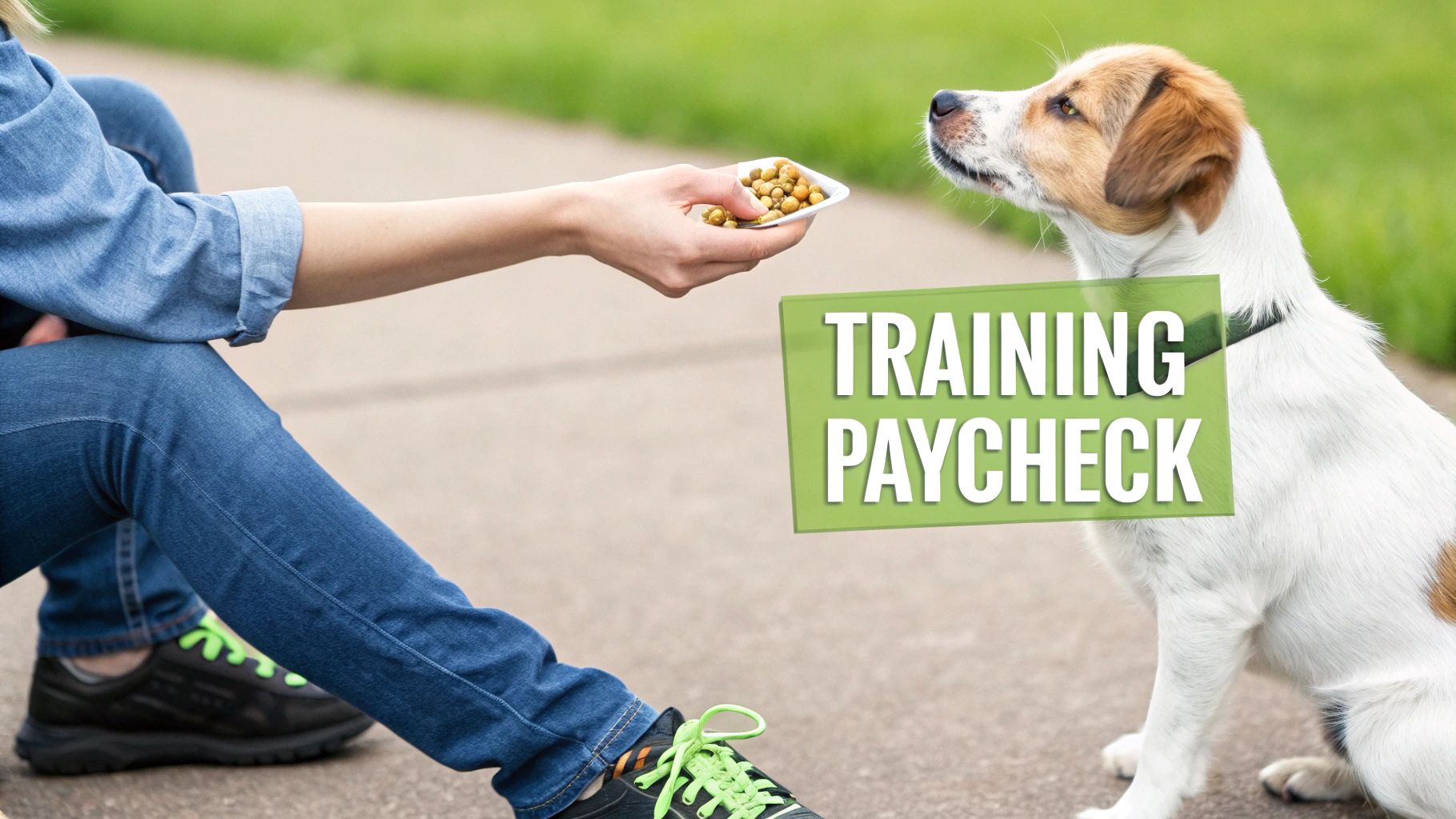
A training treat is your direct line of communication with your dog. Think of it as a clear payment for a job well done. Just as a good salary motivates people, the right treat motivates your dog to focus, listen, and actively participate in learning.
This simple exchange is the core of positive reinforcement. When your dog performs a "sit" and immediately receives a delicious reward, their brain makes a powerful connection: "Doing that action gets me something I love!" This isn't bribery; it's a clear and effective training method that accelerates learning.
The Three Pillars of a Perfect Training Treat
To make your training sessions count, move beyond the "any treat will do" mindset. A perfect reward has three key characteristics that keep your dog engaged and motivated. Your action plan is to find treats that meet these criteria:
- High Value: The treat must be more appealing than any distraction. Test different options like freeze-dried liver, small bits of cheese, or soft jerky to discover what your dog truly loves.
- Optimal Size: Choose treats that are pea-sized or can be easily broken into small pieces. This prevents long chewing breaks and keeps the training session flowing.
- Healthy Ingredients: Since training involves frequent rewards, select treats made from whole-food ingredients to support your dog's health, not detract from it.
By selecting treats that check these three boxes, you're not just giving out snacks—you're using precision tools to build reliable behaviors.
The right reward doesn't just teach a command; it strengthens the bond between you and your dog, turning training from a chore into a joyful and collaborative activity. Every treat becomes a moment of positive connection.
Building a Foundation for Success
Ultimately, the best dog treats for training are the ones that capture your dog's complete attention and make them eager to work with you. A fragrant, soft, and tasty treat can be the key to turning a distracted puppy into a focused student.
For a curated list of options and in-depth reviews, consult this guide on the top training treats for dogs to find a proven choice for your dog.
Selecting the right treat sets the stage for all future training. It helps you create a reliable system where your dog is not just obedient but genuinely enthusiastic about learning. This makes your training sessions more productive, less stressful, and far more enjoyable for both of you.
How to Decode Treat Labels and Find the Good Stuff
The pet food aisle can be confusing, with every bag claiming to be "natural" and "healthy." Your strategy is to learn how to read the ingredient label. By knowing what to look for, you can confidently choose treats that are genuinely good for your dog.
Treat an ingredient list like a recipe: the most prominent ingredients are listed first. If the first few items are recognizable whole foods like chicken, sweet potato, or salmon, you're on the right track.
The Good Stuff to Look For
The highest-quality dog treats often have the simplest ingredient lists. Your first action step is to find a treat where a whole meat protein is the #1 ingredient. Look for specific terms like "chicken," "beef," "salmon," or "lamb," not vague language.
Here's a checklist for a quality treat label:
- Whole Fruits and Vegetables: Ingredients like sweet potatoes, blueberries, or carrots provide natural vitamins and fiber.
- Simple Carbohydrates: If carbs are included, look for easily digestible sources like oats or brown rice.
- Natural Preservatives: Look for tocopherols (a form of Vitamin E) as a safe, common preservative.
Essentially, you want a list that reads more like your grocery list than a chemistry textbook. This is why limited-ingredient treats are an excellent choice. For dogs with sensitivities or allergies, their simple formulas make it easy to identify and avoid problematic ingredients. You can learn more by reviewing these major reasons why you should read dog treat ingredient labels.
Red Flags to Avoid on Treat Labels
Knowing what to avoid is just as important as knowing what to look for. Certain ingredients are clear indicators of a low-quality, filler-heavy product. If you spot these near the top of the list, put the bag back on the shelf.
A treat's ingredient panel tells the real story. If you can't pronounce the first five ingredients, or if they sound more like lab chemicals than food, it's probably not the best choice for your dog's training regimen.
Here is your "do-not-buy" list of ingredients:
- Vague "Meat" or "By-Products": Terms like "meat meal" or "poultry by-products" are intentionally vague and can include low-quality animal parts.
- Artificial Colors, Flavors, and Preservatives: Dyes like Red 40, Yellow 5, and preservatives like BHA or BHT offer no nutritional value.
- Common Fillers: Corn, wheat, and soy are often used as cheap fillers. They provide minimal nutritional benefit and are common allergens for many dogs.
- Added Sugars and Sweeteners: Avoid ingredients like corn syrup, sucrose, or xylitol (which is highly toxic to dogs) at all costs.
The Rise of Human-Grade and Functional Treats
This focus on high-quality ingredients reflects a broader shift in how we view our pets. As we increasingly see them as family members, we demand the same food quality for them as we do for ourselves, reshaping the entire pet food industry.
The global natural dog treats market hit USD 6.99 billion in 2024 and is expected to skyrocket to USD 14.03 billion by 2030. This growth is driven by owners seeking treats that actively support their dog's wellness. You can learn more about these market trends and their impact at grandviewresearch.com.
This trend has also led to functional treats—rewards designed with a specific health purpose. Some are fortified with glucosamine for joint support, while others contain ingredients that help clean teeth. By choosing a functional treat, you can turn every reward into an opportunity to support your dog's long-term health.
Matching the Treat to the Training Task
You wouldn't expect the same paycheck for a simple task versus a major accomplishment. This same principle applies to dog training. A routine "sit" in a quiet room is far less challenging than a perfect recall at a busy park, and your reward should reflect that.
To keep your dog motivated, stop using the same treat for every command. Instead, create a "training treat toolkit" with different levels of value. This strategy keeps your dog engaged and ensures you always have the right tool for the job.
The best treats start with good, honest ingredients. Think real meat, fruits, and veggies. You want to steer clear of the junk like artificial flavors, weird fillers, and sugar.
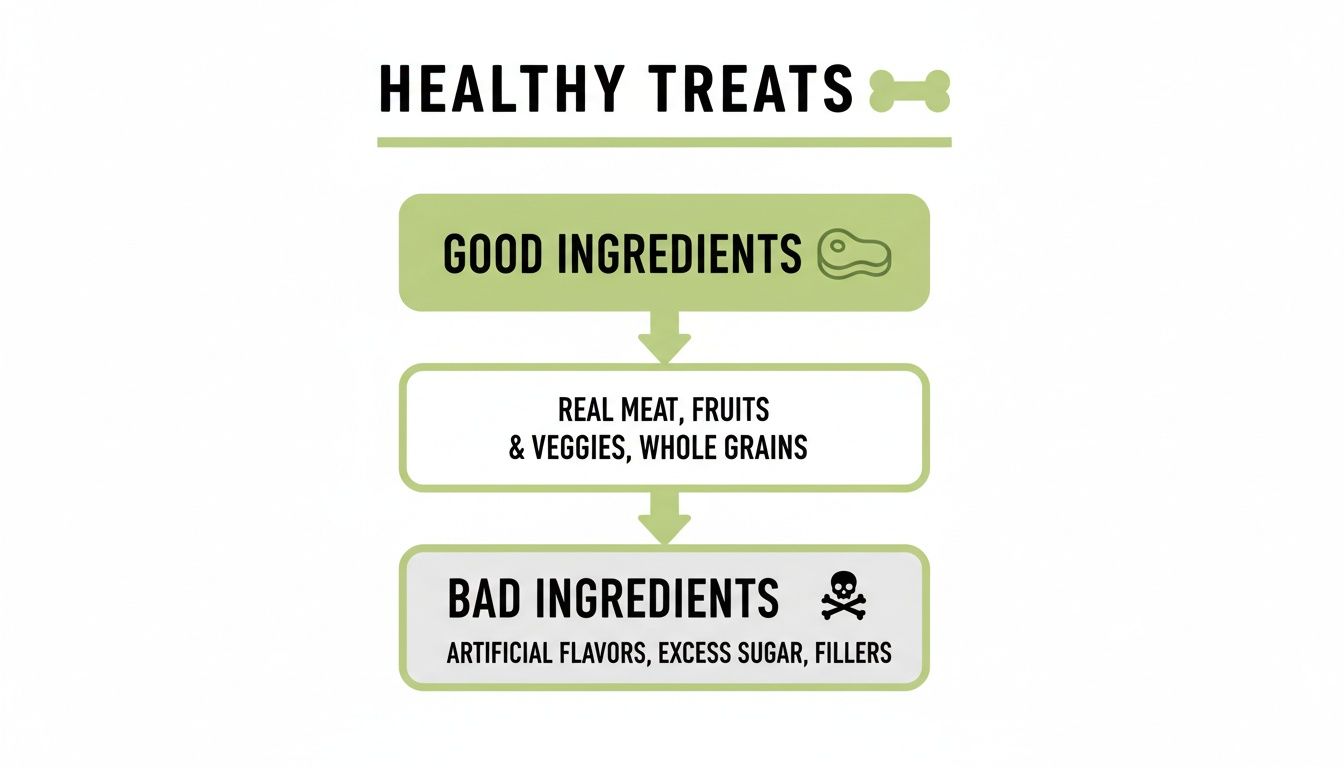
When you focus on whole-food ingredients, you’re not just rewarding your dog—you’re also supporting their overall health.
Your Guide to Training Treat Value Tiers
To maximize your training effectiveness, categorize your treats into different "value" tiers based on how much your dog desires them. Having a mix of low, medium, and high-value treats allows you to select the perfect reward for any situation.
| Value Tier | Treat Examples | Best For | Key Considerations |
|---|---|---|---|
| Low-Value | Your dog's regular kibble, simple dry biscuits, carrot sticks | Reinforcing known commands in quiet environments (like at home). | Use for frequent, low-key practice without adding excessive calories. |
| Medium-Value | Soft, chewy treats (like Zuke's Minis), small pieces of jerky | Practicing skills with moderate distractions (e.g., your backyard, a quiet street). | Their stronger smell and better taste help your dog stay focused as difficulty increases. |
| High-Value | Freeze-dried liver, small bits of cheese or chicken, hot dog pieces | Teaching difficult new skills, proofing behaviors in high-distraction zones (like a park), or for counter-conditioning. | These are "jackpot" rewards. Use them strategically to maintain their power. |
By building a toolkit with these tiers, you can keep your dog engaged and motivated. For a walk, try mixing low and medium-value treats in your pouch to make training sessions more dynamic and unpredictable for your dog.
Low-Value Treats: The Everyday Workhorse
Low-value treats are the staples of your training kit, typically your dog's regular kibble or a simple crunchy biscuit. Their familiarity makes them less exciting, which is ideal for certain scenarios.
Use them to practice commands your dog has already mastered in a low-distraction environment like your home. They are perfect for quick, five-minute sessions to keep behaviors sharp and maintain good manners. Get started by learning 5 easy commands that you can teach your dog today.
Medium-Value Treats: Upping the Ante
Medium-value treats are a significant step up in desirability. These are soft, chewy, and aromatic treats that capture your dog's attention more effectively than kibble. They are motivating enough for focused work but not so special that they lose their impact with regular use.
Deploy this tier when practicing commands with moderate distractions, such as in your backyard or on a quiet street. They provide enough incentive to help your dog ignore interesting sights and smells and focus on you.
High-Value Treats: The Jackpot Reward
High-value treats are your most powerful tool—the rewards your dog will do almost anything for. Think tiny pieces of freeze-dried liver, shredded cheese, or small bits of plain roasted chicken. Their intense aroma and flavor make them nearly irresistible.
Reserve these jackpot rewards for three specific situations:
- Teaching a complex new skill. When introducing a behavior like "leave it" or a reliable recall, a high-value treat forges a strong positive association from the start.
- Proofing behavior in distracting environments. At a busy park or pet-friendly store, you need a reward that outcompetes squirrels and other dogs.
- Working on fear or reactivity. For anxious dogs, a high-value treat can help change their emotional response to a trigger from fear to positive anticipation.
By implementing this three-tier system, you can precisely match the reward to the effort, making every training session more effective and strengthening your bond.
The Art of Rewarding for Maximum Impact
Having the best dog treats for training is only half the battle. The real skill lies in how you deliver the reward. Your goal is to deliver the treat in a way that clearly communicates, "Yes! That exact action is what earned you this."
Mastering timing and delivery transforms a simple treat into a powerful communication tool, creating a dog who is an enthusiastic partner in the training process.
Timing Is Everything
In dog training, a one-second delay is too long. To effectively connect a reward to a behavior, you must deliver it almost instantly. Aim for a one-second window to mark the behavior (with a word like "Yes!") and provide the treat.
For example, you ask your dog to sit. They comply, but you spend five seconds fumbling for a treat. By the time you deliver it, your dog has stood up. In their mind, the reward was for standing, not sitting.
It's a simple formula: the behavior that gets rewarded is the behavior that gets repeated. Lightning-fast timing ensures you’re paying them for the "sit," not the sniff that came five seconds later.
This is why a treat pouch is a non-negotiable tool for serious training. It keeps rewards accessible, enabling you to reinforce the correct action on the spot and create a crystal-clear connection for your dog.
The Difference Between a Reward and a Bribe
It's crucial to understand the difference between rewarding and bribing. A reward comes after the behavior. A bribe is shown before to coax the dog into performing. Shaking a treat bag to get your dog to come inside is bribery, not training.
While using a treat to lure your dog into a new position (like guiding their nose up to encourage a sit) is an effective teaching tool, you must phase out the lure as quickly as possible. Once your dog understands the motion, switch to an empty hand signal.
- Reward: You say, "Sit," your dog sits, and then the treat appears.
- Bribe: You hold a treat out and say, "Sit," using the food to persuade them.
Relying on bribes creates a dog who only listens when food is visible. The goal is to build a dog who performs a command based on trust that a reward will follow.
Fading the Lure to Build Reliability
Fading the lure is the process of transitioning from a food-guided action to a clean verbal or hand signal. This is a critical step for building a dog that responds reliably, even without a treat in your hand.
Follow these steps to fade a lure for a "sit":
- Lure with a Treat: For the first few repetitions, hold a treat near your dog's nose and move it up and back over their head. As their head moves up, their rear will naturally lower. The moment they sit, say "Yes!" and give them the treat.
- Lure with an Empty Hand: After a few successes, perform the exact same hand motion without a treat in it. When they sit, say "Yes!" and reward them with a treat from your other hand or pouch. This is a crucial step.
- Shrink the Signal: Gradually make your hand signal smaller and more subtle, evolving from a large motion to a slight flick of your fingers.
- Add the Verbal Cue: Once the hand signal is reliable, start saying "Sit" just before you give the signal. Soon, your dog will associate the word with the action, allowing you to request a sit with your voice alone.
Creating a Powerful Reinforcement System
The most effective training doesn't rely on treats alone. To build a truly strong training foundation, layer your rewards. Every time you give a treat, pair it with enthusiastic verbal praise like "Good boy!" or "Awesome!"
This creates a powerful reinforcement system. Over time, your dog will associate your happy voice with the positive feeling of receiving a treat. Eventually, your praise itself becomes a valuable reward, allowing you to reinforce good behavior at any time, even when you don't have treats on hand. By combining food, praise, and occasional play, you build a dog who is motivated, confident, and loves to train with you.
Treats for Puppies, Seniors, and Sensitive Dogs
A one-size-fits-all approach to training treats is ineffective. A dog's age and health dictate their specific nutritional needs. A treat that is perfect for a healthy adult might be unsuitable for a growing puppy or a senior dog with a sensitive system.
To train effectively, you must tailor your treat selection to your dog's life stage. This ensures that every reward is safe, motivating, and beneficial, turning your training sessions into an opportunity to enhance their overall health.
Training Treats for Puppies
Puppies have fragile developing teeth and sensitive digestive systems. The best training treats for them are designed with these needs in mind.
Your checklist for puppy treats:
- Soft and Chewy: Choose soft textures to protect their developing teeth and gums from damage that hard biscuits could cause.
- Pea-Sized: Use tiny treats to allow for many repetitions during training without spoiling their appetite for their regular meals.
- Low in Calories: Ensure treats are a small part of their overall diet, which should consist primarily of nutrient-dense puppy food.
Since puppies are learning everything for the first time, consistency is key. For help with housebreaking, our guide on puppy potty training tips provides actionable strategies for success.
Supporting Seniors Through Training
Training is an excellent way to keep a senior dog's mind engaged, but your choice of treats should support their aging body. Mobility and dental health are primary concerns for older dogs.
When selecting treats for your senior, prioritize soft, easy-to-chew options to accommodate sensitive teeth. Also, look for functional ingredients for an added health benefit. Treats fortified with glucosamine and chondroitin can help support aging joints, while those with omega-3 fatty acids can help reduce inflammation.
Navigating Allergies and Sensitivities
For dogs with food allergies or sensitivities, finding the right treat requires careful investigation. An incorrect ingredient can cause itchy skin, digestive upset, or ear infections. Your task is to identify and avoid your dog's specific triggers.
For a dog with sensitivities, a simple, clean ingredient list is non-negotiable. Limited-ingredient diets (LID) and hypoallergenic treats remove the guesswork by sticking to a single protein source and avoiding common allergens like chicken, beef, dairy, and grains.
Look for treats made with novel proteins—ingredients your dog has likely never had before, such as duck, venison, or salmon—as they are less likely to cause a reaction. Always double-check the label for hidden fillers or artificial additives that could trigger a flare-up.
This careful selection process is part of a massive global market. The demand for specialized pet snacks is projected to grow from USD 50.84 billion in 2025 to USD 138.73 billion by 2034. Dogs account for a 68% share of that market, driven largely by training rewards. You can discover more insights about the growing pet treats market at precedenceresearch.com.
Easy DIY Training Treats and Smart Storage
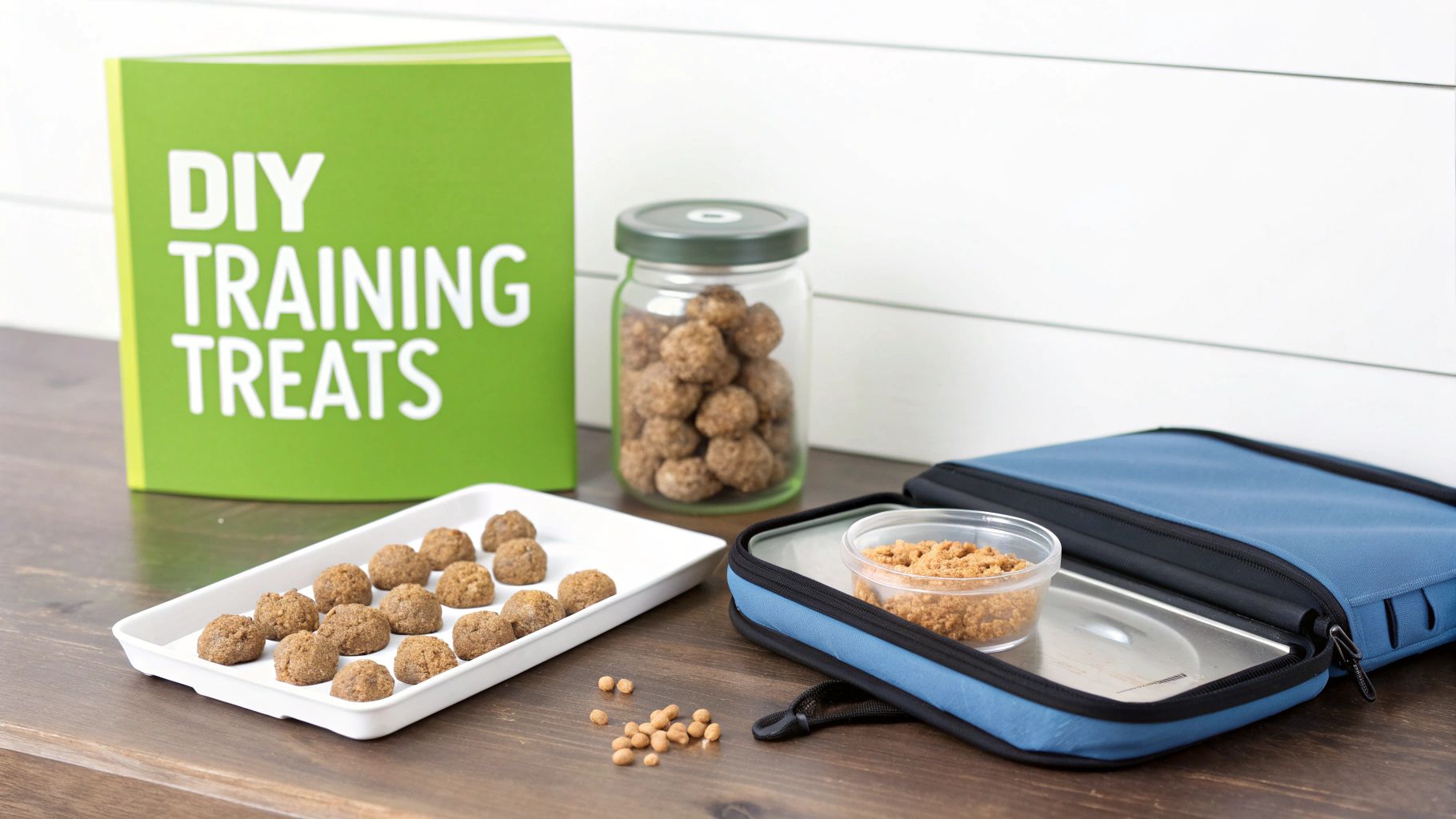
Making your own training treats is a practical way to ensure your dog receives high-quality rewards while saving money. As the chef, you have complete control over every ingredient, which is essential for dogs with allergies or specific dietary needs. Homemade treats are also often more motivating because they are fresh, aromatic, and made with whole foods.
You don't need to be a professional baker to create treats your dog will love. Many simple recipes use just a few common ingredients to produce a large batch of ideal, training-sized rewards.
Simple and Healthy DIY Treat Recipes
You can make some of the best dog treats for training using ingredients you already have. Here are two straightforward recipes that are soft, easy to portion, and packed with natural flavor.
Single-Ingredient Chicken Jerky
- Thinly slice boneless, skinless chicken breast.
- Arrange the strips on a baking sheet lined with parchment paper.
- Bake at 200°F (95°C) for 2-3 hours, until dry and firm.
- Once cool, break or cut the jerky into tiny, training-sized pieces.
Pumpkin and Oat Soft Bites
- In a bowl, mix 1 cup of plain pumpkin purée (not pie filling), ½ cup of rolled oats, and ¼ cup of water.
- Combine until a soft dough forms.
- Drop pea-sized portions of the dough onto a parchment-lined baking sheet.
- Bake at 350°F (175°C) for about 15 minutes, until firm.
These simple recipes provide healthy, whole-food rewards without the artificial preservatives or fillers found in some store-bought options.
Keeping Your Treats Fresh and Accessible
Whether your treats are homemade or store-bought, proper storage is essential. A stale treat lacks the motivating aroma and taste needed for effective training.
For preservative-free homemade treats, store them in an airtight container in the refrigerator for up to one week. To make larger batches, freeze them for several months and thaw what you need for each day's training sessions.
Proper storage isn't just about stopping treats from going bad; it's about preserving the very things that make them so motivating—that enticing smell and delicious taste. A well-stored treat is a powerful tool.
The Power of the Treat Pouch
In a training session, timing is everything. A treat pouch is an essential piece of equipment that allows you to reward your dog the instant they perform the correct behavior. Fumbling in your pockets wastes critical seconds and can confuse your dog about what action earned the reward.
A treat pouch improves your training by providing:
- Speed: Immediate access to treats for instant reinforcement.
- Convenience: Frees your hands to manage the leash and give hand signals.
- Variety: Many pouches have multiple pockets, allowing you to carry different value tiers for various training scenarios.
Using a pouch makes you a more efficient and effective trainer by ensuring every reward is delivered on time. When you're on the go, storing treats in a small, airtight container prevents them from being crushed or drying out, so you're always prepared for a training opportunity.
Got Questions About Training Treats? We've Got Answers.
Even with a solid plan, questions arise during training. Here are clear, actionable answers to some of the most common queries about using treats.
How Many Treats Can I Actually Give My Dog?
Follow the 10% rule: treats should not constitute more than 10% of your dog's total daily calorie intake. This prevents weight gain and ensures they receive balanced nutrition from their main meals.
To stay within this limit, break larger treats into pea-sized pieces. This allows you to reward your dog frequently during a session without exceeding their calorie budget. Additionally, keep training sessions short and focused—5 to 10 minutes is ideal. This maintains your dog's engagement and helps you manage their treat consumption.
Can I Just Use My Dog's Kibble?
Yes, using your dog's regular kibble is an excellent strategy for reinforcing known commands in a low-distraction environment, like your living room. It functions perfectly as a low-value reward for daily practice.
However, when you are teaching a complex new skill or working in a highly distracting area like a park, kibble will likely not be motivating enough. In these situations, you need to use a high-value treat to capture and maintain your dog's focus.
Quick tip: The "value" of a treat is totally up to your dog. What one dog considers a jackpot-level reward might just be a so-so snack to another. Always pay attention to what gets your dog genuinely excited to work.
What if My Dog Just Doesn't Care About Food?
If your dog seems uninterested in treats, don't worry. First, experiment with different high-value options like freeze-dried liver, small pieces of chicken, or cheese. You may not have found their "five-star" treat yet.
If you've tried various high-value foods and they are still unimpressed, your dog might be motivated by something else. Many dogs find a favorite toy, enthusiastic praise ("Good boy!"), or a quick game of tug-of-war just as rewarding as food. Try offering a squeak of a toy or a brief play session the moment they perform a command correctly.
At Pet Magasin, we believe training should be a fun and effective bonding experience. That's why we're dedicated to creating high-quality, safe, and affordable supplies that help you and your pet on your journey together. From travel must-haves to grooming essentials, we've got you covered. Visit Pet Magasin today to find everything your modern pet family needs.

Leave a comment