
Can Dogs Eat Potato Skins? A Guide to the Risks and Safe Alternatives

Let's get straight to the point: no, dogs should not eat potato skins. While a tiny, well-cooked piece isn't a guaranteed emergency, the risks are too high to make it a worthwhile treat.
If you're peeling potatoes, your best move is to put the skins directly into the compost or trash, well out of your dog's reach. This simple action prevents any chance of them eating something dangerous. Potato skins, especially raw or green ones, contain toxins and can be choking hazards.
Why Potato Skins Are a Bad Idea for Your Dog
It's tempting to toss your dog a scrap from the kitchen, but potato peels are a poor choice. A potato's skin acts as its natural defense, containing chemical compounds that can harm a dog’s digestive and nervous systems. This is a clear case where a simple kitchen scrap is not a safe treat.
Your actionable takeaway is to treat potato peels like any other kitchen waste that's unsafe for dogs, such as onion skins or coffee grounds. Dispose of them immediately and securely.
The Core Risks to Consider
The issues with potato skins are serious and range from immediate physical dangers to poisoning. Here are the main reasons to keep peels out of your dog’s bowl.
- Solanine Toxicity: The most significant risk. Skins, especially with green spots or sprouts, contain high levels of a toxin called solanine. Your action here is to inspect any potatoes in your home and discard any that are green or sprouting.
- Choking Hazard: Raw potato skins are tough. Dogs who gulp their food can easily choke. To prevent this, never offer tough, leathery scraps.
- Digestive Blockage: The fibrous texture is hard for dogs to digest and can cause a gastrointestinal blockage, requiring emergency surgery. The best action is prevention: keep all peels away from your dog.
When you ask, "can dogs eat potato skins?" the answer from veterinarians is a firm "no." The combination of toxins, choking risks, and digestive issues makes them a gamble you shouldn't take. Your most responsible action is to choose a safer alternative.
Understanding the Hidden Danger of Solanine
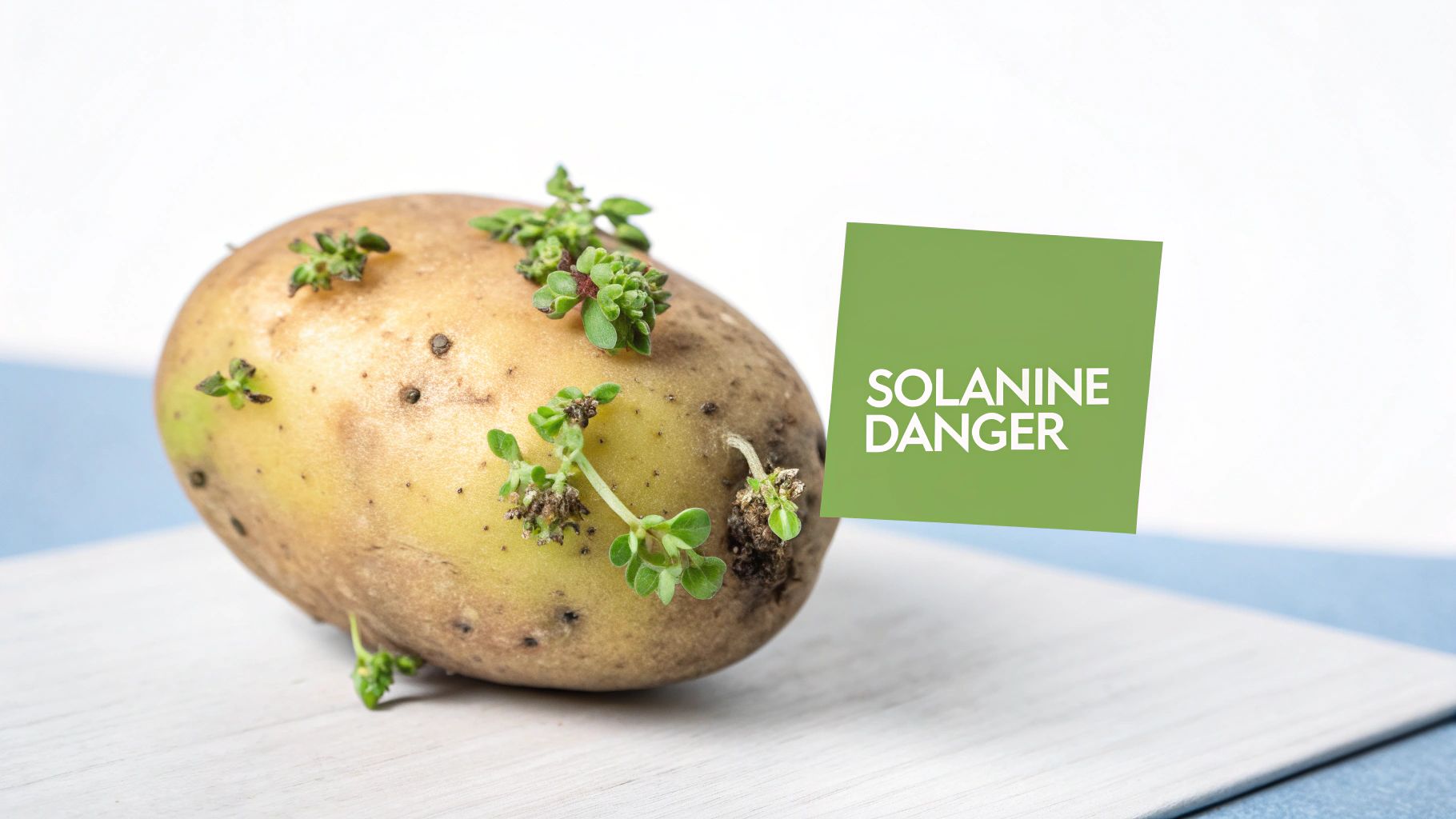
The primary reason to keep potato skins away from your dog is solanine, a natural toxin the plant uses for defense. While it protects the potato, solanine is toxic to dogs, potentially harming their nervous system and causing severe digestive upset.
This means you need to be proactive about potato storage and inspection. Storing potatoes in a cool, dark place can slow down the production of solanine. Before cooking, always check for green spots or sprouts.
Where Solanine Hides in Potatoes
Solanine is concentrated in specific parts of the potato, making them particularly hazardous. Your practical step is to always inspect potatoes and remove or discard these high-risk parts before cooking for your family, and never feed them to your dog.
Be on the lookout for these high-solanine areas:
- The Skin: The peel has a much higher concentration of solanine than the starchy interior.
- Green Spots: Any green part of a potato indicates a spike in solanine levels. Cut these areas away or discard the potato entirely.
- Sprouts (or "Eyes"): Potato sprouts contain the highest concentration of solanine and must never be fed to a dog.
One study found that 87% of household potato skins had detectable levels of solanine. The American Kennel Club confirms this danger, advising pet owners to avoid skins altogether. Cooking does not eliminate solanine, so simply boiling or baking them is not a safe solution. For more insights on why potato skins are risky for dogs on spice.alibaba.com.
Recognizing the Signs of Solanine Poisoning
If your dog accidentally eats potato skins, you need to know what symptoms to watch for. Solanine poisoning can range from mild stomach upset to severe neurological issues.
Solanine poisoning is a medical concern that affects both the digestive and nervous systems. Symptoms can escalate quickly.
Actionable Step: If you suspect your dog has eaten potato skins, especially raw or green ones, monitor them closely for these warning signs.
- Vomiting or diarrhea
- Abdominal pain and cramping
- Lethargy or loss of appetite
- Excessive drooling
- Confusion or disorientation
- Weakness
- Slow heart rate or respiratory distress
- In severe cases, tremors or seizures
If you observe any of these symptoms, call your veterinarian or an emergency pet hospital immediately. Prompt professional help is the most important action you can take.
Raw Versus Cooked Skins: What’s the Real Risk?
Before scraping leftover potato skins into your dog's bowl, understand that how they're prepared changes the danger, but doesn't eliminate it. Both raw and cooked skins present significant problems.
Raw potato skins are a definite no. Their tough texture makes them a choking and blockage risk. The immediate action is to ensure your dog never has access to raw potato peels from your meal prep.
The biggest risk with raw skins is choking. A dog can easily get a piece lodged in its throat. If they swallow it, the tough peel can clump in the intestines, causing a painful and potentially life-threatening blockage that requires surgery.
What About Cooked Potato Skins?
Cooking softens skins, reducing the choking hazard, but introduces new dangers from seasonings and toppings. The actionable insight here is to assume any "people food" is seasoned and therefore unsafe for your dog.
Potato skins served to humans are often loaded with ingredients that are toxic or unhealthy for dogs, such as:
- Butter, sour cream, and cheese (high in fat, can cause pancreatitis)
- Salt (can lead to sodium ion poisoning)
- Garlic and onion powder (toxic to dogs)
The danger of cooked skins often lies in the added ingredients. High-fat toppings can trigger pancreatitis, a painful inflammation of the pancreas, while seasonings like garlic are poisonous.
A Closer Look at the Dangers
Here is a clear breakdown of why both raw and cooked skins are unsafe. Use this to guide your kitchen habits.
- Raw Skins (Physical Threat): The key risks are choking and intestinal obstruction. Your action is to keep them out of reach.
- Cooked Skins (Chemical Threat): The danger comes from added fats, salt, and toxic seasonings. Your action is to avoid sharing seasoned foods.
- Both Types (Toxin Threat): Any skin that is green or has sprouted contains solanine. Cooking does not remove this toxin.
Vets emphasize the physical dangers of raw skins. Furthermore, symptoms of toxin ingestion, like vomiting and diarrhea, may not appear for up to 12 hours. You can get more details on potato toxicity in dogs from Fetch Pet Insurance. The only safe action is to keep all potato peels away from your dog.
The Hidden, Long-Term Threat: Oxalates and Kidney Health
Beyond immediate dangers, potato skins contain oxalates, compounds that can lead to serious long-term health issues, particularly kidney and bladder stones. While a single exposure is unlikely to cause harm, repeated feeding creates cumulative risk.
The actionable advice here is for owners of susceptible breeds to be especially vigilant about avoiding high-oxalate foods. When oxalates are ingested, they bind with calcium, forming sharp, insoluble crystals. This process can interfere with mineral absorption and lead to painful health conditions.
How Painful Stones Can Form
The most significant risk from oxalates is the formation of bladder or kidney stones (calcium oxalate uroliths). These crystals can clump together over time, growing into stones that cause urinary blockages, severe pain, and kidney damage.
Treatment often requires expensive veterinary care, including special diets or surgery. The most effective action you can take is prevention by keeping high-oxalate foods like potato skins out of your dog's diet.
The real danger with oxalates is cumulative. Each time a dog eats potato skins, it contributes to a risk that could one day result in painful kidney or bladder stones.
Why Some Breeds Are at a Higher Risk
Some dog breeds are genetically predisposed to developing calcium oxalate stones. For these dogs, avoiding high-oxalate treats is not just a suggestion—it's a critical part of their health care.
A study in the Journal of Veterinary Internal Medicine found that high-oxalate diets were linked to a 25% increased risk of developing these stones in susceptible breeds. You can read more about diet-related risks in dogs on Petcube.
If you own one of the following breeds, your actionable step is to be strict about avoiding potato skins and other high-oxalate foods:
- Miniature Schnauzers
- Lhasa Apsos
- Yorkshire Terriers
- Bichon Frises
- Shih Tzus
For these breeds, avoiding potato skins is a key preventative health measure to protect their long-term kidney and bladder function.
Safe Ways to Share Potatoes and Healthy Alternatives
While potato skins are off-limits, the flesh of a potato can be a safe treat if prepared correctly. The key is to be meticulous in your preparation to remove all potential dangers.
Think of it as preparing a special, dog-friendly version—plain, peeled, and fully cooked. This ensures they get a simple, starchy snack without the risks.
Preparing Potatoes Safely for Your Dog
Follow these steps without exception to safely share potato with your dog. Cutting corners reintroduces risks of toxins or digestive upset.
- Peel Thoroughly: Remove every bit of skin. This is the most critical step to eliminate solanine and reduce oxalates.
- Cook Completely: Boil, bake, or steam the potato until it is very soft. This makes the starches digestible. Never serve raw or undercooked potato.
- Serve It Plain: Add no salt, butter, oil, cheese, or any other seasonings. These can cause stomach upset or pancreatitis.
- Serve in Small Portions: Mash the cooked potato or cut it into small, bite-sized pieces to prevent choking. A spoonful mixed into their regular food is an appropriate treat size.
Use this simple rule: Peeled, Plain, and Cooked. Following this ensures you're providing a safe snack, not a potential health problem.
Healthy and Safe Alternatives to Potatoes
Instead of worrying about potato prep, consider offering naturally safer vegetables that provide more nutritional benefits.
Here are some vet-approved alternatives your dog might love:
- Cooked Sweet Potato: A great source of fiber and vitamins. Serve boiled or baked, with the skin removed.
- Pumpkin Purée: Use 100% pure pumpkin purée (not pie filling). It's excellent for digestive health. A spoonful can be a great food topper.
- Carrots: Raw or cooked, carrots are a great low-calorie, crunchy snack that can help with dental health.
- Green Beans: Steamed or raw green beans are a good source of fiber and vitamins.
Making informed choices about treats is crucial. For more guidance, read our article on why you should read dog treat ingredient labels. A safe home environment also includes knowing about safe houseplants for pets.
What to Do If Your Dog Eats Potato Skins
If your dog snatches potato skins, stay calm and act methodically. Your immediate response can make a significant difference.
Your first and most important action is to contact your veterinarian or a pet poison hotline immediately. Do not wait for symptoms to appear. They can provide expert advice tailored to your dog's size and the situation.
Before calling, gather this information to help the vet assess the risk quickly:
Information Your Vet Will Need
- Your Dog's Size and Weight: This helps determine the toxic dose.
- The Amount Consumed: Estimate how many skins they ate.
- The Type of Potato Skin: Specify if they were raw, cooked, green, or sprouted.
- Any Added Ingredients: Mention any salt, butter, oil, garlic, or onion on the skins.
This flowchart visually summarizes the safe way to prepare potatoes, reinforcing that skins should always be discarded.
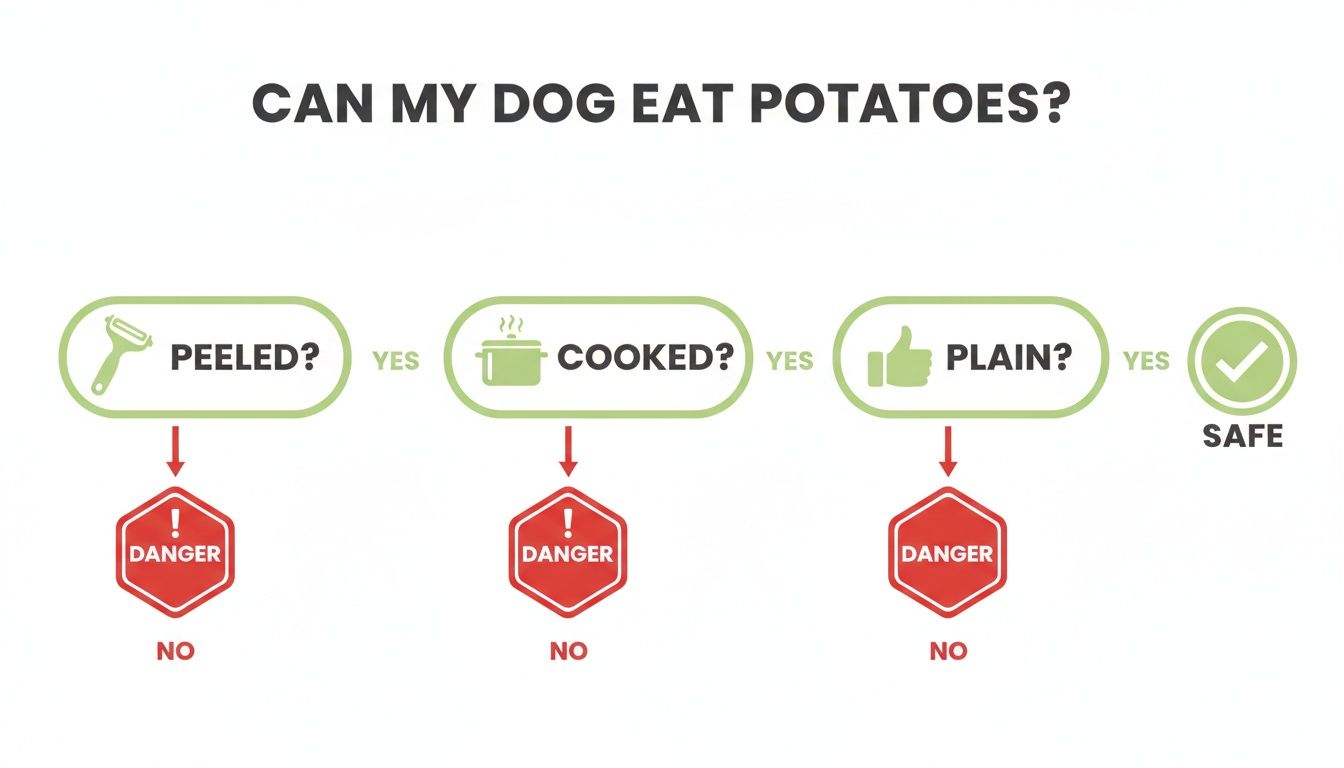
As you can see, the path to a safe potato snack for a dog—peeled, cooked, and plain—completely leaves the skins behind.
After contacting your vet and following their advice, your next action is to monitor your dog closely. Watch for any signs of poisoning or distress. Symptoms can be delayed up to 12 hours.
Your vet might recommend a temporary dog bland diet to soothe their digestive system. And in the event of an upset stomach, it helps to be prepared for the cleanup. You can even read a user's positive testimonial about doggy vomit cleanup for some practical advice.
Got More Questions About Dogs and Potatoes?
Here are quick, actionable answers to common "what if" scenarios to help you make safe choices for your dog.
What If My Dog Ate Just One Cooked Potato Skin?
If a large-breed dog eats a single, small piece of cooked skin, it's unlikely to cause a major problem.
Your action: Monitor them for signs of digestive upset like vomiting or diarrhea.
The primary dangers are with raw skins, green potatoes, or large quantities. For small dogs or those with sensitive stomachs, a precautionary call to your vet is the best course of action.
Are Sweet Potato Skins Safer for Dogs?
While sweet potato skins don't contain solanine, they are still not recommended.
The reason: They are extremely tough and fibrous, posing a significant risk for digestive upset or a dangerous intestinal blockage.
Your action: Always peel sweet potatoes before sharing the cooked flesh with your dog. For other crunchy, healthy options, you might be surprised what's safe, like apples. Learn more in our guide on whether dogs can eat green apples in our guide.
The Bottom Line: Avoid all potato skins. The digestive risk from sweet potato skins isn't worth it.
Can My Dog Eat Potato Chips or French Fries?
The answer is a firm no.
The reason: These foods are high in unhealthy fats, oils, and salt. High-fat foods can trigger pancreatitis, a painful and serious condition, while excess salt can lead to sodium poisoning.
Your action: Never share these snacks with your dog. If you want to give a potato treat, stick to the rule: plain, peeled, and cooked.
At Pet Magasin, we believe that a well-informed pet owner is a happy pet owner. For more tips on keeping your furry family safe and healthy, explore our wide range of premium pet supplies at https://www.petmagasin.com.

Leave a comment