


Can Dogs Eat Green Apples? Your Pet-Safe Guide
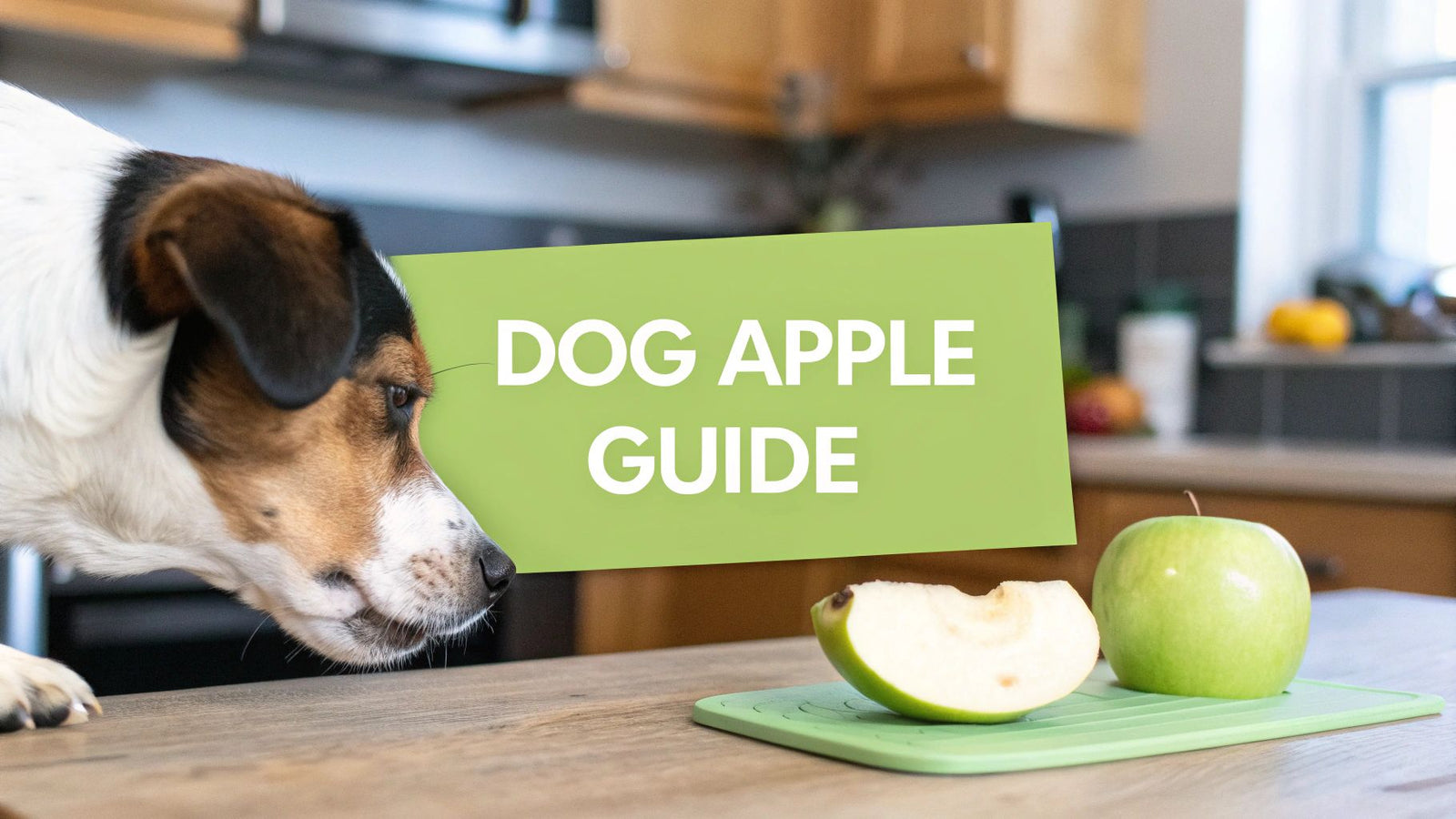
Yes, dogs can eat green apples. This crunchy, tart fruit is a fantastic, healthy treat for most dogs when prepared correctly. As a lower-sugar alternative to red apples, it's a refreshing snack you can feel good about sharing.
A Quick Look at Green Apples for Dogs
When you're wondering "can my dog have a bite of my green apple?", the answer is yes—with a few critical ground rules. This fruit is more than a tasty crunch; it’s loaded with nutrients that support your dog's health.
However, safe preparation is non-negotiable. The golden rule is to serve only the apple's flesh. You must remove certain parts that can cause serious harm.
Many dog owners choose green apples over red ones for one key reason: they have less sugar. This makes them a smarter choice, especially for dogs on a weight management plan. They deliver a satisfying crunch and hydration without the extra sweetness, fitting well into a balanced canine diet.
Why Green Apples Are a Good Choice
The benefits of green apples extend beyond being a low-calorie treat. They are a solid source of vitamins and fiber, which are essential for keeping your dog in top condition.
Here's a quick rundown of what makes them a great occasional snack:
- Actionable Insight: Digestive Health. The fiber in the apple's flesh helps regulate your dog's digestive system, promoting consistent and healthy bowel movements.
- Actionable Insight: Immune Support. They contain Vitamin C, a powerful antioxidant for the immune system, and Vitamin A, which is crucial for vision, skin, and coat health.
- Actionable Insight: Dental Benefits. The crisp texture helps scrape plaque and tartar from your dog's teeth as they chew, acting as a natural, edible toothbrush.
To help you serve them safely, use this checklist every time.
Green Apples for Dogs: A Quick Safety Check
| Apple Part | Safety Status | Action Required |
|---|---|---|
| Flesh | Safe & Healthy | Slice into bite-sized pieces to prevent choking. |
| Skin | Generally Safe | Wash thoroughly to remove pesticides. Leave it on for extra fiber if your dog digests it well. |
| Seeds | DANGEROUS | Must be completely removed. They contain trace amounts of cyanide. |
| Core | DANGEROUS | Must be completely removed. It's a serious choking and blockage hazard. |
Following these steps ensures that apple time is always a safe and happy time for your furry friend.
Vets and nutritionists often recommend green apples. Compared to red varieties, they have lower sugar and carbohydrate levels. Green apples also pack more vitamin A, which is vital for your dog’s immune system and eyesight. You can find more nutritional details over on Dogster.com.
The most important action you can take is to always remove the seeds and the core. The seeds contain small amounts of cyanide, and the tough core can easily become a choking hazard or cause an intestinal blockage. Taking a minute to prepare the apple correctly keeps snack time safe and fun.
Nutritional Benefits of This Crunchy Treat
When your dog crunches into a green apple slice, they're getting more than just a tasty snack. This simple fruit is packed with beneficial compounds that support their health. So, when asking can dogs eat green apples, the "yes" is just the beginning—understanding the benefits helps you make smarter treating choices.
One of the biggest wins is the fiber content. The fiber in a green apple acts as a prebiotic, feeding the good bacteria in your dog's gut and promoting smooth digestion. This is a simple, natural way to support their gastrointestinal health.
Green apples are also an excellent source of hydration. Composed of about 85% water, each slice gives your dog a refreshing moisture boost. This is especially useful on warm days or for dogs who don't drink enough from their water bowl.
A Closer Look at Key Vitamins and Minerals
Inside that tart green skin is a cocktail of vitamins that play a crucial role in your dog's health. Vitamin A and Vitamin C are the two key players, each providing distinct benefits.
Here’s a practical look at what these nutrients do for your dog:
- Vitamin A: Supports a strong immune system, maintains healthy vision, and ensures proper cell function. It's especially important for the development of puppies and the health of senior dogs.
- Vitamin C: A powerful antioxidant that protects your dog's cells from damage, helps reduce inflammation, and supports healthy cognitive function.
Green apples offer multiple health benefits to dogs when fed appropriately. Their blend of vitamins A, C, and K, along with dietary fiber, contributes to digestive health, hydration, and antioxidant support. You can learn more in the ultimate guide to feeding apples to your dog.
Remember to treat apples as a snack, not a meal. Moderation is essential for a balanced diet.
Lower Sugar for a Healthier Snack
A primary reason vets and owners prefer green apples is their lower sugar content. This makes them a more suitable choice for dogs that are overweight or need to maintain stable blood sugar levels.
Less sugar means you can offer a crunchy, satisfying treat without adding empty calories. For health-conscious pet parents, this tart fruit is a guilt-free way to reward your best friend.
Understanding the Risks and How to Avoid Them
Sharing a crisp green apple with your dog is a great bonding activity, but you must understand the potential risks to keep it safe. The good news is that the main dangers aren't in the apple flesh itself but in specific parts that you can easily remove with proper preparation.
The primary hazards to eliminate are the apple seeds, the tough core, and the risk of overfeeding. Each presents a different problem, but the solutions are straightforward for any dog owner.
The Hidden Danger in Apple Seeds
You've likely heard that apple seeds are off-limits, and for good reason. The seeds contain amygdalin, a compound that releases trace amounts of cyanide when chewed or digested. While the amount in a few seeds is tiny and unlikely to cause immediate poisoning, the real risk comes from long-term, cumulative exposure.
A medium-sized dog would need to ingest a very large number of seeds—around 1,000—to reach a toxic dose. However, even small, regular amounts are not advisable for their long-term health.
Actionable Step: The only 100% safe approach is to remove all of the seeds, every single time. This takes just a few seconds and completely eliminates this risk.
Why the Apple Core Is a Choking Hazard
Besides the seeds, the apple core itself is a significant hazard. It's tough and fibrous, making it difficult for dogs to chew properly. This turns it into a serious choking risk, especially for smaller dogs or any dog that tends to gulp their food.
If a dog swallows the core whole, it can cause a painful and dangerous gastrointestinal blockage. This requires an emergency vet visit, so it's a risk you must avoid entirely.
Managing Stomach Upset from Apples
Too much of any good thing can cause problems, and green apples are no exception. They are high in fiber, which is beneficial in small amounts but can lead to an upset stomach if your dog overindulges.
Watch for these signs of digestive distress:
- Diarrhea
- Vomiting
- Gas or bloating
The solution is simple: moderation. Stick to a few small slices as a special treat, not a daily meal supplement. This is a crucial rule for any snack you share with your dog. It's always beneficial to understand major reasons why you should read dog treat ingredient labels. And beyond apples, it's wise to review general pet safety tips during holidays when many human foods are present.
How to Prepare Green Apples for Your Dog
Now that you know the rules, preparing a green apple for your dog is simple. Following these steps correctly is what makes it a safe and enjoyable experience. A few moments of prep work is all it takes to turn this fruit into a perfect dog-friendly snack.
Think of it as your pre-snack safety check. These actions will eliminate all potential hazards, leaving only the nutritious fruit for your dog to enjoy.
Your Step-by-Step Preparation Guide
Properly preparing the apple is the most important part of sharing it safely. Follow these steps every time to eliminate choking risks and toxins.
-
Wash Thoroughly: Rinse the apple under cool, running water. This removes any pesticides, wax, or surface bacteria from the skin, making the entire treat safer to eat.
-
Core and De-seed Completely: This is the most critical step. Use an apple corer or a sharp knife to remove the entire core. Visually inspect the apple to ensure every single seed has been removed to avoid any risk from cyanide.
-
Slice into Appropriate Sizes: Chop the apple into bite-sized pieces suitable for your dog's size. For a small dog like a Chihuahua, use thin slivers. For a large German Shepherd, chunkier cubes are fine.
-
Decide on the Peel: The skin contains beneficial fiber, but it can be tough for some dogs to digest. If your dog has a sensitive stomach or is new to apples, peel it first. If their digestion is robust, leaving the skin on provides an extra nutritional boost.
How Much Green Apple Is Safe to Give
Knowing how to prepare the apple is half the battle; knowing how much to give is the other. For any treat, apply the 10% rule: treats should not make up more than 10% of your dog's total daily calorie intake.
Actionable Insight: Sticking to the correct portion size prevents dietary imbalances and stomach upset. Even healthy snacks contribute to weight gain if overfed, so moderation is crucial.
To make portioning easier, use this simple guide based on your dog's weight.
Daily Green Apple Serving Guide by Dog Weight
This practical table helps you determine a safe amount of apple for your dog.
| Dog Size (Weight) | Example Breeds | Recommended Daily Maximum |
|---|---|---|
| Extra Small (Under 10 lbs) | Chihuahua, Yorkie, Pomeranian | One or two small, thin slices |
| Small (11-25 lbs) | Beagle, French Bulldog, Pug | Two to three small slices |
| Medium (26-50 lbs) | Border Collie, Basset Hound | Up to a quarter of an apple |
| Large (51-90 lbs) | Golden Retriever, German Shepherd | Up to half of an apple |
Use this chart as a starting point and observe how your dog tolerates the treat. Apples should be given as an occasional snack a few times a week, not daily, to ensure their primary diet remains balanced.
Is This Treat Right for Every Dog?
While green apples are generally safe, they are not a one-size-fits-all treat. Individual health conditions matter. A crunchy snack that is healthy for a young, active dog might not be suitable for another with specific medical needs.
Before introducing green apples, consider your dog's unique health profile. This ensures you're providing a treat that supports their well-being, rather than causing a problem.
Dogs with Diabetes or Weight Concerns
If your dog has diabetes or is on a weight management plan, you must be cautious with all foods containing sugar, including fruit. Although green apples are lower in sugar than red varieties, they still contain sugar that can cause a spike in blood glucose levels.
For overweight dogs, the calories from treats can add up quickly and derail a carefully managed diet. Always consult your vet before introducing sugary fruits if your dog has diabetes or is overweight.
Key Takeaway: For dogs with diabetes or weight issues, the sugar in green apples can be problematic. Get your vet's approval before adding any new treats to their diet.
Puppies and Their Sensitive Stomachs
Puppies have developing digestive systems that can be very sensitive. Introducing new foods like green apples too quickly can lead to an upset stomach, gas, or diarrhea.
When you decide to offer apple, start with one tiny piece. Monitor your puppy for any adverse reactions over the next 24 hours. If they handle it well, you can slowly offer slightly more over time. If they do get an upset stomach, a temporary dog bland diet might help, but you should always consult your vet first.
Dogs with Dental Issues
The satisfying crunch of an apple can be painful for a dog with sensitive teeth, missing teeth, or sore gums. Forcing them to chew hard foods can worsen dental problems and cause discomfort.
Instead of a crunchy slice, offer plain, unsweetened applesauce. It provides the same flavor and nutrients in a soft, easy-to-eat form. A small spoonful is a wonderful treat for a senior dog or any pup with a tender mouth.
Simple and Safe Apple Treat Ideas
While plain green apple slices are a great snack, you can easily turn them into more exciting homemade treats. These simple recipes make snack time more engaging, especially on warm days or for use as high-value training rewards.
Frozen Apple Pupsicles
These frozen treats are hydrating, delicious, and take only minutes to prepare. They provide a long-lasting, cooling snack for a hot day.
- Blend the Ingredients: Place a few slices of cored, seedless green apple in a blender with a splash of water. For a creamier texture, add a spoonful of plain, unsweetened yogurt.
- Pour and Freeze: Pour the puree into an ice cube tray or a dog-safe silicone mold.
- Serve Chilled: Freeze for at least four hours, then offer one to your pup for a refreshing reward.
Actionable Reminder: Even healthy homemade treats must follow the 10% rule. Keep portions small to maintain a balanced diet.
Crunchy Kibble Toppers
This is one of the easiest ways to enhance your dog's regular meal. Adding fresh green apple provides a new texture and a burst of flavor that can entice even picky eaters.
Simply dice a few small, washed pieces of seedless green apple and sprinkle them over your dog’s kibble. The crunchy, juicy bits add moisture, fiber, and excitement to their dry food.
If you're short on time, you can always explore a variety of high-quality, USA-made dog treats to give your pet some safe and exciting new flavors.
Common Questions About Dogs and Apples
Even with the basics covered, specific questions often arise. Here are clear answers to some of the most common queries so you can share apples with complete confidence.
Can My Dog Eat the Apple Skin?
Yes, for most dogs, the apple skin is safe and nutritious. It contains a high concentration of fiber and antioxidants. The most important step is to wash it thoroughly to remove any pesticide residue or wax.
If your dog has a sensitive stomach, try offering a peeled slice first to see how they tolerate the fiber before giving them apple with the skin on.
Is Unsweetened Applesauce a Safe Alternative?
Absolutely. Unsweetened applesauce is an excellent option, especially for senior dogs, puppies, or any dog with dental problems that make chewing difficult. It delivers the same apple flavor and nutrients in an easy-to-eat form.
When choosing applesauce, you must check the label for two things:
- No Added Sugar: Your dog does not need the extra calories or sugar.
- No Xylitol: This artificial sweetener is extremely toxic to dogs and must be avoided at all costs.
Actionable Advice: Stick to plain, unsweetened applesauce. A small spoonful can be mixed into their food or served on its own as a delightful treat.
What Should I Do If My Dog Eats an Apple Core?
First, don't panic. A single apple core is unlikely to cause a major emergency. The primary concerns are choking or, less commonly, an intestinal blockage.
Monitor your dog closely for the next 24-48 hours. Watch for any signs of distress, such as vomiting, lethargy, abdominal pain, or difficulty defecating.
If you notice any of these symptoms, or if you have a small dog, call your veterinarian immediately. They can provide advice based on your dog's size and specific situation.
At Pet Magasin, we believe a well-informed pet owner is a happy pet owner. For more great tips on keeping your furry family members safe and healthy, and to check out our range of high-quality pet supplies, come visit us at https://www.petmagasin.com.

Leave a comment