
The Best Grooming Tools for Cats: An Actionable Guide for 2026

Picking out the best grooming tools for cats isn't about finding one magic wand. It's about assembling a personalized kit tailored to your cat's specific needs. Your core setup should include a brush suited for their coat, a de-shedder for seasonal fluff, and a reliable pair of nail clippers. This simple trio is your practical toolkit for keeping your cat healthy, comfortable, and free from painful mats.
Your Essential Cat Grooming Toolkit for 2026
Grooming is more than just aesthetics; it's a cornerstone of your cat's health and a powerful bonding activity. Think of it as creating a custom care plan. You wouldn't use the same tool for every job around the house, and the same logic applies here—different coats and temperaments require different tools.
This proactive mindset is gaining traction. The global market for cat-specific grooming products hit $2.5 billion in 2025 and is projected to climb to nearly $4 billion by 2033. This growth highlights a key trend: owners are focusing on preventative care. The payoff is clear: consistent grooming, for example, can reduce hairball formation by up to 30%. You can dig into more of these grooming market trends on DataInsightsMarket.com.
The Core Components of Your Toolkit
Every effective cat grooming kit is built on a few essential pillars. Each tool serves a distinct purpose in maintaining your cat's health and appearance.
To help you get started, use this quick guide to match the right tool to your cat's specific needs.
Quick Guide to Matching Tools with Your Cat's Needs
| Grooming Goal | Best Tool for Short Hair | Best Tool for Long Hair | Actionable Tip |
|---|---|---|---|
| Daily Upkeep & Shine | Rubber Brush or Grooming Glove | Slicker Brush or Pin Brush | Use for 5-10 minutes daily to distribute natural oils and prevent tangles from forming. |
| Shedding Control | De-shedding Tool with short teeth | De-shedding Tool with long teeth | Use once a week during shedding season; brush with short, gentle strokes, never pressing down. |
| Tangle & Mat Prevention | Metal "Greyhound" Comb | Mat Breaker or Dematting Comb | Hold the fur at the base when combing out a knot to avoid pulling on the skin. |
| Nail Maintenance | Scissor-Style Clippers | Scissor-Style or Guillotine Clippers | Trim nails every 2-4 weeks, or when you hear them clicking on hard floors. Only snip the white tip. |
This table provides a solid starting point. Your cat's reaction is the ultimate feedback, so be prepared to adjust your technique.
- Brushes: These are your daily workhorses. A good brush removes loose fur, dirt, and minor tangles while stimulating the skin. The action helps spread natural oils, resulting in a shiny, healthy coat.
- De-shedding Tools: When seasonal shedding starts, you need a specialized tool. De-shedders are designed to reach the undercoat and efficiently remove loose fur without damaging the topcoat. They are your best defense against a house coated in fur.
- Nail Clippers or Trimmers: Regular claw trimming is a safety essential. It prevents painful overgrowth, snagging on furniture, and accidental scratches.
Actionable Insight: Grooming is a dialogue. The right tools turn that conversation into a gentle, positive one, building trust with every stroke. Start with short, 5-minute sessions in a quiet room when your cat is relaxed.
Building your grooming arsenal is the first step. For more ideas, you can explore guides on essential cat grooming products for a happy, healthy home. Understanding what each tool does allows you to solve specific problems and transform grooming from a chore into a simple, effective routine.
Matching the Right Tool to Your Cat's Coat
Think of yourself as your cat's personal groomer. Just as you wouldn't use the same brush on fine, straight hair as you would on a thick, curly mane, the same principle applies to your cat. The key to a stress-free grooming session is choosing a tool designed for their specific coat type.
This goes beyond just appearances. For a long-haired cat, the right comb is your number one defense against painful mats. For a heavy shedder, the right de-shedder keeps your home and clothes fur-free. For short-haired cats, the goal is to maintain skin health and a glossy coat.
Tools for Short-Haired Cats
Cats with short, dense coats—like Siamese, British Shorthairs, or Domestic Shorthairs—are the most straightforward to groom. Their fur rarely tangles, so your primary goals are removing loose hair, distributing oils, and inspecting their skin.
A rubber curry brush, like the KONG Cat ZoomGroom, is ideal for this task. Its soft, rubbery nubs act like a magnet for loose fur while providing a gentle massage. This stimulates circulation and distributes the natural sebum that gives their coat a healthy sheen.
Grooming gloves offer another practical solution, especially for cats wary of traditional brushes. To them, it feels like a petting session. They won't realize the textured palm is efficiently removing shed fur. It’s an easy, low-stress win.
Tackling Long-Haired Coats
If you own a Persian, Ragdoll, or Maine Coon, you know their magnificent fur requires serious commitment. Their long, fine hair is prone to tangles that can quickly develop into painful mats. For these breeds, daily grooming isn't a suggestion—it's a necessity.
Your two most important tools will be a slicker brush and a high-quality metal comb.
- Slicker Brush: These have fine, bent wire bristles designed to penetrate the undercoat and gently tease out tangles. Actionable Tip: Use a light touch and always brush in the direction of hair growth. Your goal is to detangle, not to scratch their sensitive skin.
- Metal "Greyhound" Comb: This is your finishing and inspection tool. A good one has both wide and fine teeth. Start with the wide-toothed side to gently work through any remaining knots. Then, use the fine-toothed side to smooth the coat and perform a final check for hidden tangles or fleas.
Actionable Insight: For long-haired cats, prevention is everything. Think of daily combing as running a "knot detector" through their fur. Catching a small tangle today prevents a painful, matted mess tomorrow.
Managing Double-Coated Breeds
Cats with double coats, such as Siberians or Norwegian Forest Cats, possess a soft, dense undercoat for insulation and a longer, weather-resistant topcoat. These breeds are notorious shedders, especially during seasonal changes in spring and fall.
Your mission is to remove the dead undercoat without damaging the protective guard hairs. This is where a de-shedding tool becomes indispensable. These tools feature specially designed teeth that pass through the topcoat to grab and remove loose fur from beneath.
When using a de-shedding tool, stick to short, gentle strokes. You'll be amazed at the amount of fur you remove. This directly reduces shedding in your home and helps prevent hairballs. A single 10-minute session once a week during peak shedding season can make a massive difference.
This decision tree simplifies the process of choosing your starting tool based on your cat's primary grooming need.
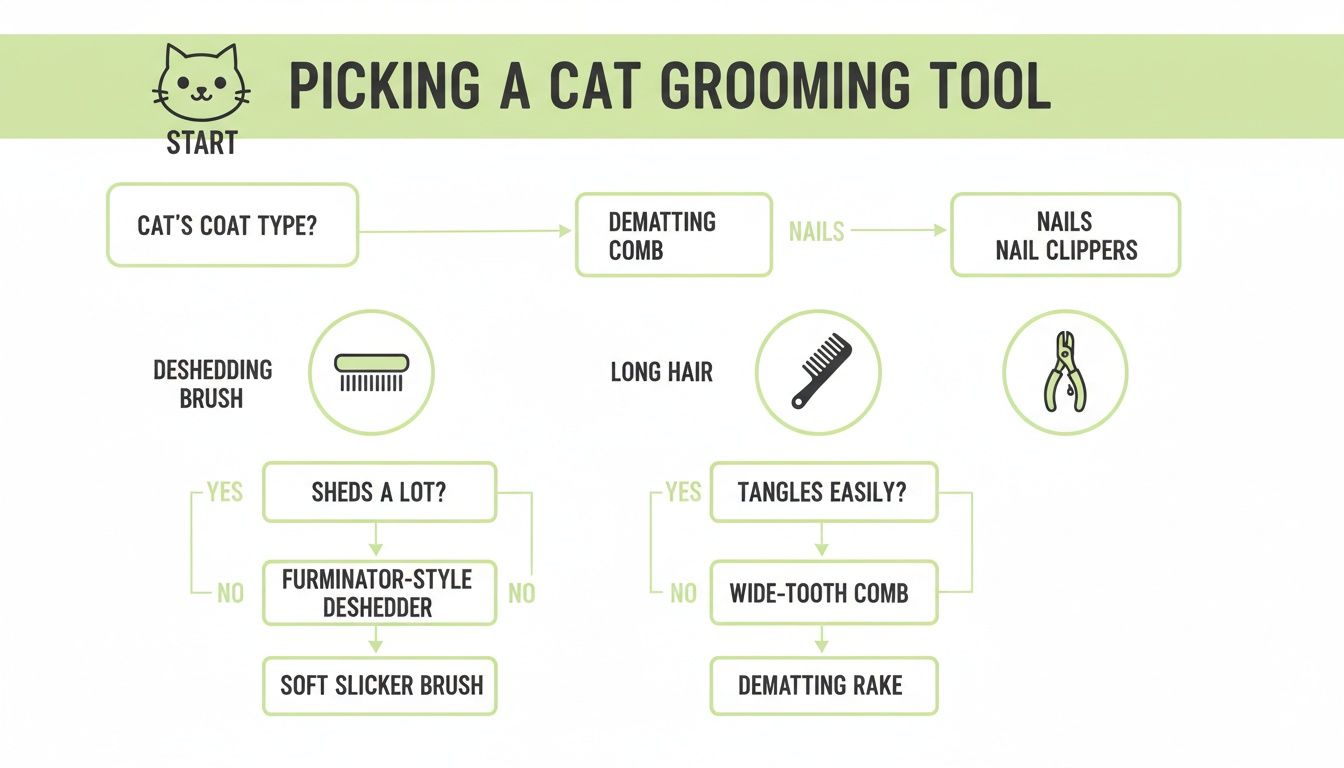
The flowchart guides you from a starting point—like coat type or a problem like matting—directly to the most effective tool. Matching the tool to the task makes grooming more comfortable for your cat and more efficient for you.
Brushes, Combs, and De-Shedders: Your Grooming Arsenal
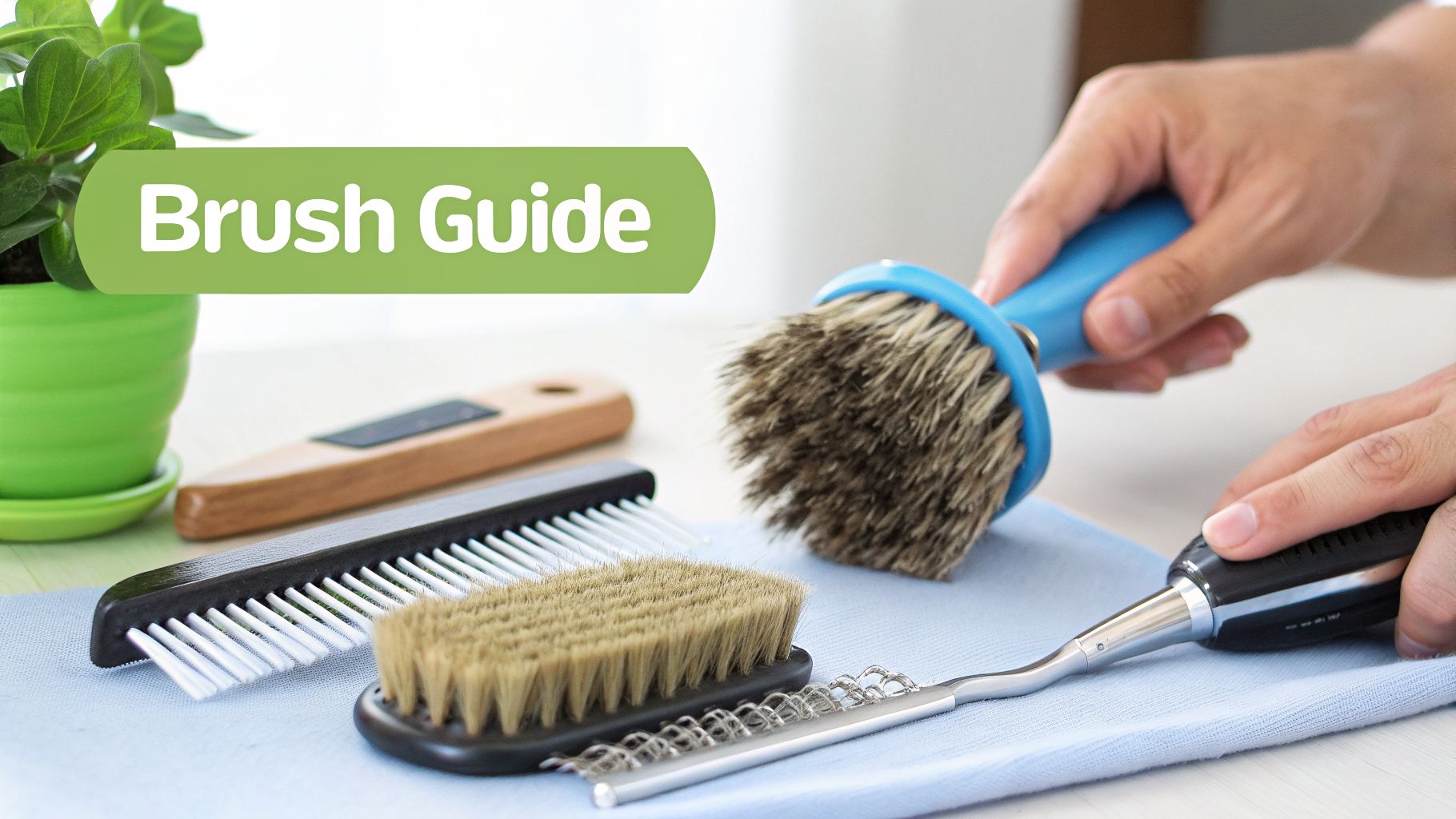
Now that you've identified your cat's coat type, it's time to select your tools. Brushes, combs, and de-shedders form the core of your grooming kit. Understanding how to use each one correctly is what elevates grooming from a chore to a craft, resulting in a healthy, happy, and tangle-free cat.
Each of these tools has a specific job. A brush is for daily upkeep, a comb is for targeted detangling, and a de-shedder is for managing seasonal shedding. Using the wrong one is ineffective and can make your cat uncomfortable.
The Brush: Your Go-To for Daily Maintenance
Brushes are your first line of defense against light shedding and minor tangles. Use them regularly to smooth the coat, distribute natural oils, and provide a relaxing massage.
Slicker Brushes: The Tangle Tamers
For owners of medium or long-haired cats, a slicker brush is essential. These brushes feature a flat head covered in fine, short wire bristles bent at an angle.
This angled design is crucial. It allows the brush to penetrate the coat and gently remove loose fur and small knots before they escalate into mats. The secret is to use a light hand—glide the brush through the fur, don't scrape the skin.
- Best For: Medium to long-haired cats (like Ragdolls and Maine Coons).
- Pro Tip: Always brush in the direction of hair growth using short, gentle strokes. Let the bristles do the work; avoid applying downward pressure.
Bristle and Pin Brushes: The Finishing Touch
Bristle brushes have soft, natural or synthetic bristles, making them perfect for short-haired cats. They're also excellent for a final pass on long-haired cats to smooth the topcoat, remove surface dust, and enhance shine.
Pin brushes, which resemble human hairbrushes, have pins with soft, rounded tips. They are a gentler alternative to slicker brushes, making them a good choice for cats with sensitive skin or for fluffing a long coat after detangling.
Combs: The Knot-Busting Specialists
While brushes handle daily maintenance, combs are your precision instruments. They are the best tools for tackling stubborn knots and conducting a thorough coat inspection.
Actionable Insight: Think of a comb as a detective for your cat's fur. It goes deeper than a brush, searching for clues—like burrs, fleas, or the beginning of a mat—that a quick brushing might miss.
Detangling Combs: The Mat Warriors
If you have a long-haired cat, a sturdy metal detangling comb (often called a "greyhound" comb) is indispensable. Most feature wide-spaced teeth on one end and finer teeth on the other.
Always start with the wide-toothed side to gently break apart any knots. Actionable Tip: Hold the fur at its base, close to the skin, to prevent painful pulling. Once the knot is clear, switch to the fine-toothed side to smooth the area.
- Best For: Long-haired and double-coated breeds prone to matting.
- Pro Tip: If you encounter a tough mat, resist the urge to yank the comb through it. First, try to gently pull the knot apart with your fingers, then re-engage with the comb. You can learn more about handling different fur types in our guide to choosing the best cat hair brush.
Flea Combs: The Tiny Inspectors
Even if you have an indoor-only cat, a flea comb is an incredibly useful diagnostic tool. Its teeth are packed tightly together, making it perfect for trapping fleas, flea "dirt" (feces), and eggs. A quick session with a flea comb provides peace of mind or an early warning of a pest problem.
De-Shedding Tools: Taming the Undercoat
Finally, we have the heavyweights of shedding season: de-shedding tools. These are not everyday brushes. They are specifically engineered to extract loose, dead fur from your cat's undercoat without cutting or damaging the topcoat.
These tools are exceptionally effective, often removing a surprising amount of fur in a single session. For double-coated cats like Siberians or Norwegian Forest Cats, they are a game-changer, improving air circulation to the skin and dramatically reducing the amount of fur on your furniture and in hairballs.
How to Use a De-Shedder the Right Way:
- Prep the Coat: Only use a de-shedder on a clean, dry, and completely tangle-free coat. Never use it on matted fur, as this will cause pain.
- Use Gentle Strokes: Use smooth, gentle strokes, moving in the direction of hair growth.
- No Pressure Needed: Do not press down. The weight of the tool is sufficient to engage the undercoat.
- Keep it Brief: Limit sessions to 10-15 minutes, once or twice a week only during heavy shedding periods. Overuse can cause skin irritation.
By understanding the specific function of each brush, comb, and de-shedder, you can select the right tools for your cat. This targeted approach makes grooming less of a struggle and more of an effective, gentle bonding experience.
More Than Fur: Paws, Claws, and Overall Health
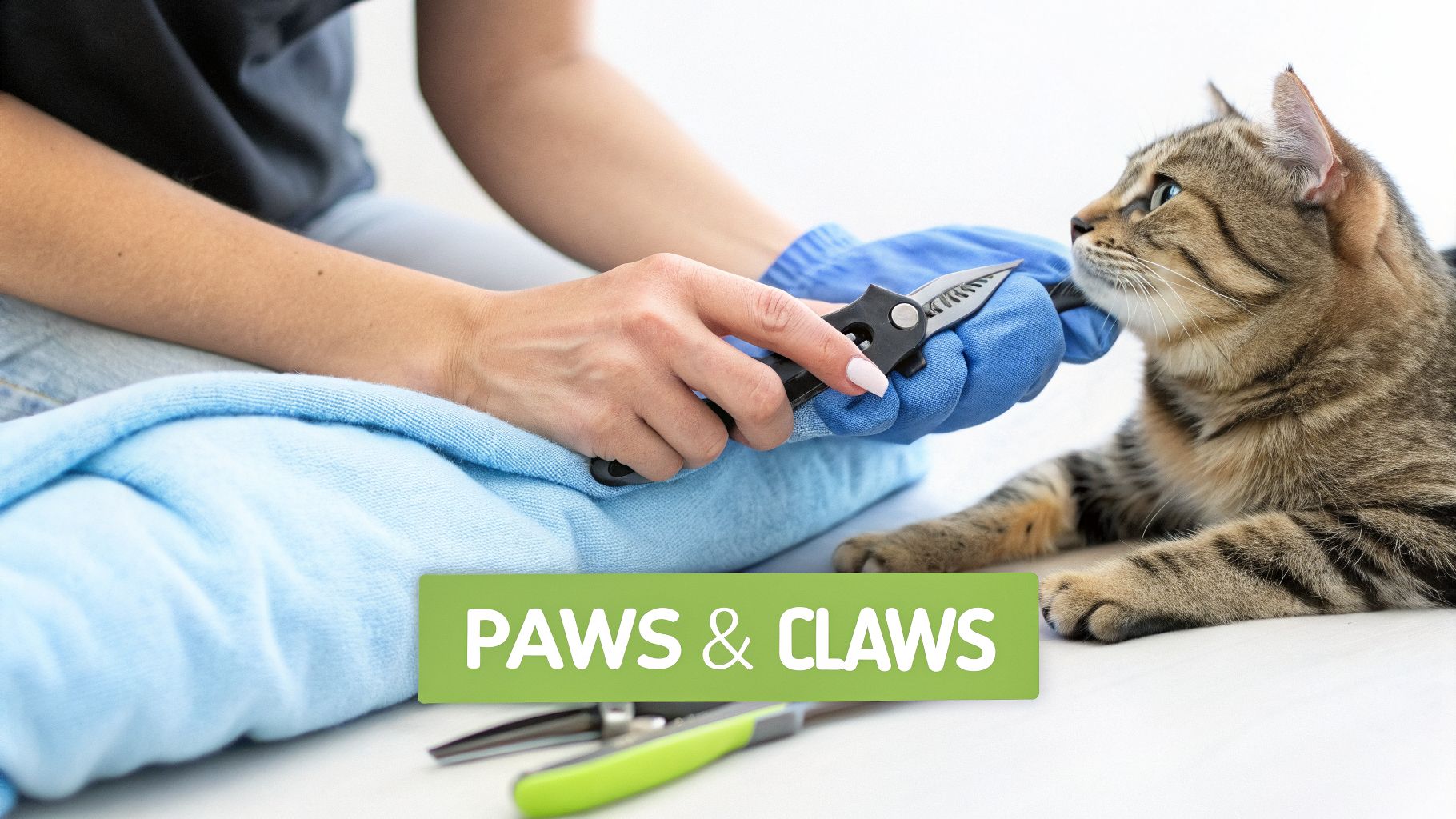
While brushes often steal the spotlight, a truly comprehensive grooming routine addresses the whole cat—from claws to cleanliness. Mastering these additional tasks not only prevents health issues but also builds profound trust, showing your cat you can be relied upon for their complete care.
This holistic view of grooming is now mainstream. A significant 67% of pet owners view regular grooming as integral to their pet's health, not just a cosmetic luxury. The data supports this: simple, regular nail trims can reduce the risk of paw injuries by up to 40%. You can discover more insights about pet grooming industry trends that underscore this evolution in pet care.
The Art of the Purrfect Manicure
Keeping your cat’s claws trimmed is one of the most impactful actions you can take for their well-being. Overgrown nails can curve back into the paw pads, causing intense pain and infection. Long nails also snag on carpets and furniture and can inflict nasty accidental scratches.
The key is to use the right tool and learn the proper technique. For cats, two main clipper styles are available.
- Scissor-Style Clippers: These resemble small scissors with curved notches for the nail. They offer excellent control and are easy to handle, making them a top choice for both beginners and experienced owners. They provide a clean, decisive snip.
- Guillotine-Style Clippers: With this type, you insert the nail through a small ring. Squeezing the handles slides a blade across to trim the tip. They are effective, but blade quality is paramount—a dull blade can crush the nail rather than cutting it cleanly.
Actionable Insight: Mastering the nail trim is a true act of love. It prevents pain, protects your home, and shows your cat that you can be trusted with their most sensitive spots.
The golden rule of nail trimming is to only snip the white, translucent tip. Stay far away from the pink part, called the quick, which contains blood vessels and nerves. Cutting the quick will cause pain and bleeding. For a detailed tutorial, review our guide on choosing and using nail clippers for cats.
Grooming Gloves: The Gentle Alternative
What's the solution for a cat that flees at the sight of a brush? For anxious felines, a grooming glove can be a lifesaver. These gloves look ordinary but are covered in soft, flexible rubber nubs.
From your cat's perspective, they're simply enjoying a long petting session. Meanwhile, you're secretly lifting away loose fur, dander, and dirt. It’s an excellent, low-stress method to introduce a nervous cat to the concept of grooming.
To Bathe or Not to Bathe
Cats are notoriously fastidious groomers, so full baths are rarely necessary. However, if they get into something sticky, oily, or potentially toxic, you'll need to intervene.
Here's how to handle those messy moments:
- Targeted Clean-Ups: For a small smudge, a cat-safe grooming wipe is your best option. They are gentle and perfect for quick spot-cleans on the face or paws.
- Spot Cleaning: For a larger soiled area that won't brush out, a waterless or no-rinse shampoo is the solution. You simply spray or foam it on, work it into the fur, and then wipe or brush it away. No bathtub needed.
- The Full Bath: When a major mess occurs, a real bath may be unavoidable. Always use a shampoo formulated specifically for cats. Human shampoo has the wrong pH balance and can strip their skin of essential oils, leading to dryness and irritation.
Maintaining a consistent grooming routine not only benefits your cat's health but also helps keep your home cleaner. For an extra layer of defense against shedding and tracked-in dirt, consider using pet friendly couch covers to keep your furniture fresh.
Creating a Stress-Free Grooming Routine
Having the right tools is only half the battle; the real secret to success is getting your cat to cooperate. The goal is to transform a potentially stressful chore into a simple, positive ritual. This means creating an environment where your cat feels safe and relaxed.
Timing is critical. The ideal moment for grooming is when your cat is already calm and sleepy, perhaps after a meal or while dozing in a sunbeam. Attempting to groom a cat that is energetic or agitated is a recipe for struggle.
It's clear why at-home grooming is so popular. While the global pet grooming market is growing, expected to jump from $7.25 billion in 2025 to $7.75 billion in 2026, many owners are taking a hybrid approach. While 72% of cat owners may use a professional groomer, 65% also perform grooming at home to save money and strengthen their bond. Mastering the basics at home can save you the $150 average annual spend on professional services. You can find more details about these market growth forecasts on Business Wire.
Setting the Stage for Success
To encourage your cat to accept grooming, create a calm atmosphere. Choose a quiet room away from household traffic and lay down a soft towel or blanket. This dedicated spot will become a signal to your cat that it's time for special, one-on-one attention.
Before the first stroke, let your cat investigate the tool on their own terms. Simply place the brush or comb on the floor and allow them to sniff or rub against it. This simple action removes the fear of the unknown and demystifies the object.
A Step-by-Step Grooming Session
When your cat appears relaxed, you can begin the session. The key is to keep it short and positive, especially in the beginning.
- Start with Petting: Begin by stroking your cat with your hands, focusing on areas they enjoy, like their cheeks or under the chin.
- Introduce the Tool Slowly: After a minute of petting, switch to the grooming tool. Make just a few gentle strokes, always in the direction of hair growth.
- Use Immediate Positive Reinforcement: The moment you finish the strokes, offer a high-value treat and verbal praise. This forges a powerful association: brushing leads to rewards.
- Expand Gradually: Once your cat is comfortable with this routine, you can slowly extend the duration of the brushing sessions and move to other areas like their back and sides.
- Incorporate Paws and Ears: After brushing is routine, gently handle their paws and peek inside their ears, always following up with praise and a reward.
Overcoming Common Challenges
What if your cat still bolts at the sight of the brush? Don't give up. This is where your patience becomes paramount.
Actionable Insight: The secret to grooming a reluctant cat is to make it their idea. Start with sessions so short they barely notice—literally one or two strokes—and build from there. The goal isn't a perfectly groomed cat on day one; it's a happy and trusting cat on day one hundred.
If your cat rejects traditional brushes, a grooming glove can be a fantastic alternative. To them, it feels like an extended petting session. If general anxiety is the root issue, creating a calmer home environment can make a significant difference. You can check out our guide on how to calm an anxious cat for tips that extend beyond grooming.
By making every session predictable, positive, and rewarding, you will gradually transform grooming into an activity you both can enjoy.
Your Cat Grooming Questions Answered
Grooming a cat can often feel like solving a furry, purring puzzle. Even with the best tools and intentions, questions will inevitably arise. Whether you're a new cat owner or a seasoned enthusiast, encountering a challenge is completely normal.
Use this section as your go-to guide for those tricky moments. We've compiled answers to the most common grooming questions to provide quick, actionable solutions.
How Often Should I Groom My Cat?
There's no one-size-fits-all answer—frequency depends on your cat's coat type and lifestyle. However, these are solid guidelines to start with.
Cats with long, flowing fur, like Persians or Ragdolls, require brushing daily. Their luxurious coats are prone to tangles and mats. A quick daily session is your most effective strategy for preventing painful knots, which are much harder to remove than to prevent.
For short-haired cats, brushing once or twice a week is generally sufficient. This helps control shedding, distributes natural skin oils for a healthy shine, and removes dander and dirt.
Actionable Tip: During peak shedding seasons (typically spring and fall), you should increase brushing frequency for all coat types. This will help manage the "fur-nado" in your home and reduce the formation of hairballs.
Beyond brushing, inspect your cat's claws weekly. A good rule of thumb is to trim them every 2-4 weeks. If you hear a "click-clack" sound when they walk on hard floors, it's definitely time for a trim.
What Is the Best Way to Introduce Grooming to a Scared Cat?
With a nervous cat, patience is your most critical tool. The goal is to slowly reframe grooming from a scary event into a pleasant, rewarding experience. Never force the interaction, as this will only reinforce their fear.
Follow this actionable game plan:
- Allow Investigation: Start by simply leaving the grooming tool on the floor. Let your cat sniff it, bat at it, and become familiar with it on their own terms, with no pressure.
- Keep It Extremely Short: Your first "grooming" session should last only a few seconds. A couple of gentle strokes with a soft brush or grooming glove is enough.
- Provide an Immediate Reward: The moment you finish, give them a high-value treat they absolutely love. This creates a powerful positive association in their mind: brushing = delicious snack.
- Choose the Right Moment: Always initiate grooming when your cat is already calm and relaxed, such as when they are dozing in the sun. Avoid times when they are playful, hungry, or agitated.
- Build Up Incrementally: Once your cat is comfortable, slowly add another stroke or two to each session. With time and consistency, you can work your way up to a full grooming routine.
Can I Use Dog Grooming Tools on My Cat?
This is strongly discouraged. While it may seem convenient, cat and dog skin and fur are fundamentally different, and using the wrong tools can cause significant problems.
A cat’s skin is much thinner and more sensitive than a dog’s. Brushes designed for dogs, especially heavy-duty tools like undercoat rakes, often have teeth that are too sharp or coarse for a cat. Using them can easily cause scratches, skin irritation, or a painful condition known as "brush burn."
Actionable Insight: Using a dog brush on a cat is like trying to polish fine wood with coarse sandpaper. You might remove some debris, but you're far more likely to scratch and damage the delicate surface underneath.
For the safety and comfort of your feline friend, always invest in tools designed specifically for cats. These products feature softer bristles, rounded tips, and safer designs to protect their sensitive skin.
How Do I Clean My Cat Grooming Tools?
Keeping your tools clean is non-negotiable for hygiene and performance. A dirty tool won't work effectively and can harbor bacteria. A little routine maintenance goes a long way.
Follow these simple, actionable steps:
- After Every Use: Remove all trapped fur from your brushes and combs. You can pull it out with your fingers or use the teeth of another comb to clear the bristles.
- For a Deeper Clean: Every few weeks, wash your tools thoroughly. Use warm water and a small amount of gentle soap to cut through any buildup of skin oils, dander, and dirt.
- Rinse and Dry Completely: Ensure all soap is rinsed off, then allow the tools to air dry completely before storing them. This is crucial for preventing rust on any metal components.
- Sanitize Clippers: Make it a habit to wipe your nail clippers with rubbing alcohol before and after each use. This keeps them sanitary and ready for the next trim.
Store your clean, dry tools in a dedicated container, and they will remain effective and last for years.
At Pet Magasin, we believe that the right tools make all the difference in caring for your beloved pet. Explore our collection of high-quality, cat-friendly grooming supplies designed for safety, comfort, and effectiveness.

Leave a comment