


Best Dog Shampoo for Skin Allergies: A Practical Guide to Soothing Relief

When your dog can't stop scratching, the right shampoo is your first line of defense. For skin allergies, that means choosing a hypoallergenic or medicated formula. These are specifically designed to be gentle and effective, packed with soothing ingredients like oatmeal or aloe vera while leaving out harsh chemicals, sulfates, and perfumes that can make irritation worse.
Finding Relief for Your Dog’s Itchy Skin
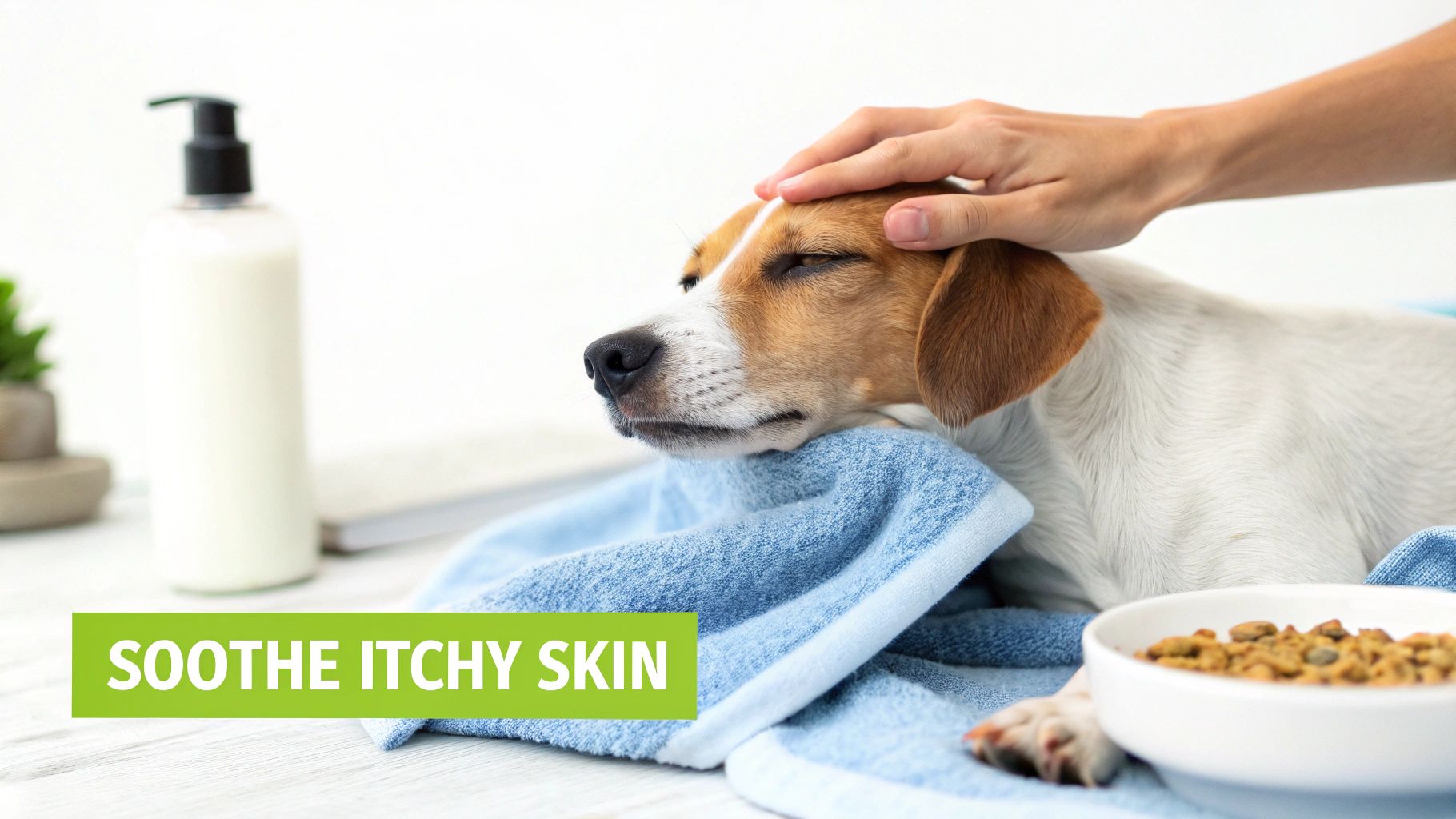
It’s tough watching your dog suffer from constant scratching. That relentless cycle of licking, chewing, and whining is a clear sign that their skin is inflamed and they need your help to find relief.
While skin allergies are common, the solution often starts with a simple change: their shampoo. This guide will provide actionable steps to help you solve the problem. We’ll go beyond just listing products to help you identify the cause of the itch, choose the right shampoo, and use it effectively for lasting comfort.
The Growing Need for Gentle Solutions
If you're dealing with this, you're not alone. Skin allergies affect a huge number of dogs, which has created a massive demand for grooming products that are both effective and gentle.
Market data confirms this trend. The global pet shampoo market is expected to jump from USD 616.9 million in 2025 to over USD 1,084.1 million by 2035. What’s driving this? A growing focus on pet skin sensitivities. It's predicted that natural and organic shampoos will grab a dominant 55.0% market share in 2025.
This shift makes one thing clear: pet owners are actively searching for the best dog shampoo for skin allergies, and they're prioritizing formulas that are safe and effective.
Actionable Insight: Choosing the right shampoo isn’t just about cleaning your dog. It’s about restoring their skin’s natural barrier, calming inflammation, and washing away allergens without introducing new irritants.
What This Guide Will Cover
This guide is designed to give you the confidence to select a shampoo that will genuinely help your dog. We'll provide practical steps on:
- How to identify the specific signs of skin allergies, not just the obvious scratching.
- How to read an ingredient label to find beneficial ingredients and avoid harmful ones.
- How to choose between medicated and hypoallergenic shampoos for your dog's specific needs.
- How to master your bathing technique to maximize relief and prevent irritation from returning.
For another great resource on this topic, check out The Ultimate Guide to Dog Shampoo for Allergies. By the end of this guide, you'll have the practical knowledge to bring your dog much-needed relief.
Decoding the Signs of Canine Skin Allergies
The first step to providing relief is accurately identifying if your dog has skin allergies. While scratching is an obvious sign, several subtle clues can point to an allergic reaction. Spotting these early allows you to intervene before a minor issue becomes a major problem.
Think of your dog’s immune system as an "allergy bucket." A few triggers—a bit of pollen, a certain food ingredient—might not cause an issue. But as the bucket fills with different allergens, it eventually overflows. That overflow is the allergic reaction you see: constant scratching, raw skin, and an unhappy dog.
Beyond the Scratch: The Subtle Signs
You know your dog best. Keep an eye out for changes in their behavior or appearance, as the signs of skin allergies often go beyond a simple itch.
Here are the key symptoms to look for:
- Obsessive Licking or Chewing: Is your dog constantly focused on their paws, groin, or the base of their tail? This is a self-soothing behavior that signals deep-seated irritation.
- Red, Inflamed Skin: Check under their fur, especially in their armpits, on their belly, and between their paw pads. Skin that looks pink or red is a clear sign of inflammation.
- "Hot Spots": Officially called acute moist dermatitis, these are painful, raw areas of skin that can appear suddenly. They often grow quickly due to constant licking and chewing.
- Chronic Ear Infections: If your dog frequently shakes their head, scratches their ears, or has a waxy buildup, allergies are a likely culprit. The skin inside the ear canal is just as susceptible to allergic reactions.
The Three Main Allergy Culprits
To effectively manage your dog's skin problems, you must identify what’s filling their allergy bucket. Canine skin allergies typically stem from one of three sources.
-
Environmental Allergens: This is the most common cause. Triggers include pollen, grass, mold spores, and dust mites. These allergies are often seasonal, flaring up in the spring or fall.
-
Food Sensitivities: An ingredient in their food could be the problem. Common culprits include proteins like beef, dairy, wheat, and chicken. If the itching is year-round and accompanied by digestive issues, a food sensitivity may be the cause. Our guide on chicken-free dog food explores this common issue.
-
Contact Allergens: This occurs when your dog's skin touches an irritant. It could be flea saliva (flea allergy dermatitis), chemicals in floor cleaners, or the fabric of their bed.
Actionable Insight: Become a health detective for your dog. Connect the symptoms to potential triggers. Did the itching start after a walk in a grassy field? Or after you switched to a new food? These observations are crucial for developing a solution.
Choosing the best dog shampoo for skin allergies is an excellent way to soothe their skin, but it's most effective when you also address the source of the problem. This knowledge provides a solid game plan for minimizing allergens in your dog's environment.
How To Read A Dog Shampoo Label
The pet care aisle can be confusing, with dozens of bottles claiming to cure your dog's itchy skin. The secret to finding an effective shampoo is not on the front label—it's in the ingredient list on the back. Learning to decode that list is the best way to choose a product that is both safe and effective.
Think of it like reading a food label for yourself. Once you know how to read labels like a pro, you can make a confident choice for your pet.
Pet owners are becoming more informed, and it's making a difference. Demand for high-quality shampoos for skin allergies is high, with natural and organic options leading the market. As more pets suffer from skin issues, owners are wisely choosing gentle, plant-based formulas over harsh chemicals. In fact, dogs account for the largest portion of the global pet grooming market, holding a 52% revenue share in 2023.
Allergies in dogs can be complex, with triggers coming from multiple sources, as this chart shows.
This highlights how many factors can contribute to your dog's discomfort. The last thing you want is a shampoo that adds another potential irritant to the mix.
Ingredients That Heal And Soothe
When scanning a label, your first task is to identify beneficial ingredients. These are the key components known for their calming, moisturizing, and anti-inflammatory properties that help restore your dog's stressed skin.
Look for these key ingredients:
- Colloidal Oatmeal: This is a fine oat powder that forms a protective barrier on the skin, sealing in moisture and stopping itching. It is a gold-standard ingredient.
- Aloe Vera: Known for its cooling properties, aloe is a natural soother. It helps calm red skin and promotes healing, especially on raw spots from scratching.
- Chamomile: This gentle flower extract soothes irritated skin directly at the source.
- Shea Butter and Coconut Oil: These natural fats are excellent moisturizers. They help repair a dry, cracked skin barrier, making it more resilient against environmental triggers.
Irritants You Must Avoid
Just as important as finding the right ingredients is knowing which ones to avoid. Many common additives can strip your dog's skin of its natural oils, worsening inflammation and irritation.
Steer clear of these common offenders:
- Sulfates (SLS/SLES): Sodium lauryl sulfate creates a rich lather but is also a harsh detergent that strips the skin's protective oils, leaving it dry and vulnerable.
- Artificial Fragrances and Dyes: Synthetic fragrances are a common cause of skin irritation in dogs. Artificial colors are purely cosmetic and can also trigger a reaction. Opt for fragrance-free products or those scented with natural essential oils.
- Parabens: These chemical preservatives can be absorbed through the skin and have been linked to allergic reactions.
- Alcohol: Isopropyl alcohol is incredibly drying and will sting inflamed skin, making the problem worse.
- Phthalates: These chemicals are often used to make fragrances last longer but are known skin irritants.
Some specific allergies, like a reaction to flea saliva, require a more targeted approach. If you're dealing with flea allergy dermatitis, you might want to check out our guide on the best flea shampoo right here: https://www.petmagasin.com/blogs/news/best-flea-shampoo.
To simplify your shopping, use this quick-reference guide.
Dog Shampoo Ingredient Cheat Sheet
| Healing Ingredients (Look For) | Why It Helps | Harmful Irritants (Avoid) | Why It's Harmful |
|---|---|---|---|
| Colloidal Oatmeal | Soothes itchiness and creates a protective barrier. | Sulfates (SLS/SLES) | Harsh detergents that strip natural skin oils. |
| Aloe Vera | Cools, calms inflammation, and promotes healing. | Artificial Fragrances | A very common trigger for skin allergies. |
| Chamomile | A natural anti-inflammatory that reduces skin irritation. | Parabens | Chemical preservatives that can cause reactions. |
| Shea Butter / Coconut Oil | Deeply moisturizes and repairs a damaged skin barrier. | Alcohol | Dries out skin and stings raw, irritated spots. |
| Hydrolyzed Protein | Helps skin retain moisture and improves elasticity. | Artificial Dyes | Unnecessary additive that can cause allergies. |
Use this table as your shopping shortcut. The best choice is almost always the shampoo with a shorter ingredient list full of recognizable, natural ingredients.
Choosing Between Medicated and Hypoallergenic Shampoo
When your dog's skin is irritated, the pet shampoo aisle presents two main options: "medicated" and "hypoallergenic." Understanding the difference is crucial for providing effective relief. Choosing the wrong one can waste money and may even worsen the irritation.
Here's how to differentiate them: Hypoallergenic shampoo is a gentle, daily-use cleanser for sensitive skin. Its purpose is to clean, moisturize, and soothe without harsh ingredients. Medicated shampoo is a targeted treatment for specific skin infections, similar to an antibiotic cream.
The demand for these specialized formulas has grown significantly. Skin allergies are a major driver in the pet care industry, and the medicated dog shampoo market alone is projected to reach USD 500 million by 2025. Online retailers have made these products widely accessible, as noted in these pet shampoo market trends on businessresearchinsights.com.
When to Choose a Hypoallergenic Shampoo
For general sensitivity and mild itchiness from allergies, start with a hypoallergenic shampoo. These formulas are designed for maintenance and prevention, focusing on what they leave out as much as what they include.
Their goal is to gently wash away environmental triggers like pollen and dust without stripping the skin's natural oils. If your dog gets itchy during certain seasons or has sensitive skin after baths, a hypoallergenic formula is the ideal choice.
Actionable Insight: Use hypoallergenic shampoos for managing sensitivity. They are proactive, gentle, and designed to prevent flare-ups by avoiding common irritants like sulfates and fragrances while using soothing ingredients like oatmeal and aloe.
Understanding Medicated Shampoo
Medicated shampoos are clinical treatments containing active pharmaceutical ingredients to address specific skin conditions that often arise from allergies. Constant scratching can break the skin, allowing bacteria or yeast to cause a secondary infection.
That's when you need a medicated formula. These shampoos are not intended for regular use unless prescribed by a veterinarian.
Common active ingredients in medicated shampoos include:
- Chlorhexidine: A powerful antiseptic used to treat bacterial skin infections (pyoderma).
- Ketoconazole or Miconazole: Antifungal agents that combat yeast infections, which can cause a greasy coat and a distinct odor.
- Salicylic Acid or Benzoyl Peroxide: Ingredients used to treat conditions like seborrhea, which causes oily and flaky skin.
Using a medicated shampoo unnecessarily can be counterproductive. The active ingredients can be drying and may irritate skin that is sensitive from allergies but not infected.
The Vet Is Your Best Guide
How do you choose the right type? The decision depends on the root cause of the problem.
If you see signs of infection—such as pimples, oozing sores, a foul odor, or greasy skin—it's time to consult your vet. They can perform tests to determine if a bacterial or fungal infection is present and recommend the appropriate medicated shampoo.
For dogs with straightforward itching, redness, and irritation without signs of infection, a high-quality hypoallergenic shampoo is the best starting point. It provides gentle, immediate relief while you work to identify the underlying cause of the allergies. Choosing the best dog shampoo for skin allergies means matching the product to your dog’s specific needs.
The Right Way to Bathe a Dog with Sensitive Skin
Choosing the best dog shampoo for skin allergies is the first step, but your bathing technique is what makes it effective. The right method ensures the shampoo’s soothing ingredients work properly to provide relief.
An incorrect technique can worsen skin irritation. Treat your dog's skin like a delicate fabric—avoid hot water and aggressive scrubbing. A gentle, patient approach can turn a bath into a healing treatment.
Step-By-Step Bathing for Allergy Relief
A calm, methodical approach is key. Rushing the process can leave behind soap residue or wash away active ingredients before they can work.
-
Prepare Your Supplies: Before starting, gather your shampoo, towels, and a non-slip mat. Brush your dog thoroughly to remove loose fur and tangles, which helps the shampoo reach the skin.
-
Use Lukewarm Water: This is critical. Hot water can increase inflammation and strip the skin's natural oils, leading to more dryness and itching. The water should feel comfortably warm on your wrist.
-
Lather Up and Let It Sit: Gently work the shampoo into your dog’s coat. The most crucial step is to let the shampoo sit for at least 5-10 minutes. This "contact time" allows ingredients like colloidal oatmeal or chlorhexidine to penetrate the skin and provide relief.
Actionable Insight: Treat the shampoo like a therapeutic soak. Rinsing too quickly washes away the beneficial ingredients before they have a chance to work. Allow the full contact time recommended on the bottle.
The Art of the Rinse and Dry
The final steps are just as important as the first. Leaving behind shampoo residue can create a new source of irritation.
- Rinse Thoroughly: Spend several minutes rinsing your dog with lukewarm water. Run your hands through their coat to check for any slick spots, which indicate remaining soap. Pay attention to areas like armpits, groin, and between the toes.
- Pat, Don’t Rub: Vigorously rubbing your dog with a towel can irritate sensitive skin. Instead, gently pat them dry with a soft, absorbent towel. If you use a blow dryer, use the lowest, coolest setting to avoid overheating their skin.
For a full rundown of the bathing process, check out our guide on how to bathe a dog properly.
How Often Should You Bathe an Allergic Dog?
Finding the right bathing frequency is a balancing act. You need to wash off allergens, but over-bathing can dry out the skin.
For most dogs with skin allergies, a bath once every 1-2 weeks with an appropriate shampoo is a good starting point.
However, your veterinarian can provide a personalized schedule based on your dog's specific condition and the shampoo you are using.
Your Pre-Purchase Checklist for Allergy-Safe Shampoo
You've done the research and are ready to choose a shampoo. Use this checklist as a final scan before you buy to ensure the product you select will provide relief, not cause more problems.
This is your final quality check to protect your dog from hidden irritants and ensure you’re bringing home a solution.
The Essential Five-Point Check
Before placing a shampoo in your cart, run it through this five-point check. If it fails any of these points, put it back on the shelf.
-
Is It pH-Balanced for Dogs? This is non-negotiable. A dog’s skin has a different pH level than human skin. Using a human shampoo or a poorly formulated dog shampoo can disrupt their skin's natural protective barrier. Look for the words "pH-balanced for canines" on the label.
-
Is It Free of Common Irritants? Check the ingredient list for what isn't there: sulfates, parabens, artificial fragrances, and dyes. A shorter, more recognizable ingredient list is generally a safer choice for sensitive skin.
-
Does It Contain Proven Soothing Ingredients? Look for beneficial ingredients known for their calming properties, such as colloidal oatmeal, aloe vera, and chamomile. These are key for combating itchiness.
The Most Important Step: The Patch Test
Even if a shampoo appears perfect, every dog is different. A formula that works for one dog might not work for yours. That's why a patch test is the most important step before a full bath.
A patch test is a simple spot-check to see how your dog’s skin reacts to the new shampoo in a controlled manner.
Actionable Insight: Perform a patch test before the first full use. This low-risk step can prevent a full-body allergic reaction and gives you peace of mind that the shampoo is safe for your dog.
Here’s how to do it:
- Choose a Spot: Select a small, inconspicuous area on your dog, such as the inside of their thigh or their belly, where the fur is sparse.
- Apply and Wait: Mix a small amount of shampoo with water. Apply it to the spot, let it sit for a few minutes, and then rinse it off completely.
- Observe for 24-48 Hours: Monitor the area for the next day or two. Look for any signs of redness, bumps, swelling, or scratching. If you see any reaction, do not use the shampoo.
If the skin remains calm and normal after 48 hours, you have likely found a suitable product. This final step ensures you are providing a solution that is both safe and effective.
We Answer Your Questions About Dog Skin Allergies
Here are answers to some of the most common questions from pet owners dealing with dog skin allergies.
How Quickly Should An Allergy Shampoo Work?
You should see some improvement in your dog's comfort immediately after the first bath. Soothing ingredients like oatmeal and aloe vera can provide instant, surface-level relief from itching.
For long-term results, especially with medicated shampoos, it may take several weeks of regular use to control underlying issues like yeast or bacteria. The best outcomes are achieved by using the best dog shampoo for skin allergies in combination with addressing the root cause of the allergy.
Can I Use Human Shampoo On My Dog?
No. This common mistake can worsen a dog's sensitive skin. Human skin is more acidic than dog skin, and our shampoos are formulated for that specific pH level.
Using a human product on a dog disrupts their skin's natural balance and strips its protective oils. This damages the skin barrier, which can aggravate allergies and lead to secondary infections. Always use a shampoo specifically formulated for dogs.
Actionable Insight: Using the wrong pH shampoo is like using a harsh chemical cleaner on a delicate fabric—it damages the very thing you're trying to protect.
What Other At-Home Remedies Can Provide Relief?
In addition to bathing, other at-home practices can help. Regular brushing removes allergens like pollen and dander from their coat. Keep hypoallergenic, unscented pet wipes by the door to clean their paws and belly after they come inside.
You can also support their skin from within. Adding an omega-3 fatty acid supplement, such as fish oil, to their diet can help strengthen the skin barrier and reduce inflammation. Always consult your vet before starting any new supplements.
At Pet Magasin, we know that your pet’s well-being is everything. That’s why we focus on creating high-quality, thoughtfully designed grooming tools and supplies to help you give them the best care possible. Find the perfect solutions for your furry family member by exploring our collection at https://www.petmagasin.com.

Leave a comment