
Best Dog Grooming Tools: An Actionable Guide for Every Coat Type

Finding the best dog grooming tools isn't about buying a pre-made kit; it’s about building a custom toolkit with a high-quality brush suited for your dog's coat, a trusty pair of nail clippers or a grinder, and effective deshedding tools. Assembling the right instruments is the first practical step toward a healthy, happy, and well-kept pup.
Why the Right Grooming Tools Matter for Your Dog
Grooming is more than making your dog look good—it's a critical part of their health and a powerful bonding activity. Use each brushing session as a hands-on health check. This is your chance to spot fleas, ticks, unusual lumps, or skin irritations before they become serious problems.
For dogs with long hair, regular grooming is non-negotiable to prevent painful matting. Mats tighten against the skin, causing severe discomfort, restricting movement, and leading to infections. Using the proper tools allows you to manage their coat safely and comfortably.
This hands-on care builds trust. It transforms a potentially stressful task into a positive, shared routine. Over time, your dog learns to feel secure and cared for during grooming.
More Than Just a Pretty Coat
When you invest in the right gear, every grooming task becomes more effective and kinder to your dog. As more owners treat their pets like family, the demand for better products has grown. The global pet grooming services market was valued at USD 6.89 billion in 2024 and is projected to reach USD 10.35 billion by 2030, showing a clear trend toward prioritizing pet well-being.
To properly care for your dog's coat, you must invest in quality pet supplies, especially specialized grooming instruments. Your core toolkit should address these needs:
- Coat Maintenance: Brushes, combs, and deshedding tools to manage shedding and prevent tangles.
- Paw Health: Nail clippers or grinders to maintain a safe, comfortable nail length.
- Cleanliness: Shampoos and conditioners formulated for a dog's sensitive skin.
- Trimming: Clippers and shears for haircuts and tidying up specific areas.
Choosing your grooming tools is like selecting tools for a car; the wrong one can cause damage. A slicker brush on a short-haired dog can irritate their skin, just as the wrong wrench can strip a bolt. Always match the tool to the specific job.
How to Choose Tools Based on Your Dog's Coat Type
Using the wrong grooming tool on your dog is like trying to rake a putting green. Picking a brush without considering your dog's specific coat type leads to frustration and can be painful for your pup.
Every dog's fur is different. The most important factor in building your grooming kit is understanding its texture, length, and undercoat. A tool that works perfectly on a Poodle's curls will be useless on a double-coated German Shepherd. Use this guide to match tools to fur and make every grooming session a success.
Proper grooming is a core part of your dog’s well-being, directly impacting their health, happiness, and your bond.
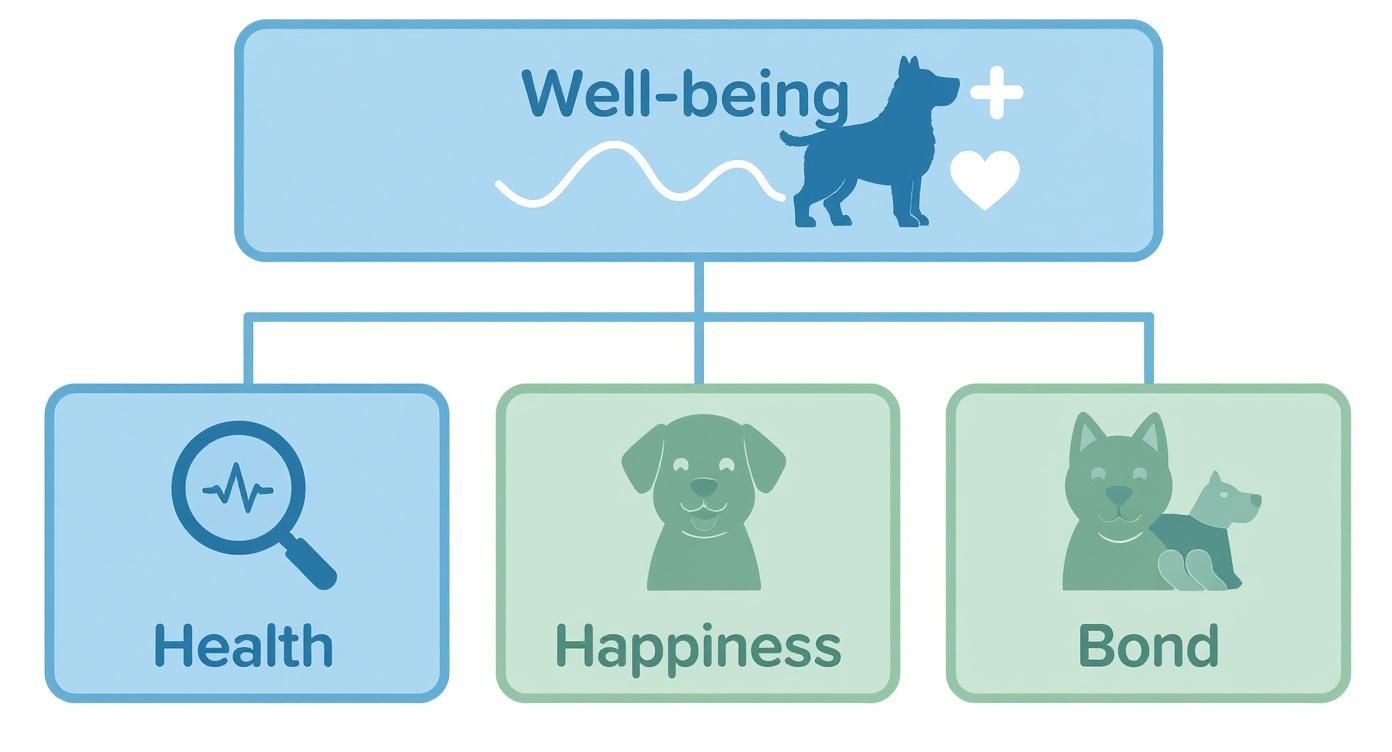
Using the right tools ensures a pain-free, effective session, which is a massive trust-builder.
Smooth and Short Coats
For breeds like Boxers, Greyhounds, and Beagles, the goal is to remove loose hair and distribute natural skin oils to enhance shine.
Your go-to tools are a rubber curry brush or a bristle brush. A rubber brush gently massages the skin and lifts dead hair without scratching. Follow up with a bristle brush to polish the coat, leaving it slick and smooth.
Dense Double Coats
Breeds like Huskies, Golden Retrievers, and Australian Shepherds have a soft undercoat and a tough topcoat. This means you'll deal with "blowing coat"—heavy seasonal shedding.
Your essential tools are an undercoat rake and a slicker brush. The rake’s long teeth reach through the topcoat to remove loose undercoat fur. A few minutes of raking can remove a surprising amount of fur. Follow up with a slicker brush to smooth the topcoat and catch any remaining hairs.
Think of a double coat like a technical jacket. The undercoat rake cleans out the old insulation. The slicker brush zips up the outer shell, keeping it neat and weather-resistant.
Curly and Wiry Coats
Poodles, Bichon Frises, and many terriers have coats that easily trap tangles and debris. Curly coats grow continuously and don't shed traditionally, making matting a high risk without regular brushing.
A slicker brush is non-negotiable for teasing out tangles before they become painful mats. For the coarse coats of terriers, a stripping knife or firm slicker brush helps maintain texture by pulling out dead outer hairs, mimicking natural shedding.
Grooming Tool Guide by Dog Coat Type
Use this quick-reference table to match the right tools to your dog’s coat.
| Coat Type | Primary Brushing Tool | Shedding Control | Mat Prevention | Trimming Needs |
|---|---|---|---|---|
| Smooth/Short | Rubber Curry Brush or Bristle Brush | Brush weekly to remove loose hair. | Rare | Nail trimming only |
| Double Coat | Undercoat Rake and Slicker Brush | Rake during shedding season; brush weekly. | Use a dematting comb on tough spots. | Trim fur around paws and ears. |
| Curly/Wavy | Slicker Brush and Metal Comb | Low shedding, but requires daily brushing. | Daily brushing is essential to prevent mats. | Professional clipping recommended. |
| Wiry | Stripping Knife or Firm Slicker Brush | Requires regular "stripping" to remove dead hair. | Check for tangles in longer furnishings. | Hand-stripping or specific trims. |
| Long-Haired | Pin Brush and Metal Comb | Daily brushing needed to manage shedding. | Very prone to mats; use a detangling spray. | Regular trims and tidying required. |
This chart is a starting point. Observe how your dog's coat responds and adjust your tools and routine accordingly. Now, let's detail the function of each brush, comb, and clipper.
The Essential Toolkit for Brushing and Deshedding
You've matched tools to your dog's coat type; now it's time to master their use. Brushing and deshedding tools are the workhorses of any grooming kit, handling everything from a daily touch-up to a full seasonal shed.
Knowing when to use a slicker brush versus an undercoat rake is key. The right technique is just as important as the tool. Your goal is to remove loose fur and prevent mats without pulling your dog's hair or irritating their skin. When done correctly, grooming becomes a positive bonding experience.
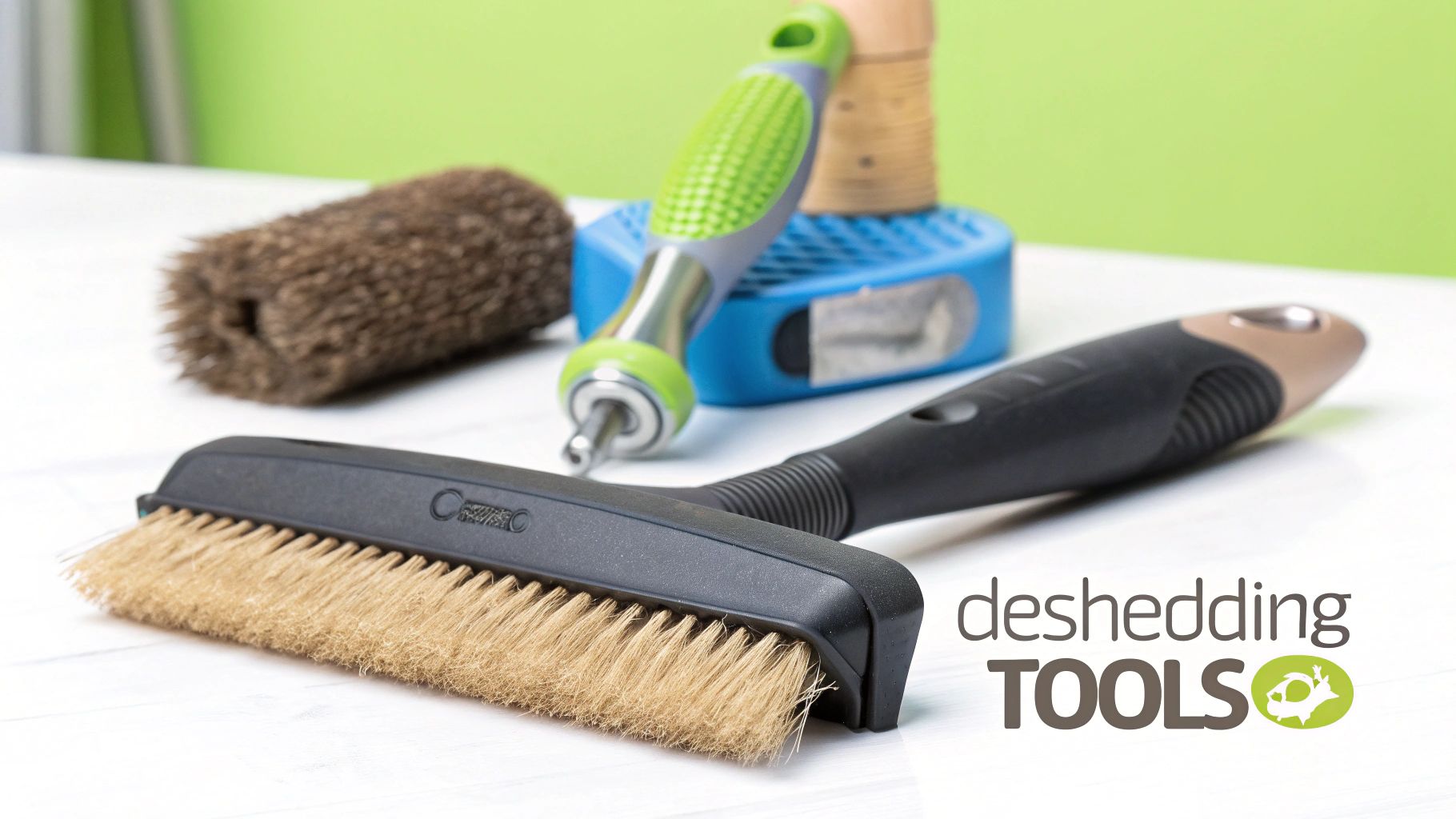
Slicker Brushes The Ultimate Detanglers
For any dog with a medium-to-long, curly, or thick coat, the slicker brush is an essential tool. Its fine, short wire pins are designed to break up tangles and small mats before they become a serious problem.
To use it effectively, apply a light touch with short, gentle strokes, especially around sensitive areas like ears and legs. This prevents "brush burn" on their skin. Think of it as gently teasing apart a knotted chain rather than yanking it.
Undercoat Rakes Conquering Shedding Seasons
For owners of double-coated breeds like German Shepherds or Huskies, the undercoat rake is your solution for managing the biannual fur storm. Its long, sturdy metal teeth bypass the topcoat to reach the dense, fluffy undercoat.
The rake's purpose is to efficiently remove the dead, loose undercoat that's ready to shed. Using a rake a few times a week during peak shedding season can reduce household fur by up to 90%. It is the single most effective tool for heavy shedders.
Pro Tip: Always use the rake in the direction of hair growth with long, smooth strokes. This feels more natural to the dog and prevents uncomfortable pulling on the healthy topcoat.
Bristle and Pin Brushes For Polishing and Finishing
After the heavy lifting of detangling and deshedding, a bristle or pin brush adds the finishing touch.
- Bristle Brushes: Ideal for short-coated breeds like Pugs. The dense bristles remove fine debris and distribute natural skin oils, leaving the coat with a healthy gloss.
- Pin Brushes: Perfect for dogs with long, silky coats like Yorkshire Terriers. The pins glide through the fur, working out minor tangles and creating a smooth finish without breaking delicate hairs.
If you need more help choosing, our complete guide on selecting the best grooming brush for dogs can provide extra clarity.
Combs The Final Check for Tangles
After brushing, use a metal comb (or "greyhound comb") for quality control. Its job is to find any hidden tangles your brush missed. If the comb glides smoothly from the skin to the hair's tip, the coat is thoroughly brushed.
These combs typically have both fine and coarse teeth, making them versatile for different body parts. Use them for feathery hair on legs and tails and for detailed work around the face.
The global dog grooming market, valued at an estimated USD 1.53 billion in 2025 and projected to hit USD 2.61 billion by 2034, reflects the growing investment in professional-grade tools for home use. Having the right, specialized tools is a key part of responsible pet ownership.
Mastering Trims with Clippers, Shears, and Nail Grinders
Once you've mastered brushing, the next step in home grooming is trimming. Clippers, shears, and nail grinders can seem intimidating, but they are essential for keeping your dog’s coat neat and their paws healthy. With the right equipment and a patient approach, you can achieve a professional-looking trim at home.
These tools are crucial for your dog's comfort. Overgrown hair can obstruct a dog's vision, and long nails can alter their gait and cause joint pain. Learning to use these tools correctly is a major step in providing comprehensive care.
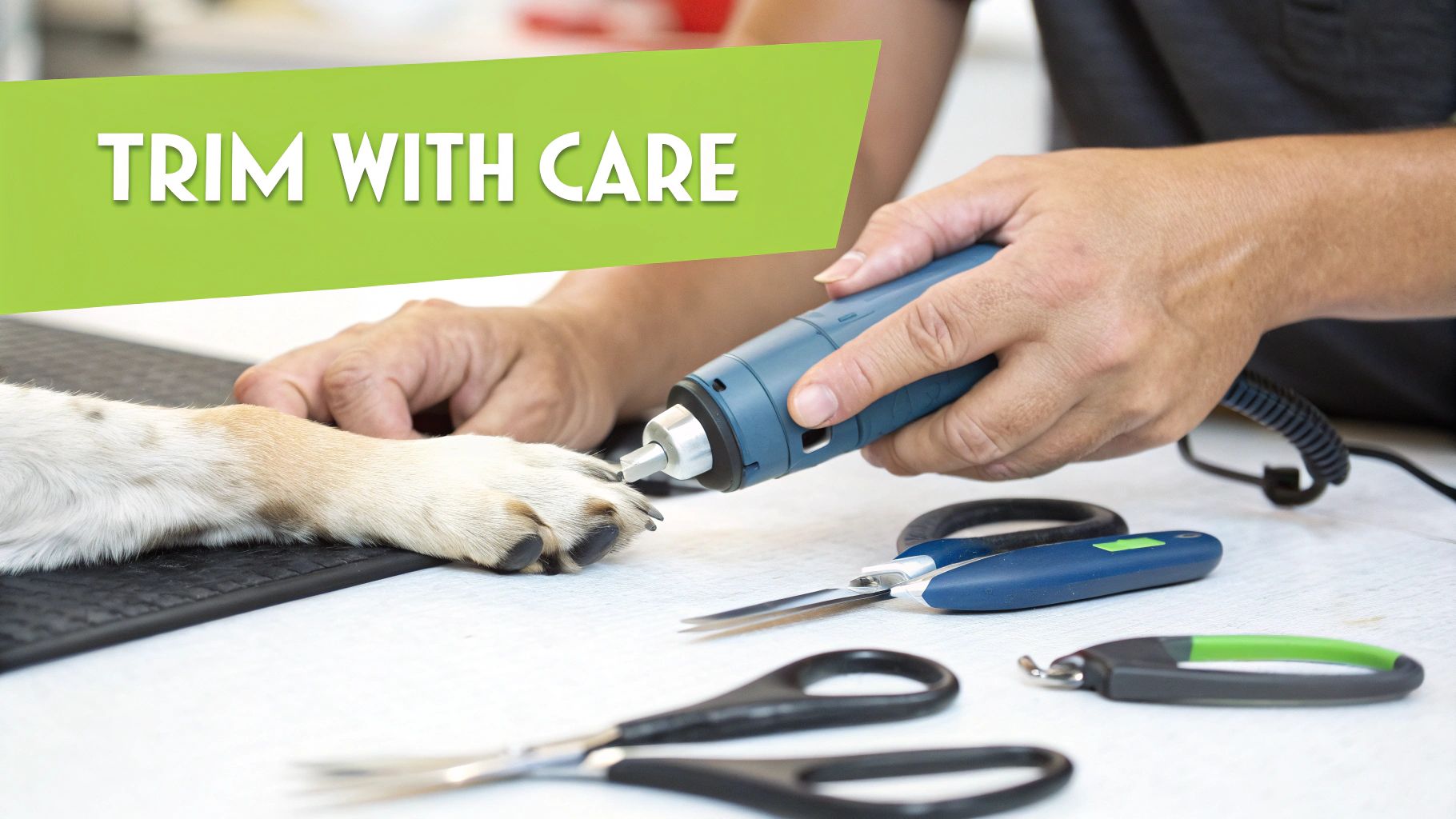
Choosing and Using Dog Clippers
Selecting the right dog clippers involves a few key choices. First, decide between corded and cordless. Corded clippers offer consistent power, which is ideal for thick or matted coats, but the cord can be cumbersome. Cordless models provide freedom of movement, making it easier to maneuver around a nervous dog.
Next, understand clipper blades and guard combs. Blades are numbered counterintuitively: a lower number like #10 leaves hair longer, while a higher number like #40 results in a very short, surgical cut. For beginners, guard combs are indispensable. They snap over the blade to ensure you cut hair to a specific, even length, providing a safety net as you learn.
To get a nervous dog used to clippers, start by letting them sniff the tool while it's off. Then, turn it on for a few seconds nearby, offering treats and praise for calm behavior. This process, known as desensitization, builds a positive association and reduces stress on trimming days.
Perfecting Details with Grooming Shears
Grooming shears are your tools for fine-tuning and finishing touches. They are ideal for sensitive or tricky areas where clippers might be too bulky or intimidating.
Different shears have specific jobs:
- Straight Shears: Your all-purpose scissors, perfect for creating clean lines on the body, legs, and tail.
- Curved Shears: Their arc is designed for shaping rounded areas like paws, heads, and tails, creating a natural, contoured look.
- Thinning Shears: With one toothed and one straight blade, they remove bulk from thick coats and blend different hair lengths for a soft finish.
Always choose shears with rounded safety tips. This feature significantly reduces the risk of accidentally poking your dog's skin, which is especially important when working around the eyes and ears.
Nail Care: The Great Debate Between Clippers and Grinders
Keeping your dog's nails trimmed is a vital grooming task. Overgrown nails can cause pain and lead to posture problems. The two primary tools for this are traditional clippers and electric nail grinders.
Nail Clippers are available in guillotine and scissor styles. They are quick and quiet, making them a good choice for noise-sensitive dogs. However, there's a higher risk of cutting the quick—the sensitive blood vessel inside the nail.
Nail Grinders are electric tools that file the nail down smoothly. This offers more control and lowers the risk of hitting the quick, as you remove small amounts at a time. The trade-off is the noise and vibration, which some pets need time to get used to. For a deeper analysis, read our guide on choosing the right dog nail cutter for your pet.
A Safety-First Guide to Trimming Nails
Regardless of your tool choice, the method for a safe nail trim is the same. Work in a well-lit area. If using clippers, snip only the very tip of the nail—it's better to make several small cuts than one large one. On light-colored nails, you can see the pink quick, making it easy to avoid.
For dark nails where the quick is hidden, trim a tiny bit at a time. Look at the cut nail surface; as you approach the quick, a small, dark circle will appear in the center. That's your signal to stop.
If you accidentally cut the quick, stay calm. Apply styptic powder or cornstarch to the nail tip with gentle pressure to stop the bleeding. Keeping styptic powder on hand provides peace of mind. Regular trims every 3-4 weeks will cause the quick to recede, making future trimming easier and safer.
Finishing the Routine with Shampoos and Dryers
A grooming session isn't complete until your dog is clean and dry. The bath and blow-dry wash away loose fur and dander, leaving the coat healthy and shiny.
The key is to use products specifically formulated for dogs. A dog's skin has a different pH balance than human skin, and using human shampoo can cause irritation, dryness, and itching.
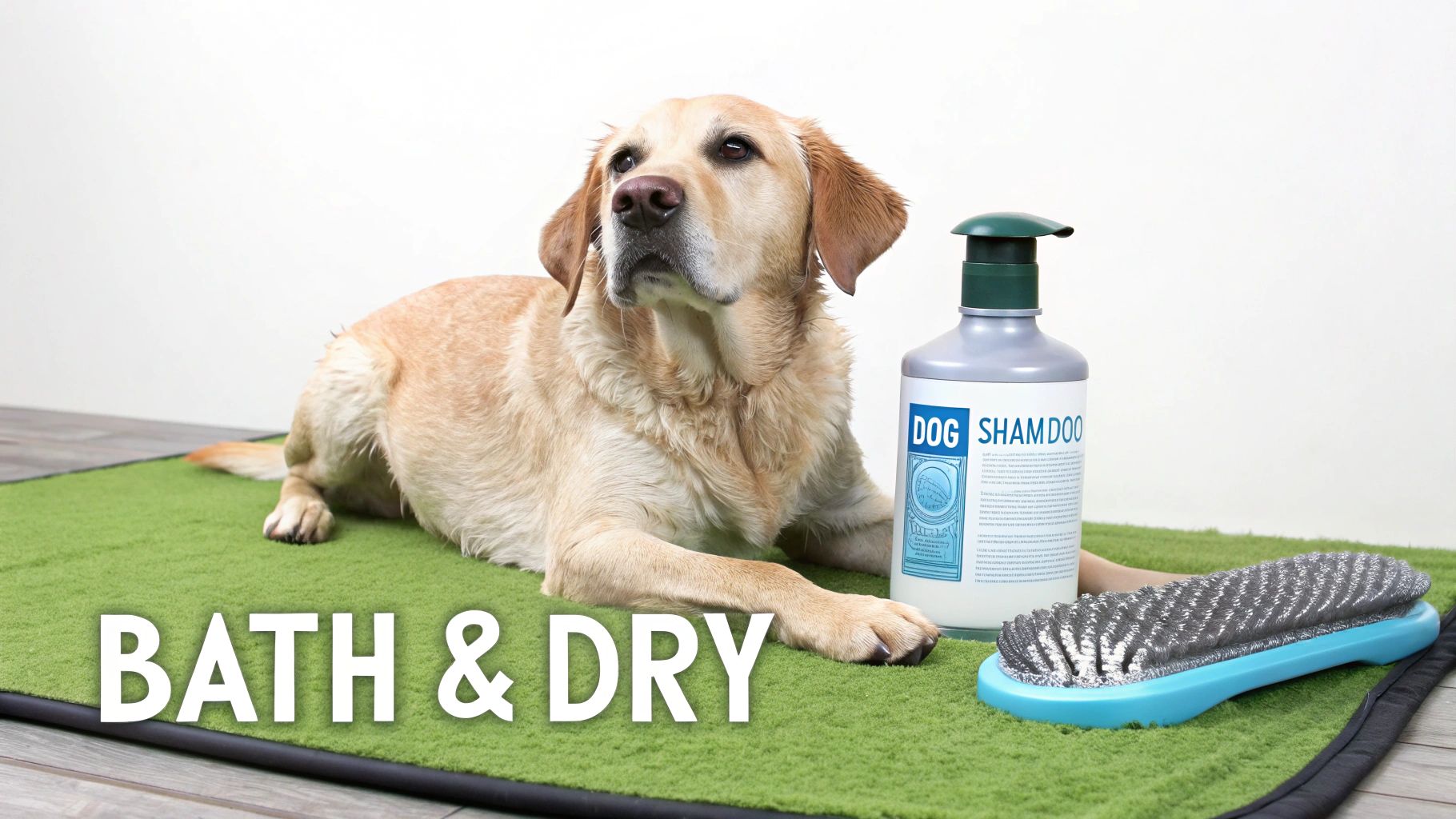
How to Select the Right Dog Shampoo
Choosing a dog shampoo is simple when you focus on your dog's specific needs. A good-quality, soap-free shampoo is suitable for most dogs, but a specialized formula can make a significant difference for those with skin issues.
Here are common types to look for:
- Soothing Formulas: Shampoos with oatmeal, aloe vera, or chamomile are excellent for dogs with sensitive or itchy skin, as they clean gently while calming irritation.
- Hypoallergenic Options: For dogs with allergies, a hypoallergenic shampoo made with minimal ingredients and no artificial dyes or perfumes is essential.
- Medicated Shampoos: For issues like hot spots, fungal infections, or severe dandruff, your vet may recommend a medicated shampoo with active ingredients to treat specific conditions.
Always check the ingredient list. A quality dog shampoo will prioritize natural, gentle ingredients over harsh chemicals to promote a healthy coat, not strip it of its protective oils.
Safe and Effective Drying Techniques
Drying your dog thoroughly after a bath is as important as the wash itself. A damp coat can foster skin infections and lead to the "wet dog" smell. Never use a human hair dryer, as its heat is too intense and can easily burn a dog's skin.
For short-haired breeds, a vigorous rubdown with a super-absorbent microfiber towel may be sufficient. These towels absorb more water than standard cotton, speeding up the process.
For dogs with long or thick coats, a dedicated pet dryer is a worthwhile investment. These high-velocity dryers use air, not heat, to blast water from the fur. This is safer and also helps straighten and fluff the coat, removing any remaining loose undercoat. When introducing a dryer, start on the lowest setting and keep it moving to avoid concentrating air on one spot.
How to Assemble Your Perfect At-Home Grooming Kit
Now that you understand the tools, let's assemble your kit. Building the right grooming set is about creating a personalized collection that fits your dog's needs and your comfort level, ensuring you don't waste money on unnecessary items.
A practical, effective toolkit makes grooming a manageable routine rather than a stressful chore, empowering you to handle everything from daily brushing to seasonal shedding.
The New Puppy Starter Kit
For a new puppy, grooming should be a positive experience. Focus on gentle tools that help them get used to being handled, turning grooming into a bonding activity.
- Soft Bristle or Rubber Curry Brush: These are perfect for a puppy’s first brushings. They are gentle on sensitive skin and provide a pleasant massaging sensation, which helps build trust.
- Small Nail Clippers: Start with small, sharp clippers that are easy for you to handle. Introduce nail trimming early, even if you only snip the tip of a single nail, to build a foundation for future cooperation.
- Training Treats: Use high-value treats to reward your puppy for staying calm. Positive reinforcement is your most effective tool.
For a puppy kit, prioritize simplicity and gentleness. The goal is not a perfect look but a positive association with grooming that will last a lifetime.
The Long-Haired Breed Maintenance Kit
For owners of a Golden Retriever, Collie, or Shih Tzu, preventing tangles and mats is a daily task. This kit focuses on prevention and provides the right tools to tackle tough spots, featuring some of the best dog grooming tools for these coats.
This setup requires more advanced gear:
- Slicker Brush: Your daily workhorse for removing loose hair from the topcoat before it can tangle.
- Undercoat Rake: A non-negotiable for any double-coated breed to remove the dense, dead undercoat that causes mats.
- Metal "Greyhound" Comb: Your final inspection tool. Run it through the coat after brushing; if it glides smoothly from skin to tip, the coat is mat-free.
- Dematting Tool: A tool designed to safely slice through stubborn mats without painfully pulling on your dog's skin.
- Grooming Shears with Safety Tips: Essential for carefully trimming hair around sensitive areas like the face, paws, and sanitary regions.
Having the right combination of tools is a game-changer. For more detailed techniques, refer to our article on how to groom your dog at home.
Got Dog Grooming Questions? We've Got Answers.
Even with the right gear, questions will arise as you establish a grooming routine. Here are answers to some of the most common queries from dog owners to help you groom with confidence.
Knowing these details helps you build a routine that is safe, effective, and enjoyable for your dog.
How Often Should I Actually Be Grooming My Dog?
The ideal grooming frequency depends entirely on your dog's coat type. There is no single schedule for all dogs.
- Long or Curly Coats (Poodles, Collies): Brush daily or every other day to prevent mats and tangles.
- Double Coats (Huskies, German Shepherds): Brush 2-3 times a week for most of the year. Increase to daily sessions during heavy shedding seasons.
- Short, Smooth Coats (Boxers, Beagles): A quick brush once a week is sufficient to remove loose hair and maintain coat shine.
Nail trims should be done universally every 3-4 weeks. Bathe your dog every 1-3 months, or more often if they get dirty.
How Do I Keep My Grooming Tools Clean?
Proper tool maintenance is essential for hygiene and longevity. After each grooming session, remove all hair from your brushes, combs, and clipper blades.
Cleaning your dog's tools is like washing your own hairbrush. It prevents the buildup of oil, dirt, and bacteria that could be transferred back to your dog's skin. Clean tools also perform better, ensuring a smooth, pain-free groom every time.
Periodically wash your tools with warm, soapy water, rinse thoroughly, and let them air dry completely to prevent rust. For clippers, follow the manufacturer’s instructions for oiling the blades to keep them running smoothly and prevent pulling.
What If My Dog Is Scared of Grooming?
It is common for dogs to fear grooming tools, but this can be overcome with patience through desensitization and positive reinforcement.
Start by letting your dog sniff the tools while they are off, rewarding calm behavior with a high-value treat and praise. For noisy tools like clippers, turn them on for a second at a distance, and immediately offer a treat. Gradually decrease the distance over several short, positive sessions. Always end on a good note before your dog becomes stressed.
Can I Just Use My Human Clippers on My Dog?
No, do not use human clippers on a dog. Human clippers are designed for fine hair and their motors cannot handle a dog's thick fur. They will snag and pull painfully, and can overheat, posing a burn risk.
Dog clippers are engineered with powerful, cooler-running motors and specialized blades designed to glide through dense coats. Using the correct tool is a matter of safety and effectiveness, and is a critical part of selecting the best dog grooming tools.
At Pet Magasin, we believe that having the right information is just as important as having the right tools. Explore our full range of professional-quality grooming supplies designed to make every session safe, easy, and effective.

Leave a comment