
How to Bathe a Dog Without All the Stress

Let's be honest, the words "dog bath" can conjure up images of a wet, soapy mess, a frantic chase around the house, and a dog who looks at you with ultimate betrayal. It doesn't have to be that way. You can transform this necessary chore from a chaotic struggle into a calm, positive experience for both of you.
The secret? It's less about the suds and more about the setup. Success begins long before a single drop of water hits their fur.
Making Bath Time a Positive Experience
This isn't just about getting your dog clean; it's an opportunity to build trust and strengthen your bond. A proper bath is vital for your dog's skin, coat, and overall well-being, not just for looks.
Your dog will mirror your energy. If you approach bath time with a calm, clear plan, your dog is more likely to stay relaxed.
Key Principles for a Calm Bath
- Get Everything Ready First: Before bringing your dog to the bathing area, gather all your supplies. Lay out the shampoo, towels, and brushes. Having a wet, sudsy dog in the tub while you scramble for a forgotten towel is a recipe for escape.
- Use the Right Tools for the Job: You wouldn't use dish soap on your own hair. Your dog needs pH-balanced shampoos and well-designed grooming tools made specifically for them to prevent skin irritation. For more tips on building your toolkit, check out our guide on how to groom your dog at home.
- Be the Calm in the Storm: Your dog reads your emotions. Project a calm, confident vibe, and they're much more likely to feel secure and cooperative. Take deep breaths and move deliberately.
A positive bath time experience is a huge part of building a strong bond with your pet. It’s one of those little routines that showcase the quiet ways a pet reshapes your life.
It's clear that pet parents are more invested than ever in their furry family members' well-being. The global pet grooming services market was valued at a whopping USD 6.33 billion in 2023 and is only expected to grow. This just shows how many people are realizing the importance of quality pet care.
Setting Up Your Dog Bathing Station
A smooth, splash-free dog bath starts with preparation. Creating a dedicated bathing station with everything within arm's reach is the single most important step for a stress-free experience.
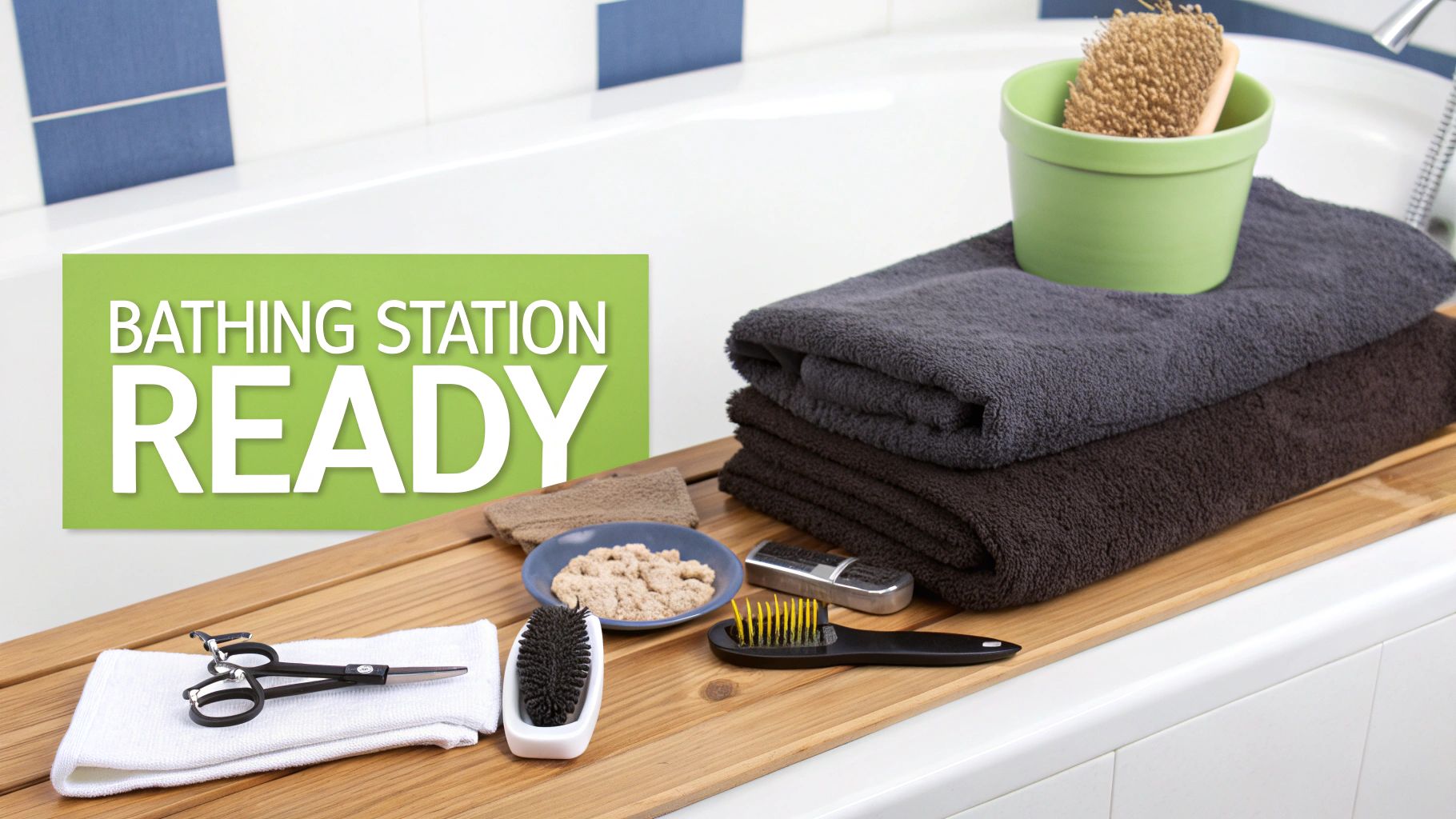
This prep work prevents that mid-lather dash for a forgotten item—the exact moment a slippery dog decides to make a run for it. The goal is to create a calm, controlled environment from the start.
Choose Your Location Wisely
Where you set up shop depends on your dog's size and your home's layout. Consider the pros and cons of each option.
- The Bathtub: This is the classic choice, ideal for medium to large dogs because it effectively contains water and suds. Actionable Tip: Use a handheld sprayer attachment to make rinsing a thousand times easier than dumping cups of water.
- A Walk-In Shower: A fantastic indoor option, especially for larger or senior dogs. With no high wall to navigate, it's safer for dogs with mobility challenges to enter and exit.
- An Outdoor Wash Station: On a warm day, washing your dog outside keeps the mess contained. Ensure you have a hose with a gentle spray nozzle to avoid startling your dog.
No matter where you choose, safety is the top priority. A slippery surface is a fast track to a panicked dog. Always lay down a non-slip mat or a thick towel on the floor of the tub or shower. This provides secure footing and can significantly reduce their anxiety.
Pre-Bath Grooming Is Non-Negotiable
Before the water runs, complete these essential grooming steps. Give your dog’s coat a thorough brushing to remove loose fur and work out tangles. Once fur gets wet, knots can tighten into stubborn, painful mats.
Taking just five minutes to brush out your dog’s coat before a bath can save you thirty minutes of frustrating detangling afterward. It prevents discomfort for your dog and makes the entire process more pleasant.
This is also the perfect time to trim their nails. Freshly clipped nails mean you're less likely to get accidentally scratched if your dog gets nervous. Having a good pair of nail clippers in your bathing kit makes this a quick first step.
Finally, grab at least two or three super-absorbent towels. Having extras ready means you can swap a soaked one for a dry one instantly, making the drying process faster and more effective.
Choosing the Best Shampoo for Your Dog
Walking down the pet care aisle can be overwhelming. To pick the right shampoo, focus on what your dog actually needs, not flashy labels.
First, the most important rule: never use human shampoo on your dog. Our skin has a different pH level, and human shampoos are too acidic for dogs. Using them strips the natural oils from your dog's skin, leaving it itchy, irritated, and vulnerable.
A dog's skin is their largest organ, and the right shampoo is crucial for its health. This choice impacts their comfort, coat appearance, and can prevent skin problems before they begin.
Understanding Shampoo Categories
Dog shampoos are not one-size-fits-all. They are formulated to address specific issues, from dryness to sensitive skin.
- Moisturizing Shampoos: If your dog's coat is dull or their skin is flaky, choose a formula with natural, hydrating ingredients like oatmeal, aloe vera, or vitamin E to soothe irritation and lock in moisture.
- Hypoallergenic Formulas: For dogs with sensitive skin or allergies, select a gentle, fragrance-free option. These shampoos use minimal ingredients to reduce the risk of an allergic reaction.
- Gentle Puppy Shampoos: Puppies have extremely delicate skin. Use an extra-mild, tear-free formula made just for them. Stick with a puppy-specific shampoo until they are at least six months old.
- Medicated Shampoos: If your vet has diagnosed a skin condition like a fungal infection or seborrhea, use the prescribed medicated shampoo. Follow the vet's directions precisely, as this is a treatment, not just a cleaner.
The right shampoo does more than just clean—it supports the delicate balance of your dog's skin. Think of it as a targeted treatment, not just soap. A well-chosen formula can resolve minor issues like itchiness before they become major problems.
If you notice your dog is constantly scratching, it’s worth taking a closer look at the best dog shampoo for itchy skin to find some much-needed relief.
How to Match Shampoo to Your Dog's Needs
Use this quick guide to match your dog's specific needs with the right type of shampoo.
| Dog Shampoo Selector Guide | ||
|---|---|---|
| Shampoo Type | Best For | Key Ingredients to Look For |
| Moisturizing | Dogs with flaky, dry skin, dull coats, or those living in arid climates. | Oatmeal, Aloe Vera, Honey, Vitamin E, Shea Butter. |
| Hypoallergenic | Dogs with known allergies, sensitive skin, or those prone to redness and irritation. | Simple, natural ingredients; formulas free from dyes, parabens, and fragrances. |
| De-shedding | Breeds with thick undercoats or dogs experiencing heavy seasonal shedding. | Omega-3 and Omega-6 fatty acids, Vitamin E, Hydrolyzed Wheat Protein. |
| Odor Control | Dogs that develop a strong "doggy" smell quickly or after outdoor adventures. | Baking Soda, Lavender, Eucalyptus, Citrus Extracts. |
| Puppy Formula | All puppies under one year old, especially for their first few baths. | Tear-free formulas, Chamomile, Calendula; avoid harsh chemicals entirely. |
Choosing the right shampoo is a simple but powerful action that contributes to your dog’s health and comfort. Always read the label and opt for products with recognizable, natural ingredients.
Let's Get Washing: A Practical Guide to the Bath
With your station set up and shampoo chosen, it's time to wash. How you manage these next few minutes determines whether you have a calm routine or a chaotic rodeo. The goal is to be quick, gentle, and thorough.
Work with your dog, not against them. Introduce water slowly, lather correctly, and be extra careful with sensitive spots.
H3: The Gentle Introduction to Water
The sound and feel of rushing water can be overwhelming. Start by gently wetting your dog's paws and legs with lukewarm water, using a cup or a low-pressure sprayer. This allows them to acclimate without shock.
Gradually work your way up their body, soaking their back, chest, and tail. Avoid spraying or pouring water directly on their face. This common mistake instantly panics most dogs. Save their head for last and use a damp washcloth for this delicate area.
Lathering Up for a Deep Clean
Once your dog is thoroughly damp, apply the shampoo. Squirt a line of shampoo down their spine and work it into a rich lather, starting at the neck and moving toward the tail. This top-down approach helps keep suds out of their eyes.
Don't just skim the surface. Use your fingertips to massage the shampoo deep into their coat until you feel it on their skin. This removes dirt and oil, stimulates the skin, and helps distribute natural moisture.
This visual guide breaks down the shampoo selection process, ensuring you've made the right choice before you even start lathering.
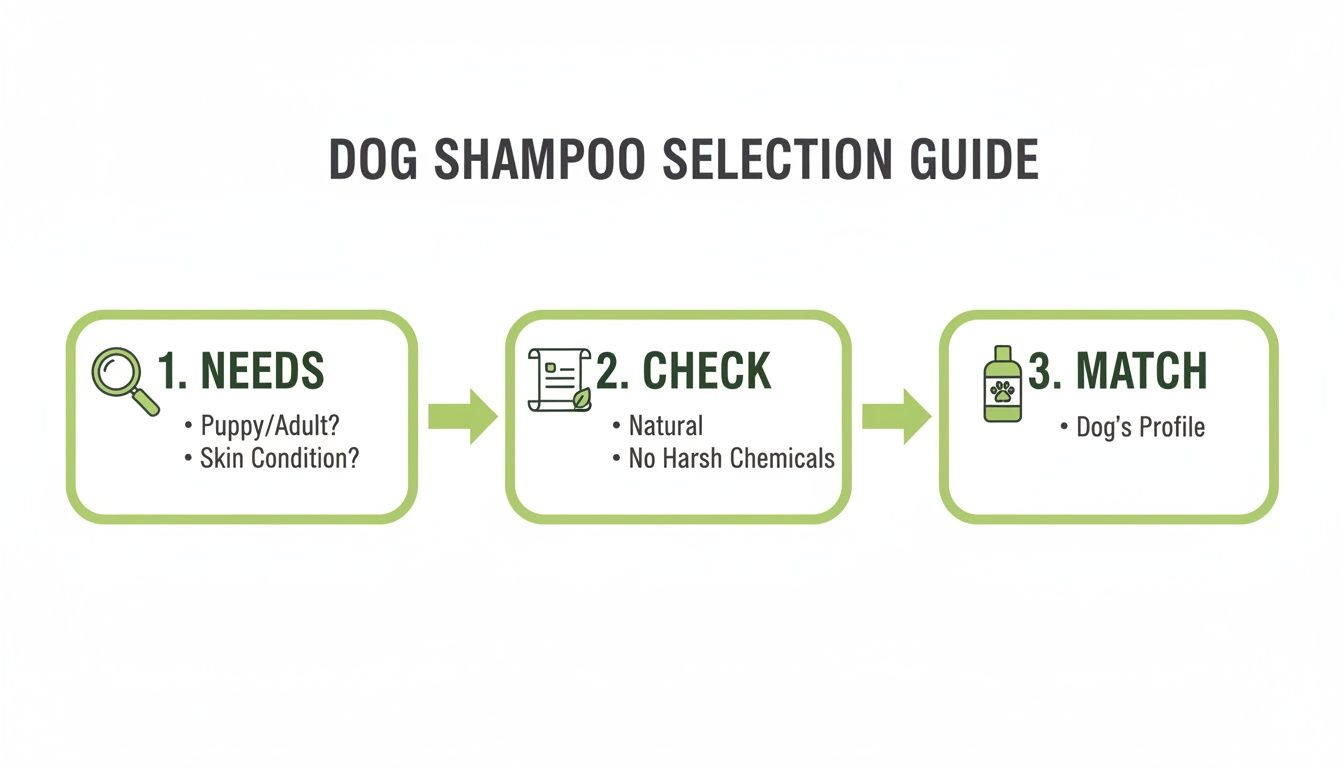 This process flow highlights the importance of matching the shampoo's ingredients to your dog's specific needs for optimal skin and coat health.
H3: Techniques for Different Coat Types
How you bathe a dog depends on their fur. A one-size-fits-all method won't work.
- Double-Coated Breeds (like Huskies or Goldens): The dense undercoat is your biggest challenge. Use a grooming brush with long pins or a rubber curry comb to work the lather down to the skin, ensuring both water and shampoo penetrate fully.
- Short-Haired Breeds (like Beagles or Terriers): These dogs are easier to wash, but their skin is more exposed. Use a gentle, circular motion with your hands or a soft brush to lift dirt without causing irritation.
- Curly-Coated Breeds (like Poodles): Suds can get trapped in curls. Focus on massaging the shampoo into the base of the curls and be extra diligent when rinsing.
H3: Handling Sensitive Areas with Care
The face and ears are sensitive areas for most dogs. To clean your dog's face, apply a small amount of diluted, tear-free shampoo to a washcloth and gently wipe around their muzzle and forehead, avoiding the eyes.
For the ears, prevention is key. Before starting the bath, gently place a cotton ball in each ear. This simple step effectively blocks water from entering the ear canal, which can prevent painful infections. Just remember to remove them when you're done!
H3: The All-Important Rinse
Rinsing is the most critical step and is often rushed. Leftover shampoo residue is a leading cause of post-bath itching and skin irritation.
Rinse, rinse, and then rinse again. Start at their head and work your way down, letting the water run clear. Lift their legs and tail to ensure you get all hidden spots. When you think you’re done, run your hands through their coat. If it feels even slightly slippery, continue rinsing.
Proper Drying and Post-Bath Grooming
The job isn't finished when the water is off. How you dry and groom your dog afterward is just as important as the wash itself. Proper drying prevents a wet mess and keeps their coat healthy and tangle-free.
A solid drying routine keeps your dog comfortable, protects their skin from moisture-related issues, and stops them from immediately rolling in dirt. You'll want plenty of towels on hand, and maybe even a funny golden retriever dish towel to add a little humor to the process.
Effective Drying Strategies
Your first line of defense is a stack of absorbent towels. Drape a large one over your dog’s back to absorb the initial shake-off. Then, gently squeeze and blot their fur from head to tail. Avoid vigorous rubbing, as this can create tangles, especially in long-haired breeds.
For dogs with thick coats, a pet-specific blow dryer is a great tool. These operate at a lower temperature and airflow speed than human dryers, which can easily burn a dog’s sensitive skin.
- Actionable Tip: Always use the lowest heat and speed setting.
- Actionable Tip: Keep the dryer moving constantly, holding it at least six inches away from their skin.
- Actionable Tip: Watch their body language. If they show signs of fear or discomfort, stop and switch back to towels.
A proper drying technique does more than just remove water. It helps fluff the coat, separates individual hairs to prevent matting, and gives you a chance to inspect your dog's skin for any redness or irritation you might have missed during the bath.
The Importance of Post-Bath Brushing
Once your dog is mostly dry but still slightly damp, it’s the perfect time for a thorough brush-out. The remaining moisture helps the brush glide through the coat, removing loose hair and tackling minor tangles before they become serious mats.
Using a brush designed for damp fur is essential. Pet Magasin’s grooming tools are crafted to detangle without painful pulling, making the experience more pleasant. For more tips on essential grooming, check out our guide on how to trim dog nails safely.
This final brushing spreads the natural oils stimulated by the bath, leaving your dog’s coat smooth, shiny, and soft. You’ve now successfully managed to bathe a dog from start to finish, reinforcing a positive and healthy grooming routine.
Answering Your Biggest Dog Bathing Questions
Even with a perfect setup, questions can arise. Getting practical answers can be the difference between a frustrating mess and a smooth routine. Let's tackle the most common worries that come up when you bathe a dog.
These are the quick, actionable tips you need to handle tricky bathing moments like a pro, from how often to wash your pup to managing a dog who is terrified of the process.
How Often Should I Really Bathe My Dog?
There is no single magic number; the right frequency depends entirely on your dog's breed, coat, lifestyle, and skin condition.
As a general guideline, once every one to three months is a good starting point for most healthy dogs. Washing too often can strip essential natural oils, leading to dryness and irritation.
- Active & Oily Coats: A Golden Retriever who loves puddles or a Basset Hound with a naturally oily coat may need a bath every 4-6 weeks to manage odor.
- Short-Haired & Indoor Dogs: A short-coated Chihuahua who spends most of its time indoors can likely go much longer between washes.
What if My Dog Is Terrified of Water?
If your dog fears baths, use patience and positive reinforcement to change their association with the experience. Forcing them into the tub will only increase their anxiety.
Start small. Get them comfortable standing in a dry tub by tossing in a high-value treat or their favorite toy and offering praise. After a few successful sessions, introduce a small amount of lukewarm water, rewarding them for staying calm. A non-slip mat is crucial, as a slippery surface can trigger panic.
For a dog with deep-seated anxiety, your goal is desensitization. Celebrate small wins, like tolerating wet paws. Always end the session on a positive note before they become overwhelmed. This slow, steady process builds trust.
Dealing with Skunks and Sensitive Skin
Sometimes, a regular bath isn't enough. Special situations require specific solutions.
If your dog is sprayed by a skunk, standard dog shampoo won't eliminate the odor. Use a de-skunking formula: a mix of 1 quart of 3% hydrogen peroxide, ¼ cup of baking soda, and 1 teaspoon of liquid dish soap.
For dogs with allergies or sensitive skin, use a hypoallergenic or medicated shampoo recommended by your vet. Bathe them in lukewarm water, as hot water can worsen irritation. After the bath, ensure they are completely dry, as lingering moisture can exacerbate skin problems. Regular, gentle baths are often part of a vet's treatment plan for managing skin conditions.
For all your grooming needs, from gentle brushes to durable tools that make bath time easier, trust Pet Magasin to provide high-quality supplies that keep your pet healthy and happy. Explore our full range of products at https://www.petmagasin.com.

Leave a comment