
Solving Bad Breath in Dogs: A Complete Guide for 2026

Let's face it, that stinky breath coming from your best friend is more than just a little unpleasant. When you lean in for a cuddle and have to pull back, it's a direct sign that something is wrong. That strong smell is your dog's way of telling you they need help.
Why Your Dog's Breath Smells Bad
It’s easy to write off some "doggie breath" as normal, but a foul, persistent odor is a health warning you shouldn't ignore. There's a world of difference between the faint smell of their last meal and the kind of halitosis that can clear a room.
Your dog's mouth is an ecosystem. When it's in balance, it runs smoothly. When neglected, problems start. It all begins when food particles and bacteria team up to form plaque—a sticky, invisible film that coats their teeth.
The Problem with Plaque and Tartar
If that sticky plaque isn't brushed or chewed away, it hardens into tartar (also called calculus) in just a few days. This hard, yellowish-brown gunk creates a rough surface that attracts even more plaque, starting a cycle of bacterial growth.
The real danger isn't the smell itself, but what's causing it. All that bacteria leads to inflamed gums (gingivitis) and eventually full-blown periodontal disease, which can cause serious pain, tooth loss, and even affect your dog's heart and kidneys if bacteria get into the bloodstream.
This isn't a rare issue. Periodontal disease is shockingly common. It affects nearly 80% of dogs by age three. That’s a massive number, and it shows just how early dental problems can start. You can see the full details from the American Veterinary Medical Association to understand just how widespread this is.
Distinguishing Normal from Worrisome Odors
Knowing what’s normal versus what’s a red flag is the first step to taking action. A mild, dog-like odor is one thing, but certain smells are a clear signal to call the vet. For example, an oddly sweet or fruity smell could point to diabetes, while breath smelling like ammonia might mean kidney trouble.
Common Odors and What They Mean
Use this quick guide to play health detective. Match the specific smell of your dog's breath to potential underlying causes and know when to take action.
| Odor Description | Potential Cause | Recommended Action |
|---|---|---|
| Persistently Foul/Rotten | Periodontal disease, tooth decay, or an oral infection. | The most common cause of bad breath in dogs; schedule a veterinary dental check-up immediately. |
| Sweet or Fruity | Diabetes mellitus, a serious metabolic disorder. | This requires an urgent visit to your veterinarian for diagnosis and treatment. |
| Ammonia or Urine-like | Kidney disease or a urinary tract issue. | See your vet immediately, as this can indicate serious kidney problems. |
Recognizing that bad breath in dogs is a symptom, not the root problem, is key. By learning to decode these smelly signals, you're not just getting rid of an unpleasant odor—you're taking a vital step in protecting your dog’s overall health.
Decoding the Root Causes of Canine Halitosis
You lean in for a puppy kiss and get a blast of foul breath instead. While plaque and tartar are usually the main culprits, the story doesn't always end there. To solve the problem, you have to play detective and look at every possible angle.
Think of your dog’s breath as a clue. Different smells point to different problems, and figuring out what you’re smelling is the first step to fixing it. The vast majority of the time, the issue starts in the mouth, where bacteria feed on leftover food. This process produces smelly sulfur compounds, creating that signature odor.
The Oral Hygiene Connection
When your dog's teeth aren't cleaned regularly, this bacteria builds up into a sticky film called plaque. In just a few days, that plaque can harden into tartar—a tough, cement-like substance that irritates the gums and gives even more bacteria a place to thrive. This cycle is what leads to gingivitis (inflamed gums) and, if left unchecked, periodontitis, a more serious infection that can damage the gums and bone.
That stinky breath is often the first alarm bell. One study showed that a whopping 47.7% of owners notice bad breath in their pets, and most connect it to poor dental care. The same research found visible tartar on the teeth of 37.3% of dogs, which shows how common this is.
This diagram shows you exactly how things go from bad to worse.

As you can see, it all starts with plaque. Once it hardens into tartar, you've got the foundation for most cases of doggy bad breath.
When Bad Breath Signals Deeper Health Issues
Sometimes, bad breath in dogs is a red flag for a systemic disease—an illness affecting your dog’s entire body. Your vet is trained to connect these smells to potential underlying conditions, so paying attention to them is critical.
Here are a few serious non-dental causes to watch out for:
- Diabetes Mellitus: If your dog's breath smells unusually sweet or fruity, it could be a sign of diabetes. The smell comes from ketones, which build up in the blood when the body can't process sugar correctly. Action: Schedule a vet visit immediately.
- Kidney Disease: Breath that smells like ammonia or urine is a major warning sign. This happens when the kidneys can't filter waste from the blood properly. Action: This is an emergency; see your vet right away.
- Liver Disease: Extremely foul breath, especially if it comes with vomiting, a loss of appetite, or yellow-looking gums (jaundice), can point to a serious liver problem. Action: Get your dog to a veterinarian without delay.
Any of these signs are a medical emergency. That smell is your dog's way of sending out an S.O.S., and you need to get them to a vet right away.
Gastrointestinal and Dietary Factors
What goes in must come out, but sometimes it comes out the wrong way. Your dog's diet and digestion can play a role in their breath. An upset stomach, acid reflux, or other gut issues can send foul odors up the esophagus.
Think of it this way: what happens in the gut doesn't always stay in the gut. If your dog's digestive system is out of whack, their breath is one of the first places you might notice.
Certain ingredients in lower-quality foods can be tough to digest, leading to fermentation and unpleasant smells. Food sensitivities can also cause GI upset that leads to bad breath. The science on how probiotic mints for bad breath in humans work by rebalancing the oral microbiome offers some interesting parallels. Internal parasites can also cause digestive trouble—learn more in our guide on deworming for dogs.
Sometimes, the cause is simpler: something is stuck in their mouth. A piece of a stick or chew toy can get lodged between teeth, collect bacteria, and rot, causing a sudden and potent stench. Action: Gently check your dog's mouth for foreign objects. If you see something you can't easily remove, call your vet.
Your At-Home Action Plan for Dog Dental Care
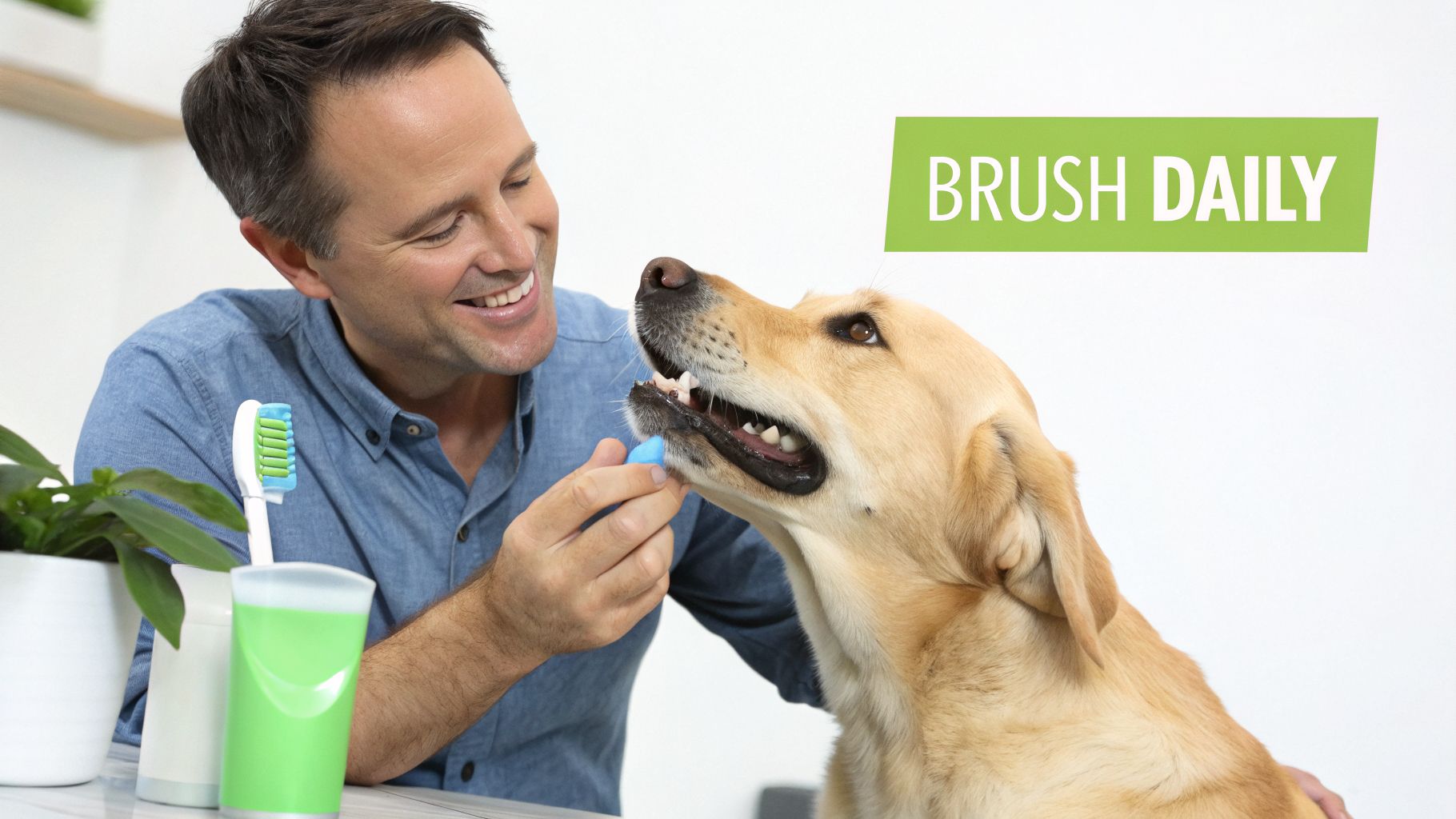
Alright, you know what's behind that stinky dog breath. It's time to roll up your sleeves and get to work. A solid at-home dental routine is your best weapon in the fight against bad breath in dogs. This daily maintenance will save you from big, painful, and expensive problems down the road.
The single best thing you can do is brush your dog's teeth regularly. It’s the number one way to physically remove plaque before it turns into rock-hard tartar. It might sound like a wrestling match waiting to happen, but with patience, it can become a positive bonding moment.
Getting the Hang of Brushing Teeth
The trick is to ease into it. You can't just spring a toothbrush on your dog one morning and hope for the best. You've got to treat it like any other training, with trust and tasty rewards.
Start by getting your pup used to you touching their mouth. For a few seconds, gently lift their lips and touch their teeth and gums with your finger. Then, shower them with praise and a favorite treat. Do this for a few days until they are comfortable.
Next, put a pea-sized dab of dog-specific toothpaste on your finger. Never use human toothpaste, as it contains ingredients like xylitol and fluoride that are toxic to dogs. Let them lick the paste and get used to the taste.
Expert Tip: You want your dog to think brushing is a great time. Always end on a high note, even if you only managed to brush one tooth. Keep your sessions short, upbeat, and full of praise to build a positive association with dental care.
Once they're okay with the toothpaste, wrap gauze around your finger or use a soft finger brush to gently rub their teeth and gums in small circles. From there, you can graduate to a real dog toothbrush. For the best defense against bad breath in dogs, aim to brush daily.
A Quick Step-By-Step Brushing Guide
- Get the Right Gear: Grab a soft-bristled toothbrush and a vet-approved toothpaste in a flavor your dog loves, like chicken or beef.
- Pick a Chill Time: Choose a time when your dog is relaxed, not when they're wound up and ready to play.
- Start Small: For the first few sessions, just brush a couple of teeth for a few seconds. You can increase the duration as your dog gets comfortable.
- Hit the Outsides: Focus on the outer surfaces of the teeth, where most plaque and tartar build up. Their tongue does a decent job of cleaning the inside surfaces.
- Praise and Reward! After every session, give enthusiastic praise, offer a special toy, or provide a healthy treat. This teaches them that brushing leads to good things.
More Than Just a Toothbrush
While brushing is king, it’s not your only option. It's smart to have a few extra tools in your arsenal, especially for dogs who resist the toothbrush.
Here are other effective tools to add to your routine:
- Dental Chews and Toys: As your dog gnaws on these, the chewing action helps scrape plaque off their teeth. Look for products with the Veterinary Oral Health Council (VOHC) seal—it’s a sign that they’re proven to help reduce plaque or tartar.
- Water Additives: Simply add these tasteless liquids to your dog's water bowl. They contain enzymes that fight bacteria and reduce plaque with every drink.
- Dental Sprays and Gels: Apply these directly onto the teeth and gums to help soften plaque and freshen breath, no brushing required.
- Special Dental Diets: Some dog foods have a special kibble design. The size and texture help scrub your dog's teeth clean as they eat, keeping plaque and tartar in check.
Combining a few of these methods can create a powerful defense. For instance, daily brushing plus a good dental chew gives you both direct cleaning and a happy, occupied dog. If you're wondering what to look for, check out our guide on the best chews for dogs. Ultimately, consistency is what will truly keep bad breath in dogs away.
What to Expect at a Professional Dental Cleaning
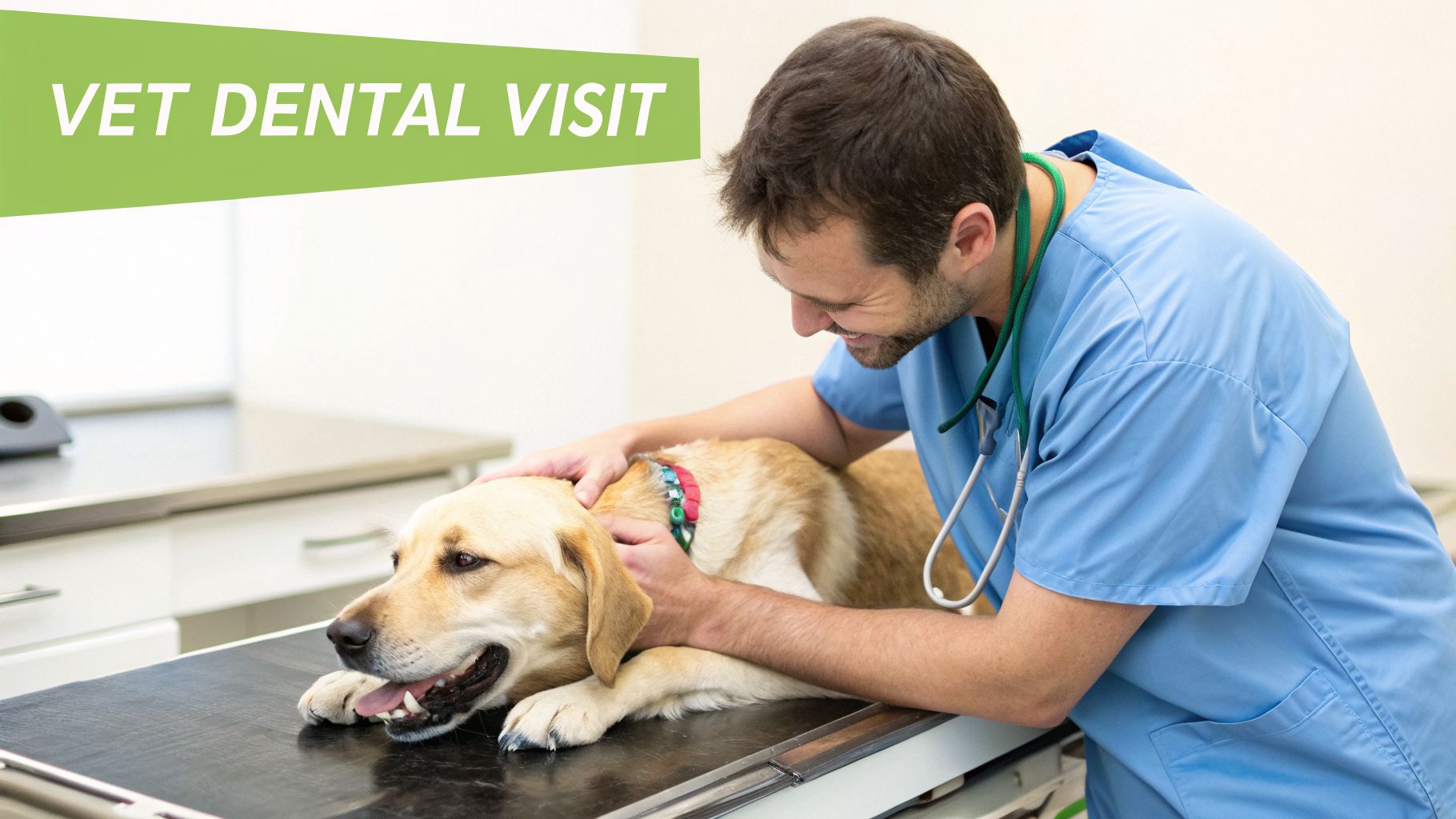
Sometimes, no matter how much you brush and provide dental chews, that funky bad breath in dogs just won't go away. This isn't a failure on your part; it's a clear signal that it's time to call in the professionals. A veterinary dental cleaning is a crucial part of your dog's health plan, not a last resort.
Knowing when to make that call is key. If you notice persistent bad breath, heavy yellow or brown tartar, or bright red gums that bleed easily, it's time for a vet visit. These are red flags that at-home care cannot fix.
The shocking truth is that most dogs run into dental trouble early. Studies show that a staggering 70-80% of dogs develop some form of dental disease by just three years old, with bad breath being the first warning sign. This isn't just "doggie breath"—it’s a real problem. Persistent halitosis affects an enormous 47.7% of dogs, often tied to the 37.3% who have visible tartar. The real danger, periodontal disease, often brews unseen, leading to about 13.1% of dogs needing anesthesia for a deep cleaning. You can always discover more about how bad breath signals pet health problems if you want to dig into the details.
Why Anesthesia Is a Non-Negotiable Part of the Process
The word "anesthesia" can make any dog owner anxious, but it's absolutely necessary for a safe and effective dental cleaning. Anesthesia-free cleanings are mostly cosmetic; they just scrape the tartar you can see, leaving the real problem—bacteria below the gumline—untouched.
It’s like cleaning your house. You can sweep the middle of the floor to make it look tidy, but the dust and grime are still hiding under the sofa. A professional cleaning under anesthesia is the only way your vet can get "under the sofa" of your dog's gums to remove the nasty bacteria causing the trouble.
Modern veterinary anesthesia is incredibly safe. Your vet will run pre-anesthetic blood work to ensure your pup is healthy enough. During the procedure, a dedicated vet tech monitors your dog's heart rate, breathing, and blood pressure the entire time.
The Step-by-Step Dental Cleaning Procedure
So, what really happens once your dog is safely under anesthesia? It’s a full oral health restoration.
- Oral Examination: The vet inspects every single tooth, looking for cracks, weak spots, and deep pockets in the gums where bacteria hide. This is impossible to do properly on an awake dog.
- Dental X-Rays: Like your own dental X-rays, these let the vet see what’s happening beneath the surface. They can spot hidden issues like root damage, abscesses, or bone loss that are otherwise invisible.
- Scaling and Polishing: Using an ultrasonic scaler, the vet removes all the hardened tartar from both above and below the gumline. Afterwards, they polish the teeth to make them smooth, which makes it harder for new plaque to stick.
- Extractions or Treatments: If the exam or X-rays reveal any teeth that are badly damaged or diseased, the vet will perform extractions to remove the source of pain and infection for good.
A professional cleaning is a reset button for your dog's oral health. It removes all the accumulated damage and gives you a clean slate to maintain with your at-home care routine.
After it's all done, your vet will provide a complete summary of your dog's oral health and what they found. They'll also give you a personalized home care plan to help you keep those teeth clean and their breath fresh for the long haul.
A Long-Term Strategy for Fresh Breath
The best way to manage your dog’s health is to prevent problems before they start. Instead of reacting when you notice bad breath in dogs, build a solid routine that keeps their mouth healthy for life. Prevention is always cheaper, easier, and kinder than treating painful dental disease later on.
It’s like taking care of your car. You don't wait for the engine to blow up to get an oil change; you stick to a maintenance schedule. Applying that same proactive mindset to your dog’s oral health is the key to fresh breath and a happy pup. This roadmap comes down to three key pillars.
Pillar 1: Consistent At-Home Dental Care
What you do every day is the foundation for good oral health. As we've covered, daily brushing is the single best way to remove plaque before it hardens into tartar.
Don’t worry about making it a long battle. A quick, positive brushing session every day is far more effective than a stressful deep-clean once a week. Consistency is your best friend.
A great home care plan attacks plaque from multiple angles:
- Dental Chews: These physically scrape plaque away while your dog enjoys a good chew. Look for products with the Veterinary Oral Health Council (VOHC) seal as a sign of effectiveness.
- Water Additives: This is as easy as it gets. Add a capful of a dental formula to your dog's water bowl to fight bacteria with every drink.
- Dental Diets: Some dog foods use a larger, textured kibble designed to scrub teeth clean as your dog eats.
Combine these methods for a powerful defense. Daily brushing provides direct cleaning, and a dental chew offers a fun, supplementary benefit.
Pillar 2: A Balanced and Appropriate Diet
It’s no surprise that what your dog eats directly affects their mouth and overall health. A balanced diet provides the nutrients for strong teeth and gums and helps create a healthy oral environment. Conversely, cheap foods full of fillers can disrupt digestion and worsen bad breath in dogs.
Your dog’s diet is a cornerstone of their well-being. The right nutrition helps build strong teeth and gums from the inside out, creating a less hospitable environment for the bacteria that cause bad breath.
Feeding a diet that’s right for your dog’s age, size, and health is critical. A healthy gut can also play a role in oral health. If you’re curious about that connection, learning more about the best probiotics for dogs can give you ideas for supporting their digestive system. High-quality food is a non-negotiable part of any long-term dental plan.
Pillar 3: Non-Negotiable Annual Vet Check-Ups
Your veterinarian is your number-one partner in keeping your dog healthy. That annual wellness exam, including a thorough look inside your dog's mouth, is something you cannot skip.
During this visit, your vet can spot early signs of trouble you might miss at home. They’ll check the gums, look for tiny fractures, and determine if it's time for a professional cleaning under anesthesia.
Think of this yearly appointment as your safety net. It ensures nothing serious is overlooked, protecting your dog from the pain and health risks of advanced dental problems. By focusing on these three pillars, you create a complete plan that keeps your dog’s mouth healthy and supports their overall happiness.
Frequently Asked Questions About Bad Breath in Dogs
Even after you've started tackling your dog's dental hygiene, questions are bound to come up. Let's clear the air and answer some of the most common questions, so you can feel confident in your dog's care.
Are Certain Dog Breeds More Prone to Bad Breath?
Yes, absolutely. The issue isn't genetics for bad breath, but the physical structure of their mouths, which can create a breeding ground for smelly bacteria.
At the top of the list are brachycephalic (short-nosed) breeds like Pugs, Bulldogs, Shih Tzus, and Boxers. Their short jaws often mean their teeth are crowded and rotated, creating nooks and crannies where food and plaque get trapped. This leads to rapid tartar buildup and bad breath.
Think of it like real estate. The cute, smooshed-in faces of these breeds just don't have the space for a neat row of teeth. This crowded "neighborhood" makes it much harder to keep things clean, leading to dental problems much earlier in life.
Toy and small breeds like Chihuahuas, Yorkshire Terriers, and Pomeranians face a similar problem with crowded teeth in tiny mouths. While these dogs are at a higher risk, remember that bad breath in dogs can affect any breed. A daily hygiene routine is a must for every dog.
Can a Raw Food Diet Improve My Dog's Bad Breath?
This is a hot topic. Proponents of raw food diets argue that chewing on raw, meaty bones helps scrape plaque off a dog’s teeth naturally. Many owners do report fresher breath after making the switch.
However, veterinarians often point out serious risks. Raw meat can be contaminated with bacteria like Salmonella and E. coli, which can cause severe gastrointestinal issues in your dog (and pose a health risk to your family).
A poorly planned raw diet can also lead to nutritional deficiencies that weaken teeth and gums. For a safer, more proven route, stick to a high-quality commercial diet formulated for dental health, combined with daily brushing and vet-approved chews. If you're looking for sustainable habits, it's worth reading up on long-term solutions for bad breath that focus on consistent care.
Is It Safe to Use Human Toothpaste on My Dog?
Absolutely not. Never use human toothpaste on your dog. This is a critical safety rule. Our toothpaste contains ingredients that are toxic to dogs, who swallow instead of spitting.
Two ingredients are especially dangerous:
- Xylitol: This artificial sweetener is extremely poisonous to dogs. Even a small amount can cause a dangerous drop in blood sugar, seizures, and liver failure.
- Fluoride: High doses of fluoride, when swallowed, can cause severe stomach upset in dogs.
Always use a toothpaste made specifically for dogs. They are designed to be safely swallowed and come in dog-friendly flavors like chicken or beef, which makes brushing a more positive experience.
How Quickly Will I See Improvement After Starting a Dental Routine?
With consistent daily brushing, you can notice a real improvement in your dog's breath in just one to two weeks. By physically removing the daily buildup of plaque and food particles, you eliminate the fuel for smelly bacteria.
However, it’s important to have realistic expectations. At-home care is for maintenance; it cannot remove tartar that has already hardened. Think of plaque as a sticky film you can wipe away, but tartar is like hardened concrete that requires professional tools.
If your dog’s bad breath is severe or doesn’t improve after three weeks of dedicated home care, it's a strong sign of underlying periodontal disease. In this case, a professional dental cleaning from your vet is the only way to get back to a healthy, fresh-smelling mouth.
A proactive approach is always the best one. For reliable and thoughtfully designed grooming tools that can help you build a consistent and effective dental care routine, Pet Magasin offers a range of products to support your dog’s health. Explore our grooming solutions at https://www.petmagasin.com.

Leave a comment