
The Ultimate Adjustable Dog Crate Guide

Bringing home a new puppy is an exciting whirlwind, but they grow fast. Before you know it, that tiny fluffball has outgrown all the gear you just bought. An adjustable dog crate is your secret weapon against this cycle—a single, smart purchase that grows right alongside your new best friend. It transforms from a small training space for your pup to a full-sized den for your adult dog, saving you money and making training significantly easier. This guide provides the actionable insights you need to choose, use, and maintain the perfect adjustable crate.
Why an Adjustable Dog Crate Is Your Best Investment
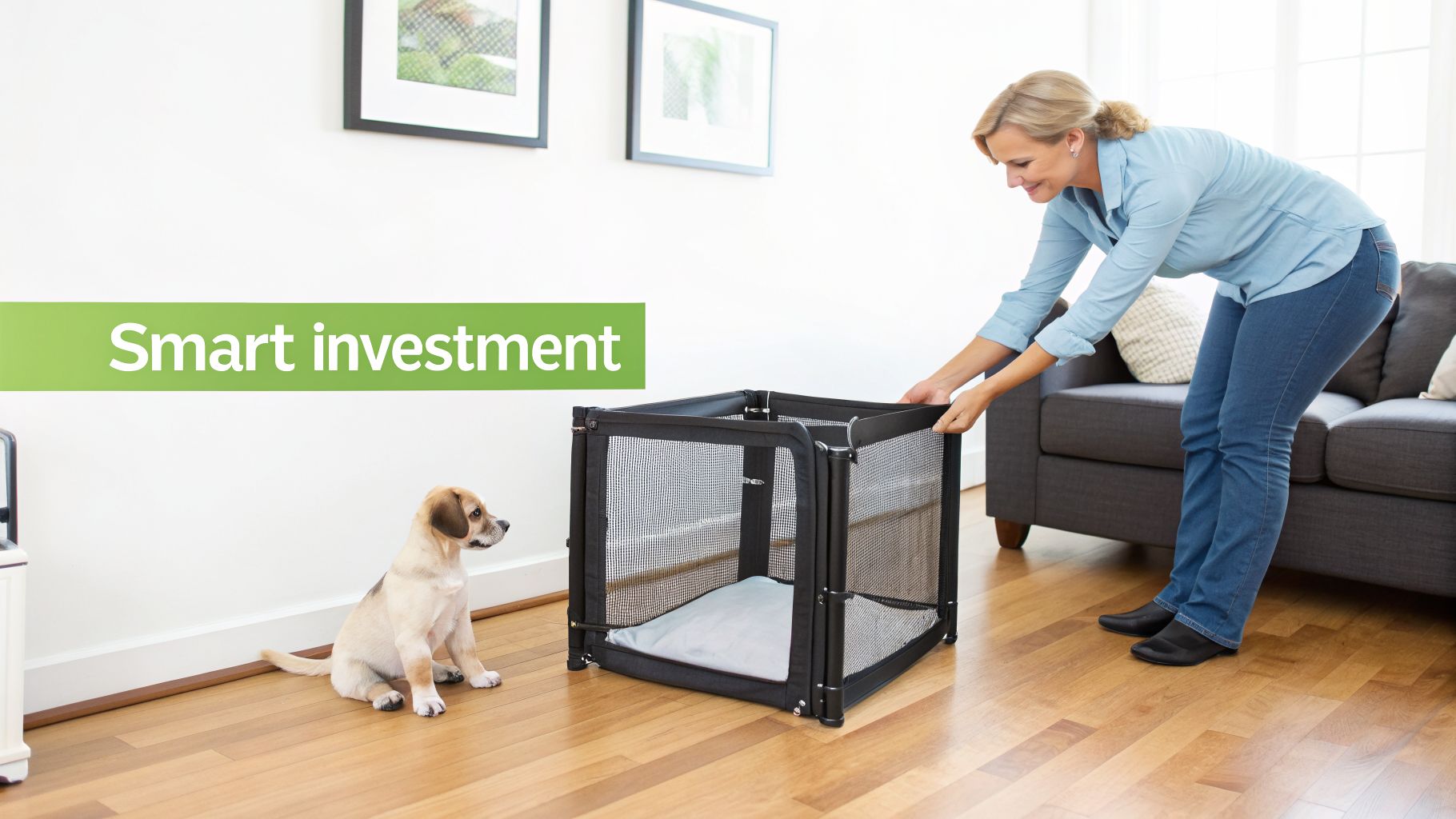
When you're at the pet store staring at your tiny puppy, it's tough to guess how big they'll get. Do you buy a small crate they’ll outgrow in three months? Or a giant one that’s too large for effective house training right now? An adjustable crate eliminates this guesswork.
Think of it like adjustable roller skates you might have had as a kid. Instead of buying a new pair every year, your parents just expanded them. This is the same principle: one purchase that saves money, reduces clutter, and gives you one less thing to worry about. It's a practical, long-term solution.
A Single Crate from Puppyhood to Adulthood
The core feature of these crates is a simple divider panel. This wall allows you to shrink the usable space inside a larger crate, creating a snug, perfectly-sized spot for your pup. As they grow, you simply move the divider back to give them more room.
This one feature supports your dog through every critical growth phase:
- Potty Training: A smaller space is essential for housebreaking. Dogs instinctively avoid soiling their sleeping area. The divider prevents them from using one end of the crate as a potty and the other as a bedroom.
- Adolescent Growth Spurts: During that rapid "teenage" phase, you can gradually expand their space. This means no last-minute trips to buy a bigger crate, and your dog keeps their familiar, secure den.
- Full-Grown Comfort: Once your dog reaches their adult size, remove the divider permanently. The crate they’ve known their whole life becomes their final, safe den.
Actionable Takeaway: When you choose an adjustable dog crate, you are investing in a consistent, secure home base that supports your dog for life. This reduces stress for both you and your pet.
The Foundation for Successful Training
Proper sizing is the cornerstone of effective crate training. It helps create the den-like atmosphere that makes a dog feel safe, not punished. A puppy that feels secure is far less likely to become anxious and will begin to view their crate as a personal retreat.
This adaptable crate becomes more than a potty-training tool. It serves as a familiar "home base" for travel, a quiet space during loud events like fireworks, and a reliable management tool. By starting with an adjustable model, you set your dog up for a lifetime of successful training and a stronger bond.
How Adjustable Crates Work for Your Growing Dog
The "magic" of an adjustable dog crate is its removable divider panel. This single piece of hardware is what makes one crate do the job of many, delivering tangible benefits for you and your growing puppy.
When you bring your puppy home, you slide the divider in to create a small, cozy den. This isn't just about comfort; it's a strategic tool for successful house training.
Creating the Ideal Den for House Training
Dogs have a deep-seated instinct not to soil where they sleep. If a crate is too large, a puppy will designate one corner as a bathroom, far from their sleeping spot. This common mistake makes potty training unnecessarily difficult.
The divider panel solves this problem. It helps you create a space that’s just big enough for your pup to stand up, turn around, and lie down comfortably—but not much else.
Actionable Takeaway: By eliminating excess space, the divider leverages your puppy's natural instinct to keep their bed clean. This teaches them to "hold it," which is the first and most critical step in building bladder control and achieving full housebreaking.
A properly sized space also enhances your puppy's sense of security. Instead of feeling exposed in a vast area, they feel snug and protected. A secure crate environment can reduce separation anxiety by up to 70%, transforming crate time into a positive experience rather than a source of stress.
Adjusting the Crate as Your Dog Grows
As your puppy gets bigger, adjusting the crate is a straightforward process. You simply move the divider panel back incrementally, always adhering to the "just enough room" rule. This ensures the crate remains an effective training tool and a personal safe space.
Here is the typical adjustment timeline:
- Tiny Puppy Stage: Set the divider to create the smallest possible space. This is crucial for the initial weeks and months of house training.
- Adolescent Growth Stage: When your puppy hits a growth spurt, unhook the panel and move it back a few inches. The crate literally grows with them, so they never feel cramped.
- Full-Grown Adult Stage: Once your dog is fully grown and house-trained, remove the divider permanently. The crate they’ve known their whole life now becomes their full-sized sanctuary.
The global market for dog crates, which includes adjustable models, reached USD 1,684.2 million in 2024. This growth is driven by pet owners seeking smart, durable products. You can find more market analysis at Cognitive Market Research. Purchasing an adjustable crate is an investment in your dog's long-term training and well-being.
Getting the Crate Size Just Right: A Quick Guide
Selecting the right size for an adjustable dog crate is the most critical decision you'll make. It’s not just about measurements; it’s about creating a safe, secure den your dog will willingly use. A crate that's too big undermines potty training, while one that's too small causes discomfort and anxiety. The solution is to buy a crate that fits your dog's estimated adult size and use the divider panel to adjust the space as they grow.
The Right Way to Measure Your Dog
To get the right fit, you'll need a flexible measuring tape and two simple measurements of your dog's final, adult size.
-
Measure Height: With your dog sitting or standing, measure from the floor to the top of their head (or upright ears). Add 2-4 inches to this number. This extra headroom ensures they can stand comfortably.
-
Measure Length: Have your dog lie down and measure from the tip of their nose to the base of their tail. Add 2-4 inches to this measurement so they have room to turn around and stretch.
These final numbers are your target dimensions. Look for a crate that meets or slightly exceeds both your final height and length measurements.
Actionable Takeaway: A common mistake is buying a crate for a puppy's adult size but failing to use the divider. This gives the puppy too much space, leading them to use one corner as a bathroom and defeating the purpose of crate training.
Predicting Your Puppy's Future Size
For a puppy, you'll need to estimate their adult size. This is easier than it sounds. For purebred dogs, online breed standard charts provide a reliable estimate of their future height and weight.
For a mixed-breed dog, it's an educated guess. If you know the parent breeds, that's your best clue. Otherwise, look at their paw size—large paws often signal a large adult dog. When in doubt, it's always safer to size up. You can find more detailed instructions in our complete guide on dog crate sizes.
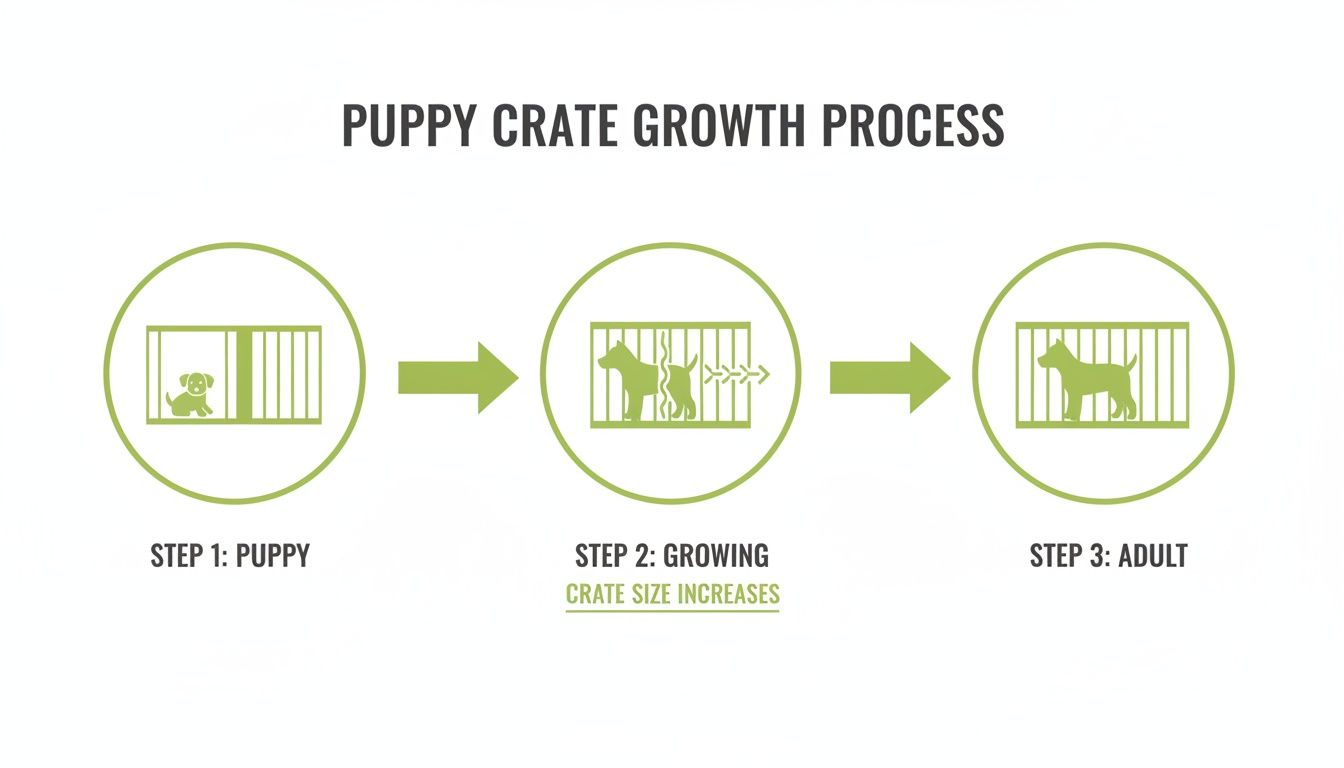
As shown, the divider panel allows one crate to function as three, providing a perfectly sized space at every stage of your dog's life.
The "Stand Up, Turn Around" Rule
Once you have your measurements, remember the golden rule of crate sizing. Your dog needs just enough room to perform three actions:
- Stand up without their head touching the top.
- Turn around easily without contorting.
- Lie down and stretch out comfortably.
That's it. A crate is a den, not a playroom. By using the divider, you give your puppy a cozy space that taps into their natural instinct to keep their den clean, which is the foundation of successful, stress-free training.
Choose the Safest Materials and Features
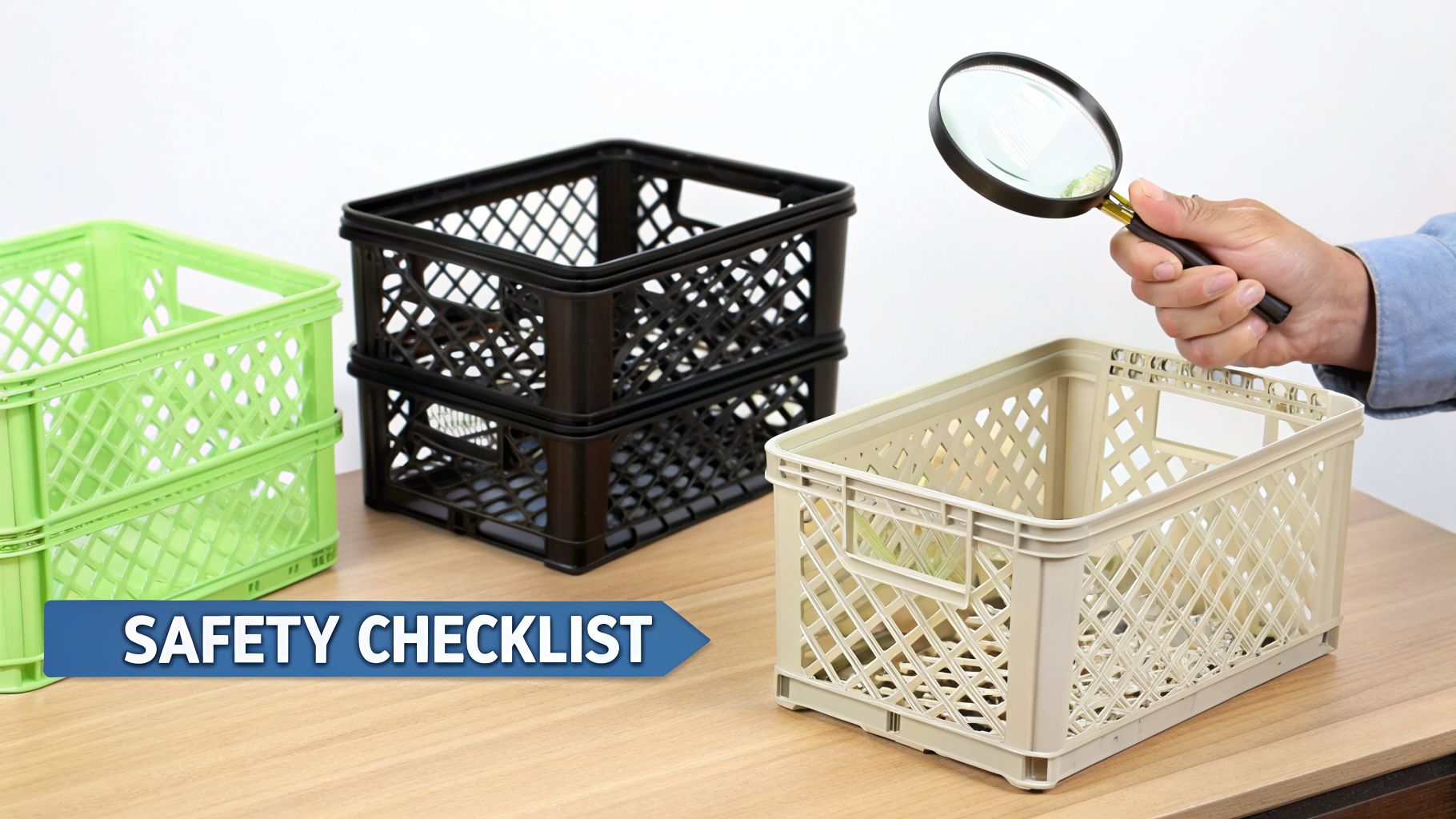
Once you've determined the correct size, your next step is to evaluate safety and durability. A crate is an investment in your dog’s well-being, so the materials and construction are paramount. Think of this as a safety inspection for your dog's future den, ensuring it's built to last and keep them secure.
Comparing Crate Materials
Adjustable dog crates are typically available in three materials: metal wire, plastic, or soft-sided fabric. The best choice depends on your dog’s temperament and how you plan to use the crate.
-
Metal Wire Crates: The most popular choice for a reason. They offer excellent airflow and visibility, helping your dog feel connected to the family. Actionable Step: Run your hands over all welds and wire ends to ensure there are no sharp points that could injure your dog.
-
Plastic Crates: Ideal for air travel and can make anxious dogs feel more secure with their enclosed, den-like design. Actionable Step: Ensure any plastic crate has ample ventilation holes on all sides. Good airflow is non-negotiable for safety.
-
Soft-Sided Crates: Made from durable fabrics like nylon, these are lightweight and perfect for travel. They are best suited as a secondary crate for dogs who are already crate trained and not prone to chewing or scratching.
For most new puppy owners, a sturdy wire crate provides the best combination of strength, visibility, and long-term value. For more tips, see our guide on selecting a large pet crate.
Your Must-Have Safety Checklist
Regardless of the material, certain safety features are non-negotiable. Before you buy, perform a hands-on inspection using this checklist. A high-quality crate should meet every criterion.
Actionable Takeaway: A secure crate provides peace of mind. Well-built, escape-proof features prevent accidents and ensure your dog is safely contained when you cannot supervise them.
Use this checklist before making your final decision:
-
Secure Latches: Examine the latches. Are they simple slide-bolts, or do they have a locking mechanism that requires lifting or twisting? An extra step can thwart a clever escape artist.
-
Rounded Corners: Feel all corners, both inside and out. They should be smooth and rounded. Sharp plastic or metal edges are a major red flag for potential scrapes and cuts.
-
Non-Toxic Coating: For wire crates, confirm the coating is non-toxic and chip-resistant. Puppies explore with their mouths, and you don't want them ingesting paint flakes.
-
A Sturdy Divider Panel: The divider is the key component. It must be durable and fit snugly, with no large gaps where a puppy could get a paw or head stuck. It should be easy for you to move but impossible for your dog to dislodge.
Everyday Uses for Your Adjustable Crate
Once your puppy is potty-trained, the value of your adjustable crate is just beginning. It transforms from a training tool into a permanent fixture in your life together, serving as your dog’s personal den, a travel essential, and a management tool for a peaceful home.
A Consistent Safe Space During Travel
Dogs thrive on routine and can get stressed in new environments. A hotel room or a relative's house presents a whirlwind of unfamiliar smells and sounds. Your dog's crate, which they already associate with safety, becomes a portable "home base."
Bringing their crate on trips provides a familiar den where they can escape and decompress. This simple action makes travel less stressful for your dog and more enjoyable for everyone. Having a secure, correctly-sized crate is also a critical safety measure. With 28% of U.S. dog owners traveling with their pets in 2024, safe transport is a top priority. As noted by Fortune Business Insights, the pet carrier market is expected to reach USD 3.4 billion by 2035, reflecting the growing demand for safe travel solutions.
Creating Harmony in Multi-Dog Households
If you have more than one dog, you know that maintaining peace sometimes requires giving everyone their own space. Dogs, like human siblings, need breaks from each other.
Actionable Takeaway: An adjustable crate gives each dog a personal den—a space that is exclusively theirs. This helps prevent resource guarding, squabbles over sleeping spots, and general tension. It's a safe zone where they know they won't be bothered.
This is especially useful during mealtimes or when distributing high-value chews. Separating dogs into their crates prevents food-related conflicts and allows each dog to enjoy their meal or treat in peace.
Managing Behavioral and Environmental Stress
Your dog's crate is an excellent tool for navigating stressful life events. The world can be overwhelming for a dog, and having a safe retreat makes a significant difference.
- Loud Noises: During thunderstorms or fireworks, the crate acts as a muffled, cozy fort where your dog can feel protected.
- Visitors: When guests are over, especially children or people nervous around dogs, the crate provides an easy management solution for everyone's comfort.
- Forced Rest: If your dog is recovering from surgery or injury, vets often prescribe "crate rest." It’s the perfect way to ensure they heal calmly without risk of re-injury.
By using the crate in these situations, you provide your dog with a healthy coping mechanism. They learn to retreat to their safe space instead of panicking.
Cleaning and Maintaining Your Crate for a Lifetime
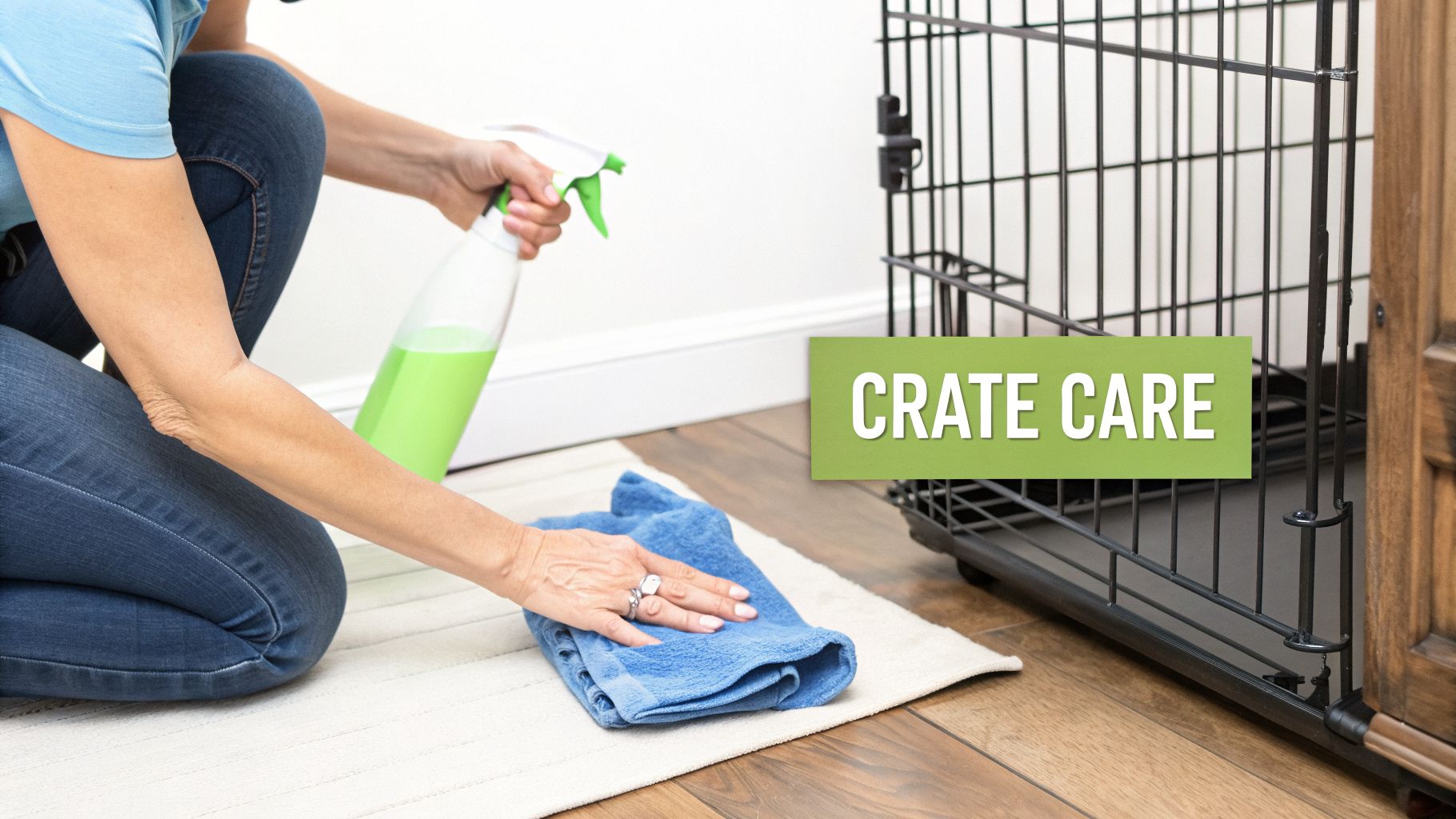
An adjustable dog crate is built to last, but regular upkeep is necessary. A simple cleaning routine and periodic safety checks will keep your dog’s den healthy, secure, and ready for years of use. Think of it like vehicle maintenance: a few minutes of preventative care can prevent major issues down the line.
A Simple Cleaning Playbook
A clean crate prevents the buildup of odors, bacteria, and grime. The best cleaning method depends on the crate's material.
-
Wire Crates: For daily upkeep, wipe the wires and pan with a damp cloth. For a deep clean, remove the pan and wash it with hot, soapy water. A 50/50 solution of white vinegar and water is an effective, pet-safe disinfectant.
-
Plastic Crates: These are generally easy to clean. Disassemble the crate and wash all parts with warm water and a gentle, pet-safe soap. Rinse thoroughly and allow it to air-dry completely to prevent mildew.
-
Soft-Sided Crates: Always check the manufacturer's care label first. Many fabric covers are machine-washable. For spot cleaning, an enzyme cleaner designed for pet stains is effective at breaking down spots and odors.
Don't forget the bedding! A comfortable dog bed makes the crate cozier. Choosing a bed with a removable, washable cover is a game-changer for easy cleanup. For help finding the right one, consult this ultimate guide to a dog bed with washable cover.
Conducting Regular Safety Inspections
In addition to cleaning, perform a quick safety check every few weeks to catch potential issues before they become problems. A quick inspection will confirm the crate remains in top condition.
Actionable Takeaway: A routine safety check is the most direct way to ensure your dog’s den remains a safe haven. It’s about being proactive—spotting a bent wire or loose latch before it poses a risk.
Follow this quick checklist:
-
Check for Weak Points: Run your hands over all wire welds and corners. Feel for any sharp edges, bent wires, or cracks in the plastic that could snag a collar or paw.
-
Test All Latches and Locks: Open and close the crate door several times. The latches should engage securely and not pop open with a simple push. A loose latch is an invitation for escape.
-
Inspect the Divider Panel: This is the most crucial moving part of your adjustable dog crate. Verify that the hooks attaching it to the walls are strong and unbent. Wiggle the panel to ensure it's held firmly in place and cannot be pushed over by your dog.
Making these simple cleaning and safety checks part of your routine ensures your crate remains a safe, comfortable, and reliable space for your dog throughout their life.
Common Questions About Adjustable Dog Crates
Even with a solid plan, you may have questions as you start your crate training journey. We've compiled the most common questions from new owners to provide clear, actionable answers and boost your confidence.
When Should I Move the Divider Panel for My Puppy?
The right time to give your pup more space is dictated by their growth, not a calendar. Actionable Step: Watch for the moment they can no longer stand up straight or turn around without being cramped. When you see this, slide the panel back just enough for them to be comfortable again. Avoid giving too much space at once, as this can create a new "potty spot." This gradual adjustment reinforces their den instinct and supports successful potty training. For more details, read our guide to crate training a puppy.
How Can I Make the Crate Comfortable Without Encouraging Accidents?
Making the crate comfortable is key, but a big, fluffy bed can backfire with a puppy still in training. They might see it as an absorbent potty pad, undoing your hard work. Actionable Step: Start with a thin, durable, and chew-proof mat. It provides a soft surface without creating a tempting place for an accident. Once your puppy is reliably house-trained, you can upgrade them to a cozier bed.
Actionable Takeaway: A little less fluff at the beginning is a small trade-off for a much cleaner and more successful training experience for both of you.
Can I Use One Adjustable Crate for Two Small Dogs?
While it might seem like a space-saving idea, putting two dogs in one crate is strongly discouraged. A crate must be a private, personal den for one dog only. Here's why this is critical:
- Safety: If a disagreement occurs in a confined space, neither dog can escape. This can lead to stress or injury.
- Security: Every dog needs a personal sanctuary to rest without being bothered. Sharing can cause anxiety and resource guarding.
- Training: Effective crate training relies on building a personal den instinct, which is impossible in a shared space.
Actionable Step: Provide each dog with their own adjustable dog crate. This is the best way to support their training, ensure their safety, and give them the personal retreat they need to feel secure.
At Pet Magasin, we’re all about creating smart, long-lasting solutions for every stage of your pet's life. Our products are designed to grow right alongside your furry family, giving them the safety they need and you the peace of mind you deserve. Explore our collection today and find the perfect gear for your best friend.

Leave a comment