


10 Pet Safety Tips for a Safer, Happier Home

You open the front door with an armful of groceries, and your dog slips past your legs before you can react. Or your cat discovers an unattended pill bottle, your rabbit chews through a power cord, or a storm forces your family to leave home quickly. Pet safety rarely begins with a dramatic emergency. It begins with small details, such as a secure door, a current tag, a safe carrier, and a plan everyone in the household understands.
Effective pet safety tips combine prevention, identification, supervision, health monitoring, and preparation. The right routine protects dogs, cats, rabbits, and other common pets during ordinary moments, from breakfast and walks to grooming and travel. It also gives you a clearer response when something does go wrong.
These ten safeguards follow a pet's real day. You'll find practical ways to reduce escape risks, prevent poisoning, manage food and weather exposure, prepare for evacuation, and recognize symptoms that need veterinary attention.
1. Secure Proper Pet Identification and Microchipping
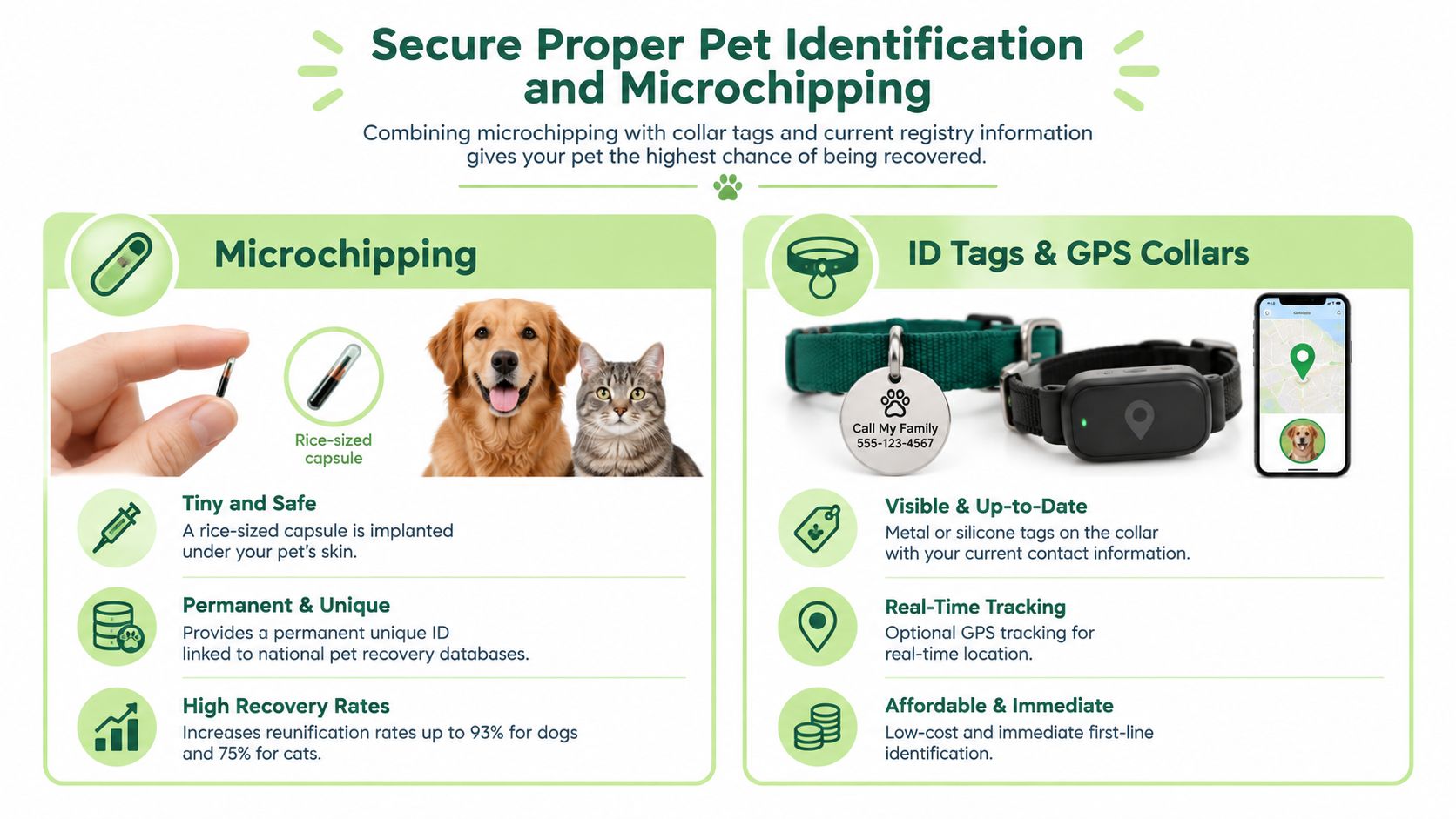
A collar tag is often the fastest way for a neighbor, driver, shelter worker, or veterinary clinic to contact you when a pet wanders away. Keep the collar on whenever it's safe and appropriate, and check that the tag remains readable. Include your current phone number and address, then replace the tag after a move or phone-number change.
A veterinarian can implant a microchip beneath your pet's skin. The chip doesn't replace a collar because someone who finds your pet may not have a scanner immediately available. It creates a second identification route when a collar is lost or removed.
Register the chip as soon as you adopt or rehome a pet. Confirm that the registration includes your name, phone number, backup contact, and current address. You can also check whether your information is listed with more than one compatible registry, such as AKC Reunite or 24PetWatch, where applicable.
Make identification easy to verify
- Keep recent photos: Photograph your pet from several angles, including distinctive markings, coat patterns, and facial features.
- Review records: Ask your veterinarian to scan the microchip during routine visits and compare the number with your paperwork.
- Prepare for travel: Place a copy of identification details inside the carrier and keep a digital version on your phone.
- Consider extra tracking: A GPS collar can supplement, but not replace, physical identification and microchipping.
2. Use TSA-Approved Pet Travel Carriers for Safe Transportation
Transportation starts with the right enclosure, not the day you leave. A carrier should let your pet remain secure, breathe comfortably, and sit or reposition without being crushed against the sides. Measure your pet's length, width, and height before shopping, then compare those measurements with the carrier's usable interior space.
For air travel, requirements vary by airline and route. The Federal Aviation Administration explains airline decisions about pets in the cabin, while the U.S. Department of Transportation notes that some airlines require a certified health record issued within 10 days of travel. The CDC recommends direct flights when possible, USDA-approved crates for cargo transport, and never placing a pet in an overhead bin.
Airlines also decide whether an animal can travel in the cabin, so verify the current rules directly with the carrier. An airline-approved carrier can support travel planning, but it doesn't guarantee acceptance on every route.
For measurements, acclimation, and carrier features, review TSA pet carrier requirements. Introduce the carrier gradually, using familiar bedding or a toy with your pet's scent. Practice short car trips before attempting a longer journey, and keep the carrier ventilated and out of direct sunlight.
Travel rule: Don't sedate a pet for air travel unless a veterinarian specifically directs medication. IATA warns against sedation or tranquilization during transport because of possible adverse effects, and any medically necessary medication should be veterinarian-directed and documented on the health certificate with the time and dosage. IATA's pet travel guidance explains the concern.
3. Implement a Pet-Proofing Strategy for Your Home Environment
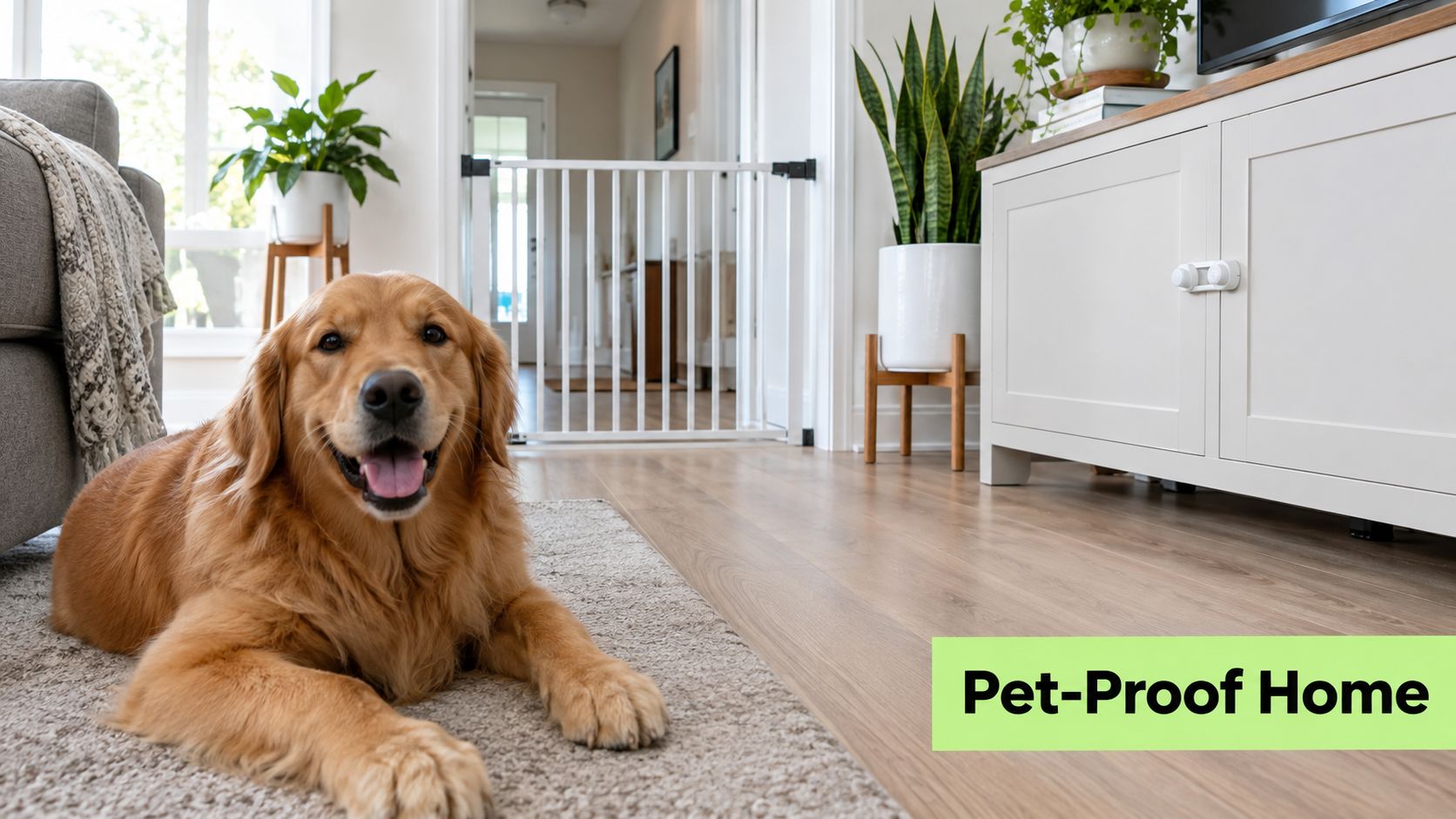
Walk through your home at your pet's eye level. A loose button, charging cable, open toilet, unstable lamp, or dropped pill can look harmless to you and inviting to an animal. Rabbits and other small pets may reach hazards that dogs and cats overlook, while cats can climb onto shelves and counters.
Lock cleaning products, medications, pesticides, fertilizers, disinfectants, insect sprays, laundry detergents, bleach, and automotive fluids in closed cabinets. The ASPCA identifies these products, along with rodenticides, certain plants, human medications, antifreeze, and incorrectly used flea-and-tick products, as household risks in its poison-prevention guidance. Follow every product label exactly, including species restrictions and application instructions.
Home-proofing should include outdoor spaces. Fence off compost, inspect gates, secure trash, and keep treated lawns inaccessible until products are safe according to their labels. For pest control decisions, consult this guide to pet-safe pest control from Pestless Inc..
Create safe zones
Use baby gates to separate pets from kitchens during meal preparation, stairways during busy periods, or rooms containing repair work. Protect accessible cords with covers, add outlet protection where appropriate, and secure unstable furniture. A washable pet diaper may help manage accidents for an elderly or anxious pet in a controlled indoor area, but it needs regular changing and shouldn't replace veterinary advice for new incontinence.
4. Establish Proper Nutrition and Feeding Safety Protocols
Feeding safety depends on more than choosing a food bag. Dogs, cats, rabbits, birds, and other species have different nutritional needs, so ask your veterinarian before changing a diet or adding supplements. A sudden switch can cause digestive upset, and an unsuitable diet can create longer-term health problems.
Keep chocolate, onions, garlic, grapes, raisins, and xylitol-containing products inaccessible. Secure the food cupboard, supervise children around treats, and use a closed bin for table scraps. Human food can also contain bones, rich ingredients, or seasonings that aren't suitable for pets.
Measure meals rather than estimating portions by eye. Follow the feeding guidance on the product and adjust with your veterinarian according to age, body condition, activity, and medical needs. Store dry food in an airtight container, wash bowls regularly, and provide fresh water throughout the day.
Build a calmer feeding routine
Consistent meal times help you notice appetite changes. Feed pets separately if competition causes rushing, guarding, or conflict. Slow-feeder bowls, food puzzles, or scattered feeding may help some animals eat more gradually, but introduce them calmly and monitor the result.
Treats should fit into the daily food plan, not sit outside it. Small pieces can accumulate quickly, especially when several family members reward the same behavior. A written household rule, such as who gives treats and when, prevents accidental overfeeding. If you need safer boundaries around the yard or driveway, review secure dog fencing options.
5. Maintain Current Vaccinations and Regular Veterinary Care
Preventive veterinary care gives you a reference point for your pet's normal health. At a wellness appointment, your veterinarian can review vaccines, parasite prevention, dental needs, weight, diet, mobility, and behavior. The schedule depends on species, age, lifestyle, location, and medical history, so don't copy another pet's plan without professional guidance.
Book an initial veterinary appointment soon after acquiring a pet. Bring adoption or medical records, a list of current food and supplements, and questions about breed- or species-specific risks. Ask about microchipping if your pet doesn't already have one, and learn which symptoms should prompt an urgent call.
Keep both digital and physical records. Store vaccination certificates, prescriptions, laboratory results, and your veterinarian's contact details where another household member can find them. A phone reminder can prevent missed appointments, while a relationship with an emergency clinic helps you act faster after hours.
Prepare financially and medically
Emergency planning isn't only about a carrier. Ask your veterinarian which preventive treatments are appropriate and what recurring expenses belong in your household budget. The ASPCA reports that a majority of America's pet owners were unprepared for costly medical emergencies, highlighting why owners should discuss payment planning and low-cost preventive priorities before a crisis. The ASPCA's emergency-preparedness announcement provides that context.
For dogs, keep a veterinarian-reviewed record of required and lifestyle-based vaccines. A useful starting point for questions is this dog vaccine schedule guide, then confirm the recommendations with your own veterinary practice.
6. Create Emergency Preparedness and Disaster Response Plans
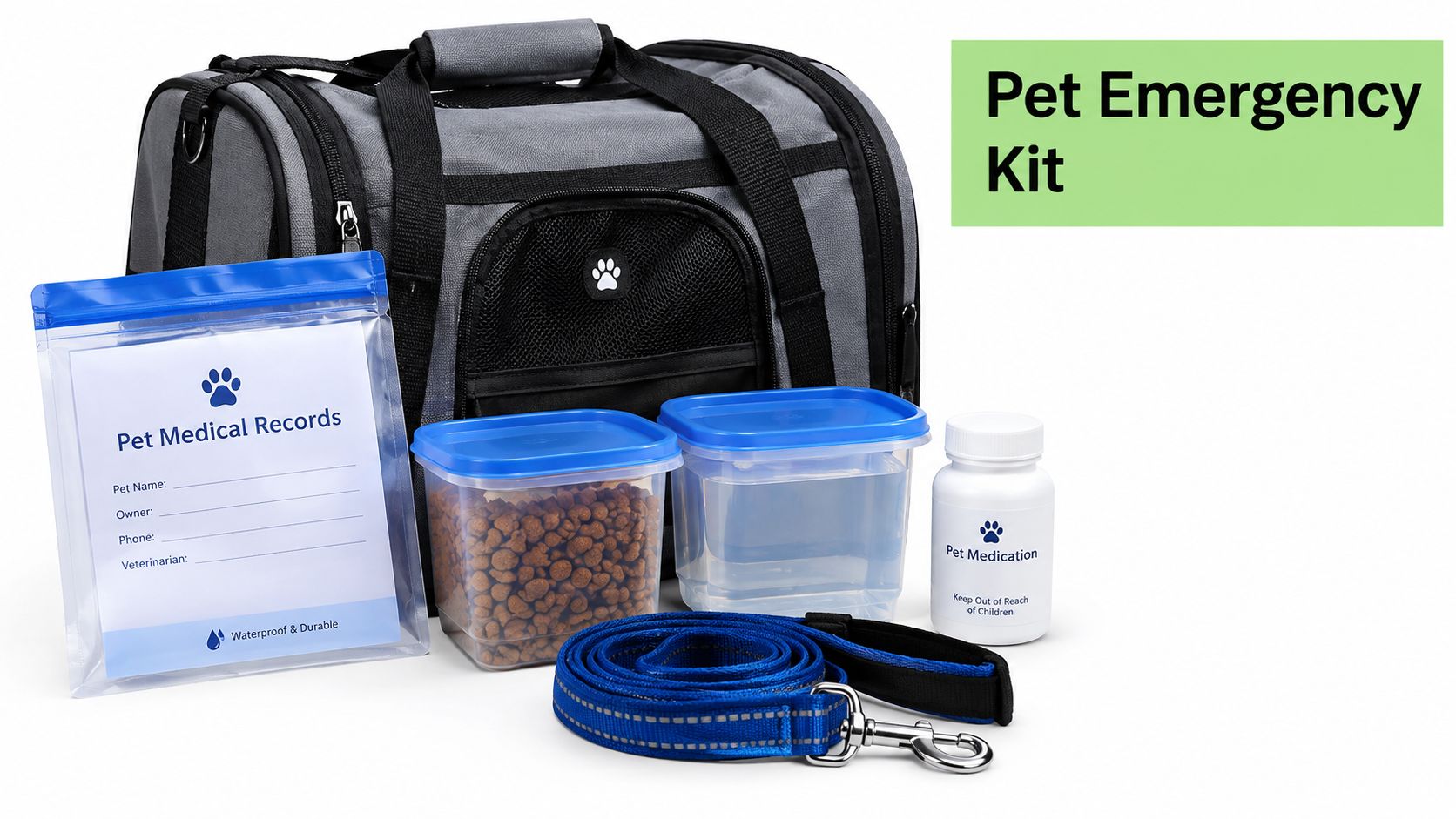
A frightened pet may hide, bolt, or resist handling during a fire alarm, flood, storm, or evacuation. Store carriers where you can reach them quickly, not buried behind seasonal equipment. Keep leashes, harnesses, and collars together so you aren't searching through drawers while smoke, water, or noise is spreading.
Build a pet emergency kit suited to each animal. Include food and water, medications, records, vaccination certificates, waste supplies, bowls, bedding, a first aid kit, and recent photographs. Waterproof documents in a pouch, and keep a written card with your veterinarian, emergency clinic, microchip, and identification details.
Identify pet-friendly hotels, shelters, friends, or family members before you need them. Some evacuation locations won't accept animals unless they're properly contained, so ask about rules in advance. Arrange a backup caregiver who can collect your pet if you're at work or injured.
Rehearse the first few minutes
Practice placing your cat, rabbit, or small dog into its carrier without chasing it. Let the animal explore the enclosure during calm periods and reward cooperation. Walk through your home's exit routes, including an alternative route if the primary door is blocked.
The ASPCA handled more than 451,000 toxic substance exposure calls in 2024, a nearly 4% increase from the previous year, according to the foundational data provided for this article and its linked travel reference. That volume reinforces why a poison-response plan belongs with disaster preparation, not in a forgotten folder.
7. Practice Proper Leash Training and Outdoor Supervision
Outdoor safety changes with the setting. A quiet fenced yard may allow different freedom than a busy sidewalk, parking lot, trailhead, or unfamiliar vacation area. Even a normally reliable pet can react to a loud vehicle, wildlife, another animal, or a dropped piece of food.
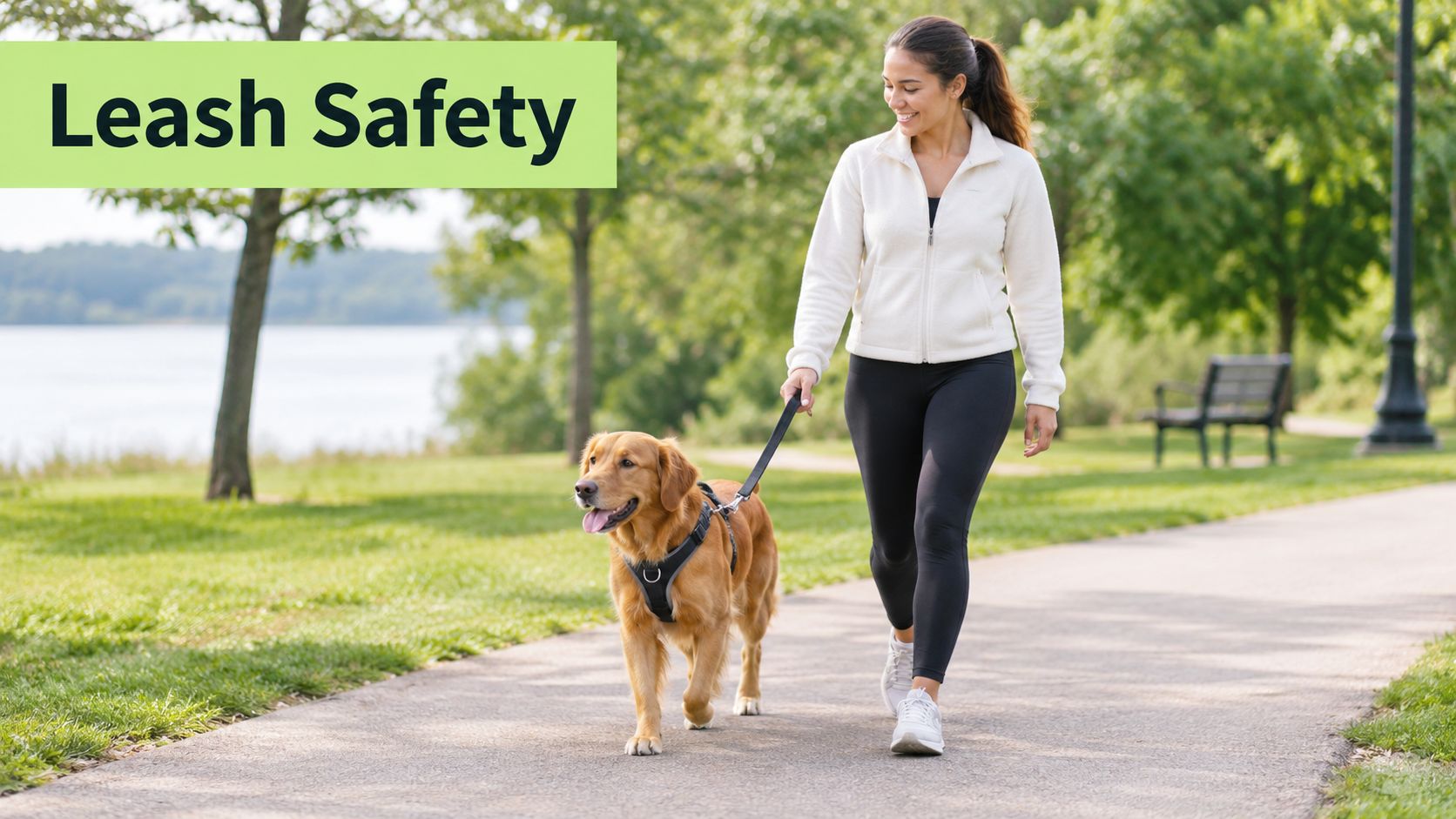
Choose a properly fitted collar or harness and inspect its stitching, clips, and leash attachment points. A harness can help distribute pressure for some dogs, while a collar may be appropriate for others. Your veterinarian or qualified trainer can help you choose equipment for your pet's body shape and behavior.
Start leash practice indoors or in a low-distraction area. Reward calm walking, stopping, checking in, and waiting at doors. Teach recall in a secure space before testing it outdoors, and don't rely on recall alone near traffic or unfamiliar hazards.
Match control to the environment
Use a shorter leash in crowded or high-traffic areas. A retractable leash may offer room to explore in an open, controlled location, but it can reduce reaction time near roads, bicycles, unfamiliar dogs, or hazards. Never leave a pet unattended while attached to a leash, tie-out, or cable.
Stay alert rather than walking while absorbed in your phone. Check gates before releasing a pet, keep cats and rabbits in secure outdoor enclosures, and use reflective equipment for low-light walks. Avoid stagnant or contaminated water, and carry fresh water for trips.
Use these dog-walking safety techniques as a visual reminder to keep supervision active throughout the outing.
8. Maintain Proper Grooming and Hygiene Practices
Grooming is a health check that happens at close range. While brushing, look for swelling, cuts, parasites, mats, irritated skin, changes around the paws, unusual lumps, discharge, or sensitivity. Cats may need help with mats, rabbits require careful handling, and dogs with complex coats may need professional support.
Use tools designed for the species, coat, and task. Brush before bathing to loosen mats, choose pet-specific shampoo, and keep water and products away from eyes and ears. Human shampoos can irritate animal skin, and forcing a frightened pet can turn a routine into a bite or escape risk.
Introduce each step gradually. Start with brief contact, pair handling with praise or a suitable treat, and stop before your pet becomes overwhelmed. A calm routine is safer than rushing through a complete grooming session.
Keep a simple maintenance rhythm
Inspect nails and trim them before they become uncomfortable or alter movement. Check ears according to your veterinarian's advice, especially for pets with floppy ears or a history of ear problems. Brush teeth with pet-safe toothpaste and ask your veterinarian to examine dental health during wellness visits.
Professional salons can be useful for dense coats, difficult nail work, or pets whose behavior makes home grooming unsafe. The AKC S.A.F.E. Grooming Program defines ongoing recertification, with certified salons recertifying every year and AKC S.A.F.E. Certified Groomers recertifying every two years. The AKC's program update explains these intervals.
For a careful home routine, use this guide to grooming your dog at home.
9. Control Environmental Temperature and Weather Exposure
A pet's comfort depends on more than the number on a thermometer. Breed, coat, age, body condition, health, humidity, wind, and activity all matter. A short-nosed dog, elderly cat, young rabbit, or pet with heart or breathing problems may need a more conservative plan than a healthy animal with a different body type.
Never leave a pet unattended in a vehicle. Use shade, ventilation, fresh water, and rest periods during outdoor activity, and avoid the hottest part of the day when conditions are harsh. The CDC recommends supervising pets during trips, using a carrier or leash, harnessing pets in the back seat, and avoiding stagnant or contaminated water. CDC guidance for traveling with pets provides the travel-health framework.
The Ontario Veterinary Medical Association advises shortening walks in hot weather and taking extra care with snub-nose dogs. OVMA's pet safety tips can help you adapt exercise rather than following a fixed routine.
Watch paws and behavior
Check pavement with your hand before a walk. If the surface is too hot for you to hold your hand against comfortably, choose grass, shade, or an indoor activity. In winter, wipe paws after walks to remove salt and chemicals, and consider protective booties or paw balm when appropriate.
Provide a dry, warm resting place in cold weather, with clothing only when it fits comfortably and doesn't restrict movement. In heat, watch for excessive panting, heavy drooling, weakness, vomiting, confusion, or collapse. Stop activity, move your pet to a cooler area, and contact a veterinarian promptly when signs are severe or don't improve.
10. Behavioral Management, Socialization, and Health Monitoring
Training and observation work together. A pet that knows how to wait at a door, return when called, settle in a carrier, and accept gentle handling is easier to protect during daily routines and emergencies. Use positive reinforcement, keep sessions brief, and make sure every household member uses the same cues.
Socialize puppies, kittens, and other young pets gradually. Introduce people, sounds, surfaces, handling, and calm animals in controlled settings. Don't force an interaction, and avoid uncontrolled contact with animals whose vaccination or behavior history is unknown. If aggression, severe anxiety, or destructive behavior develops, involve a qualified trainer and your veterinarian.
A daily baseline helps you detect change. Notice appetite, water intake, energy, movement, breathing, elimination, and interaction. Cats may conceal illness, while rabbits can deteriorate quickly when appetite or droppings change, so a small deviation deserves attention.
Know what needs urgent action
Emergency signs include difficulty breathing, seizures, unresponsiveness, severe bleeding, and inability to urinate or defecate. Sudden weakness, repeated vomiting, collapse, or a rapidly worsening condition also warrants immediate veterinary advice. Don't wait for a routine appointment when you're unsure about symptom severity.
If you suspect poisoning, remove your pet from the exposure, collect packaging or remaining pills, and call the ASPCA Poison Control hotline at (888) 426-4435 or a veterinarian. An unconscious pet, or one having trouble breathing, bleeding, or seizing, should go directly to a veterinary clinic. Follow ASPCA poisoning-response guidance, and don't induce vomiting unless a veterinary professional tells you to do so.
Keep gauze, antiseptic, bandaging material, and a thermometer in a pet first aid kit. Record symptoms, timing, and progression, and photograph visible injuries when it can be done safely. That information can help the veterinary team make faster decisions.
10-Point Pet Safety Comparison
| Item | 🔄 Implementation Complexity | ⚡ Resource Requirements | 📊 Expected Outcomes (⭐) | 💡 Ideal Use Cases | ⭐ Key Advantages |
|---|---|---|---|---|---|
| Secure Proper Pet Identification and Microchipping | 🔄 Low–moderate: simple vet procedure + registration | ⚡ Low cost; one-time chip ($25–75); ongoing registry updates | 📊 Very high reunification rates; reduces permanent loss ⭐⭐⭐⭐⭐ | 💡 All pets, travel, outdoor/exploration-prone animals | ⭐ Permanent ID; hard to lose; broad database reach |
| Use TSA-Approved Pet Travel Carriers for Safe Transportation | 🔄 Moderate: select/fit to airline specs; pre-travel checks | ⚡ Moderate–high upfront ($80–300+); occasional replacement | 📊 High safety for travel; reduces in-transit injuries ⭐⭐⭐⭐ | 💡 Air travel, long trips, vehicle transport, emergency evacuation | ⭐ Regulatory compliance; ventilation and security features |
| Implement a Pet-Proofing Strategy for Your Home Environment | 🔄 Moderate–high: room-by-room assessment and fixes | ⚡ Time-intensive; low–moderate cost for gates, locks, storage | 📊 Strong reduction in household accidents and poisonings ⭐⭐⭐⭐ | 💡 Homes with curious pets, multi-pet households, puppies/kittens | ⭐ Prevents emergencies; reduces veterinary visits |
| Establish Proper Nutrition and Feeding Safety Protocols | 🔄 Moderate: research + routine establishment | ⚡ Ongoing higher cost for quality food; storage solutions | 📊 Improves long-term health, reduces toxic ingestions ⭐⭐⭐⭐ | 💡 All pets; weight-management, allergy-prone animals | ⭐ Prevents obesity/toxicity; improves coat/digestion |
| Maintain Current Vaccinations and Regular Veterinary Care | 🔄 Moderate: schedule adherence and record-keeping | ⚡ Recurring costs ($500–2,000+ annually possible); time for visits | 📊 Very high disease prevention and early detection ⭐⭐⭐⭐⭐ | 💡 All pets, especially young/indoor-outdoor or high-risk animals | ⭐ Prevents severe infectious disease; establishes health baseline |
| Create Emergency Preparedness and Disaster Response Plans | 🔄 High: planning, kit assembly, practice drills | ⚡ Upfront kit costs; periodic refresh; time for planning | 📊 Significantly increases survival/reunification in disasters ⭐⭐⭐⭐⭐ | 💡 Areas prone to natural disasters, frequent travelers, multi-pet homes | ⭐ Rapid response capability; reduces separation and panic |
| Practice Proper Leash Training and Outdoor Supervision | 🔄 Moderate: training consistency and reinforcement | ⚡ Low cost tools (leash/harness); time investment for training | 📊 Greatly reduces escapes, traffic incidents and injuries ⭐⭐⭐⭐ | 💡 Urban walks, hikes, public spaces, recall training | ⭐ Direct control; safer outdoor interactions; improved recall |
| Maintain Proper Grooming and Hygiene Practices | 🔄 Moderate: routine care or professional appointments | ⚡ Tools/professional services ($50–300 per session) | 📊 Reduces infections, parasites; aids early problem detection ⭐⭐⭐⭐ | 💡 Long- or dense-coated breeds, senior pets, allergy-prone animals | ⭐ Prevents skin/dental issues; improves comfort and detection |
| Control Environmental Temperature and Weather Exposure | 🔄 Moderate: monitoring and habitat adjustments | ⚡ Cost for climate control, shelters, cooling/heating gear | 📊 Prevents heat stroke/hypothermia; protects paws and respiration ⭐⭐⭐⭐ | 💡 Extreme climates, short-haired/senior pets, outdoor housing | ⭐ Prevents weather-related emergencies; extends safe activity time |
| Behavioral Management, Socialization, and Health Monitoring | 🔄 High: ongoing training and daily monitoring routines | ⚡ Time-intensive; possible professional fees ($500–2,000+) | 📊 Reduces aggression/anxiety; enables early illness detection ⭐⭐⭐⭐⭐ | 💡 Puppies/kittens, reactive pets, multi-pet homes, public access | ⭐ Improves safety, social skills, and early health intervention |
Turn These Safety Checks Into a Routine
Pet safety works best as a routine rather than a one-time shopping list. Start with the risks that could create the greatest immediate problem in your home: missing identification, accessible toxins, unsecured doors and windows, unavailable emergency contacts, and a carrier that your pet fears or cannot use comfortably.
Complete one focused review today. Walk through every room at floor level, test the latch on the main exit, check the information on your pet's tags, confirm the microchip registration, and save your veterinarian and nearest emergency clinic in your phone. If you have a cat, rabbit, bird, or another small animal, inspect the spaces they can reach rather than limiting the review to dog-height hazards.
Use the daily rhythm as your reminder system. Feeding time gives you a chance to notice appetite and water intake. Walks reveal changes in movement, breathing, paw comfort, and behavior. Grooming lets you inspect skin, ears, nails, teeth, and coat. Travel preparation tests whether your pet can enter the carrier calmly, while evening routines give you an opportunity to check doors, gates, medication storage, and outdoor access.
A practical starting point: Fix one preventable hazard before buying another convenience item. A locked cabinet, current phone number, safe carrier location, or written emergency contact list can make the next stressful moment easier to manage.
Refresh food, medications, first aid supplies, identification details, and medical records on a recurring schedule. Replace damaged leashes, worn carrier hardware, unreadable tags, and expired supplies. Ask a veterinarian whenever your pet's diet, symptoms, behavior, exercise tolerance, or environmental needs are unclear. Professional advice is especially important for senior pets, brachycephalic breeds, animals with chronic conditions, and species with specialized housing or nutrition requirements.
Preparedness should also account for cost. The ASPCA has identified a majority of pet owners as unprepared for costly medical emergencies, so discuss preventive priorities, likely care needs, and payment planning before an emergency occurs. Small, regular decisions can reduce avoidable exposure and help you respond decisively when professional care is necessary.
The most useful pet safety tips are the ones your household can repeat. Keep identification current, make hazards difficult to reach, supervise outdoor activity, adapt care to weather, and practice the emergency steps before you need them. Your pet doesn't need a perfect home. They need a home where responsible people have made the safer choice easier.
Pet Magasin offers practical supplies for several parts of a pet's daily safety routine, including TSA airline-approved travel carriers, washable pet diapers, and durable grooming utensils. Visit Pet Magasin to explore products that can support safer travel, cleaner home routines, and more manageable grooming.

Leave a comment