
How to Make Cat Toys: Actionable DIY Ideas

Learning how to make your own cat toys is simpler than you think. All you need are a few household items and a bit of creativity to turn things like cardboard tubes and old t-shirts into engaging toys that satisfy your cat's natural hunting instincts. This approach saves money and lets you customize the perfect toy for your cat's specific play style.
Why Your Cat Deserves Homemade Toys
Crafting toys for your cat is more than a cost-saving measure; it's an opportunity to create something that matches their personality. Whether they are a stalker, an acrobat, or a puzzle-solver, a DIY toy can provide the mental and physical stimulation needed to prevent boredom and destructive behavior.
This hands-on approach is also a sustainable choice. Upcycling common household items aligns with the growing trend of embracing eco-friendly hobbies by turning potential trash into a source of joy for your pet.
Strengthening Your Connection Through Play
The real value of a homemade toy emerges during shared playtime. Dangling a wand you made or watching your cat solve a puzzle you built deepens your bond. This interaction allows them to act on their predatory drive in a safe, controlled way.
While there are many excellent commercial toys available, a homemade one has a personal touch. If you need inspiration for your next project, exploring a range of enriching cat products can provide fresh ideas.
To make a toy your cat will love, tailor it to their play style. Create a lightweight chaser for a sprinter or a sturdy puzzle for a methodical thinker. This shows you understand their needs and are committed to their well-being.
This focus on enrichment is reflected in the cat toy market, valued at USD 3.3 billion in 2025 and projected to reach USD 4.5 billion by 2035. This growth signals a clear shift toward providing pets with more engaging play experiences. Creating your own toys is a rewarding way to contribute directly to your cat's happiness.
Choosing Safe and Engaging Crafting Materials
Before you start crafting, think like your cat. The toy you make is their prey. It will be kicked, bitten, and clawed. Your primary responsibility is to ensure it can withstand this activity without becoming a safety hazard.
Prioritize non-toxic, durable materials that won't break into small, swallowable pieces. Natural fabrics like cotton, felt, or fleece from old clothing are ideal because they are soft and generally safe if small fibers are ingested. Untreated wood, plain cardboard, and natural cork are also excellent for puzzle and chase toys.
Use this chart to decide which type of toy to make based on your cat's current mood.
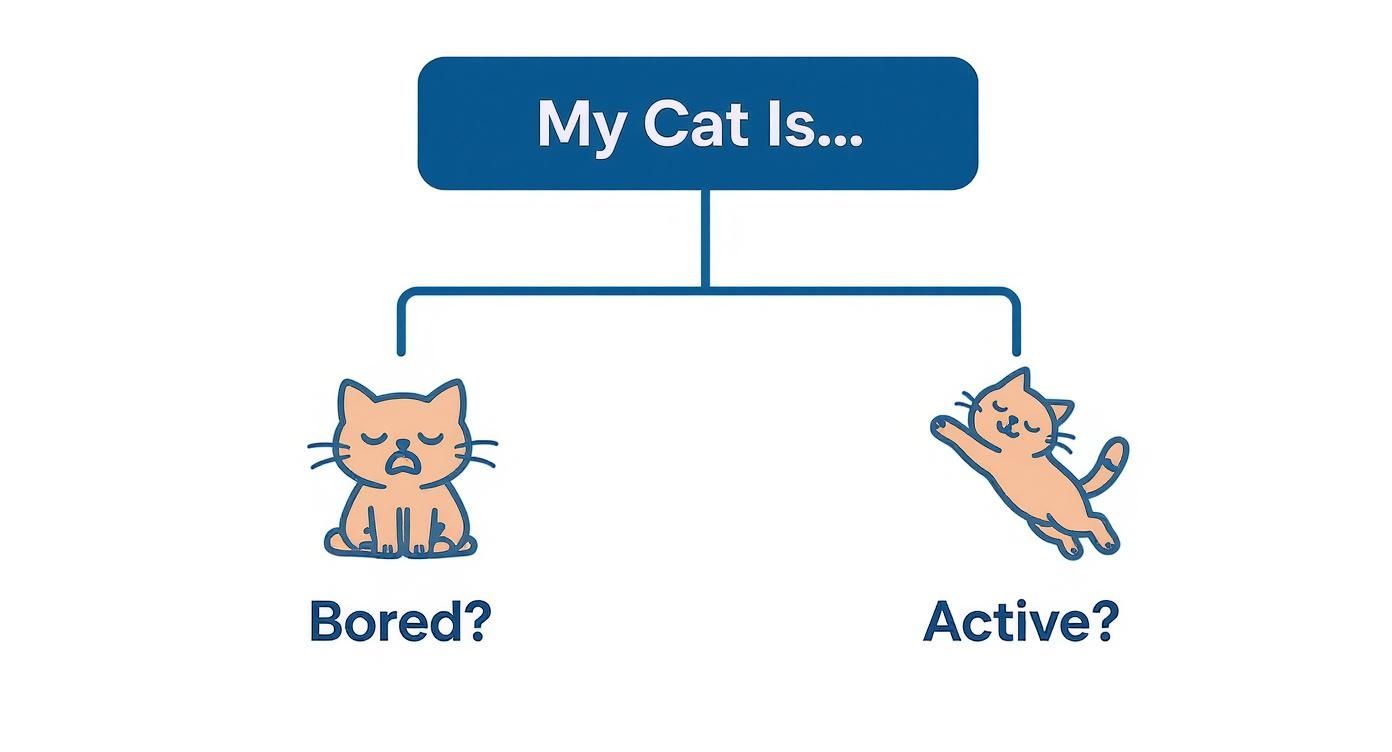
A bored cat often needs mental stimulation from a puzzle toy, while an active cat will prefer a toy they can chase.
Materials to Confidently Upcycle
Your recycling bin and linen closet are full of potential cat toy materials. Here are some of the best items to repurpose:
- Cardboard Tubes: Use empty toilet paper or paper towel rolls to create treat puzzles or lightweight batting toys.
- Old T-Shirts or Socks: Cut them into strips for wand toys or tie them into a large knot for a durable chew toy. No sewing is needed.
- Wine Corks: Natural corks (never plastic) make excellent chase toys. Wash them thoroughly to remove any wine residue.
- Cardboard Boxes: A simple box can become a fort, a scratch pad, or the base for a complex puzzle feeder.
Actionable Tip: To make a toy more enticing, mimic the texture and weight of natural prey. Choose materials that are soft, crinkly, or light enough to be sent flying across a room.
To streamline your crafting process, take a few minutes to organize your craft supplies. Having everything ready saves time and makes the project more enjoyable.
Cat-Safe vs Risky Crafting Materials
Selecting the right material is the most critical step for ensuring a toy is safe. This table outlines which common materials are safe and which you must avoid.
| Material | Safety Level | Best For | Potential Risks to Avoid |
|---|---|---|---|
| Felt or Fleece | High | Plush toys, kickers, wand danglers | Sew seams securely; never use toxic glues. |
| Cardboard | High | Puzzle feeders, scratchers, batting toys | Remove all tape, staples, and plastic labels first. |
| Natural Cork | High | Lightweight chase toys | Use only real, natural cork—not synthetic or plastic. |
| Untreated Wood | High | Sturdy puzzle toys, rollers | Sand down any splinters or sharp edges completely. |
| Yarn or String | Very Low | AVOID | Extreme risk of intestinal blockage if swallowed. |
| Rubber Bands | Very Low | AVOID | Choking hazard; can cause severe internal obstruction. |
| Small Plastic Bits | Very Low | AVOID | Googly eyes, beads, and buttons are serious choking hazards. |
| Sharp Feathers | Low | Attached danglers (with caution) | Sharp quills can injure eyes or mouths. Use only soft marabou. |
If your cat is an aggressive chewer, stick to the most durable materials. For gentler cats, you have more flexibility, but always supervise play.
Dangerous Materials to Always Avoid
Certain craft supplies are hazardous to cats and can lead to choking, poisoning, or intestinal blockages. Do not use them under any circumstances.
Yarn and string, while iconic, are extremely dangerous. If swallowed, they can cause a life-threatening condition called a linear foreign body obstruction that requires emergency surgery.
To ensure playtime is safe, never use these materials in your DIY cat toys:
- Yarn, String, and Rubber Bands: High risk of intestinal tangling if ingested.
- Small Plastic Parts: Beads, googly eyes, or buttons can be chewed off and swallowed.
- Toxic Glues and Adhesives: Most craft glues are toxic. Use secure knots or sew toys with heavy-duty thread instead.
- Feathers with Sharp Quills: Use only soft marabou-type feathers and ensure they are attached so securely they cannot be pulled off.
Since cats ingest fur while grooming, use materials that won't contribute to digestive issues. For more information on this topic, consult a guide on a home remedy for cat hairballs. Choosing your materials carefully ensures every pounce is a safe one.
Crafting the Cardboard Food Puzzle
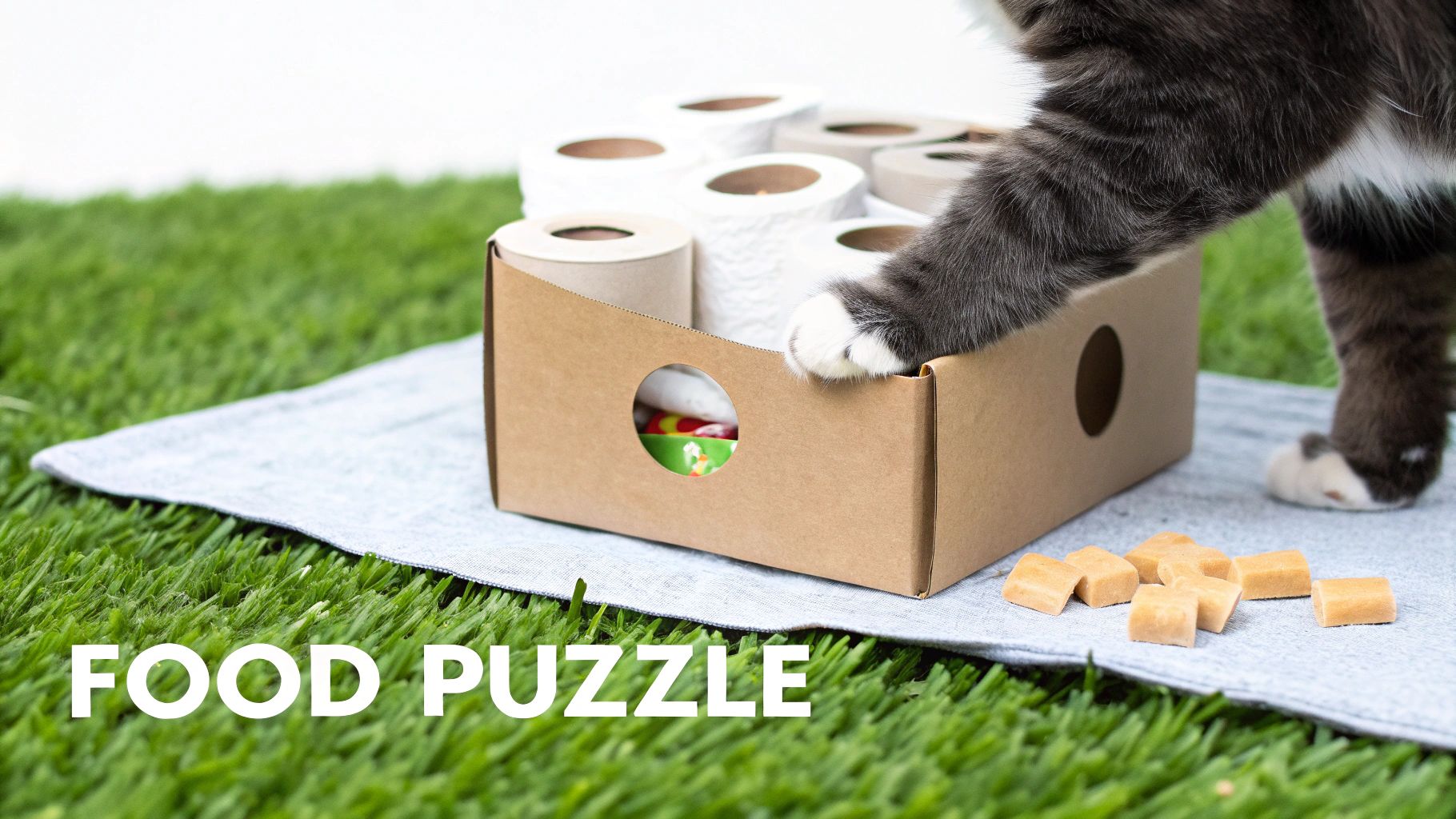
A cardboard food puzzle is one of the most effective ways to provide mental stimulation for your cat. This project encourages them to use their natural foraging and problem-solving skills to earn a reward, turning a simple snack into an enriching activity.
The concept is straightforward: create an object with holes that requires your cat to paw, nudge, and roll it to release treats. You can easily make one using items from your recycling bin.
Building the Basic Puzzle Tube
Start with a toilet paper roll puzzle. This is an excellent introductory toy for cats new to puzzle feeders.
- Gather Materials: Get a clean, empty toilet paper or paper towel tube and your cat's favorite kibble or small treats.
- Cut Holes: Use scissors or a craft knife to carefully cut a few small holes in the sides of the tube. Make the holes slightly larger than the treats.
- Fold the Ends: Lightly crimp or fold in both ends of the tube to prevent treats from falling out too easily.
- Add Treats and Introduce: Place a few treats inside and show the toy to your cat. Roll it once or twice to demonstrate that treats can come out.
This design encourages your cat to bat and roll the tube, mimicking the way they would hunt for small prey.
Upping the Difficulty for Clever Cats
Once your cat masters the basic puzzle, you must increase the challenge to keep them engaged. A puzzle that is too easy becomes boring, while one that is too difficult causes frustration.
Actionable Tip: The goal is a fun challenge, not an impossible task. If your cat gives up, make the holes larger or add more of them to increase the reward frequency.
To increase the puzzle's complexity, try these modifications:
- Smaller Holes: Decrease the size of the openings to require more precise pawing.
- Add Obstacles: Place crinkly paper or small fabric scraps inside with the treats, forcing your cat to work around them.
- Use a Box: Cut holes of various sizes in a small cardboard box (like a tissue box). A box doesn't roll easily, demanding more strategic poking and pushing.
Enrichment activities like puzzle feeders are proven to reduce stress and boredom-related behaviors in animals. By providing these simple homemade puzzles, you are giving your cat's brain a much-needed workout.
Making No-Sew Fabric and T-Shirt Toys
You can make some of the best cat toys without any sewing. Using clever knots and old fabric, you can create soft yet durable toys perfect for wrestling. These projects use old t-shirts or fabric scraps and avoid risky materials like glue or staples. Instead, secure tying techniques turn simple items into your cat's next favorite toy.
Crafting a Durable Fabric Wand
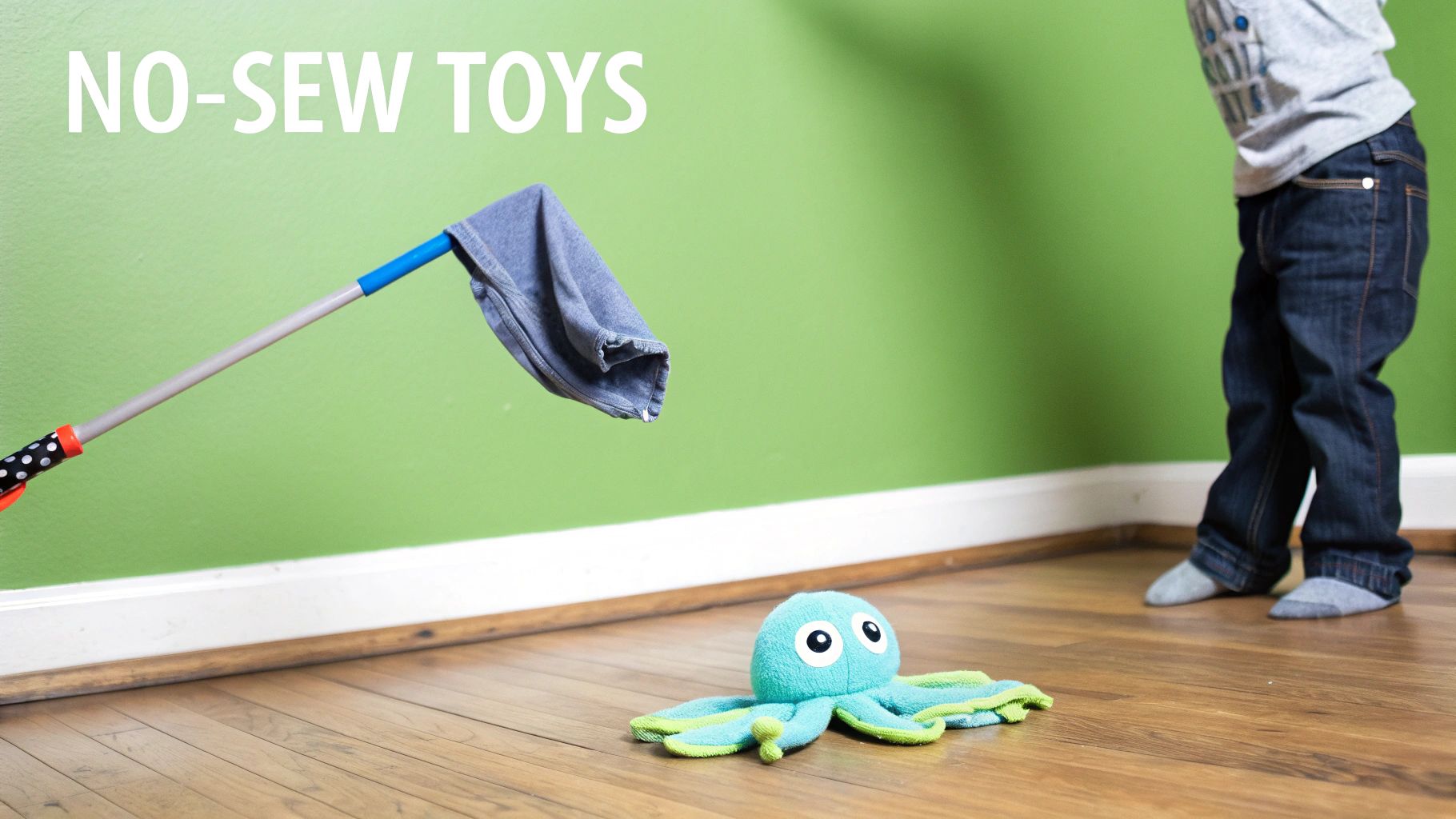
A wand toy is essential for interactive play, as it lets you mimic the quick, unpredictable movements of prey.
- Prepare the Handle and Fabric: Find a wooden dowel or a sturdy, smooth-sanded stick. Cut an old t-shirt or piece of fleece into several long strips, each about 1-2 inches wide and at least 12 inches long.
- Attach the Lure: Gather all the fabric strips together at one end.
- Secure with Knots: Tie the bundle of strips onto the tip of the dowel using a series of tight, overlapping knots.
Actionable Tip: A double or triple knot is non-negotiable. After tying, pull firmly on the fabric strips to ensure they are completely secure and cannot be pulled off during play.
This commitment to creating engaging toys is widespread. North American pet owners hold a 53.2% share of the cat toy market, valued at USD 0.64 billion in 2024. This shows a significant investment in feline happiness. You can learn more about the cat toy market trends to understand this growing focus.
The T-Shirt Octopus for Wrestling Fun
For cats that love to grab and wrestle, the t-shirt octopus is the perfect toy. It provides multiple "legs" for them to latch onto, satisfying their instinct to grapple with prey.
Here’s how to make one:
- Gather Your Gear: You'll need an old cotton t-shirt and a small ball of crinkly material like parchment paper for the head.
- Make the Head: Cut a large square from the t-shirt. Place the crinkle ball in the center, pull the fabric up around it, and tie it off securely below the ball with another strip of t-shirt fabric to form a crinkly head.
- Cut the Tentacles: Cut the fabric hanging below the knot into at least eight long strips to create the octopus "legs."
- Braid for Strength: For added texture and durability, braid three of the tentacles together and secure the end with a tight knot. Repeat for other legs as desired.
This toy engages multiple senses with its crinkly sound and soft, dangly legs, making it perfect for solo play. As with any toy, inspect it regularly for signs of wear.
Crafting Simple Crinkle Balls and Cork Chasers
Often, the simplest toys are the most effective. Small, lightweight objects that skitter across the floor perfectly mimic the frantic movements of prey and trigger a cat's hunting instincts. Here are instructions for two quick toys—crinkle balls and cork chasers—that provide maximum fun with minimal effort.
The goal is to create something irresistible and safe. This means ensuring every component is secured and can withstand pouncing without becoming a choking hazard. These projects are perfect for using up small scraps and can be completed in minutes.
The Irresistible Crinkle Ball
The crinkling sound of paper or plastic mimics the sound of small prey rustling in leaves. To make this sound safe, the crinkly material must be enclosed within a durable fabric cover.
Here are the steps to assemble one securely:
- Make the Core: Tightly bunch a small piece of parchment paper or a clean, crinkly food wrapper into a ball about one inch in diameter.
- Wrap It Up: Cut a 4x4 inch square of sturdy fabric like fleece or felt. This should be large enough to completely cover the crinkly core.
- Create the Neck: Place the crinkle ball in the center of the fabric. Gather the edges up and around the ball, twisting them tightly at the base to form a "neck."
- Tie It Off: Use a thin strip of the same fabric to tie a very tight double-knot around the neck. Pull firmly to ensure it is secure.
The result is a lightweight ball that makes an enticing crinkle sound without the risk of your cat ingesting the paper inside.
Quick and Easy Cork Chasers
Natural wine corks have a light, unpredictable bounce that cats find irresistible. You can easily transform a plain cork into an exciting chase toy. The key to this project is a secure attachment method that avoids glue.
Actionable Tip: First, use a screwdriver or awl to carefully poke a hole through the center of the cork. Thread several fabric strips or soft, quill-free feathers through this hole. Finally, tie a strong double-knot on both ends of the cork to anchor the attachments so they cannot be pulled out.
This technique ensures the feathers or fabric strips remain firmly in place, providing all the fun of a chase toy without the danger of loose parts.
These thoughtful, handmade toys reflect the growing "pet humanization" trend. The pet toy market, valued at USD 4.4 billion in 2025, is projected to nearly double by 2035, driven by owners seeking safer, more engaging play experiences for their pets. You can discover more insights about the pet toy market's growth to see the scale of this trend.
Common Questions About Homemade Cat Toys
Even with clear instructions, questions often arise when making DIY cat toys. Addressing these common concerns will help you create with confidence, knowing you're prioritizing your cat's safety and happiness.
One of the most frequent questions is about durability. Because they are often made from upcycled materials, homemade toys will not last as long as commercial ones, which requires regular oversight.
How Often Should I Replace Homemade Toys?
Inspect homemade toys before and after every play session. Look for any signs of wear, such as fraying fabric, loose knots, or weakening cardboard.
Discard any damaged toy immediately to prevent your cat from swallowing a hazardous piece. A good practice is to rotate toys weekly. This keeps your cat engaged and provides a scheduled time to check each toy's condition.
Can I Add Catnip to DIY Toys?
Yes. For most adult cats, adding a pinch of dried catnip can make a new toy much more appealing. Ensure the catnip is completely sealed inside the toy to prevent your cat from eating a large quantity.
Remember that kittens under six months old typically do not react to catnip, and a small percentage of adult cats can become overstimulated by it. Always supervise the first few play sessions with a new catnip toy to monitor your cat's reaction.
Key Takeaway: Supervised play is essential, especially with new or homemade toys. Your direct involvement is the best way to ensure playtime remains safe and to prevent accidents before they occur.
My Cat Ignores the Toys I Make
It's common for a cat to seem uninterested in a new toy. Don't be discouraged. Every cat has unique preferences for sounds, textures, and play styles.
- Experiment with different styles: If your cat ignores a cardboard puzzle, try making a t-shirt octopus instead.
- Vary the materials: Test whether they prefer fleece over felt, or a lightweight cork over a crinkle ball.
- Get involved: Your participation is often the key. Make the toy act like prey by wiggling the wand or tossing the chaser. Your engagement can make the game irresistible.
Ensuring your cat is comfortable and safe during play and travel is a key part of responsible pet ownership. For advice on stress-free travel, you may find our guide on choosing an airline-approved cat carrier useful.
At Pet Magasin, we believe that thoughtful care makes all the difference. While you're crafting wonderful toys, explore our collection of high-quality pet supplies designed for safety, comfort, and fun at https://www.petmagasin.com.

Leave a comment