
Grooming at PetSmart: An Ultimate Guide for Pet Parents

Your dog jumps onto the couch, and you catch that familiar mix of smells. A little outside, a little wet fur, a little “we’ve gone too long between baths.” Then you look closer. The nails are clicking on the floor, the feathering behind the legs is tangling, and the face trim you meant to do last weekend never happened.
That’s the moment a lot of pet parents start searching for grooming at PetSmart. It feels practical because the stores are easy to find, but the first appointment can also feel like a big leap. You wonder what happens in the salon, how long your pet will be there, what it will cost, and whether your particular dog or cat will handle it well.
I’ve seen that hesitation many times, especially with first-timers. Some pets walk in like they own the place. Others plant their feet at the door and give you a look that says, “Absolutely not.” Both reactions are normal. What matters is going in with a plan, asking better questions, and knowing that professional grooming doesn’t have to be an all-or-nothing decision.
For many families, the best routine is a mix. A salon visit for the jobs that are hard to do safely at home. Regular brushing, nail care, and quick cleanups in your own bathroom or laundry room between appointments.
Your First Step to a Fresher Pet
A first grooming visit usually starts with one small problem that turns into three. Maybe your doodle has mats behind the ears. Maybe your senior spaniel can’t keep the sanitary area clean anymore. Maybe your short-haired dog doesn’t need a haircut, but the shedding is coating every black shirt you own.
That’s when a store salon starts to sound appealing. You want help, but you also want reassurance that your pet won’t be rushed, frightened, or misunderstood.
The good news is that a grooming appointment doesn’t have to begin with panic. It begins with knowing what your pet needs. A Labrador with heavy shedding needs something different from a Shih Tzu with a constantly growing coat. A young, energetic puppy needs a different approach from an older dog with sore joints.
If you’re still trying to figure out your pet’s baseline routine, this guide on how often you should groom your dog is a helpful starting point before you book anything.
What first-time owners usually worry about
Most anxiety comes from not knowing what the salon day looks like.
- Will my pet be stressed out? Some pets are. Some settle quickly once the groomer gets started.
- Will they know how to handle my breed? That depends on the groomer, your communication, and the specific service you request.
- Should I even use a salon? Sometimes yes. Sometimes a home routine is the kinder choice.
Practical rule: If your pet is matted, overdue for nails, or needs a tidy that requires skill and restraint, a professional appointment can be the safer option than guessing at home.
A calm, informed owner helps create a calmer experience for the pet. That sounds simple, but it matters. When you know what to ask for and what to watch for, the whole process gets easier.
Decoding PetSmart Grooming Services and Prices
One reason pet parents get stuck is simple. PetSmart service pages often describe what they offer without clearly listing prices, so people end up calling stores to get specifics. A commonly cited industry range says a full dog groom at major chains averages $50 to $100 depending on breed and location, which helps with budgeting but still doesn't replace getting a store-specific quote through PetSmart’s local grooming information.
That lack of upfront detail can make grooming feel more confusing than it is. The easiest way to think about it is this. There are usually three buckets: bath-focused services, full haircut services, and starter services for young pets.
PetSmart grooming packages at a glance
| Feature | Bath & Brush | Bath & Full Haircut | Puppy & Kitten Packages |
|---|---|---|---|
| Best for | Short-haired dogs, shedding coats, dogs that don’t need trimming | Breeds with continuously growing coats or pets needing shape and length removed | Young pets learning the salon routine |
| Typical includes | Bath, brush-out, basic cleanup work | Bath, drying, brushing, haircut, finishing work | Gentle introduction to handling, bathing, and basic grooming steps |
| When to choose it | Your dog smells, sheds heavily, or needs coat maintenance but not a style change | Your dog’s coat is overgrown, shaggy around the face, feet, or sanitary areas | You want positive early exposure before coats become difficult |
| Common owner mistake | Booking this for a doodle, Shih Tzu, or poodle mix that really needs clipping | Asking for “just a trim” without describing problem areas | Waiting too long and making the first visit happen after tangles and fear have already built up |
What each service is really for
A Bath & Brush is often enough for dogs like Labs, Beagles, Boxers, and many mixed breeds with short or double coats. Owners sometimes think “no haircut” means “not worth it,” but that’s not true. The value is in the wash, blow-out, brushing, nail care, and cleanup that many people struggle to keep up with at home.
A Bath & Full Haircut is for coats that keep growing or become shapeless fast. Think poodle mixes, schnauzers, cocker spaniels, Yorkies, and dogs with face, foot, or sanitary hair that quickly gets messy. If your dog’s coat tangles when you skip a few brushing sessions, this is usually the category you need.
Puppy and kitten packages matter more than many owners realize. The first few visits aren’t about perfection. They’re about teaching the pet that clippers, dryers, brushing, handling feet, and standing on a table are part of life and not a crisis.
What changes the final price
The biggest price drivers are usually practical ones:
- Coat type and condition. A clean, brushed coat is faster to work on than a dense, impacted, or tangled one.
- Breed and size. A tiny Yorkie and a large doodle don’t take the same time or effort.
- Requested haircut. A simple all-over trim is different from a scissored finish or breed-style shaping.
- Location. Prices vary by store and market.
If you’re comparison shopping, this breakdown of dog grooming cost helps you think through what you’re paying for, beyond the sticker price.
A good quote starts with an honest coat description. “He’s a little tangled” can mean very different things to an owner and a groomer.
Add-ons that may actually be worth it
Not every add-on is fluff. Some are valuable.
A nail trim can be worth doing professionally if your dog twists, screams, or fights at home. Teeth brushing is more of a maintenance extra than a full dental solution, but some owners like it as part of a routine. De-shedding treatments can help if your dog blows coat hard and your vacuum is losing the war.
The smartest question to ask isn’t “What’s the cheapest package?” It’s “What problem am I trying to solve today?”
How to Book and Prepare for a Smooth Appointment
Your first PetSmart grooming appointment often starts the same way. You open the booking page, pick a service, and then realize you are not worried about the booking itself. You are worried about everything around it. Will your dog be scared. Will the groomer understand what you want. Will you forget some rule and get turned away at check-in.
That nervousness is normal. A good appointment usually comes down to prep, clear communication, and choosing the right level of help. Some pets do best with a full professional groom. Others are better with a hybrid routine, where you use salon visits for the hard parts and handle maintenance at home.
Before you book
Gather the practical details first. It saves a lot of back-and-forth and helps you choose the right service instead of guessing.
Have these ready:
- Your pet’s basic details. Breed, age, approximate weight, coat type, and whether the coat is long, curly, double, or short and smooth.
- Vaccination records. Confirm what your local store requires before the appointment day.
- A clear goal. Bath only, bath and tidy-up, or a full haircut.
- Behavior and health notes. Fear of dryers, trouble with nail handling, stiff joints, skin irritation, recent surgery, seizures, or a history of biting.
This part works like handing a mechanic the right symptoms before they pop the hood. “He gets upset when anyone touches his back feet” is useful. “He’s kind of dramatic” is not.
If your dog gets regular brushing and gentle handling between appointments, the salon visit usually goes better. A simple home routine can lower stress around feet, ears, and combing. If you want to build that routine, this guide on how to groom your dog at home gives you a solid starting point.
Choose the appointment time with your pet in mind
Morning is often easier for puppies, seniors, and dogs who get cranky as the day goes on. A mid-day slot can work well for dogs who need time to wake up and settle after breakfast.
The best time is the one your pet can handle comfortably.
If your dog becomes overwhelmed by noise, handling, or long waits, call the salon instead of relying only on online booking. Ask whether a quieter time of day or a shorter service is a better fit. That one conversation can prevent a rough first experience.
The night before and the morning of
Preparation is less about making your pet look perfect and more about making the appointment manageable.
A few simple steps help:
- Feed a normal meal unless your vet has told you otherwise. Hungry dogs can be edgy. Overfed dogs can feel sick during handling.
- Give your pet a real walk before drop-off. A short potty break is rarely enough, especially for young or energetic dogs.
- Do light brushing only if your pet tolerates it well. Do not turn the morning into a wrestling match over mats.
- Bring instructions in plain language. “Trim the sanitary area, clean up the paws, and keep the ears fluffy” is much easier to follow than “just do the usual.”
- Leave extra time for check-in. Rushing makes pets more tense, and it makes owners forget the details that matter.
A first appointment is not the day to test whether your dog will suddenly tolerate hard brushing, nail grinding, or face trimming.
What to say at check-in
Check-in is where your groomer builds the plan for the day. The more specific you are, the fewer surprises you will have later.
Useful things to say include:
- “This is his first professional groom.”
- “She dislikes her front feet being handled.”
- “He gets tired standing for long periods.”
- “Please call me before going shorter if you find matting.”
- “She is sensitive around the ears and mouth.”
- “He has done baths before, but not a full haircut.”
Photos help too. If you have a picture of your pet after a haircut you liked, show it. If you have a picture from the internet, use it as a reference, not a promise. Coat type, density, and condition change what is possible on that day.
Know when salon care is the right call, and when home care is smarter
Some tasks are harder and safer to hand to a professional. Nail trims on a dog who thrashes. Tight matting behind the ears. Sanitary trims on a squirmy puppy. Haircuts that need clipper work and precise scissoring.
Other tasks are often better handled at home between visits. Brushing, wipe-downs, coat maintenance, and getting your dog used to being touched all over the body. Pet parents who use a hybrid approach often get the best results. The salon handles the technical work, and home care keeps the coat from sliding back into tangles and stress.
That is the behind-the-scenes truth many first-time owners miss. The appointment starts long before drop-off. A calm walk, honest notes, and realistic expectations do more for the outcome than any last-minute attempt to make your dog look ready.
A Day in the Life Your Pet at the Grooming Salon
The salon feels less mysterious once you can picture the flow. Most pets don’t get marched straight to a tub and blasted with air. There’s a sequence, and that sequence matters.
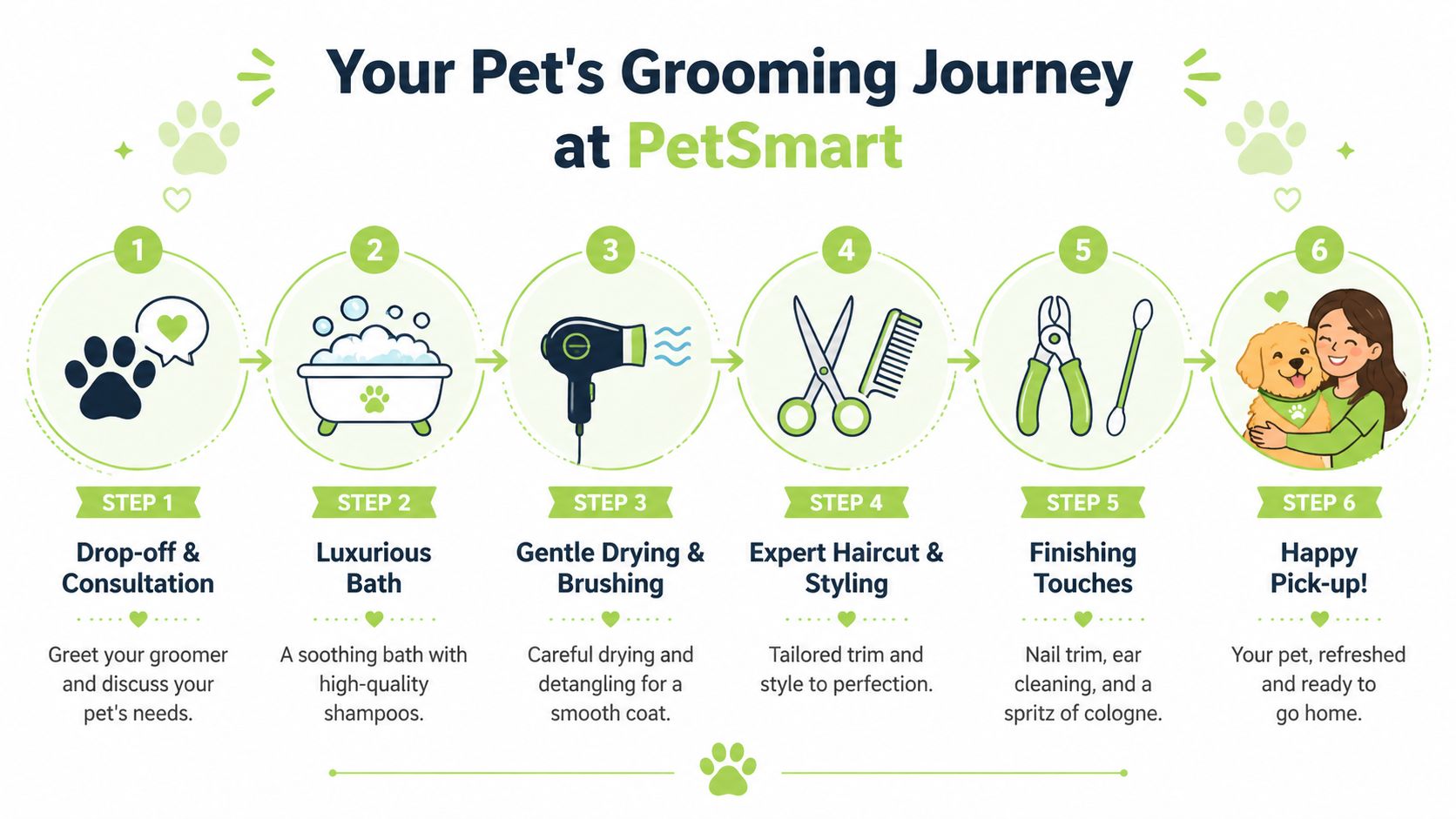
Near the start of the appointment, the groomer does a hands-on assessment. PetSmart describes a structured process that includes a pet assessment lasting 5 to 10 minutes, pre-bath prep lasting 10 to 30 minutes, a bath lasting 10 to 30 minutes, custom drying for 30+ minutes, and a final haircut and finishing stage lasting 30+ minutes on its grooming process page.
Here’s the salon journey in a simple visual:
Check-in and hands-on assessment
At drop-off, the groomer looks at the coat, skin, ears, nails, and overall condition. They may feel for mats under the collar, behind the ears, in the armpits, and around the tail base. Those are classic trouble spots.
This part matters because wetting a tangled coat can make things worse. If a dog comes in with hidden matting, the conversation about haircut length may change before the bath even starts.
Pre-bath work and the bath itself
A lot of owners think brushing happens after the wash. Some of it does, but prep work often starts first. That can include brushing, combing, clipping certain areas, nail trimming, and ear cleaning.
Then comes the bath. For a comfortable pet, this can be the easiest part of the visit. For a worried dog, the groomer is already learning what pace, handling style, and restraint level the pet can tolerate without escalating.
A short salon video helps make that sequence feel more concrete:
Drying is where many pets reveal their true opinion
Drying is often the make-or-break stage. Some dogs tolerate baths just fine but dislike airflow or noise. That’s why owners of sensitive pets should mention sound issues, panic history, or breathing concerns at check-in.
Once the coat is dry enough to work with, the groomer can see the underlying shape of the body and start the haircut or finish work. Scissoring the face, shaping feet, trimming sanitary areas, and blending the outline all happen better on a properly dried coat.
A haircut done on a damp, fluffy, or poorly brushed coat usually won’t look as neat or last as long.
Finishing and pickup
By pickup time, your pet may look fresh and polished, but you should still do your own quick once-over. Check the face, feet, tail, and sanitary area against what you requested. If something isn’t what you expected, speak up calmly before leaving.
Most misunderstandings are about communication, not bad intent. “I wanted the ears left longer” is fixable. Silence at pickup usually isn’t.
Understanding PetSmart Safety Standards and Groomer Training
You hand over the leash, sign the form, and then the real question hits. What happens to my pet once that swinging salon door closes?
That question matters more than the haircut. A clean trim is nice. Calm handling, good judgment, and a groomer who knows when to slow down or stop are what protect your pet.
PetSmart describes a formal training path for salon staff on its careers page, including hands-on practice, work with many dogs, and supervised grooming before a stylist works more independently. The company also says groomers complete ongoing safety education. That tells you the salon is built around a system, not improvised training on busy weekends.
A system helps. It does not replace judgment.
Good grooming safety works like a three-part check. First, the salon needs clear procedures. Second, the groomer needs handling skill and restraint. Third, the pet parent needs to give honest information. If one part is weak, the appointment gets harder for everyone.
That is why two dogs booked for the same bath and trim can have completely different risk levels. One walks in relaxed, stands well, and tolerates drying. The other panics at foot handling, has a collapsing trachea, and has not been brushed in months. On the schedule, those appointments can look similar. In real life, they are not.
What groomer training usually helps with
Training gives a groomer a repeatable process. It covers coat prep, bathing, drying, clipper safety, scissoring control, nail care, sanitation, and how to read body language before a pet goes from uneasy to overwhelmed.
That last part is where experienced groomers stand out. A dog rarely jumps from calm to meltdown without warning. The signs often start small. Lip licking. Whale eye. Stiff legs. Sudden stillness. Pulling a paw away a little harder each time. A trained groomer should notice that early and adjust the pace before the pet tips over the edge.
If you have a cat, tool choice matters just as much at home, especially for coat maintenance between appointments. A practical reference on essential grooming equipment for felines can help you decide what is realistic to handle yourself and what is better left to a professional.
Questions that tell you more than a brochure will
Before the appointment, ask a few plain questions. You are not being difficult. You are doing the same thing a careful mechanic or pediatric nurse would want you to do. You are sharing the details that change the job.
Ask things like:
- Who is grooming my pet today? Experience level matters, especially for puppies, seniors, large double coats, and pets with handling issues.
- What do you do if my pet becomes too stressed to finish? A good answer includes stopping, calling you, or modifying the service.
- Can you add notes to my pet's file about triggers? Feet, face, dryer noise, hip pain, stranger handling, and separation anxiety all matter.
- Is an express service or shorter appointment a better fit? Some pets do better when the salon reduces waiting time and gets them in and out faster.
- Should I talk to my vet before booking? This is a smart question for flat-faced breeds, seniors, and pets with heart, airway, or seizure concerns.
Addressing incident concerns honestly
Pet parents often search safety records before booking, and they should. Reporting by CBS News Philadelphia covered allegations involving dogs that died during or after grooming over a period of years, along with PetSmart's response about its screening procedures, safety measures, and the large number of salon visits it handles.
That information is upsetting. It should be.
The useful response is not panic, and it is not blind trust. It is better screening. If your pet has breathing trouble, fainting episodes, advanced age, severe anxiety, a history of biting from fear, or panic during restraint, treat grooming as a health decision first and a beauty service second.
When professional grooming is the right call, and when home care is kinder
Some pets benefit from a pro because the task itself is technical. Heavy deshedding, coat-specific haircuts, safe sanitary trims, and severe mat removal all take skill and equipment that many owners do not have.
Other pets do better with a hybrid plan. A salon handles the hard jobs a few times a year. You handle brushing, light detangling, paw cleanup, and routine coat care at home in short, familiar sessions. For many anxious pets, that approach lowers stress more than trying to force every grooming task into one long appointment.
Some pets are poor candidates for a standard retail salon at all. Medically fragile seniors, pets with major panic responses, and animals that cannot tolerate drying or restraint may need a quieter mobile groomer, a fear-aware independent salon, vet-supervised grooming, or simple home maintenance.
The safest choice is the one that fits the animal in front of you. Not the one that looks easiest on the calendar.
The Pet Magasin Guide to At-Home Grooming
Sometimes the best answer isn’t another salon visit. It’s a bathroom mat, a stack of towels, a slicker brush, and twenty patient minutes with your pet in familiar surroundings.
That’s especially true for pets who get overwhelmed by travel, noise, restraint, or long appointments. It’s also true for owners who don’t want to pay for a full service every time the coat just needs light maintenance.
When DIY grooming is the better fit
Home grooming works well when the job is manageable and your pet can tolerate handling in short bursts.
Good candidates include:
- Short-haired dogs needing upkeep. Brushing, bath time, nail maintenance, and ear wipe-downs.
- Cats that hate travel. Many cats do better with regular coat care at home than with salon-style disruption.
- Pets between professional appointments. A face wipe, paw trim, or detangling session can prevent small issues from becoming a major clip-down later.
- Senior pets. Some older animals handle home sessions better because you can stop the moment they’ve had enough.
Build a simple home kit
You don’t need a professional salon setup. You need the right basics and a pet who trusts the process.
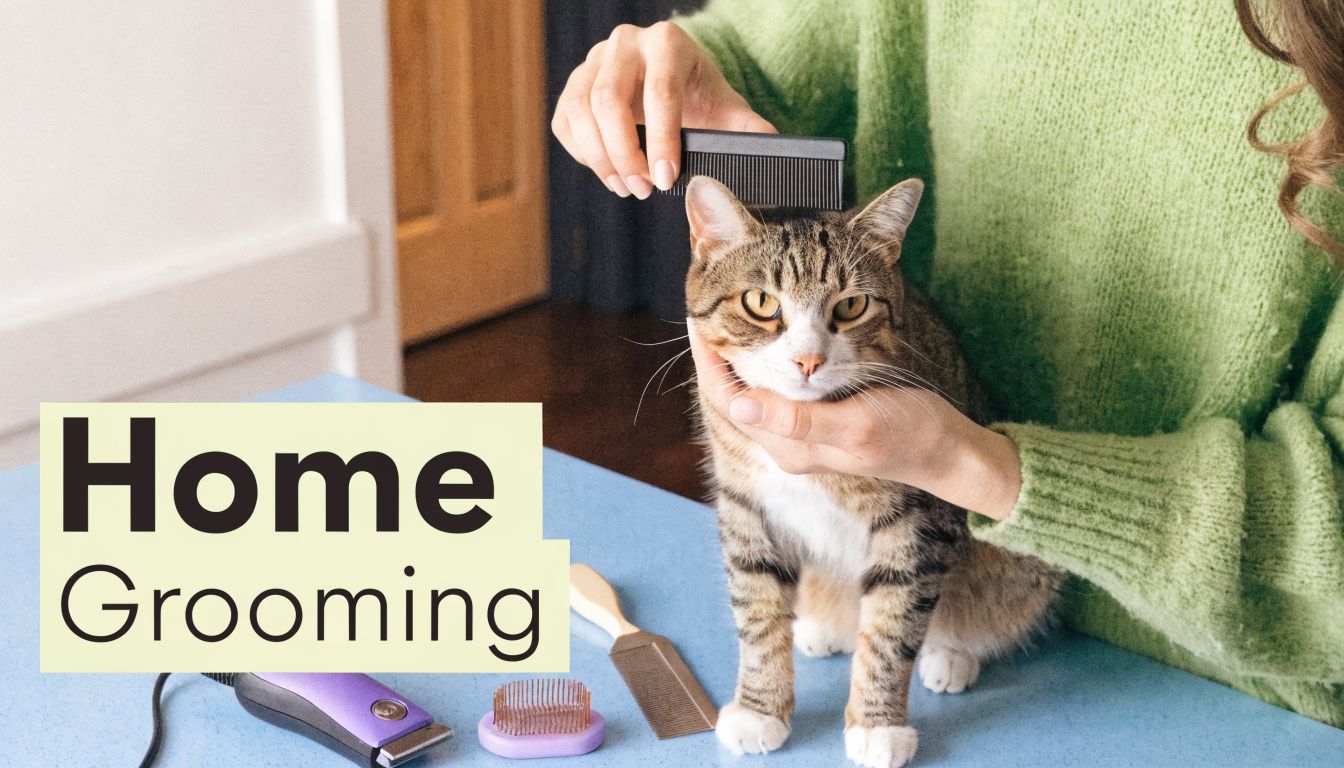
A useful home grooming kit usually includes:
- A brush matched to the coat. Slicker brush for many longer coats, rubber curry for short coats, metal comb for checking tangles.
- Nail tool. Clippers or a grinder, depending on what your pet tolerates.
- Blunt-tip scissors for tiny cleanup jobs. Only for safe, visible areas. Never for mats tight to the skin.
- Pet-safe shampoo and towels. Keep it boring and gentle.
- Non-slip surface. A bath mat or towel helps nervous pets feel steadier.
If you share life with a long-haired cat, this guide to essential grooming equipment for felines is a solid reference for choosing combs and brushes that won’t turn a brushing session into a wrestling match.
The hybrid routine that works for many families
A lot of experienced pet owners settle into a hybrid pattern. They use a salon for the jobs that require speed, table handling, or a polished finish. Then they handle maintenance at home so each professional visit is easier.
That might look like this:
- brushing every few days
- wiping eyes and beard after meals
- checking feet for packed hair or debris
- trimming nails or smoothing edges when needed
- booking professional help only when coat length or condition calls for it
Short, calm home sessions usually beat one long battle. Stop while your pet is still cooperating.
Know your limits
DIY grooming is a smart option. It isn’t a dare.
Don’t dig at tight mats with scissors. Don’t force a terrified pet through a full groom in one sitting. Don’t attempt tricky sanitary or face work if your pet jerks suddenly and you’re not confident. In those cases, professional help is worth it because safety matters more than pride.
Conclusion Creating Your Pet's Perfect Grooming Plan
The best grooming plan is the one your pet can handle consistently. For some dogs, that means regular grooming at PetSmart for baths, trims, and coat management. For others, it means skipping the salon and doing careful maintenance at home. Many pets do best with a combination of both.
If you’re deciding what fits, ask yourself a few plain questions:
- What is my pet’s temperament in new places?
- Does my pet need a real haircut or just upkeep?
- Can I brush and maintain the coat between appointments?
- Is my pet elderly, anxious, or medically complicated?
- What can I manage comfortably in my budget and schedule?
A good plan doesn’t have to look impressive. It just has to keep your pet clean, comfortable, and easy to care for. That’s the true goal. A shiny coat is nice. A pet who feels safe is better.
If you’re building a smarter grooming routine at home, Pet Magasin offers practical pet care tools designed to make everyday upkeep easier, from durable grooming utensils to other comfort-focused essentials for pets who are family.

Leave a comment