
A Practical Guide to Eco Friendly Pet Supplies

Choosing eco-friendly pet supplies means picking products designed to be gentler on the planet. From how they're made to how you dispose of them, the goal is to leave the smallest paw print possible. To do this, focus on three key areas: sustainability, safety, and ethical production. Making this shift is a direct investment in your pet's health and the world you share.
What Really Makes Pet Supplies Eco-Friendly?
The term "eco-friendly" is everywhere, but what does it actually mean for a dog toy or cat bed? Don't get distracted by a single "green" feature. To make a smart choice, you need to understand the entire journey of a product, from its creation to its disposal.
Think about a typical cheap plastic toy. It likely starts as petroleum, is produced in a factory, shipped globally, and after a few good chews, it breaks. Its final stop is a landfill, where it will sit for hundreds of years. A truly eco-friendly toy follows a much better path.
The Product Lifecycle Matters Most
To assess if a product is truly sustainable, look at its entire lifecycle. A good product starts with smart materials, like renewable bamboo or recycled plastics that give old water bottles a new purpose. The production process should use less water and energy, and the item should arrive in minimal, recyclable packaging.
Most importantly, it needs to be built to last. Durability is a cornerstone of sustainability. When you aren't constantly replacing broken toys or worn-out beds, you're creating less waste and saving money. And when that product finally reaches the end of its road, it should be biodegradable, compostable, or recyclable, closing the loop instead of just adding to the trash pile.
It’s clear this way of thinking is catching on. The global market for eco-friendly pet products was valued at $7.2 billion and is expected to hit $18.6 billion by 2033. This boom is driven by pet owners who see their pets as family and are actively seeking healthier, more responsible options.
Eco Friendly vs Conventional Pet Supplies at a Glance
To make smart choices at the store, it helps to know the key differences between standard products and their eco-friendly alternatives. Use this table as a quick checklist.
| Feature | Eco-Friendly Supplies | Conventional Supplies |
|---|---|---|
| Material Source | Renewable (bamboo, hemp), recycled (rPET), or upcycled materials. | Often virgin, petroleum-based plastics, synthetic fabrics, and treated woods. |
| Production Impact | Lower energy/water consumption, minimal waste, and often local or ethical manufacturing. | Can involve high energy use, chemical runoff, and less transparent supply chains. |
| Pet Safety | Non-toxic, free of BPA, phthalates, and harsh chemicals. | May contain questionable dyes, glues, or plastics that can be harmful if ingested. |
| Durability | Designed for longevity to reduce the need for frequent replacement. | Often designed for a lower price point, leading to a shorter lifespan. |
| End-of-Life | Biodegradable, compostable, or easily recyclable. | Typically ends up in a landfill, where it can take centuries to break down. |
| Packaging | Minimal, made from recycled materials, and/or fully recyclable. | Often excessive plastic clamshells, shrink wrap, and non-recyclable materials. |
This table highlights how thoughtful choices at every stage of a product's life add up to a significant positive impact.
Key Concepts in Sustainable Pet Care
When you're shopping for eco-friendly pet supplies, look for products that meet these practical standards:
- Biodegradability: This means the material breaks down naturally, returning to the earth without leaving harmful residues.
- Non-Toxic Materials: Look for labels stating the product is free from harmful chemicals like BPA, phthalates, and synthetic dyes. This makes it safer for your pet to chew on, sleep on, or eat from.
- Ethical Sourcing: The raw materials were gathered responsibly, without damaging ecosystems or exploiting workers.
A truly eco-friendly product isn't just about what it's made of; it's about its entire lifecycle, from creation to disposal. It’s a commitment to reducing waste, conserving resources, and promoting a healthier planet for everyone—pets included.
Thinking sustainably can also spark creativity. It's about more than just buying; it's about reusing what you already have. For instance, you can find amazing guides on upcycling a wooden cable spool for birds, turning discarded material into a fantastic enrichment center. This is the real spirit of sustainability—giving old materials a new purpose.
The Real Benefits for Your Pet and the Planet
When you choose eco-friendly pet supplies, you create a positive chain reaction. This single action benefits the two things you care about most: your pet's immediate health and the long-term well-being of our planet. These two are more connected than you might think.
Many conventional pet products are made with synthetic materials, plastics, and dyes that can contain harmful chemicals. When your dog chews on a cheap plastic toy or your cat sleeps on a bed treated with harsh flame retardants, they risk exposure to toxins. Over time, this can contribute to skin allergies, digestive issues, or other health problems.
A Healthier Pet Starts with Better Materials
This is where you can take direct action. By choosing eco-friendly products, you sidestep these risks by sticking to natural, non-toxic materials. Your practical takeaway is to look for toys made from organic cotton or natural rubber, and beds crafted from untreated hemp. These materials are safer for pets to chew, sleep on, and live with daily.
When you select supplies that are free from BPA, phthalates, and other synthetic additives, you actively reduce your pet’s chemical load. It’s no different from choosing whole, natural foods over highly processed ones—it’s a simple switch that supports their long-term health and gives you peace of mind.
A conscious choice for a non-toxic dog bed or a chemical-free cat toy is a direct investment in your pet's health. You're minimizing their exposure to potentially harmful substances found in so many mass-produced items.
Reducing Your Carbon Pawprint
The positive impact goes way beyond your home. Each eco-friendly choice contributes to a healthier environment. Traditional manufacturing of plastic and synthetic goods often consumes huge amounts of energy and water, contributing to pollution.
Sustainable manufacturing, however, is all about conservation. For example, a dog bed made from recycled plastic bottles not only keeps plastic out of a landfill but also uses significantly less energy than creating new polyester. This is a real, tangible way you can help reduce waste.
Your most powerful action is choosing durable, washable gear over cheap, disposable items. A single high-quality, washable dog bed can last for years, saving a dozen flimsy, non-recyclable beds from the trash. This one decision conserves resources, slashes waste, and saves you money in the long run.
How to Read Labels and Avoid Greenwashing
Walking down the pet aisle, it's easy to get lost in a sea of "green," "natural," and "earth-friendly" claims. To find truly sustainable products and sidestep marketing tricks, you need to learn how to read labels effectively.
The tactic to watch out for is greenwashing, where a company spends more effort making you think their products are eco-friendly than actually making them so. They might use earthy-toned packaging or vague phrases like "eco-conscious" without proof. Your job is to look past the marketing fluff for hard facts.
Look for Specific Materials
Instead of falling for broad marketing terms, flip the product over and find the materials list. Genuinely sustainable brands are proud to tell you exactly what’s in their products.
Here’s a quick-reference guide to some of the best materials to look for in eco-friendly pet supplies.
| Material | Key Benefits | Commonly Used For |
|---|---|---|
| Bamboo | Fast-growing, needs minimal water, renewable. | Bowls, brush handles, some toys. |
| Recycled Plastics (rPET) | Diverts waste from landfills, less energy to produce. | Toys, pet beds, fabric components. |
| Hemp | Durable, grows quickly without pesticides. | Collars, leashes, tough chew toys. |
| Natural Rubber | Non-toxic, biodegradable, and sustainably sourced. | Chew toys, treat dispensers. |
Knowing what to look for helps you make an informed decision. As the chart below shows, the benefits are interconnected—what’s good for the planet is often much healthier for your pet.
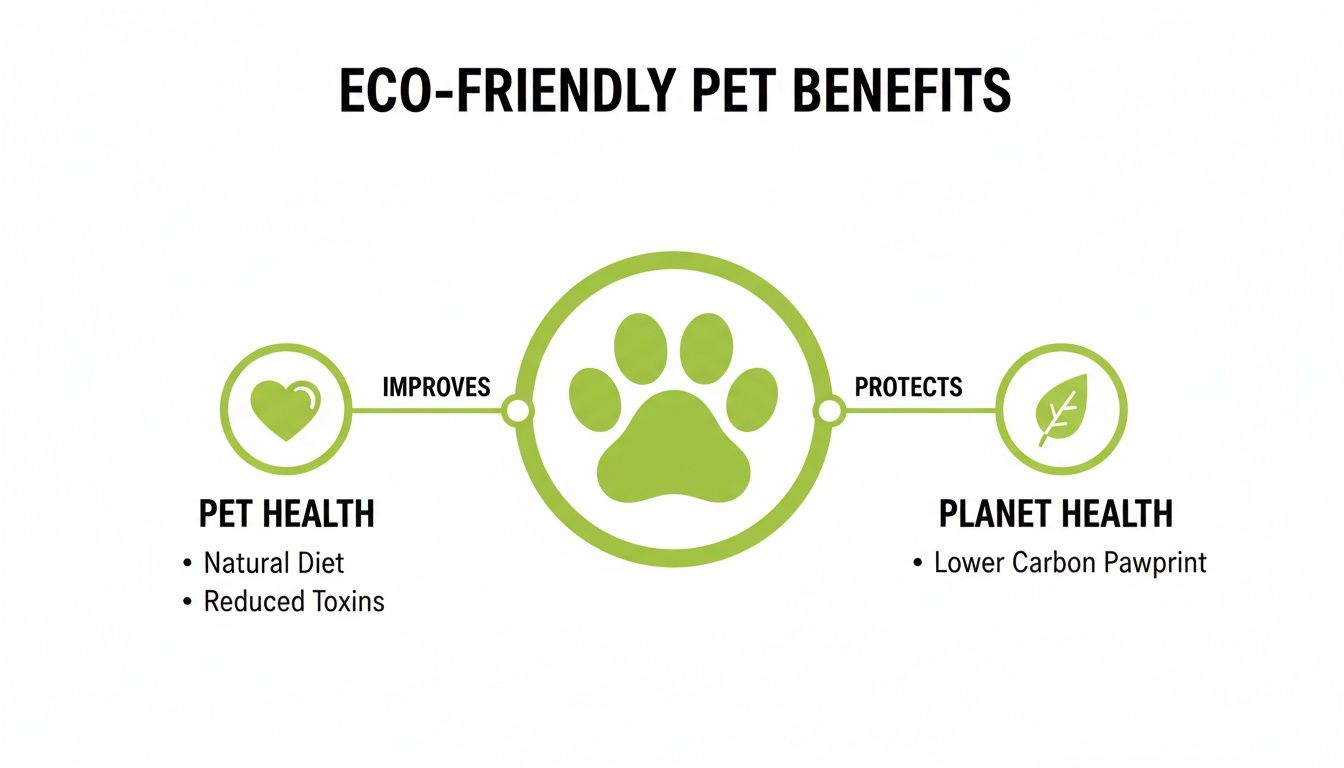
This simple chart shows how choosing better materials directly cuts down on your pet's exposure to toxins while shrinking your household's environmental "pawprint." It’s a win-win.
Decode Important Certifications
Think of certifications as a reliable shortcut. These official logos aren't just for show; they are awarded by independent organizations after rigorous testing. They confirm a company’s claims are legitimate.
Here are a few of the most reliable certifications to look for when you shop:
- Forest Stewardship Council (FSC): If you see this on a wood or paper product (like packaging or toys), it means the material was sourced from a responsibly managed forest.
- Global Organic Textile Standard (GOTS): This is the top certification for fabrics. A GOTS label on a pet bed or blanket guarantees the textile was grown and processed without harmful chemicals.
- USDA Organic: Common on pet food, this certification can also apply to grooming products. It ensures the ingredients were grown without synthetic pesticides or fertilizers.
Learning how to read pet food labels is a great first step. The same critical eye for ingredients applies to everything you buy. In fact, we have a whole guide on why you should read dog treat ingredient labels. Once you start focusing on materials and certifications, you can shop with confidence, knowing you're making a real difference.
Simple Swaps for Your Daily Pet Routine
Going green doesn't require a complete overhaul of your pet supplies. The most effective changes come from making small, consistent swaps in your daily life. By rethinking common tasks—like cleanup, grooming, and playtime—you can significantly reduce your environmental impact.
The best way to start is to identify where you generate the most waste. What are you constantly using and throwing away? For most pet owners, this includes poop bags, grooming supplies, and disposable training pads.
Upgrade Your Cleanup Game
One of the easiest and most impactful changes you can make is upgrading how you handle pet waste. Millions of plastic bags are used for dog walks every single day, and they all end up in landfills. Here’s how you can do better:
- Biodegradable Waste Bags: Switch to bags made from plant-based materials like cornstarch. Unlike a regular plastic bag that lasts for centuries, these are designed to break down much faster.
- Washable Diapers: For puppies in training or senior dogs, washable diapers are a game-changer. A single reusable diaper can replace hundreds of disposables, drastically reducing landfill waste and saving you money.
Pet owners are embracing these swaps. The market for sustainable pet products has grown to over $35 billion globally, with biodegradable waste bags being a major driver. It's a clear sign that consumers are actively trying to reduce plastic pollution. You can explore more data on these trends to see just how big this movement has become.
It might feel like a small thing to choose a biodegradable bag or a washable diaper. But when you multiply that one small choice by thousands of other pet owners doing the same thing, it creates a massive positive ripple effect, keeping tons of plastic out of our environment.
Invest in Durability for Grooming and Play
Grooming is another area ripe for an eco-friendly makeover. Instead of buying cheap plastic brushes that break after a few months, make a one-time investment in a high-quality grooming tool made from a durable material like bamboo or stainless steel. A well-made brush not only works better but will last for years, preventing dozens of flimsy tools from ending up in the trash. This "buy it once" mindset is a core principle of sustainable living.
Apply the same logic to toys. Instead of buying a handful of cheap plastic toys that your dog will shred in a week, choose one or two highly durable ones made from tough, non-toxic materials like natural rubber or hemp. This action not only cuts down on waste but also ensures your pet is chewing on something safe, not a product full of questionable chemicals. These are simple, budget-friendly changes that make being an eco-conscious pet owner achievable.
Choosing Sustainable Gear for Pet Travel
Traveling with your pet is a fantastic experience, but it can create a lot of waste—disposable food bags, single-use water bowls, and flimsy carriers that don't last. The good news is that a few smart, simple choices can make your adventures much more planet-friendly.
The Single Best Investment: A Durable Carrier
If you make just one change, let it be this: invest in a high-quality, long-lasting travel carrier. It’s tempting to grab a cheap one for a single trip, but those often end up in a landfill after just one or two uses.
Instead, look for a sturdy, airline-approved carrier built from tough, recycled materials. This isn’t just a purchase; it’s an investment in countless future journeys. You'll avoid the wasteful cycle of buying, breaking, and tossing, and your pet will be safer and more comfortable for it.
Smart Swaps for the Road
Beyond the carrier, a few other easy swaps can slash your travel waste without any real effort.
- Reusable Bowls: Ditch the flimsy, single-use plastic bowls. Collapsible silicone or stainless steel travel bowls are your new best friends. They’re super lightweight, a breeze to clean, and will last for years.
- Smarter Food Packing: Instead of portioning out kibble into a dozen little plastic baggies, use a reusable container. It’s a no-brainer. This simple switch cuts down on plastic and keeps your pet’s food much fresher and more secure.
- Eco-Friendly Grooming: When you need to pack shampoos or wipes, look for travel-sized, biodegradable options that come in minimal, recyclable packaging.
Choosing durable, reusable gear isn't just about reducing waste. It’s about ensuring your pet travels safely and comfortably, trip after trip, without contributing to the throwaway culture common in travel products.
Making these small adjustments means you can explore all the beautiful places you want to see with your pet while leaving a much lighter footprint. For more ideas on making your trips smooth and sustainable, check out our complete guide to essential travel accessories for dogs. After all, the goal is to protect the very places we love to visit.
The Power of Washable and Reusable Pet Gear
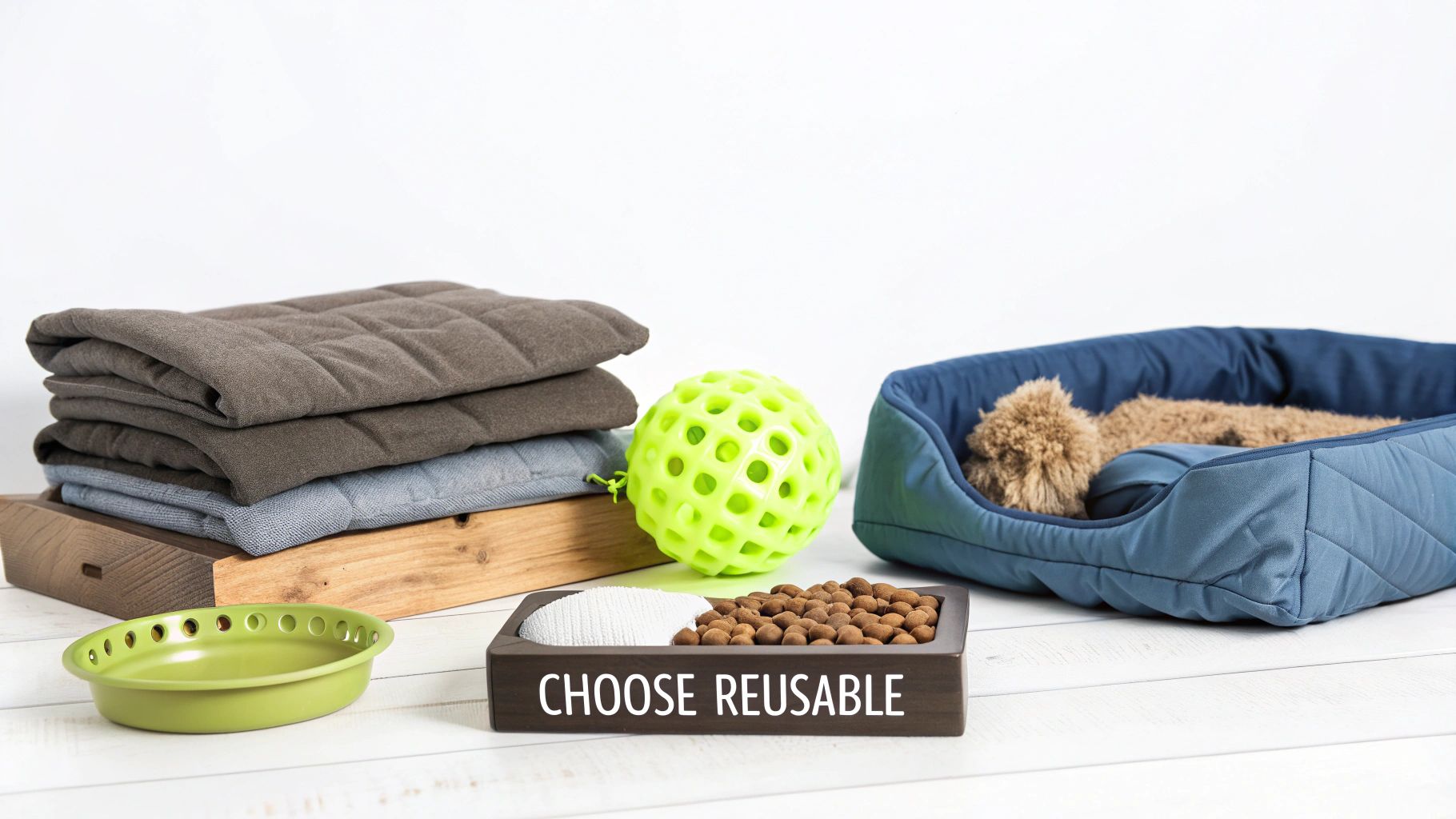
One of the easiest and most effective ways to make your home greener is to choose items you can use over and over again. This "reuse" philosophy is perfect for pet owners, offering a clear path to reduce trash and save money without sacrificing quality.
Think about how many single-use items you go through: disposable puppy pads, flimsy beds that fall apart after one wash, and toys that barely last a week. Each one contributes to the stream of waste heading to a landfill. By choosing washable and reusable gear, you can stop that cycle.
The Lifetime Value of Reusability
When you invest in reusable products, you get a double payoff. First, you significantly reduce your environmental footprint. A single, well-made washable dog bed can keep dozens of cheap, synthetic beds out of the trash over your pet’s lifetime. The same principle applies to reusable puppy pads and diapers.
Second, the financial savings add up. That pack of disposable pads might seem cheap at checkout, but the cost accumulates week after week. A quality set of washable pads has a higher upfront cost but can save you hundreds of dollars in the long run. Our guide to the best reusable dog diapers breaks down how a one-time purchase can completely eliminate a recurring expense.
Choosing washable gear is a conscious decision to shift from a "throwaway" mindset to one of long-term value. It’s a practical investment in both your wallet and the planet’s health.
Maximizing the Lifespan of Your Gear
To get the most value from your reusable eco friendly pet supplies, proper care is key. A little maintenance ensures they last for years.
Follow these simple tips to make your washable gear last as long as possible:
- Follow Washing Instructions: Always check the care label. Using the correct water temperature and cycle is the best way to prevent damage to the fabric and stitching.
- Use Pet-Safe Detergents: Opt for gentle, non-toxic detergents. Harsh chemicals can break down materials faster and may irritate your pet's skin.
- Air Dry When Possible: High heat from a tumble dryer can be tough on fabrics. Air drying is gentler, saves energy, and helps your gear maintain its shape and durability for years to come.
Common Questions About Eco-Friendly Pet Supplies
Switching to sustainable pet gear is a great goal, but it’s normal to have questions. Here are practical answers to some of the most common concerns.
Are Eco-Friendly Pet Supplies More Expensive?
It’s true that some eco-friendly products have a higher upfront cost, but that's not the full picture. Think of them as an investment. A durable travel carrier or a set of washable diapers is designed to last for years.
The choice is yours: buy a cheap, flimsy product you have to replace every few months, or invest once in a quality item that lasts. In the long run, choosing durable, reusable supplies will almost always save you money by eliminating those repeat purchases.
How Can I Tell If a Product Is Genuinely Eco-Friendly?
This is a big one. Your action plan is to look past vague buzzwords like "natural" or "green" and get to the facts. Start by checking the product's material list—look for specific materials like recycled plastics, bamboo, or hemp.
Next, look for official third-party certifications. Seals of approval like the Forest Stewardship Council (FSC) for wood products or the Global Organic Textile Standard (GOTS) for fabrics are your proof that a company is committed to sustainability.
A transparent company will be upfront about its materials and production processes. Vague claims often hide a lack of real commitment to sustainability. This simple check helps you support brands that are genuinely making a difference for the planet.
Ultimately, a trustworthy brand makes it easy for you to see what’s in their products and how they’re made.
What Is the Easiest First Step to Go Green with My Pet?
Start with something you use every day. One of the simplest and most impactful changes is switching from standard plastic poop bags to biodegradable or compostable ones. This small swap makes a powerful difference by reducing the amount of plastic heading straight to landfills.
Another easy win is choosing durable toys and grooming tools over flimsy ones that break quickly. This immediately reduces your plastic waste and saves you from constantly buying replacements. Just remember, every small change adds up to a big impact.
At Pet Magasin, we’re committed to making durable, high-quality, and thoughtfully designed products that help you and your pet live a more sustainable life. From our long-lasting travel carriers to our reusable diapers, we make it easier to choose options that are better for your pet and the planet. Explore our collection today at https://www.petmagasin.com.

Leave a comment