


Dog Seat Belt Clip Guide for Safe Car Travel

You've clipped your dog into the car, heard the buckle click, and assumed the important part is done. Then your dog leans toward the front seat, the tether stretches across the cushion, or the metal clip looks secure until you give it a firm pull. That familiar setup reveals the problem with shopping for a dog seat belt clip as if it were a standalone safety product. The clip is only one link in a system, and it can be the weakest one.
A safer approach starts with a crash-tested harness, a suitable vehicle anchor, and a tether adjusted to control forward movement. The dog belongs in the back seat whenever possible, secured well enough to sit, turn, and lie down without roaming into the driver's space. The following guide focuses on what holds up in real cars, what commonly fails, and how to check your setup before every trip.
Why a Dog Seat Belt Clip Is More Than a Simple Tether
A dog jumps into the back seat, the owner connects a tether to the harness ring, and the ride begins. On a smooth road, almost any attachment can appear effective. A sudden stop exposes the difference between a convenient connection and a restraint designed to manage collision forces.
The category changed significantly after the Center for Pet Safety's early crash-testing work. In 2011, crash testing found that none of the dog harnesses evaluated were considered safe enough to protect both the dog and human occupants in a collision. Rhode Island followed in 2012 by becoming the first U.S. state to make driving with an unrestrained dog a finable offense. By 2013, Subaru and the Center for Pet Safety were publicizing tests with a 55-pound crash-test dog at 30 miles per hour, making restraint performance something manufacturers could measure rather than merely describe.
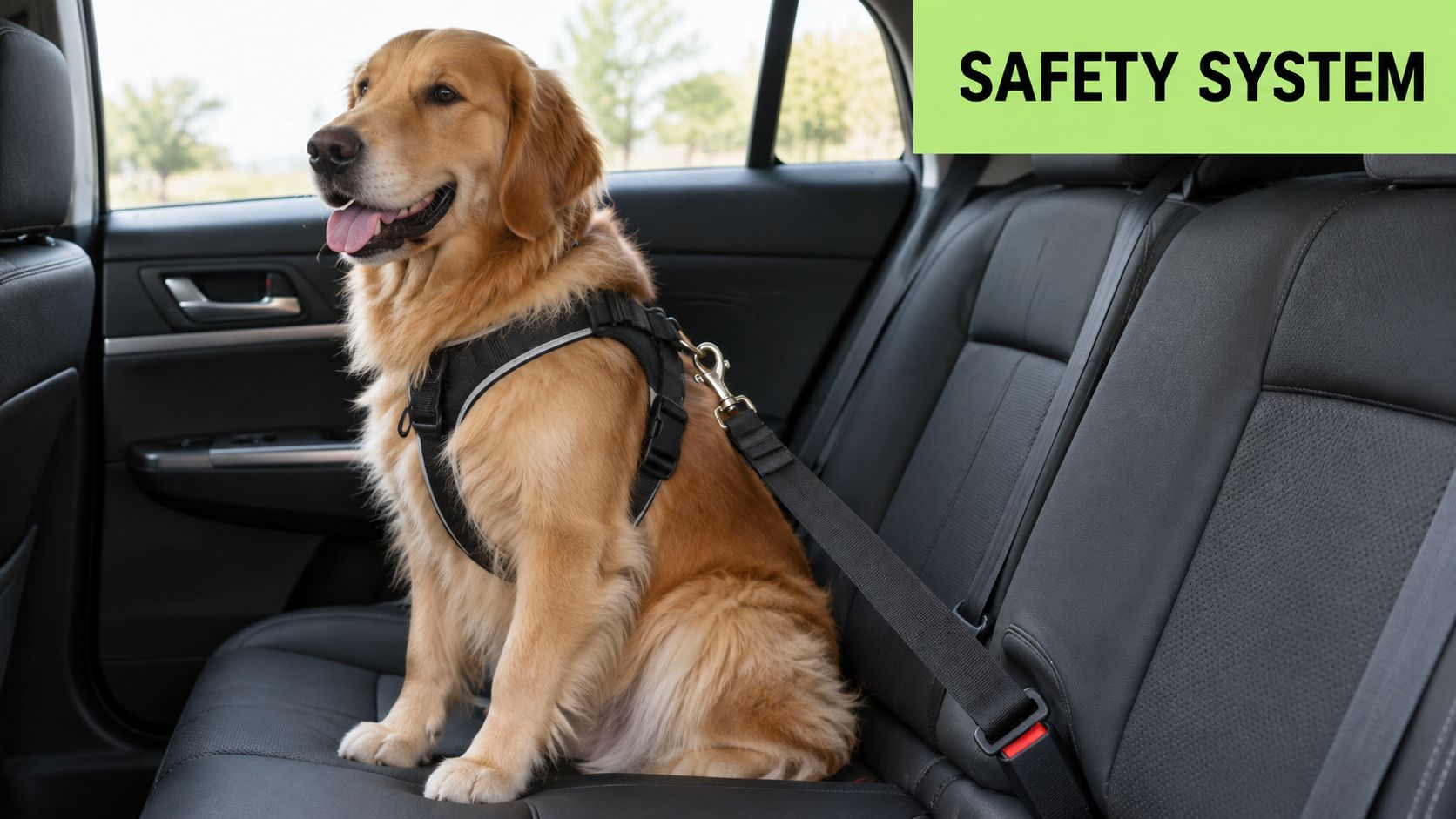
The clip isn't the whole restraint
A static pull rating tells you how much force a component may withstand in a particular test. It doesn't prove that the harness distributes impact forces across the dog's body, that the buckle stays engaged, or that the complete system prevents dangerous forward excursion. Market listings show tethers rated at 2,200 pounds, 4,500 pounds, and 725 pounds, yet one listed product explicitly says it hasn't been crash-tested. Those figures come from manufacturer product information, and they illustrate why static strength and crash performance must be judged separately.
Independent testing looks for full containment before, during, and after a simulated crash, with every connection point still attached. In the Center for Pet Safety methodology, a usable tether had a maximum adjusted length of 6 inches in the relevant research context, limiting how far the dog could travel forward.
Practical rule: Buy the harness and verified restraint system first. Treat the clip as the connection hardware, not the safety strategy.
In a properly arranged back-seat setup, the dog can settle naturally without reaching the driver, becoming airborne, or striking the cabin. That appearance of controlled movement is more meaningful than a polished clip, a large breaking-strength number, or the word “universal” on packaging.
How to Choose a Compatible Dog Seat Belt Clip and Harness
The right restraint depends on the car, the harness, and the dog's movement pattern. A direct-to-buckle clip clicks into the vehicle's seat belt receiver, which makes it quick to attach but raises compatibility questions because buckle receivers vary between vehicles. A seatbelt-loop tether routes through the vehicle belt, giving the restraint a different connection path and often avoiding a buckle tongue that may not fit securely.
A fixed tether keeps the connection simple and predictable. A swivel can reduce twisting when a dog turns, but it adds another moving component that needs careful inspection. Bungee sections may soften routine movement, while static webbing limits stretch and makes the dog's range easier to control. Neither style proves crashworthiness by itself.
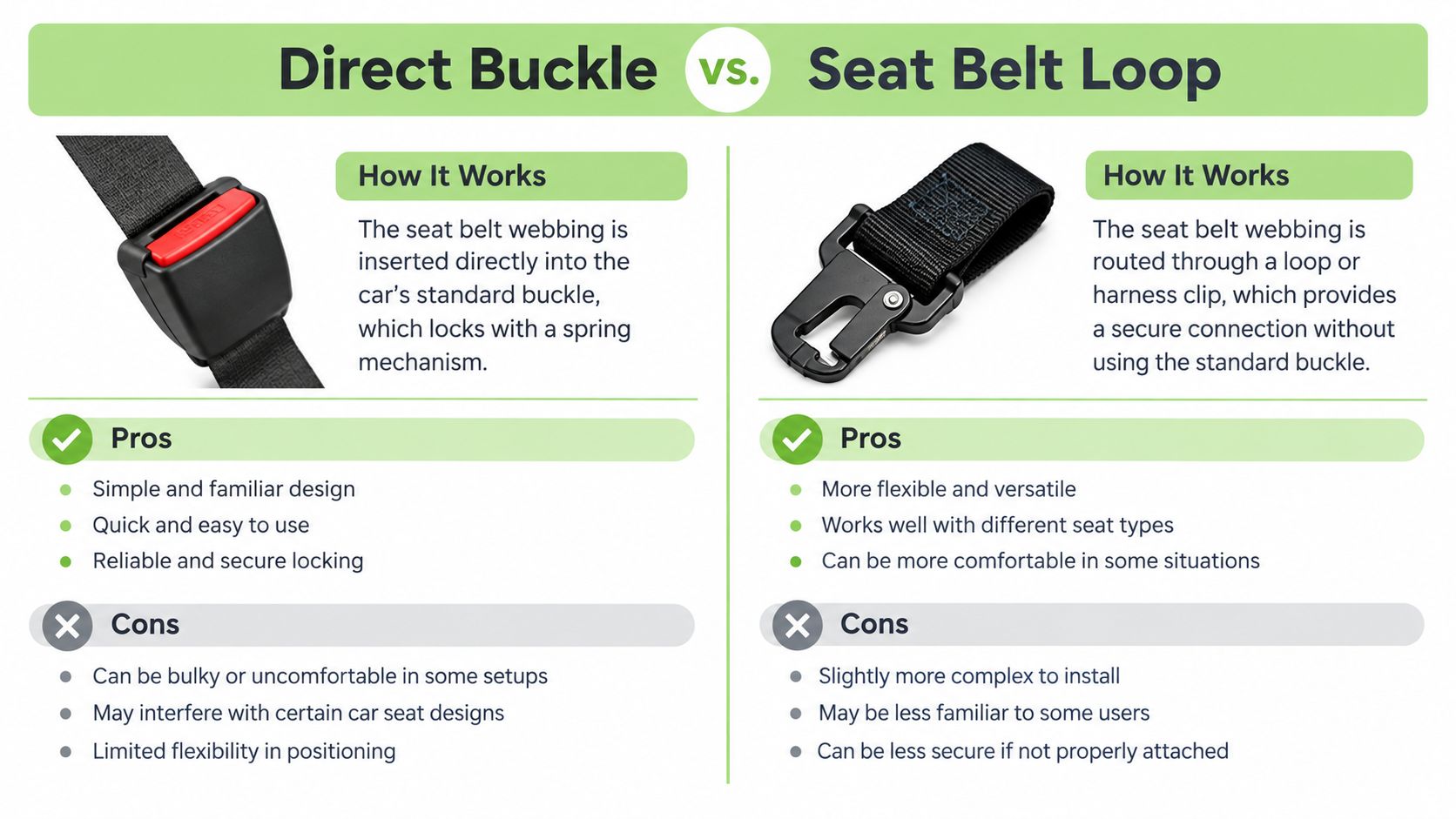
Compare the complete combination
Prioritize a harness with independently documented crash testing. The Pet Magasin dog car safety harness guide can help narrow the harness side of the decision, but the vehicle connection still needs its own check.
| Clip Type | Vehicle Compatibility | Safety Signal to Check | Best For |
|---|---|---|---|
| Direct-to-buckle clip | Compatible only when the tongue and receiver engage correctly | A documented test of the complete restraint system | Drivers who want quick attachment and a verified buckle fit |
| Seatbelt-loop tether | Works through the vehicle's seat belt path when routed as directed | Secure webbing, attached hardware, and independent crash evidence | Vehicles where a direct buckle clip doesn't fit reliably |
| Swivel tether | Depends on the underlying buckle or loop connection | Smooth rotation without an unverified weak joint | Dogs that turn frequently, provided the full system is tested |
| Bungee tether | Requires enough restraint control despite elastic movement | Crash-tested design, not merely a breaking-strength rating | Dogs needing limited flexibility during ordinary travel |
Look for steel hardware, secure stitching, and seatbelt-grade webbing at least 1.5 inches wide, a recommendation discussed in the available restraint guidance. Match the harness attachment to the harness manufacturer's intended ring. A clip that fits the car but connects poorly to the harness isn't a compatible system.
Getting the Right Fit and Tether Length for Your Dog
A harness should hold the dog's body without restricting breathing or rubbing behind the legs. Measure the chest around its broadest point, check the manufacturer's weight guidance, and account for coat thickness. A fluffy coat can hide a loose strap, while a short-coated dog makes pressure points easier to spot.
Fit the harness before attaching the car hardware
Place the harness on the dog while standing, then ask the dog to sit and lie down. You should be able to slide two fingers under the straps without leaving enough slack for the harness to rotate or shift toward the neck.
Check the following in a parked car:
- Body coverage: The harness sits across the chest and torso, not the throat.
- Movement: The dog can sit, turn, and lie down without reaching the front seat.
- Attachment: The rear ring remains accessible and doesn't pull the harness sideways.
- Clip engagement: The clasp closes completely and stays closed when loaded.
The Center for Pet Safety's published fitting method calls for tightening the restraint so the dog can lie down but can't move far forward. That balance matters. A dog needs enough space to change position and settle, but a long tether gives the body more distance to build momentum.
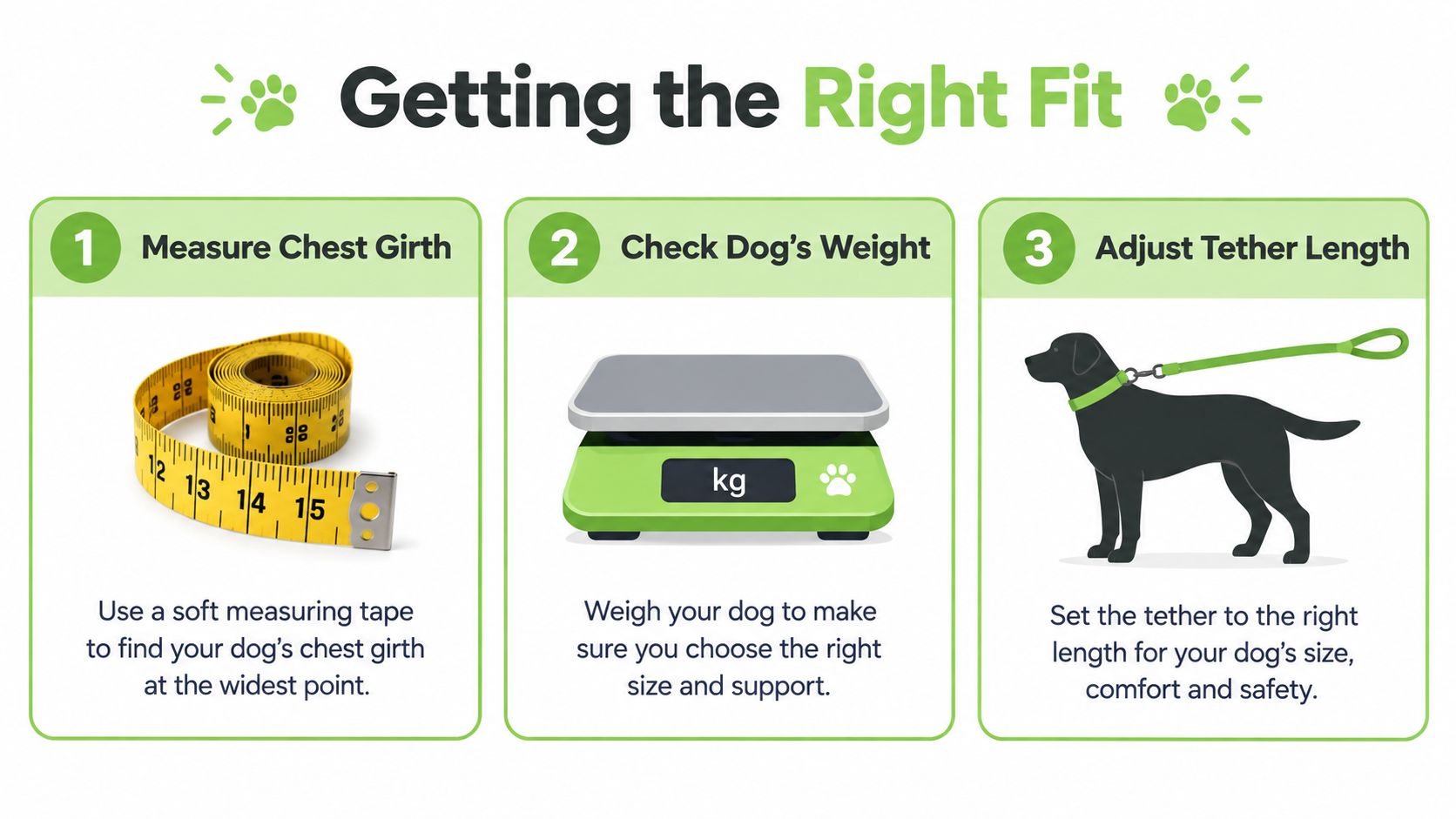
Control the forward range
In the relevant Center for Pet Safety test context, the benchmark for a usable tether was a maximum adjusted length of 6 inches. That figure shouldn't be treated as a universal measurement for every car and harness. It does show the principle clearly, keep the dog's forward excursion tightly controlled rather than offering a walking leash's freedom.
Test the setup with the dog moving from sit to down. If the tether goes slack enough for the dog to climb toward the console, shorten it. If the dog can't lie down or is held in an awkward posture, adjust the harness position and connection before adding length. Never attach the restraint to a collar, because the neck becomes the primary load path.
Installing Your Dog Seat Belt Clip Correctly in the Back Seat
The safest installation is the one that stays stable after the dog shifts weight, turns around, and settles. Put the dog in the back seat, away from front airbag zones, and choose the position where the restraint can be routed cleanly. The center seat may reduce exposure to some impact areas, but an outboard position can produce a more reliable anchor when the belt and buckle align better.
Start with the manufacturer's routing instructions. A seatbelt-loop tether should pass through the specified belt path without twists. A direct buckle clip must sit fully inside the vehicle receiver, not at an angle or partly inserted. If the buckle design, release button, or belt geometry prevents a solid connection, use another approved attachment method or another restraint.
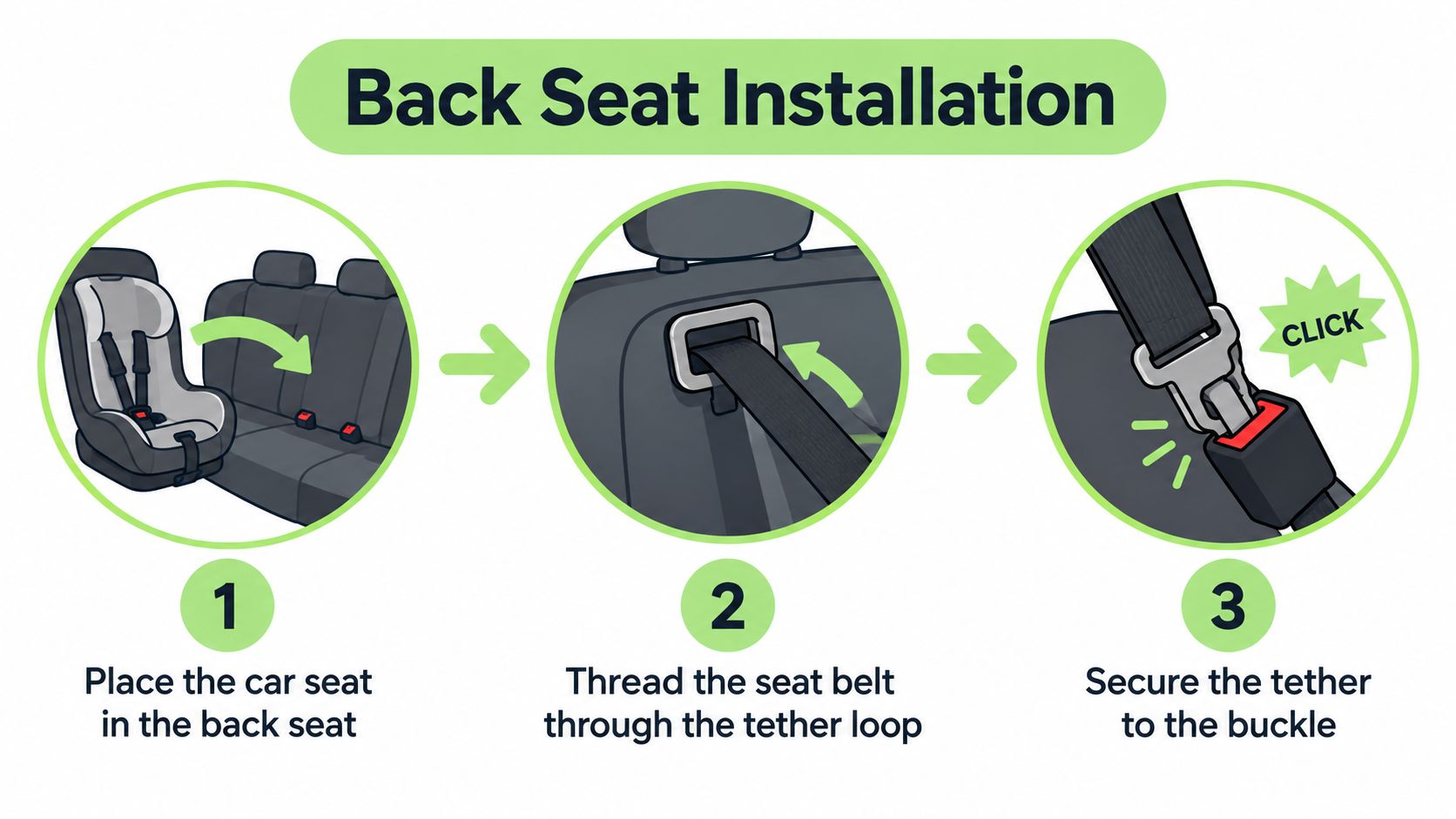
Check the car, not just the dog
Run the webbing flat against the seat and remove twists before loading it. Keep the tether away from the dog's legs, door hardware, sharp trim, and any point where the webbing could rub repeatedly. For a carrier or kennel, follow the same containment principle and secure it with the vehicle seat belt, tie-down anchors, or LATCH system as directed. The Pet Magasin dog travel carrier guide is useful when a contained travel setup suits the dog better than a harness.
Use a firm pre-drive tug on the tether and inspect each connection visually. The clip should remain closed, the anchor should stay in its intended position, and the harness should not rotate toward the dog's neck. In an SUV or wagon, a cargo-area crate needs a real anchor or tie-down arrangement. A loose crate, loose dog, or barrier alone doesn't provide the same control as secured containment.
Before pulling away: Confirm the dog is in the back seat, the harness is centered, the tether is short enough to prevent front-seat access, and every connection has taken a light load without shifting.
Safety Checks and Common Mistakes to Avoid
A large force rating can create false confidence. A product rated to 2,200 pounds, 4,500 pounds, or 725 pounds in a static listing still may not survive a simulated frontal impact, because crash forces involve acceleration, webbing behavior, stitching, body fit, and connection geometry. The relevant benchmark is whether the complete restraint keeps the dog contained during a simulated 30 mile-per-hour frontal test, not whether one metal component withstands a pull.
The Center for Pet Safety describes catastrophic release from the restraint or connection point as the most common failure mode in its test program. Its analysis also found that many products marketed as crash-tested did not provide acceptable protection, so the wording on a product page needs evidence behind it.
Replace convenience with verification
- Walking leash: A leash is designed for controlled movement on foot, not collision loads. Don't substitute it for a vehicle restraint.
- Unverified crash claim: Look for an identifiable test protocol, product identity, and independent certification. In many markets, no government standard or industry-wide test governs pet restraints, as AAA's pet travel guidance explains.
- Long tether: Extra length may look comfortable but allows more forward movement. Set the shortest range that still lets the dog lie down.
- Collar attachment: Connect to a suitable full-body harness, never the collar.
- Wrong buckle: A direct clip must match the vehicle receiver. “Universal” doesn't remove the need for a physical engagement check.
For UK travel, Highway Code Rule 57 guidance says dogs and other animals must be suitably restrained so they can't distract the driver or injure anyone during a quick stop. Breaches can lead to fines up to £5,000, penalty points, and possible driving bans. For readers comparing buckle hardware, Seat Belt Extenders stop clip info provides useful context about how seat belt stopping and attachment components function, but it shouldn't replace pet-specific crash evidence.
Keeping Your Dog Comfortable and Your Gear in Top Shape
A secure restraint works best when the dog accepts it as part of the normal car routine. Start with the harness indoors, reward calm contact, and let the dog investigate the clip before expecting a drive. Short, uneventful rides build better habits than introducing the system for the first time on a long journey.
Keep the back seat predictable. A washable cover can reduce slipping and protect upholstery, while a familiar blanket may help an anxious dog settle without changing the tether length. Plan breaks for water, toileting, and movement on longer trips. If motion sickness is part of the problem, the Pet Magasin guide to helping a car-sick puppy offers practical travel considerations.
Maintain the restraint like safety equipment
Inspect the webbing, stitching, harness rings, buckle, and clip routinely. Look for fraying, pulled threads, bent metal, corrosion, damaged spring gates, and any buckle that releases too easily. Clean according to the manufacturer's directions, avoid harsh chemicals that could weaken fibers, and dry the webbing fully before storage.
Replace the restraint after a collision, even when damage isn't visible. Replace it sooner when the hardware or stitching shows wear. If a dog has chewed vehicle belt webbing, a specialist resource such as mail-in seat belt webbing fix can explain repair options, but damaged safety webbing shouldn't remain in service while you decide.
The dependable routine is simple: crash-tested harness, compatible vehicle anchor, short controlled tether, back-seat placement, and a pre-drive inspection. Use that system on ordinary trips as well as major journeys, so restraint becomes automatic rather than something added only when the road ahead looks demanding.
Choose the harness and vehicle connection together, then inspect the fit before your next drive. Pet Magasin offers pet travel carriers and other practical supplies that can support a more organized travel setup. Visit the store to compare travel options and prepare a safer, calmer routine for your dog.

Leave a comment