
Your Actionable Guide to the Best Cat Food for a Sensitive Stomach

When you're trying to find the right cat food for a sensitive stomach, your main goal is to solve a problem. A "sensitive stomach" isn't the root issue; it's a symptom. Your first, most critical step is to learn how to spot the signs of digestive distress so you can take clear, effective action to bring your cat relief.
Step 1: Identify the Symptoms of a Sensitive Stomach
Your cat's digestive system is a finely tuned instrument; it doesn't take much to throw it off. Many owners dismiss occasional issues, but consistent problems are your cat's way of signaling that something is wrong. Learning to read these signals early is the key to fixing the problem.
"Sensitive stomach" is a catch-all term for various digestive upsets. Some signs are messy and obvious, but others are subtle. Your most powerful tool is observation. Pay close attention to your cat's daily routine, from litter box habits to energy levels, to gather the information you need.
Create a Symptom Checklist
Frequent vomiting or diarrhea are clear red flags, but digestive distress often shows up in less direct ways. Use this checklist to become a keen observer of your cat's well-being and identify potential issues.
- Changes in Stool Quality: Actively check the litter box for stool that is consistently too hard, too soft, or has an unusually foul odor. Any sudden change is a major clue to document.
- Increased Gas or Bloating: While occasional gas can be normal, take note if your cat has frequent flatulence or a visibly bloated belly. This is a sign of digestive trouble.
- Poor Coat Condition: A dull, flaky, or greasy coat can be an outward sign of an internal problem. If a cat isn't absorbing nutrients correctly, their skin and fur are often the first places it shows.
- Lethargy or Low Energy: Track your cat's energy levels. Is your normally playful cat suddenly sluggish, especially after meals? Their body might be struggling to digest food that doesn't agree with them.
A Symptom, Not a Diagnosis
Remember that "sensitive stomach" describes symptoms, not the actual diagnosis. These signs are clues pointing to an underlying cause, which could range from a food intolerance to a more serious health condition.
Think of a sensitive stomach as your cat’s check-engine light. It flashes to tell you something needs attention under the hood—it doesn’t tell you what the problem is, just that it's time to investigate.
By tracking these signs, you're not just cleaning up messes; you're gathering crucial data. This information will empower you to have a productive conversation with your veterinarian and become a true partner in your cat's health. Recognizing the problem is the first and most important step toward finding the right cat food for a sensitive stomach and getting your cat back to feeling their best.
Step 2: Decode Your Cat's Digestive Symptoms
Your cat communicates through physical signs. It's your job to learn their language. Picking up on these behavioral and physical clues is the next practical step toward finding the right cat food for a sensitive stomach.
Think of yourself as a pet detective. The more specific clues you can gather, the better you and your vet can solve the mystery. Move past a general "my cat is sick" and start documenting the specifics of their symptoms.
Vomiting: Document the Details
Vomiting is one of the most obvious signs, but not all vomit is the same. The timing, frequency, and contents provide vital clues about the root cause. Distinguish between a rare hairball and a chronic issue that demands action.
To get a clearer picture, start a log and ask these questions:
- Timing: When does it happen? Vomiting undigested food immediately after a meal could mean they're eating too fast. If it’s partially digested food hours later, the issue may be further down the digestive tract.
- Content: What are you seeing? Is it mostly food, clear liquid, yellow bile, or hairballs? Frequent, large hairballs can indicate that the digestive tract isn't moving things along efficiently.
- Frequency: How often does this occur? Vets consider chronic vomiting to be anything more than twice a month. If you hit this threshold, it’s a clear signal to consult your vet.
Diarrhea and Litter Box Clues
Your cat's litter box is a direct report on their digestive health. Your action item is to check it daily. Healthy cat stool should be firm, well-formed, and a consistent dark brown.
Diarrhea means food is moving through the system too quickly for proper nutrient and water absorption. This can be caused by anything from a dietary indiscretion to a food intolerance. Monitoring their litter box provides invaluable insights. For more on this, a comprehensive cat litter review can even help you find a product that makes monitoring easier: https://www.petmagasin.com/blogs/news/cat-litter-review.
The type of diarrhea can also tell a story. A large amount of watery stool often points to a problem in the small intestine, while smaller, more frequent deposits, sometimes with mucus, could signal an issue in the large intestine.
Constipation and Gas
On the flip side is constipation. If you see your cat straining, producing tiny, hard, dry stools, or not defecating for more than a day, they could be constipated. This is often caused by dehydration, insufficient fiber, or a lack of exercise.
And then there's gas. While an occasional toot is normal, frequent or foul-smelling flatulence is a common sign of poor digestion. It usually means food is fermenting in their gut instead of being properly broken down, often due to an ingredient that doesn't agree with them.
Providing your vet with this level of detail—what, when, and how often—makes you an active partner in your cat's health. These observations are the most critical step to diagnosing the problem and finding a lasting solution.
Alright, you've identified the signs—the occasional vomit, the loose stool, the post-meal discomfort. Knowing the symptoms is the first step, but the real progress comes from understanding why it's happening. A sensitive stomach is your cat's way of signaling an underlying issue.
This is a puzzle, and by examining the potential causes, you can piece together a solution that helps your cat feel great again.
These triggers range from food ingredients to deeper health issues. This is such a common problem that the global market for sensitive stomach cat food was around USD 3.2 billion in 2023 and continues to grow. This shows how many cat parents are seeking solutions for the same issues. You can get more details on the expanding sensitive stomach cat food market to see just how widespread this is.
Dietary Intolerances vs. Allergies
Let's clarify a key point: food intolerances and food allergies are not the same. Understanding the difference is crucial for choosing the right path forward.
A food intolerance is a digestive issue. Your cat's system struggles to process a specific ingredient, leading to gas, an upset stomach, or diarrhea. Think of it like a person who gets bloated after eating dairy.
A true food allergy involves the immune system. The body mistakenly identifies a food ingredient—usually a protein—as a threat and launches an attack. This causes digestive upset plus other classic allergy symptoms like itchy skin, hair loss, or chronic ear infections. The most common culprits are proteins cats eat frequently, such as chicken, beef, and fish.
A food intolerance is like having trouble digesting lactose—it's uncomfortable but confined to the digestive tract. A food allergy is more like a peanut allergy in humans, where the entire immune system overreacts, causing a body-wide response.
Still a bit fuzzy? This table should help clear things up.
Food Allergy vs Food Intolerance: What's the Difference?
| Characteristic | Food Allergy | Food Intolerance |
|---|---|---|
| System Involved | Immune System | Digestive System |
| Primary Symptoms | Itchy skin, hair loss, ear infections, vomiting, diarrhea | Gas, bloating, vomiting, diarrhea (primarily digestive) |
| Onset of Symptoms | Can be delayed (hours to days) | Usually occurs within a few hours of eating |
| Common Triggers | Proteins (chicken, beef, dairy, fish) | Dairy, certain fats, artificial additives, gluten |
Determining which one you're likely dealing with is a huge step toward selecting the right food and providing relief.
Sudden Changes and Environmental Factors
Cats are creatures of habit, and their digestive systems are no different. One of the most common and avoidable causes of an upset stomach is changing their food too quickly.
An abrupt food swap shocks the good bacteria in their gut, leading to vomiting and diarrhea. To prevent this, implement any food change slowly over a 7-10 day period to allow their system to adapt.
Stress can also have a real, physical effect on your cat's digestion. As sensitive animals, significant changes in their environment can manifest as tummy troubles.
Consider any recent disruptions:
- Moving to a new house
- Introducing a new pet or baby
- Loud construction noises
- A major change in your daily routine
Underlying Health Conditions
Finally, a sensitive stomach can be a red flag for a more serious medical issue that requires a vet's diagnosis. While the right cat food for a sensitive stomach is powerful, it cannot cure an underlying disease.
Conditions like Inflammatory Bowel Disease (IBD), pancreatitis, intestinal parasites, or thyroid problems can all initially mimic a simple food sensitivity.
If you've tried dietary adjustments and stress management with no improvement, or if symptoms are worsening, it is time to call your vet. They can run diagnostic tests to rule out these more significant issues and ensure your cat receives the correct treatment.
Step 3: Choose the Best Cat Food for a Sensitive Stomach
Navigating the pet food aisle can be overwhelming, but your goal is clear: stop guessing and start understanding what your cat’s unique system needs. It's not about finding a flavor they like; it's about selecting a formula that their body can easily digest and use to thrive.
The demand for specialized nutrition has reshaped the market. In the United States, foods for sensitive stomachs are a significant part of the pet food industry, which is projected to reach USD 21.94 billion by 2025. This growth shows that owners are actively seeking solutions. To choose wisely, you need to understand the strategies behind these specialized diets.
Limited Ingredient Diets (LID)
Think of a Limited Ingredient Diet (LID) as an elimination diet for your cat. The strategy is simple: reduce the number of ingredients to the bare essentials. This makes it much easier to pinpoint the cause of the digestive upset.
Instead of a complex recipe with multiple meats and grains, an LID focuses on one animal protein (like duck or rabbit) and one or two simple carbohydrates (like sweet potatoes or green peas). By avoiding common triggers like chicken, beef, or corn, you significantly reduce the chance of an adverse reaction.
A Limited Ingredient Diet simplifies the "who-done-it" mystery of your cat's digestive issues. By removing potential suspects from their food bowl, you can more easily identify the true culprit behind their discomfort.
Novel Protein Diets
This approach often goes hand-in-hand with LIDs. A novel protein diet introduces a protein source your cat has likely never encountered. Since food sensitivities often develop after prolonged exposure to common proteins (like chicken and fish), switching to something new can give their immune system a break.
What counts as "novel"? It depends on your cat's dietary history. For most cats, this could include:
- Venison
- Rabbit
- Duck
- Kangaroo
The logic is simple: if your cat's body hasn't encountered a particular protein before, it's less likely to react negatively to it. This can be a game-changer for cats whose digestive issues are linked to an immune response.
Hydrolyzed Protein Diets
For more complex cases, veterinarians may recommend a hydrolyzed protein diet. These formulas take a common protein, like chicken, and use enzymes to break it down into microscopic pieces. These fragments are so small that the cat's immune system doesn't recognize them as a threat.
Imagine a protein is a large Lego castle that an allergic cat's body attacks. A hydrolyzed diet breaks that castle into individual Lego bricks. The immune system sees only the tiny pieces, doesn't sound the alarm, and allows the nutrients to pass through without a reaction.
Wet vs Dry Food: Which Is Better for Digestion?
When choosing between wet and dry food for a sensitive stomach, the key factor is hydration. Cats have a low thirst drive, a trait inherited from their desert ancestors, which can lead to constipation and kidney issues.
Wet food, typically 70-80% moisture, is an excellent way to increase your cat's water intake. This extra hydration helps flush their system, promotes smooth digestion, and makes stools softer and easier to pass. Its soft texture is also gentler on an irritated digestive tract.
This doesn't mean high-quality dry food is off the table. Many sensitive stomach formulas are enriched with beneficial fibers and prebiotics. A practical solution for many owners is a mixed-feeding plan, providing the hydrating benefits of wet food along with the dental advantages and convenience of dry kibble. You can explore a variety of cat food options for sensitive stomachs to find what works best for your pet.
Ultimately, selecting the best cat food for a sensitive stomach requires a strategic approach. By understanding these dietary options and the importance of hydration, you can read labels with confidence and make an informed choice that promotes your cat's comfort and health.
Step 4: Safely Switch Your Cat to a New Food
You've done the research and selected a promising new cat food for a sensitive stomach. The next step is just as critical: the transition. Abruptly switching foods is a surefire way to trigger the very vomiting and diarrhea you're trying to prevent.
Your cat’s gut contains a specific balance of bacteria accustomed to their old diet. A sudden change disrupts this delicate ecosystem. Think of it like this: you wouldn't go from a sedentary lifestyle to running a marathon overnight. Your cat’s digestive system needs the same gradual introduction to avoid an upset.
The gold standard is a slow transition over 7 to 10 days. This gives their stomach and gut bacteria time to adapt to the new ingredients and allows your cat to get used to the new flavors and textures.
The 10-Day Transition Plan
Patience is key. The goal is to gradually increase the proportion of new food while decreasing the old food. This allows their digestive system to adjust without drama.
Follow this simple, effective schedule:
| Day(s) | Old Food Percentage | New Food Percentage |
|---|---|---|
| Days 1-2 | 75% | 25% |
| Days 3-5 | 50% | 50% |
| Days 6-8 | 25% | 75% |
| Day 9-10 | 0% | 100% |
Mix both foods together thoroughly in the bowl. Otherwise, clever cats may pick out the familiar kibble and leave the new food behind. Throughout the process, monitor their litter box and overall demeanor for any signs of trouble.
How to Troubleshoot the Transition
Even with a careful plan, some cats resist change. If you encounter a problem, don't panic. A few simple adjustments can get you back on track.
- Your Cat Refuses to Eat: If your cat sniffs the new mixture and walks away, take a step back. Revert to the previous ratio they were eating successfully and maintain it for a few more days before trying to increase the new food again.
- Minor Tummy Upset Occurs: Slightly softer stools aren't necessarily a cause for alarm. It's often a sign to slow down. Hold steady at the current food ratio for an extra day or two to allow their system to catch up.
- You're Dealing with a Picky Eater: For the truly fussy cat, try slightly warming wet food to enhance its aroma. You can also sprinkle a tiny amount of a high-value topper they love, like bonito flakes, over the mixed food to entice them.
Remember: A successful food transition is a marathon, not a sprint. Rushing it will only set you back. A little extra patience now means a much happier and healthier cat down the road.
For those interested in deepening their knowledge of pet health, perhaps even professionally, a course like the Certificate Pet Wellness Business offers valuable insights. Mastering these small but crucial aspects of animal care is the secret to their long-term well-being.
Step 5: Support Your Cat's Digestive Health Daily
Finding the right cat food for a sensitive stomach is a major victory, but your daily habits are what maintain long-term digestive health. Lasting relief goes beyond the food bowl; it’s about creating a predictable, low-stress environment where your cat's gut can function optimally. Implement these simple, actionable tweaks to their routine.
Consistency is your most powerful tool. Cats thrive on predictable schedules. Feed your cat at the same times each day to help regulate their metabolism and the production of stomach acid. This simple routine can prevent the discomfort that comes from an empty, overly acidic stomach.
Create a Calm Feeding Environment
How you feed your cat is just as important as what you feed them. Many cats with sensitive stomachs are also speed-eaters. Gulping down food causes them to swallow excess air, which leads to bloating, gas, and regurgitation of undigested food.
A slow-feeder bowl is a practical and highly effective solution. These bowls feature built-in obstacles that force your cat to eat more slowly and mindfully. This reduces air intake and gives their digestive system a better chance to work properly. Additionally, place their feeding station in a quiet, low-traffic area of your home to minimize mealtime stress.
Think of it this way: a calm environment and a consistent schedule are like a protective shield for a sensitive gut. By managing stress and eating speed, you're tackling major triggers that even the most perfect diet can't fix on its own.
The visual guide below illustrates the slow-and-steady process for introducing a new food—a critical step for preventing digestive upset.
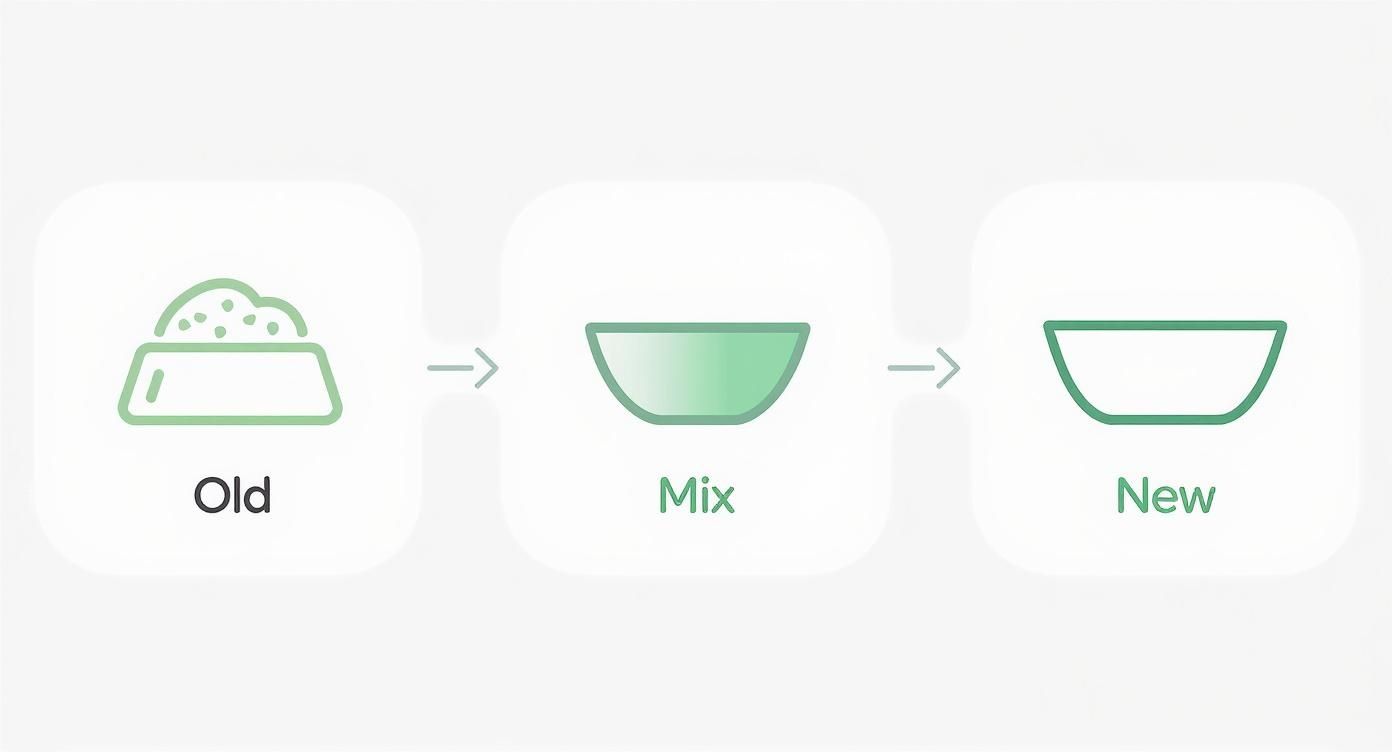
This step-by-step approach gives their gut bacteria time to adjust without causing a rebellion. Another common issue that can disrupt digestion is hairballs. If this is a problem for your cat, our article on finding a good home remedy for cat hairballs provides additional actionable advice.
When to See a Veterinarian Immediately
While many mild sensitivities can be managed at home, you must know when to escalate to a professional. Certain symptoms are red flags for serious issues that require immediate veterinary attention.
Contact your vet without delay if you observe any of the following:
- Refusing to eat for more than 24 hours: In cats, this is a medical emergency that can lead to a dangerous liver condition called hepatic lipidosis.
- Repeated vomiting: This means multiple times in one day or consistently vomiting every day.
- Blood in the stool or vomit: This is never normal and indicates internal bleeding or severe inflammation.
- Extreme lethargy or hiding: A sudden, dramatic change in your cat's energy and social behavior is a major warning sign.
- Signs of pain: Look for a hunched posture or crying out when their abdomen is gently touched.
Being a responsible pet owner means knowing your limits. These symptoms are your cue to seek a professional diagnosis and treatment plan from your veterinarian.
Got Questions? We've Got Answers.
When you're dealing with a sensitive stomach, a million little questions pop up. Even after you've picked a new food, the day-to-day management can feel tricky. Let's tackle some of the most common things cat owners wonder about.
Are Grain-Free Diets the Magic Bullet for Sensitive Stomachs?
Not necessarily. It's a common misconception, but the biggest culprits for food sensitivities are usually animal proteins like chicken and beef, not grains. Slapping a "grain-free" label on the bag doesn't automatically make it a tummy-friendly food.
In fact, true grain allergies in cats are surprisingly rare. A much better approach is to try a limited ingredient diet. This simplifies everything—both protein and carbs—making it way easier to figure out what's actually causing the trouble.
How Long Before I See a Change on the New Food?
This is where you need to be patient. If you're dealing with digestive issues like diarrhea from a food intolerance, you might start seeing some good signs within one to two weeks after switching foods.
But if it's a true food allergy that also shows up as itchy skin and inflammation, you're in it for the long haul. It can take a strict 8-12 week food trial for your cat’s immune system and skin to really calm down and heal. Always stick to the timeline your vet gives you.
A food trial is a diagnostic tool, not a quick fix. Sticking to the plan without a single cheat is the only way to get clear, reliable results about what works for your cat.
Can My Cat Still Have Treats or a Bite of My Food?
It's a hard no on this one, especially when you're in the middle of a food trial. Tossing your cat a treat or some scraps from your plate can sneak in the very ingredients you're trying so hard to avoid. It completely undoes all your progress and makes it impossible to know what's working.
You have to stick only to the prescribed diet. If you absolutely must give a reward, find treats made with the exact same limited ingredients as their special food. Your vet can also point you toward safe, hypoallergenic options that won’t trigger a flare-up and send you back to square one.
At Pet Magasin, we believe that a happy pet starts with great care and the right information. Explore our range of high-quality pet supplies designed to support your pet's health and well-being at Pet Magasin.

Leave a comment