
Finding the Best Slicker Brush for Dogs
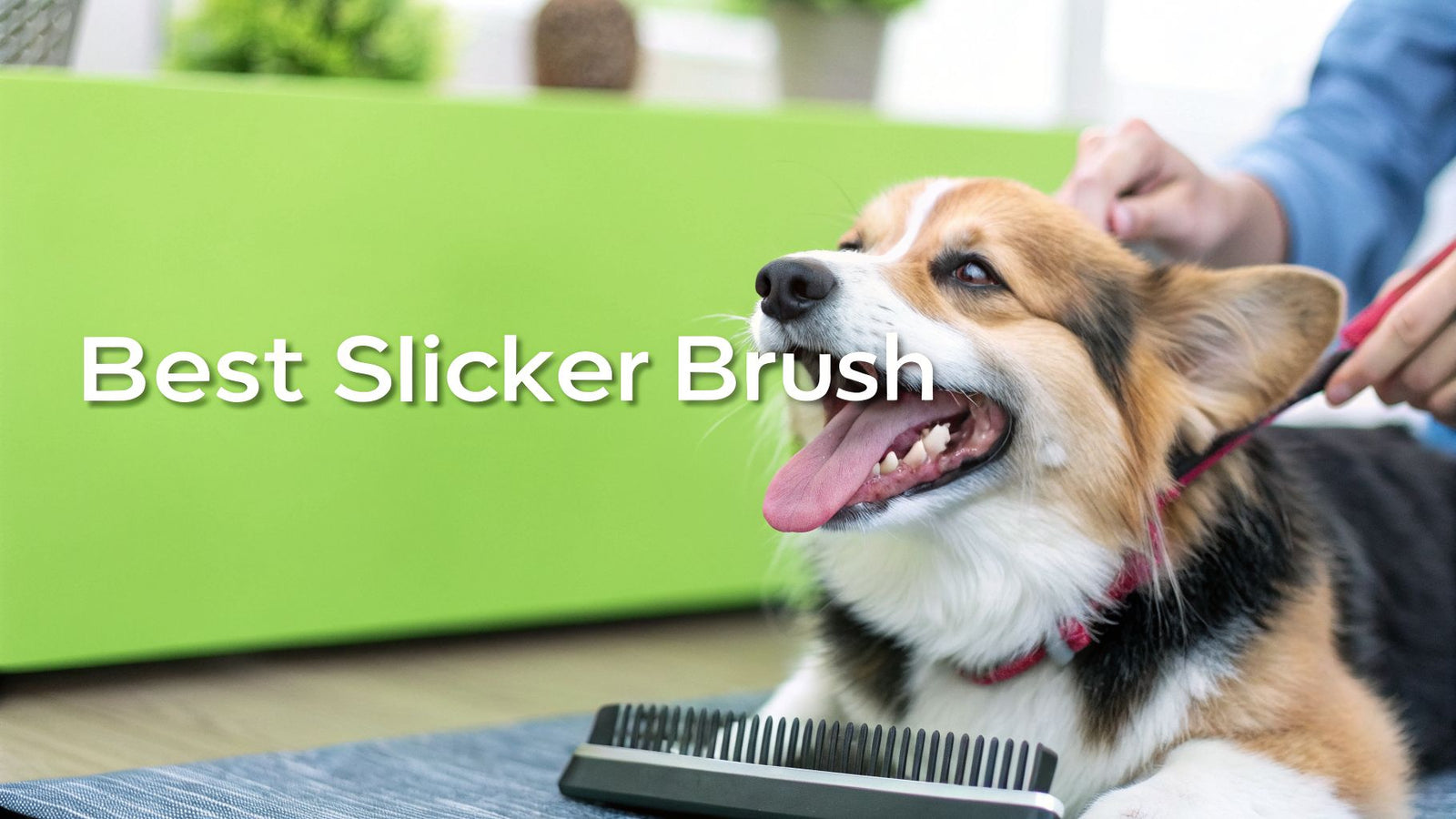
Wading through the sea of slicker brushes can be overwhelming, but finding the right one is your key to a healthy, mat-free coat. The best slicker brush for dogs isn't a one-size-fits-all gadget. To choose correctly, you need to match the brush's features—pin type, pad flexibility, and handle design—to your dog's specific coat, size, and skin sensitivity.
This guide will show you exactly what to look for so you can turn grooming from a chore into a positive, bonding experience.

Why Choosing the Right Slicker Brush Matters
A slicker brush is an essential grooming tool for removing loose fur, preventing painful mats, and distributing natural oils for a healthy, shiny coat. Think of it as a specialized instrument designed to tackle your dog’s unique fur challenges.
Using the wrong brush can cause skin irritation, discomfort, or simply fail to groom effectively. The right one, however, makes grooming efficient and strengthens your bond.
It's clear that owners are prioritizing high-quality grooming. The global pet grooming brushes market was valued at $6.2 billion in 2023 and is projected to reach $12.5 billion by 2030. This growth shows that effective grooming tools are now considered a necessity for responsible pet care.
Key Benefits of a Quality Slicker Brush
Choosing the right slicker brush delivers tangible benefits for your dog's health and your home's cleanliness. Here's what you can expect:
- Effective Mat Prevention: The fine, tightly-packed pins separate individual hairs, detangling them before they can form painful mats that pull on your dog's skin.
- Deep Undercoat Removal: For double-coated breeds, a slicker is non-negotiable. It efficiently removes the dense, loose undercoat that causes heavy shedding and can lead to overheating.
- Improved Skin Health: By clearing away dead hair and debris, the brush allows air to circulate down to the skin, which helps reduce the risk of irritation and hot spots.
- Enhanced Coat Appearance: Regular brushing distributes your dog’s natural oils from root to tip, resulting in a softer, shinier, and healthier-looking coat.
Actionable Tip: Don't assume all slicker brushes are the same. Pay close attention to pin stiffness, pad flexibility, and handle design—these details determine whether a brush is right for your dog.
To help you get started, use this quick reference chart to match your dog's coat type to the ideal brush features.
Slicker Brush Quick Reference Guide by Coat Type
| Dog Coat Type | Recommended Pin Type | Recommended Pad Firmness | Use For Breeds Like |
|---|---|---|---|
| Short & Smooth | Soft, flexible pins (often with protected tips) | Soft, flexible pad | Beagles, Pugs |
| Wiry Coats | Firm, straight pins | Firm pad | Terriers, Schnauzers |
| Long & Silky | Long, flexible pins | Soft to medium pad | Yorkies, Shih Tzus |
| Double Coats | Long, firm pins (angled or bent) | Firm, curved pad | Huskies, Shepherds |
| Curly & Wavy | Long, strong pins | Medium to firm pad | Poodles, Doodles |
This table provides a solid starting point. Keep these recommendations in mind to narrow down your choices and find a brush that works with your dog’s fur, not against it.
Navigating Your Options
Whether you groom at home or between professional appointments, having the right tools is critical. Insights from professional pet grooming services highlight the importance of tool selection.
This guide empowers you with the knowledge to make a confident choice. Let's break down the anatomy of a slicker brush so you can learn to spot quality. Understanding the pins, pad, and handle will help you see past marketing and focus on features that actually deliver results.
The Pins: The Business End of the Brush
The fine wire bristles, or pins, do all the work. They glide through the coat to separate hairs, grab loose undercoat, and break up small tangles. The design of these pins is the most important feature to evaluate.
Here’s what you need to know to choose the right pins for your dog:
- Firm vs. Soft Pins: Choose firm pins for dense double coats (German Shepherds, Huskies) to penetrate thick fur. Opt for soft, flexible pins for dogs with silky, fine hair or sensitive skin to prevent irritation.
- Angled vs. Straight Pins: Most slicker brushes have angled pins. This design excels at "grabbing" loose fur from deep in the undercoat without requiring excessive pressure.
- Protected Tips: Look for brushes with small plastic or rubber balls on the pin ends. This is a critical safety feature for beginners and dogs with sensitive skin, as it prevents "brush burn"—painful skin irritation caused by sharp pins.
Actionable Tip: The right pins make the difference between a stressful struggle and a calm grooming session. The goal is to detangle and de-shed without painfully pulling your dog's hair.
The Pad: Where Flexibility Meets Function
The pins are set into a rubber or silicone base called the pad. The pad's flexibility acts like a suspension system, allowing the brush head to conform to your dog's body contours.
A flexible pad absorbs and distributes pressure evenly, preventing discomfort when brushing over legs, shoulders, and other curved areas. A firmer pad, however, provides the necessary tension to work through tough mats or an exceptionally thick coat. Choose the pad firmness that matches your dog's grooming needs.
The Handle: Your Connection to Control
The handle is your point of control. Grooming can be time-consuming, and a poorly designed handle can lead to hand fatigue and loss of control, which is unsafe for your pet.
Always look for an ergonomic handle with a non-slip rubber or silicone grip. This ensures a firm but relaxed hold, giving you the agility to use proper brushing techniques and adjust pressure as needed. This level of control is essential for safe and effective grooming.
The pet care industry continues to grow, reflecting a commitment to high-quality tools. The global pet grooming and accessories market is projected to grow from $87.78 billion in 2026 to $158.77 billion by 2034. Investing in a well-made slicker brush is part of this trend toward providing the best possible care. You can discover more insights about this growing market on fortunebusinessinsights.com.
Matching the Right Brush to Your Dog's Coat
The most effective way to choose a slicker brush is to match its features to your dog's specific coat type. A brush that works wonders on a Golden Retriever could be ineffective or even harmful for a Poodle. Your goal is to select a tool that works with the fur, not against it.
This quick guide will help you determine what to look for based on your dog's coat, skin, and your own comfort.

As the flowchart illustrates, your decision comes down to three key factors: coat type, skin sensitivity, and handle design. Get these right, and you'll have the perfect tool for the job.
Let's see how this applies to different breeds.
Feature Comparison for Different Dog Breeds
The table below breaks down how to choose the right slicker brush features for specific grooming challenges.
| Example Breed | Primary Coat Challenge | Ideal Brush Head Size | Optimal Pin Length & Type | Recommended Pad |
|---|---|---|---|---|
| Golden Retriever | Preventing tangles in long, fine fur without breakage. | Medium to Large | Long, flexible pins with protective tips. | Soft to Medium |
| Siberian Husky | Removing massive amounts of shed undercoat. | Large | Long, firm pins to penetrate the dense layers. | Firm |
| Poodle (Standard) | Stopping mats from forming deep within curly hair. | Medium | Long, sturdy pins to reach the skin. | Medium to Firm |
| Jack Russell Terrier | Removing dead, coarse hair to maintain wiry texture. | Small to Medium | Short, firm pins to grab and pull dead hair. | Firm |
This comparison shows why a one-size-fits-all approach fails in dog grooming.
For Long and Flowing Coats
Dogs like Golden Retrievers, Bernese Mountain Dogs, and Shih Tzus have long, beautiful fur that easily tangles. Your goal is to prevent knots without breaking delicate hairs.
The best slicker brush for them has:
- Long, flexible pins: These are essential. They must be long enough to reach through the coat but flexible enough to gently work around tangles rather than ripping through them.
- A soft to medium pad: A softer pad provides a gentle touch, allowing the brush to flex around your dog’s body for maximum comfort during full-body brush-outs.
Actionable Tip: For these coats, groom gently a few times a week. Consistent maintenance is far more effective than an occasional, intense de-matting session.
For Dense Double Coats
If you own a Siberian Husky, German Shepherd, or Australian Shepherd, you're familiar with "blowing coat." These breeds have a thick, insulating undercoat and a tougher topcoat of guard hairs. Your primary job is to remove loose undercoat fur.
Actionable Tip: Avoid skimming the top layer. The real problem lies in the undercoat, where trapped fur holds heat and moisture. Use a slicker brush to get all the way down to the skin.
The ideal slicker brush for these dogs has long and firm pins to penetrate the dense undercoat and pull out trapped fluff. A firm pad provides the tension needed to work through thick patches effectively.
For Curly and Wavy Coats
Poodles, Doodles, and Bichon Frises have coats prone to matting. Their curly hair twists and locks, forming tight knots close to the skin. Because their hair grows continuously, shed strands get tangled in the curls instead of falling out.
To manage this, you need a slicker with long, sturdy pins that can reach the base of the curls. A brush with a medium-to-firm pad gives you the leverage to work through thick hair. Follow up with a metal comb to check for any hidden tangles.
For Wiry Coats
Terriers and Schnauzers have a coarse, wiry coat designed to protect them from rough terrain. To maintain this texture, dead hair must be removed.
The best slicker for a wiry coat features firm, straight pins in a firm pad. This design is perfect for gripping and pulling out the dead outer coat while leaving the softer undercoat intact. This process encourages healthy new hair growth and preserves the coat's distinctive look.
How to Use a Slicker Brush Like a Pro
Knowing how to use a slicker brush correctly transforms grooming into a productive and enjoyable session. Proper technique ensures a beautiful, mat-free coat while keeping the process safe and comfortable for your dog. Instead of just scraping the brush over their back, use the professional method of line brushing.
Line brushing is a systematic technique that ensures every hair is brushed from root to tip. It is the most effective way to get deep into the undercoat where mats form.
The Professional Line Brushing Method
Line brushing involves parting the hair to see the skin, then brushing the hair down over your fingers in small, methodical sections. This approach guarantees a thorough groom and prevents tangles from forming near the skin.
Here is a step-by-step guide to line brushing at home:
- Start Somewhere Easy: Begin on an area where your dog is comfortable being touched, like their back or side, to help them relax.
- Create Your First Part: Use your free hand to lift a section of hair straight up, creating a horizontal part where you can see the skin.
- Brush Down Gently: Place your slicker brush at the part line and use light, gentle strokes to brush down, following the natural direction of hair growth.
- Work in Small Rows: Once that section is tangle-free, create a new part just below it and repeat the process. Continue working your way down your dog’s body in organized lines.
Actionable Tip: Let the pins do the work. Never apply heavy pressure. If you encounter a tangle, do not yank the brush through it, as this can cause pain and brush burn.
How to Handle Stubborn Tangles Safely
Even with regular grooming, you will occasionally find a stubborn knot. Here's how to remove it without causing pain:
- Isolate the Knot: Hold the base of the tangled fur firmly between your fingers, close to the skin. This prevents pulling on their skin as you work.
- Use a Detangling Spray: A conditioning or detangling spray can add slip, making it easier to separate the knot without breaking the hair.
- Work from the Tip Inward: Use the corner of your slicker brush to gently pick at the end of the tangle. Slowly work your way toward the base until the knot loosens.
For severe mats, always consult a professional groomer. Attempting to cut them out at home can easily result in cutting your dog's skin. You can find more advice in our detailed guide on how to groom your dog at home.
Prepping for a Successful Grooming Session
A common mistake is bathing a dog before brushing.
Always brush before a bath. Water tightens existing mats, turning them into dense clumps that often require clippers to remove. Brushing first removes loose fur and tangles, allowing shampoo to clean all the way down to the skin.
This routine—regular line brushing, careful tangle removal, and always brushing before bath time—will keep your dog's coat in excellent condition and make grooming a positive experience for both of you.
Common Grooming Mistakes You Can Easily Avoid
Having the best slicker brush is only half the battle; knowing what not to do is just as important. Avoiding these common mistakes will make grooming safer, more comfortable, and more effective, helping you build trust with your dog.

Mistake 1: Applying Too Much Pressure
Pressing down hard on a tangle is the leading cause of brush burn, a painful skin irritation from the brush's sharp pins.
How to Fix It: Let the brush do the work. Use light, short, repetitive strokes. The angled pins on a good slicker brush are designed to grab loose fur without heavy pressure.
Mistake 2: Brushing Against Hair Growth
Brushing against the direction of hair growth pulls on the hair follicles, causing discomfort and potentially creating more tangles.
How to Fix It: Always brush in the same direction the hair grows. Follow the natural flow of the fur, paying attention to how it changes direction on the legs, belly, and tail.
"A key to successful grooming is understanding that you are working with your dog, not just on them. Paying close attention to their comfort signals and using a gentle, methodical approach builds the trust necessary for a lifetime of positive grooming experiences."
Mistake 3: Using a Slicker Brush on Wet Fur
Water causes tangles and mats to tighten, making them nearly impossible to remove without cutting them out.
How to Fix It: Always brush your dog thoroughly before a bath. Removing loose fur and tangles first allows for a better clean and prevents mats from setting.
Mistake 4: Forgetting to Clean the Brush
A brush clogged with fur, dander, and dirt is ineffective and unhygienic, redepositing grime back into your dog's coat.
How to Fix It: Pull all fur from the brush pad after every use. For a deeper clean, wash the brush with warm, soapy water monthly and let it air dry completely. For homes struggling with shedding, specialized couch throws for dogs can help protect furniture between grooming sessions.
Your Final Checklist for Buying the Right Brush
You are now equipped with the information needed to choose the perfect slicker brush. Use this final checklist to review your options and make a confident purchase. This is an investment in your dog's health, comfort, and the quality of your time together.
The Four Pillars of a Perfect Slicker Brush
Before you buy, ensure the brush you're considering meets these four critical standards:
- Pins—Are they right for the coat? Match the pins to your dog's fur: flexible for fine hair, firm for dense undercoats. Crucially, check for protective tips if your dog has sensitive skin to prevent brush burn.
- Pad—Does it have the right flexibility? The pad needs the right amount of "give." A flexible pad contours to your dog’s body for comfort, while a firmer pad provides the tension needed to tackle tough mats.
- Handle—Is it ergonomic? Look for a non-slip, comfort-grip handle to maintain control and prevent hand fatigue during longer grooming sessions.
- Cleaning—How easy is it to clean? A brush that is difficult to clean is a brush you won't want to use. Look for models that release hair easily or feature a self-cleaning mechanism that retracts the pins.
Your Goal: Find a brush where every feature serves a purpose—the right pins protect the skin, the right pad ensures comfort, a good handle provides control, and easy cleaning makes your life simpler.
Why Pet Magasin Tools Meet the Mark
At Pet Magasin, we design grooming tools based on these exact principles. We believe you deserve professional-quality results at home without compromising your dog’s safety or comfort.
Our slicker brushes feature ergonomic, non-slip grips to give you the control needed for precise techniques like line brushing. The pins are engineered to be tough on tangles yet gentle on the skin, with designs that protect your dog while efficiently removing loose undercoat.
We believe finding the best slicker brush should be straightforward.
By focusing on durable materials, smart design, and pet-first safety, Pet Magasin offers tools you can trust. We bridge the gap between expert recommendations and practical, at-home use.
To see how our slicker brushes fit into a complete grooming arsenal, check out our guide on the best grooming brushes for dogs. This will help you build a comprehensive system for your best friend's care.
Got Questions? We’ve Got Answers.
Here are answers to some of the most common questions about slicker brushes. Getting these details right will help you build a safe, effective, and enjoyable grooming routine.
How Often Should I Use a Slicker Brush?
The frequency depends on your dog's coat type and lifestyle. Let their fur be your guide.
- For Long-Haired & Curly-Coated Dogs (Poodles, Golden Retrievers): Brush three to four times a week, or even daily, to prevent tangles from forming into mats.
- For Double-Coated Dogs (Huskies, German Shepherds): Brush two to three times a week normally. During peak shedding seasons in spring and fall, increase this to daily sessions to manage the heavy shedding.
- For Active Dogs: If your dog regularly plays outside, a quick daily brush-out is a good practice to remove burrs, twigs, and debris before they cause tangles.
Can I Use a Slicker Brush on My Puppy?
Yes, but start correctly. Introduce grooming around 8 to 12 weeks of age to create a positive association.
Actionable Tip: You must use a soft-pinned slicker brush, preferably one with protective tips, on a puppy’s sensitive skin. Keep initial sessions short, positive, and filled with praise and treats. The goal is positive conditioning, not a perfect groom.
Is a Slicker Brush the Same as a Deshedding Tool?
No, they serve different functions.
A slicker brush is your daily tool for removing loose surface hair, detangling, and finishing the topcoat. It is ideal for regular maintenance and preventing mats.
A de-shedding tool is a specialized comb designed to reach deep into the undercoat and remove large volumes of trapped shed fur. It is much more intensive and should only be used once or twice a week during peak shedding seasons.
How Do I Know if I Am Brushing Too Hard?
Your dog's body language is your best indicator.
Here's the golden rule: Let the brush do the work. If you feel you need to apply heavy pressure or force the brush through a spot, you are brushing too hard or need to address the tangle differently.
Watch for these signs of discomfort:
- Flinching or yelping.
- Nipping at the brush or your hand.
- Red or irritated skin after grooming.
- Constant squirming or trying to escape.
Always use a gentle touch. Techniques like line brushing ensure you remain methodical and keep your dog comfortable, building trust for future sessions.
At Pet Magasin, we’re focused on creating grooming tools that are high-quality, effective, and safe, making pet care less of a hassle for you and more comfortable for your best friend. Our slicker brushes are built with comfy, ergonomic handles and skin-safe pins so you can get professional results at home. Check out our complete line of trusted pet supplies at https://www.petmagasin.com.

Leave a comment