
Top 10 Actionable Travel Tips for Pets: The Ultimate 2026 Guide

Traveling with your furry, feathered, or scaled family member can transform a good trip into an unforgettable adventure. However, ensuring their safety, comfort, and happiness requires more than just bringing them along for the ride. Proper preparation is the key to a smooth journey, preventing potential stress for both you and your companion. This guide moves beyond generic advice to provide a comprehensive, actionable checklist designed to cover every aspect of your trip. We've compiled essential travel tips for pets to help you navigate the entire process with confidence.
From selecting the right TSA-approved carrier to creating a detailed packing list and preparing for unexpected emergencies, each point is designed to be a practical step you can implement immediately. We will explore specific strategies for different modes of transportation, offer insights on acclimating anxious animals, and even discuss practical solutions like washable pet diapers for long journeys. This resource is built to give you a clear, step-by-step framework, ensuring you have considered all the critical details before you even leave the house. While many of these tips apply universally, feline companions often require unique considerations. For an even deeper dive into making your cat's journey stress-free, explore this detailed guide: How to Travel with Cats Without the Stress.
Whether you're planning a weekend road trip or an international flight, the following 10 tips will equip you with the knowledge and tools needed to make your pet’s travel experience as safe and enjoyable as possible. Let’s get started on planning a seamless adventure together.
1. Invest in TSA-Approved Pet Travel Carriers
One of the most crucial travel tips for pets, especially for those flying, is securing a carrier that meets airline and Transportation Security Administration (TSA) standards. A TSA-approved carrier isn't just a suggestion; it’s a mandatory requirement for bringing your companion into the cabin. These carriers are specifically designed to fit under the seat in front of you, ensuring your pet's safety and comfort while complying with strict regulations.
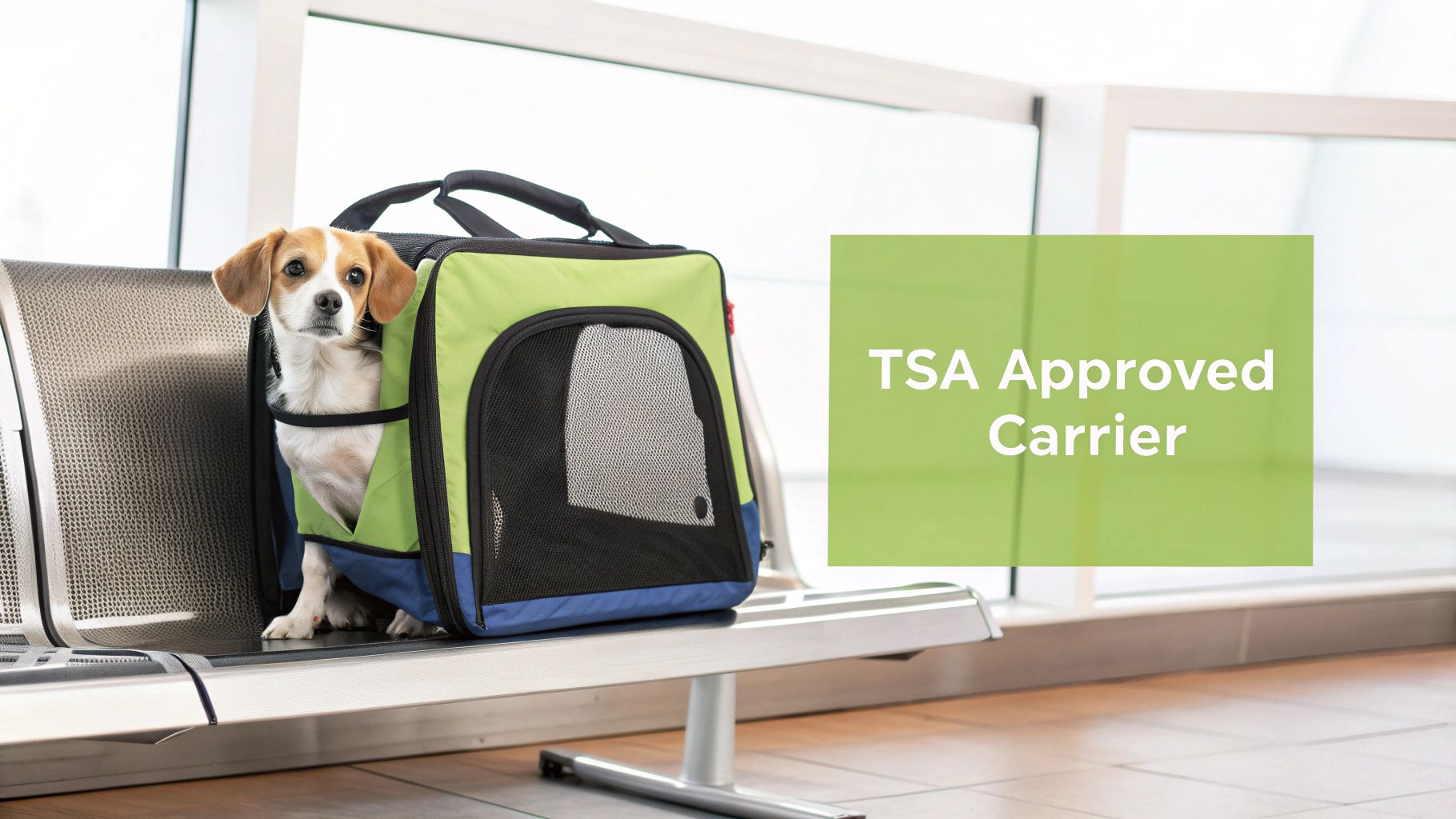
The right carrier acts as your pet's personal safe space during the chaos of travel. For example, a frequent flyer with their emotional support cat found that using a familiar, high-quality soft-sided carrier from Pet Magasin drastically reduced the cat’s anxiety during security checks and in-flight turbulence. The carrier’s familiar scent and cozy interior provided a consistent sense of security, transforming a stressful experience into a manageable one.
Actionable Steps for Carrier Success
To ensure a smooth journey, preparation is key. Don't wait until the day of your trip to introduce the carrier.
- Acclimate Early: Place the carrier in your living area weeks before your trip. Leave the door open and put treats, favorite toys, or a soft blanket inside to encourage your pet to explore it on their own terms.
- Practice Runs: Start with short trips around the block in the car. This helps your pet associate the carrier with movement and new environments in a low-stakes setting.
- Confirm Dimensions: Always double-check your airline's specific size requirements before purchasing or flying. While most carriers follow a standard, some budget airlines have smaller under-seat spaces. Your pet must have enough room to stand up, turn around, and lie down comfortably.
Key Insight: The goal is to make the carrier a sanctuary, not a source of stress. Positive reinforcement and early acclimation are your most effective tools for building this association, making it one of the most impactful travel tips for pets you can implement.
By investing in a compliant and comfortable carrier, you're not just buying a piece of luggage; you're ensuring your pet's well-being. To explore options that prioritize both safety and comfort, you can find more information about the best pet carriers for air travel on petmagasin.com.
2. Pack a Comprehensive Pet Travel Kit
One of the most practical travel tips for pets is to assemble a dedicated, well-organized travel kit before your departure. This kit is your pet's go-to bag for all their essentials, ensuring their health, safety, and comfort are managed from the moment you leave home. A comprehensive kit prevents last-minute scrambles for food, medication, or waste bags and keeps everything you need accessible at a moment's notice.
Having a dedicated kit can be a trip-saver. Consider a family on a cross-country road trip who used pre-portioned meal containers to maintain their dog's strict feeding schedule, preventing digestive upset. They also packed Pet Magasin's washable diapers for their senior dog, which made long stretches between rest stops stress-free and hygienic. This level of preparation transformed a potentially chaotic journey into a smooth and enjoyable adventure for everyone.
Actionable Steps for Kit Success
To build the perfect travel kit, think methodically about your pet’s daily routine and potential travel-related needs.
- Create a Checklist: Start a list at least a week before you travel. Include food, water, medications, leashes, waste bags, grooming wipes, and favorite toys. While focusing on your pet's needs, don't forget your own essentials; you can refer to an ultimate packing list to ensure you're covered, too.
- Overpack Essentials: Always pack at least two extra days' worth of food and any necessary medications. Travel delays are common, and you don't want to be caught unprepared in an unfamiliar place.
- Keep Meds Labeled: Store all medications in their original, clearly labeled bottles with the veterinarian's instructions. This is crucial for administering correct dosages and is often required for air travel.
- Include Comfort Items: A familiar blanket, bed, or favorite chew toy can significantly reduce travel anxiety by providing a comforting scent and a sense of routine.
Key Insight: Your pet’s travel kit isn't just a bag of supplies; it's a mobile version of their home environment. A well-stocked kit provides consistency and security, which are essential for keeping your pet calm and happy while on the move.
3. Acclimate Your Pet to Travel Before the Trip
One of the most effective travel tips for pets is to gradually introduce them to travel-related experiences long before your departure date. This process, known as acclimation, involves desensitizing your pet to cars, carriers, and the general sensation of movement. By creating positive associations with these new stimuli, you can significantly reduce their anxiety and prevent behavioral issues when the real trip begins.
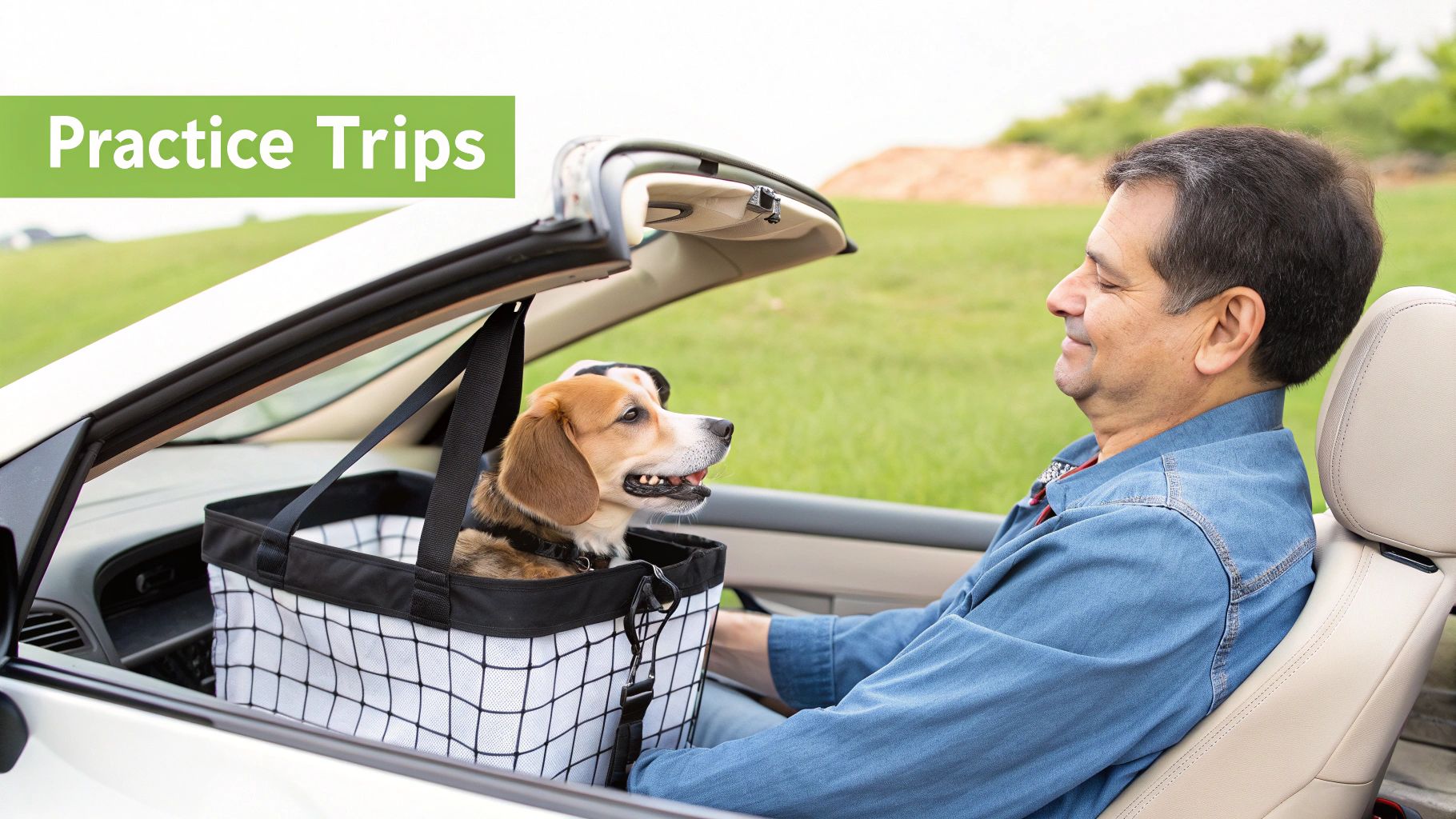
Sudden exposure to a long car ride or the confinement of a carrier can be overwhelming for an unprepared pet. A family planning a cross-country road trip with their anxious retriever started taking short, 10-minute car rides to a local park a month in advance. These brief, fun outings helped the dog connect the car with positive outcomes, transforming his travel-related fear into eager anticipation for the journey ahead.
Actionable Steps for a Smooth Acclimation
Success hinges on a slow, patient, and positive approach. Never force your pet into a situation that causes them distress; the key is to build confidence over time.
- Start Stationary: Begin by simply sitting with your pet in the parked car for a few minutes each day. Offer praise and high-value treats to create a calm, rewarding atmosphere.
- Introduce Short Drives: Once your pet is comfortable in the stationary car, progress to short drives around the block. Gradually increase the duration of these trips as their comfort level grows.
- Carrier Familiarization: Leave the travel carrier open in a common area of your home for several weeks before the trip. Place their favorite toys, blankets, and occasional treats inside to encourage them to explore it voluntarily.
- Establish a Routine: If possible, conduct these practice sessions at the same time each day. A predictable routine can provide a sense of security and structure for your pet.
For a visual guide on helping your dog get used to car travel, this video offers excellent step-by-step advice:
Key Insight: The goal of acclimation is to reframe travel from a scary, unknown event into a normal, non-threatening activity. Patience and positive reinforcement are your most powerful tools in making this transition successful.
By dedicating time to this preparatory phase, you address potential anxiety at its root. This makes the actual travel experience far more pleasant for both you and your beloved companion.
4. Maintain Consistent Feeding and Hydration Schedule
Maintaining a consistent routine is one of the most grounding travel tips for pets, as it provides a sense of normalcy in an unfamiliar environment. Abrupt changes to feeding times can lead to digestive upset, stress, and behavioral issues. By sticking to your pet's regular meal and water schedule, you help regulate their internal clock and minimize anxiety, ensuring they remain comfortable and healthy throughout the journey.
This simple act of consistency offers a powerful anchor for your pet. Consider the family on a cross-country road trip with their golden retriever. Despite the changing scenery, they fed him at 7 a.m. and 6 p.m. every single day, just like at home. This predictable routine helped the dog settle quickly in new hotels each night, as his most important daily events remained unchanged. Using familiar, portable accessories like collapsible bowls further reinforces this stability.
Actionable Steps for Dietary Consistency
A little planning goes a long way in keeping your pet’s digestion and mood stable while on the move.
- Pre-Portion Meals: Pack each of your pet's meals in individual, airtight bags. This removes guesswork and ensures you're providing the correct amount every time, preventing overfeeding or underfeeding.
- Set Reminders: Use your phone to set alarms for your pet's normal feeding times. During the excitement of travel, it's easy to lose track of time, but these reminders ensure their schedule isn't disrupted.
- Prioritize Hydration: Offer water frequently, especially during active travel days. A good rule of thumb is to offer a drink every 2-3 hours and at every rest stop. In warmer climates or during flights, hydration is even more critical.
- Avoid New Foods: Travel is not the time to introduce new foods or treats. Stick exclusively to what your pet is used to eating to prevent an upset stomach, which can quickly complicate your trip.
Key Insight: Routine is the bedrock of a pet's sense of security. A consistent feeding schedule is a non-negotiable part of a stress-free travel experience, providing comfort when everything else is new and unpredictable.
By maintaining your pet’s dietary schedule, you’re providing more than just nutrition; you’re offering stability and reassurance. For easy and convenient feeding on the go, consider portable solutions like the Pet Magasin Collapsible Dog Bowls, which are designed for travel.
5. Keep Pet Identification and Medical Records Accessible
Proper identification and readily available documentation are non-negotiable travel tips for pets. Should your companion become lost or require unexpected medical attention far from home, having these records organized can be a literal lifesaver. This includes everything from updated ID tags and microchip information to vaccination certificates and a recent, clear photo of your pet.
This preparation proves critical in countless scenarios. A family traveling cross-country was able to quickly reunite with their beagle who bolted at a rest stop because his microchip information was up-to-date with their cell phone number. Similarly, many pet-friendly hotels and campgrounds require proof of rabies vaccination upon check-in, a process made seamless by having digital copies of records on a phone. In an emergency, these documents provide a new veterinarian with your pet’s crucial health history.
Actionable Steps for Document Preparedness
To avoid scrambling during a stressful situation, assemble a comprehensive pet travel portfolio before you leave.
- Update All Identifiers: Before every trip, check that your pet’s collar ID tag has your current mobile number, not just a landline. Log into your microchip provider’s website to verify that your contact details and address are correct.
- Create a Travel Folder: Keep physical and digital copies of all essential documents. This should include vaccination records, your primary vet’s contact information, a list of any current medications, and a recent, clear photo showing any unique markings.
- Pre-Scout for Vets: Research and save the contact information for a few 24-hour emergency veterinary clinics near your destination. Having this information ready means you won't waste precious time searching during a crisis.
Key Insight: Your pet's identification and medical records are their passport to safety. Keeping this information both physically on them (tags, microchip) and accessible to you (digital/physical folder) creates a crucial safety net for any travel-related emergency.
6. Choose Pet-Friendly Accommodations in Advance
One of the most important travel tips for pets is booking a genuinely welcoming place to stay, which requires diligent research and advance planning. Simply finding a property listed as "pet-friendly" isn't enough; policies on size, breed, fees, and unattended pets can vary drastically. Securing a confirmed reservation at a truly suitable hotel or rental prevents last-minute scrambles and ensures your pet has a safe, stress-free environment upon arrival.
The right accommodation can make or break a trip. For instance, a family road-tripping with their two large Labradors used the BringFido app to find a La Quinta Inn that not only welcomed large dogs but also had no extra pet fees and was located next to a park. This thoughtful planning meant the dogs had ample space for potty breaks and exercise after a long day in the car, making the entire overnight experience positive for everyone.
Actionable Steps for Accommodation Success
To avoid unwelcome surprises, you must be proactive and thorough when booking your stay. Never assume a hotel’s standard policy applies to your specific situation.
- Confirm Policies Directly: Before booking, call the specific hotel location (not the central reservation line) to confirm their pet policy. Ask about weight limits, breed restrictions, and any non-refundable pet fees or deposits. Get the policy in writing via a booking confirmation email.
- Request a Suitable Room: Ask for a ground-floor room near an exit. This simple request makes late-night and early-morning potty breaks significantly easier and minimizes disturbances to other guests as you and your pet come and go.
- Plan for Unattended Time: Clarify the rules about leaving your pet alone in the room. Many hotels prohibit this. If you must leave them, ensure they are crated, calm, and will not bark. To be safe, consider bringing along a washable dog diaper from Pet Magasin to prevent any stress-related accidents on hotel furniture.
Key Insight: True pet-friendly accommodations go beyond simply allowing pets on the premises; they create an environment where your pet is genuinely welcome. Reading recent reviews from other pet owners and confirming details directly are essential steps for a hassle-free stay.
7. Protect Your Pet from Motion Sickness and Discomfort
Just like humans, many pets experience motion sickness, which can turn a journey into a distressing event for everyone. This discomfort often manifests as drooling, whining, vomiting, or lethargy. Effectively managing motion sickness is one of the most compassionate travel tips for pets, ensuring their physical well-being and reducing travel-related anxiety for future trips.
Addressing this issue goes beyond just cleaning up messes; it's about making travel a positive or at least neutral experience. For example, one family on a cross-country road trip found that their dog, who previously dreaded car rides, became much calmer after they started using a veterinarian-prescribed anti-nausea medication. Combining this with frequent breaks and a securely fastened car seat transformed their travel dynamic entirely.
Actionable Steps for a Nausea-Free Journey
A multi-faceted approach works best to combat motion sickness. By combining practical adjustments with potential remedies, you can significantly improve your pet's comfort.
- Limit Food Before Departure: Avoid feeding your pet a large meal two to three hours before you leave. A small amount of water is fine, but traveling on a full stomach can worsen nausea.
- Ensure Proper Ventilation: Keep the air flowing. Crack a window to let fresh air circulate or aim a vent towards their carrier. A cool, well-ventilated space can help prevent overheating and queasiness.
- Secure Their Space: Minimize jostling and swaying by securing your pet’s carrier or using a dedicated car seat. The carrier should be placed on the floor or buckled into a seat where it won't slide around.
- Consider Natural Remedies & Medication: Start with natural options like ginger-based treats, which can soothe an upset stomach. For more severe cases, consult your veterinarian about prescription anti-nausea medications, which are highly effective when administered before the journey begins.
Key Insight: Your pet picks up on your stress. Maintaining a calm and reassuring demeanor can significantly influence their own anxiety levels. A relaxed owner often leads to a more relaxed pet, making your attitude a powerful tool against travel-induced stress.
By proactively addressing motion sickness, you ensure the journey is as comfortable as the destination. For more on creating a secure and comfortable car environment, explore these dog car seat reviews and safety tips on petmagasin.com.
8. Plan Regular Exercise and Bathroom Breaks
One of the most essential travel tips for pets on long journeys, particularly by car, is to schedule frequent breaks for exercise and potty time. Just like humans, pets need to stretch their legs, relieve themselves, and decompress from the confinement of a vehicle. Planning for these stops every two to four hours is crucial for preventing accidents, reducing stress, and avoiding potential health issues like urinary tract infections.
Consistent breaks transform a monotonous trip into an engaging adventure for your pet. For example, a family road-tripping with their energetic Golden Retriever used the BringFido app to plan their route around pet-friendly parks and rest areas. By stopping every three hours for a 15-minute game of fetch and a water break, they kept their dog happy and well-behaved, preventing the restlessness and anxiety that often accompanies long car rides.
Actionable Steps for Successful Breaks
Proactive planning is the key to making your stops effective and stress-free. Don't wait until your pet is showing signs of distress to pull over.
- Map Your Stops: Before you leave, use apps like BringFido or AllTrails to identify pet-friendly rest stops, parks, or quiet green spaces along your route. Plan to stop every 2-4 hours, depending on your pet’s age, size, and specific needs.
- Keep Supplies Accessible: Have a "go-bag" ready with a leash, harness, waste bags, a portable water bowl, and a few high-value treats. This ensures you can safely and efficiently manage each stop without rummaging through your luggage.
- Prioritize Safety: Always keep your pet leashed during breaks, as unfamiliar environments can be unpredictable. For added peace of mind during the drive between stops, consider using a comfortable, absorbent diaper like Pet Magasin's reusable dog diapers.
Key Insight: These breaks are not just about bathroom needs; they are vital mental and physical resets. A well-exercised and comfortable pet is a calmer, happier travel companion, making this one of the most impactful travel tips for pets on any journey.
9. Use Washable Pet Diapers for Extended Travel
One of the most practical travel tips for pets involves planning for inevitable potty breaks, especially during long journeys. Washable pet diapers offer a sustainable and reliable solution for managing accidents during extended travel days, hotel stays, or situations where immediate outdoor access is limited. These reusable, eco-friendly diapers provide comfort and peace of mind, protecting your pet and your surroundings from messes.
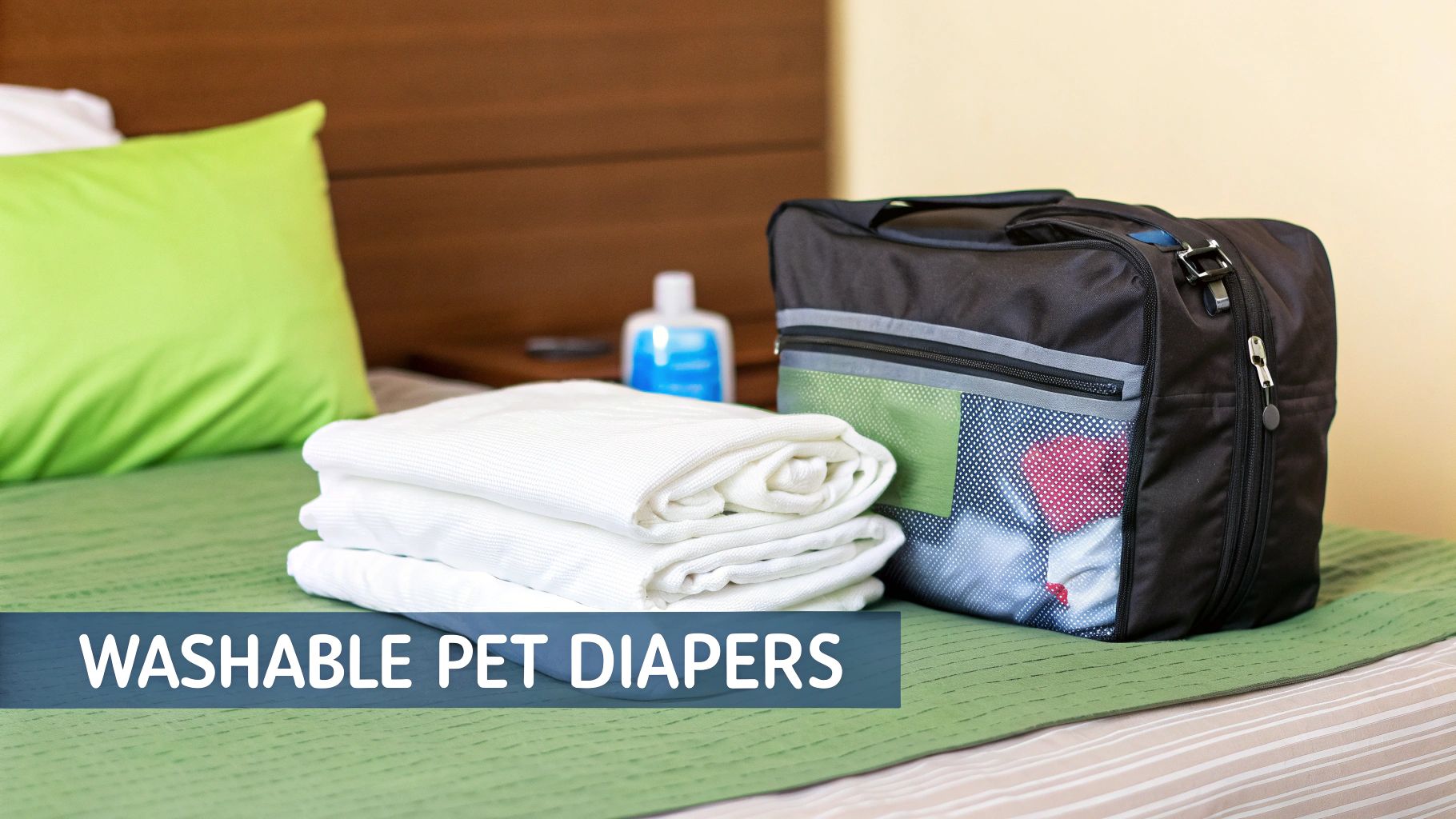
This simple tool can be a game-changer for various travel scenarios. For instance, a family on a cross-country road trip with their senior dog used Pet Magasin washable diapers to manage incontinence during long drives between rest stops. The diapers prevented messes in the car and hotel rooms, allowing everyone to enjoy the journey without constant worry. Similarly, they are ideal for flights, preventing in-carrier accidents when bathroom breaks are impossible.
Actionable Steps for Diaper Success
Proper preparation ensures the diapers are a helpful tool rather than a source of discomfort for your pet.
- Acclimate Before Travel: Introduce the diapers at home for short periods, using treats and praise to create a positive association. Let your pet get used to the feel and fit well before your departure date.
- Ensure the Right Fit: Measure your pet carefully and choose the correct size. A diaper that is too tight can cause chafing, while one that is too loose will not be effective.
- Pack Accordingly: Bring at least three to four pairs for your trip, allowing you to rotate them. Also, pack a waterproof "wet bag" for storing soiled diapers until you can wash them.
- Maintain Hygiene: Check the diaper every three to four hours and change it as needed to prevent skin irritation. Even with a diaper, you should still offer regular bathroom breaks whenever possible.
Key Insight: Washable diapers are not just for senior pets or those with medical issues; they are a proactive travel tool for any pet owner facing long hours in transit. They offer a dignified and hygienic safety net, reducing stress for both you and your companion.
By incorporating washable diapers into your travel kit, you are prepared for any delays or unexpected situations. To find the right fit and style, you can find more information about the best reusable dog diapers on petmagasin.com.
10. Protect Your Pet from Extreme Temperatures and Weather
One of the most critical travel tips for pets involves managing their environment, as extreme temperatures can pose a severe health risk. Unlike humans, pets cannot regulate their body temperature as efficiently, making them vulnerable to heatstroke in warm climates and hypothermia in cold ones. Protecting your pet means actively managing their exposure and providing the right gear for the conditions.
This preparation can be life-saving. For instance, a family traveling to Arizona in July for a hiking trip packed a cooling mat and a portable water bowl for their Golden Retriever. By ensuring constant access to shade, providing cool water frequently, and scheduling hikes for the early morning, they prevented dangerous overheating. Similarly, a Boston Terrier owner traveling to Vermont in winter used a fleece-lined sweater and protective paw balm to prevent frostbite during walks.
Actionable Steps for Weather Safety
Proactive measures are essential to keep your pet safe and comfortable, regardless of the destination's climate.
- Never Leave Unattended: The single most important rule is to never leave your pet in a parked vehicle. Even with cracked windows on a 70°F day, the interior temperature can soar to over 100°F in minutes.
- Pack Climate-Appropriate Gear: For hot weather, bring cooling mats, portable water bowls, and provide shade. For cold weather, pack insulated sweaters or coats, protective booties, and extra blankets for their carrier.
- Time Your Activities: Plan walks, potty breaks, and outdoor activities for the coolest parts of the day, such as early morning or late evening, during hot trips. In cold regions, aim for midday when temperatures are highest.
- Monitor Your Pet: Watch for signs of distress. For heatstroke, look for excessive panting, drooling, lethargy, or disorientation. For hypothermia, watch for shivering, weakness, and shallow breathing.
Key Insight: Your pet's breed, age, and health condition significantly impact their temperature tolerance. Research your pet's specific vulnerabilities and plan accordingly to turn a potentially hazardous trip into a safe adventure.
By prioritizing your pet’s environmental needs, you ensure their well-being remains the focus of your journey. This awareness is a cornerstone of responsible pet travel.
10-Point Comparison of Pet Travel Tips
| Item | 🔄 Implementation Complexity | ⚡ Resource Requirements | ⭐ Expected Outcome | 📊 Ideal Use Cases | 💡 Key Advantages |
|---|---|---|---|---|---|
| Invest in TSA-Approved Pet Travel Carriers | 🔄 Medium — select correct size and type for airline rules | ⚡ Medium — one-time purchase, storage space | ⭐⭐⭐⭐⭐ — Ensures airline acceptance & in-flight safety | Air travel, frequent flyers, vet visits | 💡 Regulatory compliance; secure, multi-use containment |
| Pack a Comprehensive Pet Travel Kit | 🔄 Medium — checklist and organized packing | ⚡ Medium — supplies, extra luggage space | ⭐⭐⭐⭐ — High preparedness; fewer health incidents | Long trips, remote travel, multi-day outings | 💡 Quick access to meds/food; reduces stress |
| Acclimate Your Pet to Travel Before the Trip | 🔄 High — weeks of progressive practice | ⚡ Low — time commitment; minimal equipment | ⭐⭐⭐⭐⭐ — Significantly lowers anxiety and behavioral issues | Anxious pets, first-time travelers, long road trips | 💡 Better behavior; smoother travel days |
| Maintain Consistent Feeding and Hydration Schedule | 🔄 Low — simple planning and routine | ⚡ Low — portable bowls, stored food/water | ⭐⭐⭐⭐ — Maintains digestive health and energy | All travel types; hot climates; long drives | 💡 Prevents upset stomach; stabilizes behavior |
| Keep Pet Identification and Medical Records Accessible | 🔄 Medium — update and organize documents | ⚡ Low — copies, digital backups, folder | ⭐⭐⭐⭐⭐ — Faster recovery and emergency care | International travel, hotel stays, remote areas | 💡 Essential for reunification; required by many providers |
| Choose Pet-Friendly Accommodations in Advance | 🔄 Medium — research and confirm policies | ⚡ Medium — potential higher fees and booking time | ⭐⭐⭐⭐ — Reduced lodging stress; better amenities | Vacations, long stays, overnight road trips | 💡 Predictable policies; pet-specific services |
| Protect Your Pet from Motion Sickness and Discomfort | 🔄 Medium — vet consults, positioning, trials | ⚡ Medium — meds, bedding, supplements | ⭐⭐⭐⭐ — Fewer vomiting incidents and anxiety | Long drives, sensitive or motion‑sick pets | 💡 Combines meds, positioning, and acclimation |
| Plan Regular Exercise and Bathroom Breaks | 🔄 Medium — route planning and timing | ⚡ Low — leash, waste bags, local research | ⭐⭐⭐⭐ — Reduces stress and prevents accidents | Road trips, active breeds, long travel days | 💡 Frequent stops = healthier, calmer pets |
| Use Washable Pet Diapers for Extended Travel | 🔄 Low — purchase and fit adjustment | ⚡ Low-Medium — carry extras; laundering | ⭐⭐⭐ — Controls accidents; eco-friendly option | Senior/incontinent pets; hotels; long flights | 💡 Reusable, cost-saving, reduces carrier mess |
| Protect Your Pet from Extreme Temperatures and Weather | 🔄 Medium-High — monitoring & season planning | ⚡ Medium-High — climate gear, cooling/heating items | ⭐⭐⭐⭐⭐ — Prevents heat stroke/hypothermia; safety critical | Desert, winter travel, breed‑sensitive trips | 💡 Life‑saving precautions; plan by climate and breed |
Embark on Your Next Adventure with Confidence
Traveling with a companion animal transforms a simple trip into a shared adventure, creating memories that last a lifetime. However, the success of these journeys hinges not on luck, but on meticulous preparation and a deep understanding of your pet's needs. The comprehensive list of travel tips for pets we've explored moves beyond generic advice, providing a detailed blueprint for a safe, comfortable, and stress-free experience for both you and your furry, feathered, or scaled friend.
From the foundational step of selecting a TSA-approved carrier that serves as a mobile safe space to the practical wisdom of using washable pet diapers for long-haul peace of mind, each tip is a building block. Mastering these strategies means you're no longer just reacting to travel-related problems; you are proactively preventing them. It’s the difference between a frantic search for a vet in an unfamiliar city and having all medical records and emergency contacts neatly organized and instantly accessible. It’s the contrast between a stressed, anxious pet and one that views its carrier and the car as familiar, positive environments because you invested time in acclimation.
Your Actionable Travel Checklist: Key Takeaways
The most crucial takeaway is that preparation is an active, ongoing process, not a one-time task. Before you even think about booking a flight or hotel, your focus should be on your pet's well-being and readiness.
- Foundation First: Your immediate next steps should be securing the right gear. This includes a durable, comfortable carrier and a well-stocked travel kit with everything from food and water to first-aid supplies.
- Practice Makes Perfect: Begin acclimation training now, not the week before your trip. Short, positive car rides and carrier desensitization sessions build a crucial foundation of confidence.
- Documentation is Non-Negotiable: Compile a digital and physical folder containing your pet's vaccination records, microchip information, a recent photo, and your vet's contact details. This is your single most important safety net.
Pro-Tip: The goal isn't just to get from Point A to Point B. The goal is to make the journey itself part of the positive experience. By maintaining familiar routines, planning for frequent breaks, and managing their environment, you show your pet that travel is an exciting extension of their safe home life, not a scary disruption.
Why This Diligence Matters
Ultimately, your pet relies entirely on you to be their advocate, guardian, and comfort source when venturing into new environments. Adhering to these detailed travel tips for pets demonstrates a commitment to that responsibility. It allows you to focus on the joy of exploration rather than the anxiety of unforeseen complications.
When your pet is comfortable, secure, and happy, you are free to be fully present in the moment, whether you're watching them gleefully explore a pet-friendly park or nap peacefully in their hotel room. This level of preparation is the ultimate expression of love for your animal companion, ensuring every journey you take together strengthens your bond and enriches both of your lives. You are now equipped with the knowledge and tools to be an expert pet traveler. Go forth and explore the world together, with confidence and peace of mind.
Ready to upgrade your pet's travel gear? For premium, thoughtfully designed products that make every journey safer and more comfortable, explore the collection at Pet Magasin. From durable carriers to essential grooming tools, Pet Magasin provides the high-quality supplies you need to implement these travel tips with confidence.

Leave a comment