


Pet Travel on Airlines How to Fly Safely with Pets

You're at the airport with a carrier in one hand, a leash in the other, and a line at the counter moving faster than your confidence. Your pet is already reading the room better than the person behind the desk, and the question is simple: will this trip go smoothly, or will one missing detail turn the whole plan into a scramble?
Pet travel on airlines is usually more manageable than it feels at first. Airlines already handle pets as a routine part of passenger and cargo operations, and the market is large enough that policies, fees, and documentation rules have become standardized in many places. The hard part is not finding a flight, it's matching your pet to the right travel mode, the right carrier, and the right paperwork before you buy the ticket.
That's why the smartest approach is a decision tree, not a packing list. First qualify the pet by species, size, route, and health status. Then confirm the carrier rules, the fee, the reservation process, and the paperwork. If you do those steps in the right order, you avoid the most common failure point, showing up with a pet that can't be accepted.
Introduction to Pet Travel on Airlines Without the Stress
At the airline counter, a traveler can have a new carrier, a paid ticket, and a pet who still cannot fly. I once watched a passenger discover that the carrier fit under the seat, but the airline had no remaining in-cabin pet spaces on that route. The carrier was compliant. The booking was not.
That distinction makes pet travel on airlines a logistics task with several gates. Airlines may accept a small cat or dog in the cabin, handle larger animals through baggage or cargo services, or refuse pets on particular routes and aircraft. The total cost can also include the pet fee, an approved carrier, veterinary preparation, and route-specific documents, so the passenger fare is only part of the budget.
A carrier-first approach creates avoidable problems. Confirm that the species, size, health condition, and route are accepted before spending money on equipment or assuming the reservation is complete.
Practical rule: until the airline confirms your pet's acceptance, you have booked a seat for yourself, not secured the animal's journey.
The rest of the process follows that reality: verify eligibility, calculate the full cost, reserve the pet space, then prepare equipment and documents for airport day. This order also exposes trade-offs early. A cheaper itinerary may involve a connection, an aircraft restriction, or a route that does not accept pets, while a more expensive option may reduce handling and compliance risks.
For broader health preparation, see your airline's official pet policy page and review its documentation requirements before departure.
Will Your Pet Qualify and How to Book the Right Flight
A pet can be healthy, calm, and used to its carrier, yet still be refused at check-in because the route, aircraft, or cabin space does not qualify. Airline rules vary by species, size, breed, destination, and service type. Decide eligibility before comparing fares, buying equipment, or arranging veterinary appointments.
Start with species, size, and route
Most cabin programs accept small dogs and cats. Some airlines exclude brachycephalic breeds because of breathing risks. The U.S. Department of Transportation notes that airlines commonly set size and weight limits, require the pet to fit under the seat in front of you, and restrict pets from bulkhead and emergency exit row seats.
Use this order:
- Species: confirm that the airline accepts your animal.
- Size and condition: check whether the pet can travel safely in the approved cabin, baggage, or cargo arrangement.
- Route and aircraft: verify that the destination, connection, and aircraft type allow pets.
If your pet is too large for the cabin, too fragile for the expected pressure or temperature conditions, or traveling on a restricted route, stop there. No carrier can solve an eligibility problem.
Decision point: if the airline does not accept your pet's species, size, or breed on that route, choose a different itinerary or travel arrangement before paying for the ticket.
Age can decide the outcome as well. Delta requires pets to be at least 8 weeks old for domestic travel, and its cabin rules exclude several seat types, including bulkhead, emergency exit row, no-stowage seats, Delta One flat-bed seats, and certain aircraft-specific rows. Delta also permits two small pets in one kennel only when they are the same breed and size, between 8 weeks and 6 months old, and compatible. A general “pet friendly” label is not enough. Read the detailed policy for the actual flight.
Book like the policy can change, because it can
Read the airline's current pet page for your exact route, then contact the airline to reserve a pet space if cabin acceptance is controlled by inventory. Open seats do not guarantee an available pet position. Confirm the aircraft type, under-seat dimensions, connection rules, and whether your selected seat provides the required stowage.
Build the full budget before booking. Include the pet fee, approved carrier, veterinary preparation, documents, and any route-specific charges. A cheaper itinerary may add a connection or aircraft restriction. A higher fare may reduce handling and compliance risks.
Arrange a veterinary visit early. For planning medical costs, browse dog and cat shot prices. International travel can require import permits, health certification, and a shipper's certificate under IATA live-animal standards, so document timing belongs in the booking plan, not at the end.
A reliable workflow is:
- Check the airline's current policy for the complete route.
- Confirm species, size, breed, age, and travel method.
- Reserve the pet space and a permitted passenger seat.
- Schedule the veterinary visit and collect required paperwork.
- Recheck the policy and aircraft before departure.
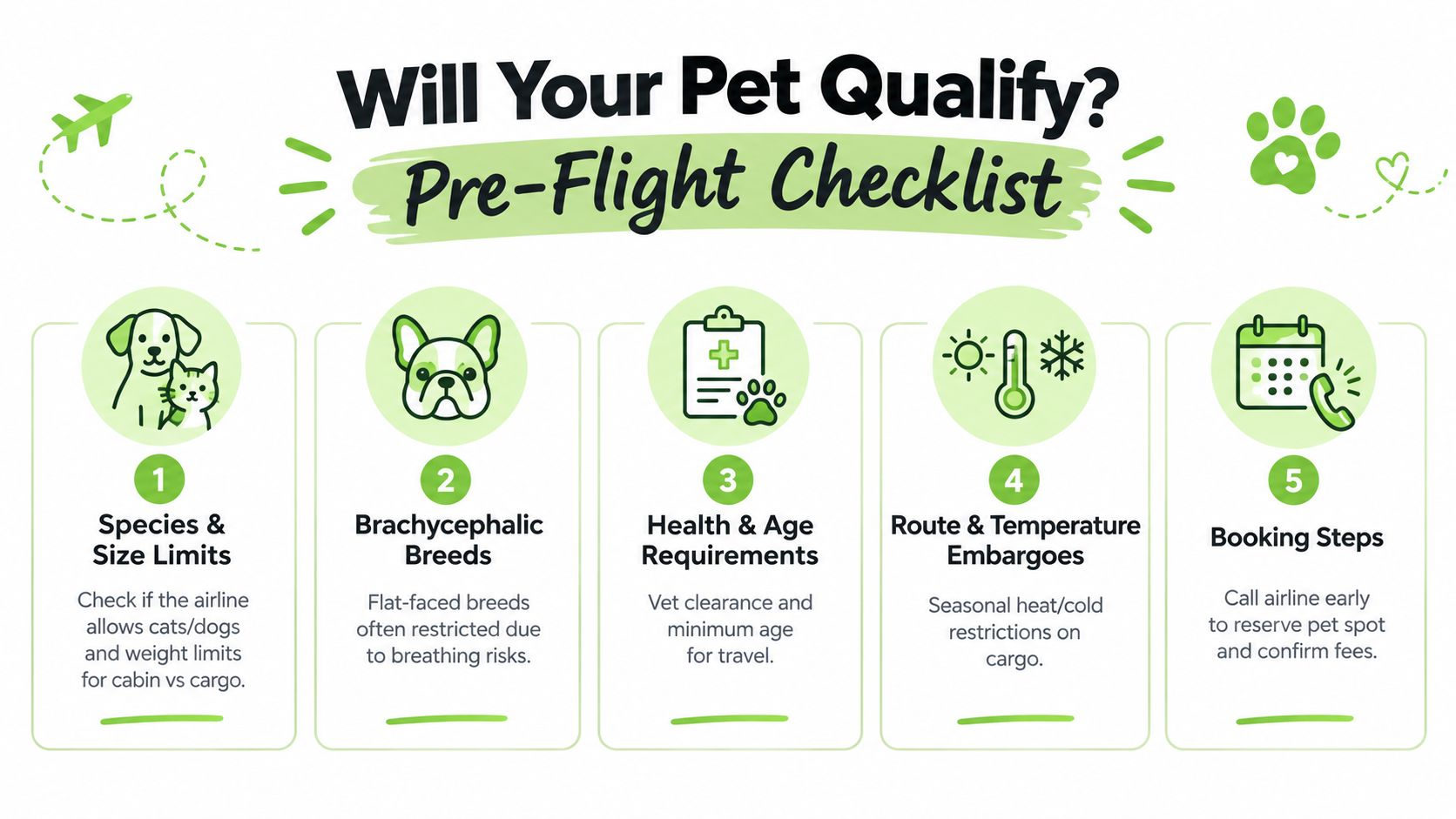
For a practical cross-check of documents and preparation steps, review Pet Magasin's guide to pet travel requirements, then confirm every item against the airline's own instructions. The goal is simple: avoid paying for a flight your pet cannot take.
Choosing and Preparing a Compliant Carrier That Fits
A carrier passes or fails on fit, airflow, and stowability. In cabin, a soft-sided carrier usually works better because it can flex under the seat, while cargo travel requires a rigid, IATA-compliant crate that's built for handling, ventilation, and secure closure. The carrier is not a style choice, it's a compliance tool.
The cleanest way to compare options is to look at the three things airline staff care about: dimensions, ventilation, and security. If the carrier is too tall, too stiff, or too poorly ventilated, you may get stopped before boarding. If it doesn't close securely or has weak seams, you create a problem for the whole trip.
What a compliant carrier needs
A cabin carrier should fit under the seat in front of you without blocking the aisle. The U.S. Department of Transportation says airlines may require that, and the FAA says the container is treated as carry-on baggage if cabin pets are allowed. That means the carrier has to be compact enough to stow before the last passenger entry door closes, and it must stay stowed during taxi, takeoff, and landing.
The features that make life easier are straightforward:
- Mesh ventilation on multiple sides so the pet gets airflow and the carrier doesn't feel like a box.
- A leak-proof, padded bottom so accidents or water spills don't soak through.
- Zippers or closures that stay shut even if the pet shifts during loading.
- A shape that compresses slightly instead of a rigid frame that fights under-seat space.
For cargo, the rules are stricter. IATA's live-animal program expects species-appropriate containers, visible labeling, emergency contact details, and duplicate care instructions on the crate. That's not busywork. It's what keeps handlers from rejecting the shipment at acceptance.
How to prep the carrier before travel day
Measure your pet while they're standing and lying down, then compare those numbers to the carrier's usable interior, not just the marketing dimensions. If your pet can't turn around and settle, the carrier is too small. If the carrier is so big that it won't slide under the seat, it's the wrong one for cabin.
Acclimation matters more than people think. Leave the carrier open at home, add a familiar blanket, and let your pet enter it on their own before you ever head to the airport. When the carrier feels normal at home, screening and boarding get easier.
For more carrier examples and sizing context, the Pet Magasin page on cat carrier airline approved is a practical reference point. Pet Magasin also offers TSA airline-approved travel carriers with the kind of soft-sided construction, padding, and mesh ventilation that tend to work better for cabin travel than rigid boxes.
A short video walkthrough can also help if you're visual:
Navigating the Airport and Security With Your Pet
Airport day goes better when the documents are already sorted and the pet hasn't had a long, chaotic morning. I always keep the health certificate, permit if needed, reservation confirmation, and carrier measurements in one easy-access folder. If a gate agent asks a question, you want to answer it in seconds, not dig through your bag while your pet gets anxious.
The TSA process is usually simpler than people expect, but only if you know the sequence. Your pet comes out of the carrier for screening, while the empty carrier goes through X-ray. Keep the leash short, keep your voice calm, and don't assume the line will forgive a loose setup.
Keep the pet attached before you unzip the carrier, and don't rush the handoff at security. A calm pace helps the agent, helps the pet, and helps you avoid a messy re-pack at the checkpoint.
The FAA's cabin rules matter here too. If the airline allows in-cabin pets, the container must fit under the seat without blocking the aisle, be stowed before the last passenger entry door closes, stay stowed during taxi, takeoff, and landing, and comply with flight attendant instructions. That means the gate is not the place to improvise with a carrier that's half a size too large.
A smart airport rhythm looks like this:
- Check in early with documents ready.
- Weigh and measure the carrier if the airline asks.
- Go to security with the pet leashed and the carrier accessible.
- Use a pet relief area before boarding.
- Board calmly and stow the carrier immediately.
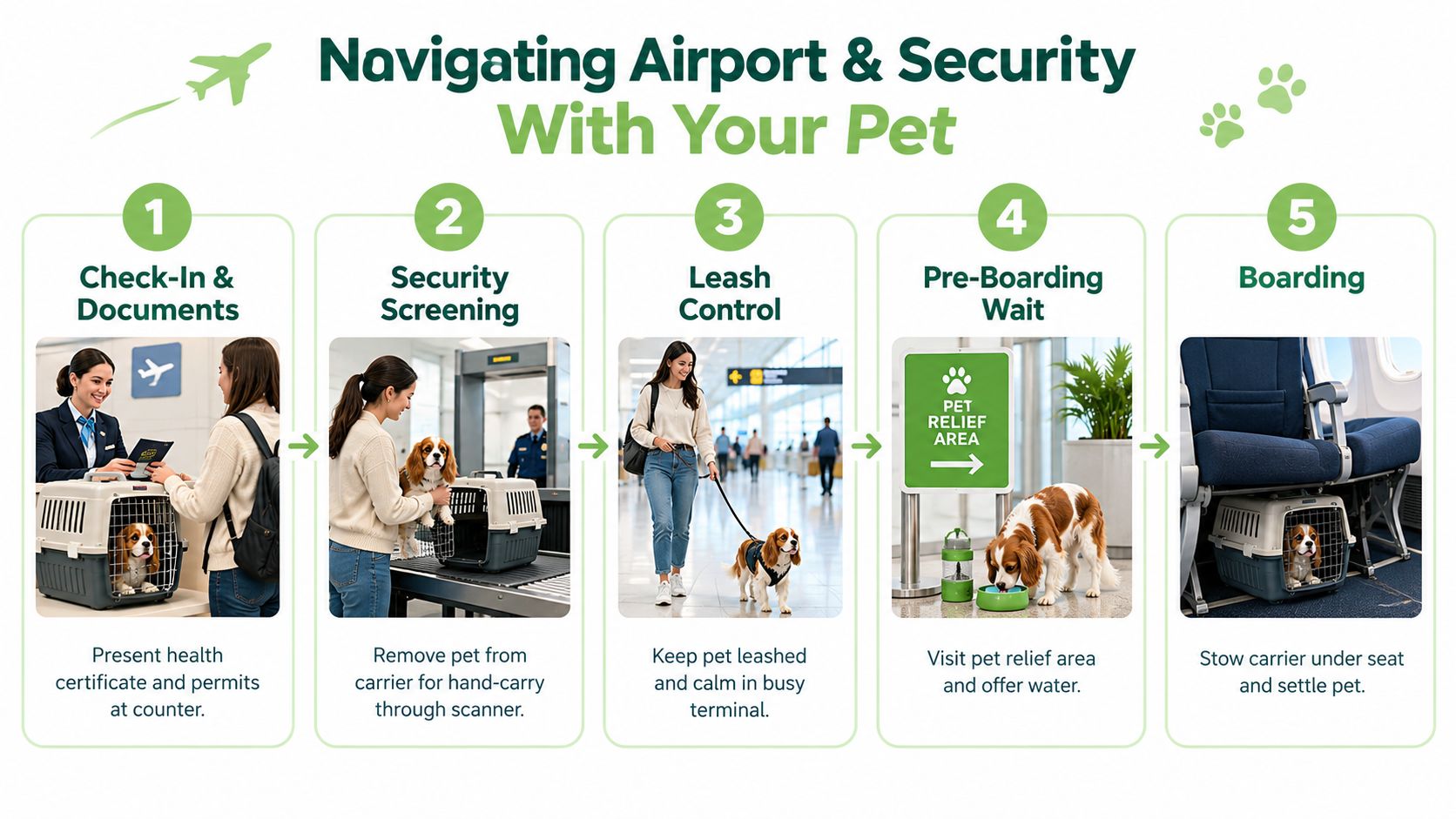
The general rule is simple. Keep the pet close, the paperwork closer, and the boarding pace slow enough that no one has to guess what happens next. That's usually what separates a stressful airport experience from a boring one, which is exactly what you want.
In Flight and Cargo Best Practices for a Safe Journey
A smooth flight depends on decisions made before boarding. Once you know the pet qualifies for the route and the carrier meets the airline's rules, keep the travel routine familiar. For cabin trips, offer a light meal, control water access, and avoid last-minute changes. The goal is a settled pet, not constant stimulation.
During the flight, keep the carrier closed and under the seat. Reassurance through repeated opening can create noise, movement, and conflict with nearby passengers. A nervous pet usually benefits more from a quiet, consistent setup than from frequent handling. If your dog struggles with travel anxiety, this guide on how to keep dog calm on plane offers practical preparation ideas.
Cargo travel requires a separate compliance check. IATA's Live Animals Regulations provide the worldwide standard for commercial animal transport, covering species-appropriate containers, clear labeling, and documented care instructions. Confirm that the airline accepts your species and route, then follow its crate, paperwork, and handoff requirements. Cargo staff manage transfers through a chain of handlers, so instructions must remain clear after the counter.
U.S. Department of Transportation Air Travel Consumer Reports recorded 12 pet-related air travel incidents in 2024, including 4 injuries and 8 deaths, and 8 incidents in 2025, a 33% decrease from the prior year. DOT Air Travel Consumer Report 2024 These figures do not describe ordinary flights overall, but they show why route selection, carrier compliance, and handling details deserve attention.
Use the same practical checks for either transport mode:
- Keep the routine simple so food, timing, and familiar habits do not all change at once.
- Match the mode to the pet's size and sensitivity rather than forcing a cabin arrangement that does not fit.
- Label the crate clearly with a 24-hour contact and duplicate care instructions for cargo travel.
- Choose a direct flight when possible because every transfer adds another handling step.
The safest setup is predictable, correctly labeled, and accepted by the airline before travel day. That reduces avoidable handling errors and helps the pet remain calm from departure through arrival.
Troubleshooting Common Problems and Your Final Checklist
A denied boarding attempt often starts at the airport counter with a carrier that is too tall, a missing document, or a policy assumption that was never confirmed. Airline staff are applying requirements that should have been checked before travel day. Treat eligibility, route acceptance, and carrier compliance as separate decisions, then verify each one.
If boarding is refused, ask which requirement failed and correct only what the airline permits you to correct. Recheck whether your pet qualifies for cabin or cargo, then compare the carrier with the airline's size, ventilation, and stowage rules. An aircraft change can reduce under-seat space, so reconfirm the aircraft type and seat assignment after any schedule update.
Paperwork creates a second common failure point. A missing health certificate or import permit can stop an international trip, while incomplete labels can prevent cargo acceptance. Keep the original documents in one folder, place copies with the carrier or crate when required, and store digital backups on your phone. Check validity dates and destination rules before leaving home.
Cost planning should include more than the pet fee. Recent U.S. comparisons put in-cabin fees at about $99 to $150 each way on major carriers, while cargo can cost more where it is offered. Pet Magasin A separate analysis estimated that fees and related travel expenses can add up to about $700 to a trip. Build the full total before buying the ticket, including the carrier, required documents, ground transport, and possible overnight costs.
Final checklist for the airport
- Carrier fit: Confirm under-seat dimensions for cabin travel or use an IATA-compliant crate for cargo.
- Documents: Pack the health certificate, any required permit, and written airline confirmation.
- Contact details: Put a 24-hour emergency contact on the carrier or crate.
- Care instructions: Attach duplicate feeding and handling instructions where staff can see them.
- Comfort items: Pack absorbent pads, a familiar blanket, and airline-approved travel accessories.
- Route check: Reconfirm the aircraft type, pet policy, seat assignment, and check-in location before departure.
Eligibility comes first, followed by carrier compliance, paperwork, and the true trip cost. That order exposes problems while there is still time to change the route, carrier, or booking. A prepared setup makes pet travel on airlines easier to manage, and the right travel gear can reduce last-minute decisions at the counter.

Leave a comment