
How to Remove Pet Hair from Furniture Like a Pro
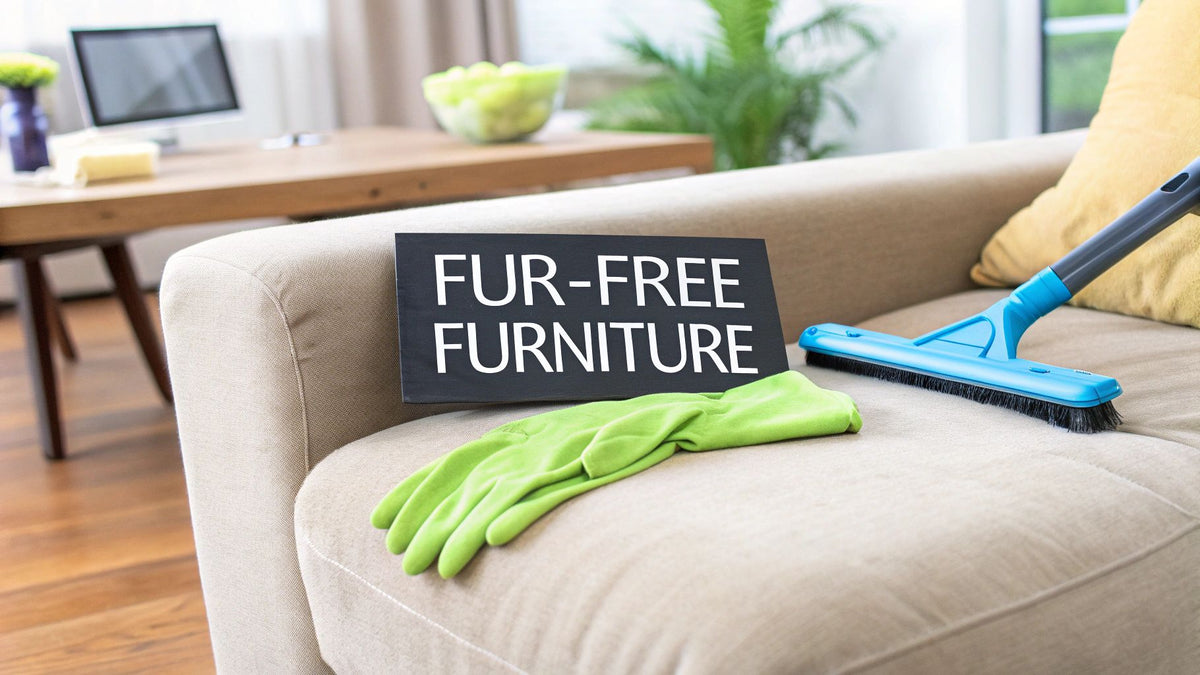
If you're losing the war against pet hair, you're not alone. Winning this constant battle comes down to two simple tactics: friction and static control. You don’t need fancy gadgets; a dampened rubber glove or a window squeegee uses friction to ball up hair for easy removal. The other half of the equation is tackling the static that makes fur cling for dear life.
Winning the War on Pet Hair Before It Starts
Every pet owner knows the sight: your favorite spot on the couch looks like it's growing a fur coat. Before diving into cleaning methods, it's useful to understand why that hair is so stubborn. It’s not just shedding—it’s about the fabric of your furniture and a bit of science.
The Science of Stubborn Fur
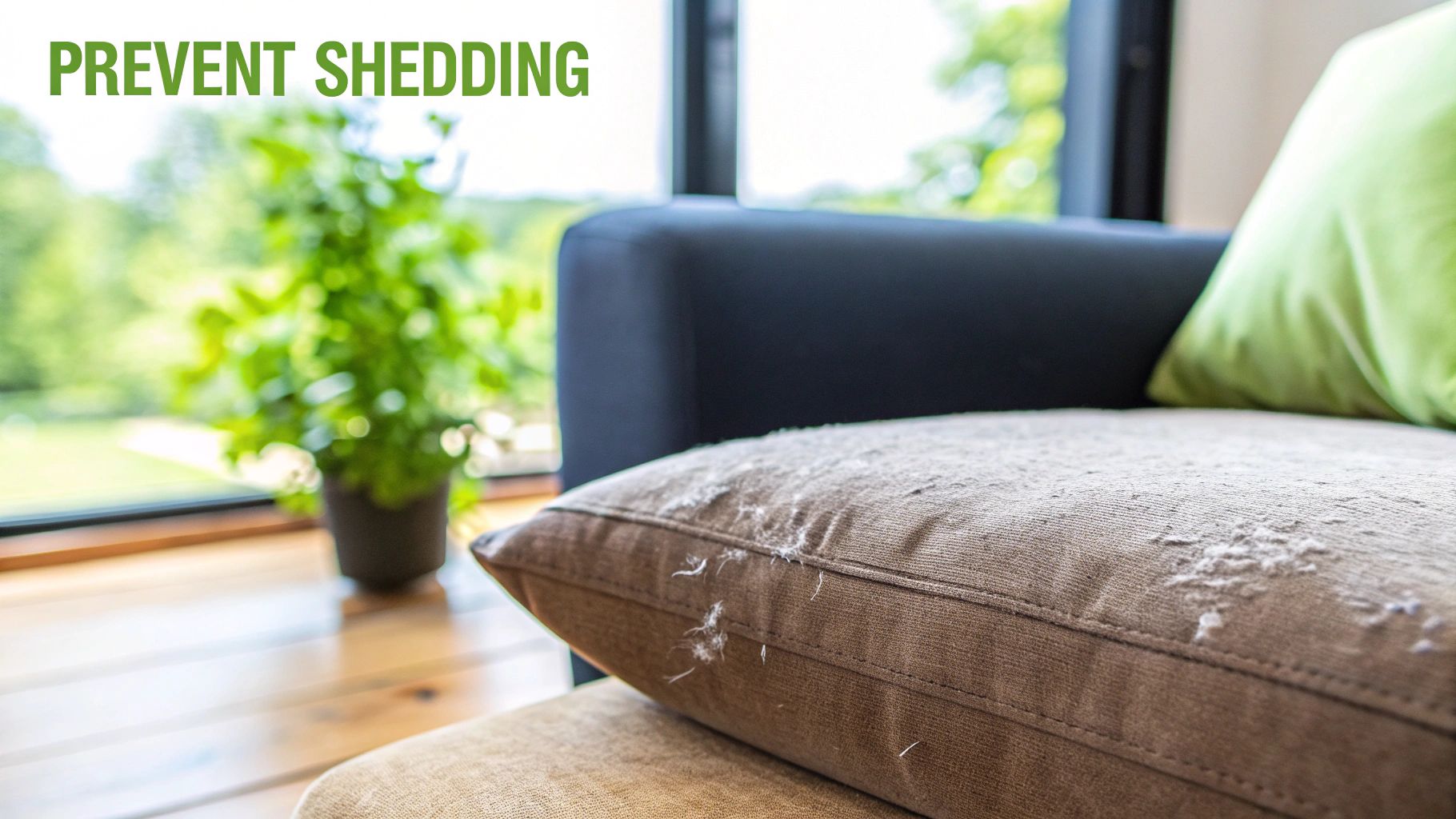
That frustrating layer of pet hair is the result of a few factors working together. The texture of certain materials, for instance, creates a perfect trap for fur.
- Fabric Weave: Materials with a deep, textured weave like velvet, chenille, or corduroy have tiny loops and fibers that act like hooks, grabbing and holding onto every strand of hair.
- Static Electricity: As your pet moves on furniture, friction creates a static charge. This turns your couch into a magnet for loose fur, which is why synthetic fabrics are often the biggest culprits.
This is a daily challenge for millions. With about 71% of all U.S. homes having at least one pet, that's a lot of fur. As our pets shed, their hair gets caught in fabrics, and static electricity makes sure it stays put.
Winning the battle against pet hair requires more than just a vacuum. It's a combination of the right tools, smart techniques, and consistent habits that really makes a difference.
Your First Line of Defense
The easiest way to manage pet hair is to prevent it from becoming a major problem. Start by making smart furniture choices that will save you cleaning time later. This guide on choosing kid-friendly and pet-friendly furniture is a great resource for finding materials that naturally repel fur.
Another simple but effective strategy is using protective layers. Stylish and washable furniture covers create a barrier that keeps upholstery clean underneath. This proactive step can cut your cleaning time in half.
Building Your Pet Hair Removal Toolkit
Having the right tools is the difference between a frustrating chore and a quick, satisfying clean. Learning how to remove pet hair from furniture is about having a well-stocked toolkit, but it doesn't have to be expensive. In fact, many of the most effective items are simple things you probably already have.
The goal here isn't to give you a shopping list. It's to help you build a collection that can tackle any surface, from delicate fabrics to that rugged armchair your dog has claimed. Let's look at the simple science behind each tool so you can build the perfect arsenal.
Low-Tech Tools With High Impact
You don't always need to plug something in to get fantastic results. Some of the best pet hair removers use basic principles like friction and static to lift and gather fur with surprising efficiency. These manual tools are perfect for quick touch-ups and for fabrics that can't handle a heavy-duty vacuuming.
- Dampened Rubber Gloves: Lightly moisten a standard pair of dishwashing gloves and run your hand over the furniture. The friction and tackiness of the rubber will pull the hair into large, easy-to-grab clumps.
- Window Squeegee: A clean, dry window squeegee is a secret weapon for flat upholstery like microfiber. The rubber blade works like the gloves, dragging embedded fur into a neat line that you can pick up or vacuum away.
- Reusable Lint Rollers: Unlike disposable ones, reusable rollers use a sticky, washable surface to pick up hair. They are excellent for delicate materials and for a final pass to catch lingering strands.
The most effective tools often work by creating friction. Whether it's the drag of a rubber glove or the blade of a squeegee, this simple force is your best ally in dislodging stubborn, woven-in pet hair from furniture.
Power Tools for a Deeper Clean
For a truly deep clean, especially with a heavy shedder, you'll need a good vacuum cleaner. But the machine is only half the story—the right attachments are what conquer pet hair.
Your vacuum needs a motorized pet hair tool or a turbo brush attachment. These attachments have their own rotating bristles that actively agitate fabric fibers to pull out deeply embedded hair, which standard suction alone can't do. A long, narrow crevice tool is also essential for getting into seams and corners where fur hides.
Of course, the best defense is a good offense. Your toolkit should also include items for your pet. Consistent grooming is the best way to reduce shedding at the source. To learn how deshedding brushes and combs can stop fur before it reaches your sofa, check out our guide on the best grooming tools for dogs.
Tackling Pet Hair on Any Furniture Surface
Not all furniture is created equal—and your plan for pet hair removal shouldn't be one-size-fits-all. A method that works on a durable microfiber couch could be a disaster for a delicate velvet chair or a sleek leather sofa.
The secret is matching your technique to the material. You have to work with the fabric, not against it, to get the fur off without causing damage. This calls for more strategy than just grabbing a lint roller. We're talking about different weaves, textures, and finishes that all have their own rules.
To make things easier, here's a quick decision tree to help you pick the right tool for the job.
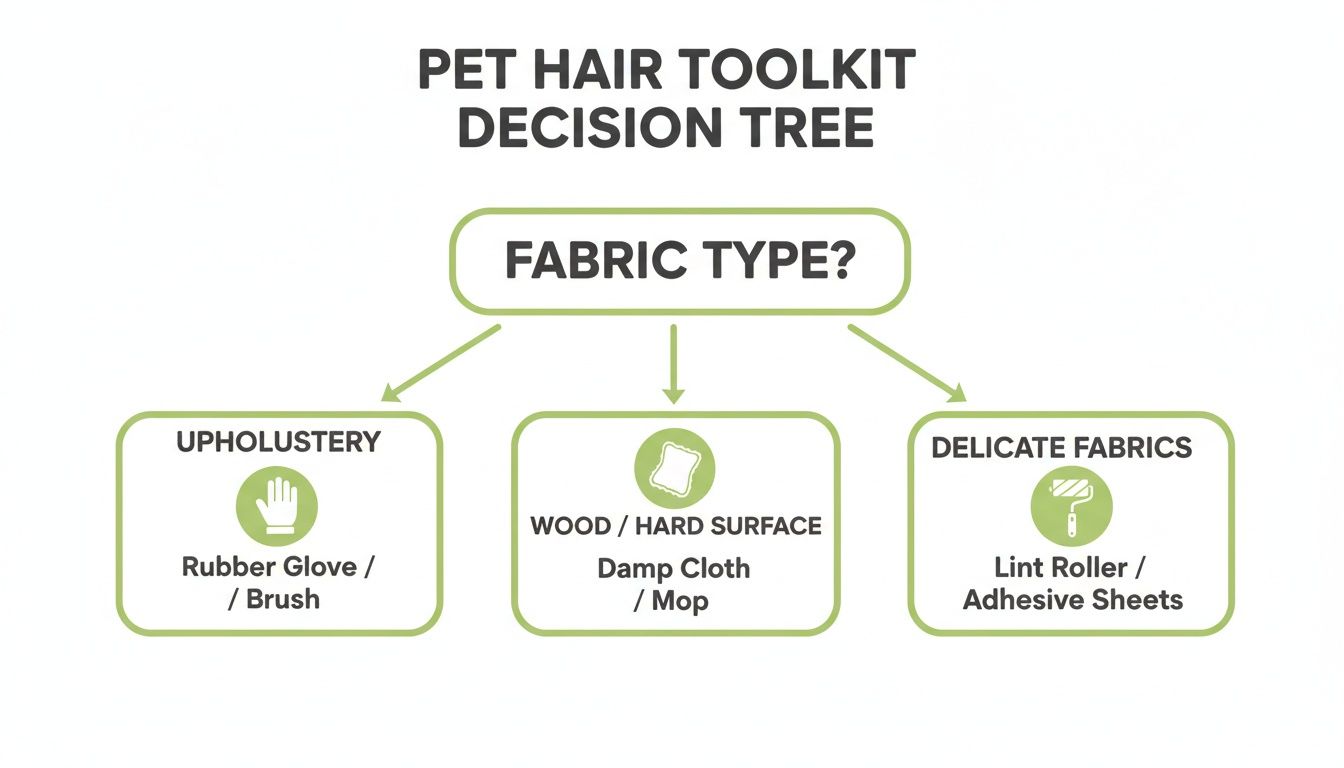
As you can see, it all starts with the material. Once you identify what you’re working with, finding the safest and most effective tool is a breeze.
Strategies for Fabric Upholstery
Most couches and armchairs fall into this category—think microfiber, chenille, linen, and canvas. These woven fabrics are magnets for pet hair. For these surfaces, you need friction to pry the fur loose.
A window squeegee or a pumice stone (often sold as a "fur remover") can work like magic. Drag the rubber blade or stone across the fabric in short, firm strokes. The hair will pile up, making it easy to vacuum away. Another effective trick is using a dampened rubber glove. The combination of moisture and the grippy rubber surface acts like a hair magnet, balling up the fur as you wipe your hand across the cushions.
Pro Tip: For durable, tightly woven fabrics with deeply embedded fur, try a fabric shaver. It gently trims the very top of the fabric, lifting away stubborn hairs and pilling at the same time. Always test it on a hidden spot first.
Gentle Methods for Leather and Wood
With leather and wood, hair doesn't weave into the material, but it clings due to static electricity. Using anything abrasive will scratch and ruin the finish. The key is to break the static bond.
- Microfiber Cloths: Use a dry microfiber cloth to wipe down these smooth surfaces. Its fibers are designed to attract and trap dust and hair without chemicals.
- Anti-Static Sprays: Lightly mist a clean cloth with an anti-static dusting spray to make wiping away hair effortless. It neutralizes the electrical charge, forcing the hair to release its grip.
- Leather Conditioner: For leather furniture, apply a small amount of leather conditioner to a soft cloth and wipe down the surface. It cleans and moisturizes the leather while picking up any stray pet hair.
Caring for Delicate Materials Like Velvet and Silk
Delicate fabrics demand the most careful touch. Materials like velvet, velour, and silk have a distinct "pile" or direction that is easily damaged by aggressive rubbing. A squeegee or pumice stone here could pull threads and cause permanent damage.
For these sensitive materials, stick to gentler tools. A high-quality, reusable lint roller is usually all you need to lift surface hair without disturbing the fabric's texture. You can also use the soft brush attachment on your vacuum cleaner, always moving in the direction of the fabric’s nap. This gentle suction-and-brushing combo is the safest bet.
A Proactive Plan to Minimize Shedding
The best way to get pet hair off your furniture is to stop it from landing there in the first place. Shift from a reactive cleaning chore to a proactive routine. This means tackling shedding at the source—your pet—and making your home less friendly to flying fur.
This mindset is crucial. As more pets become indoor family members, managing fur has grown. In Australia, for example, pet ownership shot up from 61% of households in 2019 to 69% in 2021. This trend fuels demand for high-quality grooming tools that make a real dent in shedding.
Master a Consistent Grooming Routine
The single most powerful action you can take is to establish a regular grooming routine. Every hair you catch with a brush is one less you have to scrape off the sofa. This isn't just a quick once-over; use the right tool for your pet's specific coat.
If your pet has a thick undercoat, a deshedding tool is a game-changer. These brushes are designed to get beneath the top layer of fur and pull out the loose undercoat that causes the most trouble. A few sessions a week can dramatically reduce the amount of hair you find around the house.
Spending 15 minutes grooming your pet two or three times a week is far easier than dedicating hours to deep-cleaning your furniture every weekend. Think of it as preventative maintenance for a fur-free home.
Learning how to groom your pet properly can change everything. For a closer look at techniques that can seriously cut down on the amount of fur in your home, take a look at our guide on how to stop dog shedding.
Fortify Your Home Against Fur
Beyond brushing, a few strategic tweaks in your home can build up your defenses against pet hair. These simple adjustments create a barrier that helps keep furniture cleaner for longer.
- Use Stylish Furniture Covers: Modern throws and covers are both functional and fashionable. Drape them over your pet’s favorite nap spots. When a cover gets furry, just toss it in the wash instead of launching a full upholstery cleaning mission.
- Invest in an Air Purifier: A good air purifier with a HEPA filter is a silent hero. It works 24/7 to trap airborne pet hair, dander, and other allergens before they can settle on your furniture. This improves air quality and reduces cleaning.
To get a truly fur-free home, you must go after the root of the problem. You can explore effective strategies to get rid of pesky pet dander, which is a major contributor to the hair on your furniture. By combining a solid grooming routine with these smart home solutions, you can finally start winning the battle against pet hair.
Solving Your Most Stubborn Pet Hair Problems
Every pet owner knows that one spot—the patch of fur permanently woven into the couch or the hair that gathers in corners where no vacuum can reach. Even with the best tools, you sometimes hit a wall. This is your game plan for those frustratingly stubborn situations.
Sometimes, the best solution is already in your closet. For tough upholstery or carpeted areas where fur is deeply embedded, grab a clean sneaker. Drag the rubber sole across the fabric. The friction it creates is amazing for dislodging and pulling up even the most determined hairs.
Conquering Static Cling
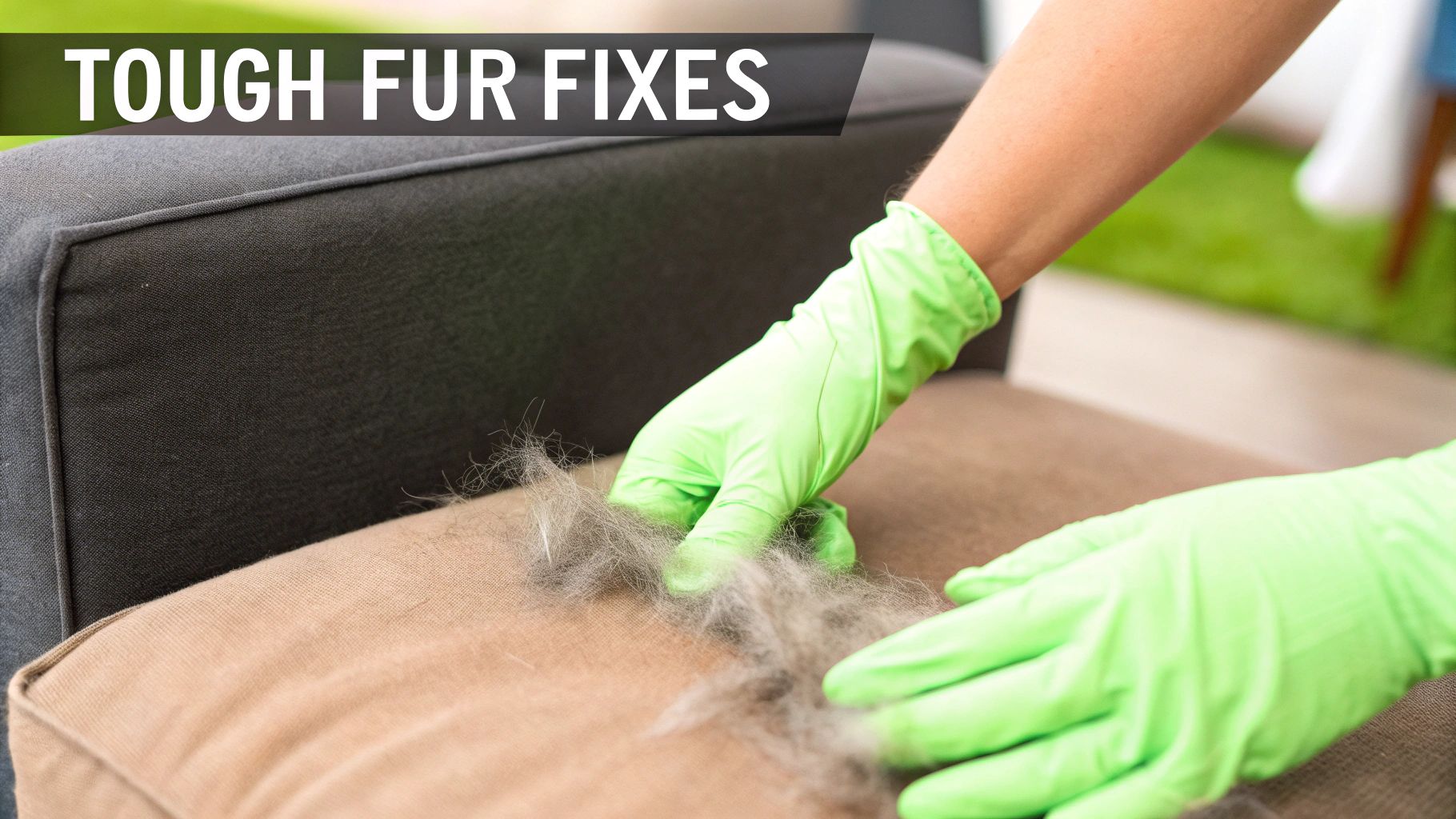
One of the biggest reasons pet hair is so stubborn is static electricity. It’s an invisible magnet making fur cling to surfaces, especially synthetic fabrics. When your lint roller just pushes the hair around, it’s time to fight the static. You can create a simple but effective anti-static spray at home.
- Mix a solution of 1 part liquid fabric softener to 10 parts water in a spray bottle.
- Lightly mist the area. Aim for damp, not soaked.
- Let it sit for a minute to break the static bond.
- Wipe the hair away. It should come off easily with a microfiber cloth or paper towel.
This trick is a favorite among professional cleaners because it instantly neutralizes the static charge, releasing the hair's grip and making cleanup almost effortless.
Don't underestimate the power of simple physics. Techniques that either increase friction (like a rubber shoe sole) or neutralize static (like a fabric softener spray) are often more effective at removing embedded fur than expensive gadgets.
Reaching Difficult Nooks and Crannies
But what about the hair that collects in furniture seams, along baseboards, or deep in the corners of cushions? These spots are notorious fur traps where vacuums and rollers can't do the job.
For these tight spaces, think small and targeted. An old toothbrush works wonders for flicking hair out of tight seams. If you're tackling a larger gap, like between the cushion and the arm of the sofa, try wrapping a dryer sheet around a kitchen spatula. It slides right in and grabs all that trapped fur. These creative workarounds ensure no stray hairs are left behind, giving your furniture a truly deep-cleaned feeling.
Your Top Questions About Keeping Furniture Fur-Free
Even with the right tools and a solid game plan, questions pop up. Keeping a home fur-free is a marathon, not a sprint. Here are answers to the most common questions pet owners ask in the fight against fur.
How Often Should I Really Be Cleaning Pet Hair Off My Furniture?
The real answer depends on your pet. If you have a heavy shedder, a quick daily once-over with a lint roller or rubber glove is a lifesaver. It stops hair from building up. Follow that with a more thorough vacuuming session 1-2 times a week. For low-shedding pets, a deep clean once a week is likely enough. The key is consistency. Regular cleaning stops hair from weaving deep into the fabric, making every future cleaning job faster and easier.
What Are the Best DIY Pet Hair Removal Hacks?
You probably already own some of the most effective tools. A dampened rubber dish glove works wonders: slip it on, wipe your hand across the furniture, and watch the friction pull fur into clumps. A window squeegee does something similar on flat fabrics like microfiber. To deal with static, mix a small amount of liquid fabric softener with water in a spray bottle. Lightly mist the area, let it settle for a moment, and wipe the loosened hair away with minimal effort.
A simple, consistent routine is far more effective than occasional deep-cleaning marathons. A few minutes each day can prevent the frustrating task of removing deeply embedded fur later on.
Can Regular Grooming Actually Reduce Hair on My Furniture?
Absolutely. Consistent grooming is the single best preventative step you can take. It’s the difference between constantly reacting to a mess and proactively stopping it from happening. Using a good deshedding tool a few times a week pulls loose fur from your pet’s undercoat before it has a chance to fly around your house. This one habit can drastically cut down on the amount of hair you find on your furniture, clothes, and floors.
Will Some Furniture Fabrics Hide Pet Hair Better Than Others?
Yes, some materials are definitely more pet-friendly. Smooth surfaces like leather and pleather are easiest to manage since you can wipe the hair right off. Tightly woven fabrics or materials with a subtle pattern can also do a great job camouflaging stray hairs between cleanings. On the other hand, fabrics like velvet, chenille, and anything with a loose weave tend to act like hair magnets and will require more frequent attention.
For grooming tools that help you win the war on shedding at the source, explore the collection from Pet Magasin. Our professional-grade deshedding brushes and combs are designed to keep your pet comfortable and your home cleaner. Find the perfect tool for your furry friend at https://www.petmagasin.com.

Leave a comment