
Best Airline to Travel with Pets: A Guide to Pet-Friendly Travel

Flying with your pet can feel like a huge task, but picking the best airline to travel with pets is easily the most critical part of the whole process. Get this right, and everything else falls into place.
For flights within the US, Alaska Airlines is a long-time favorite. They strike a great balance with fair fees and policies that just make sense. If you're heading overseas, airlines like Lufthansa really shine with their top-notch global services and even have dedicated animal facilities in their hubs.
What Makes an Airline Pet Friendly
Finding the right airline isn't just about buying a ticket; it's about peace of mind. You want to know your best friend will be safe and comfortable from takeoff to landing.
The "best" airline is rarely a one-size-fits-all answer. Your choice depends entirely on your pet’s size, their breed, and your destination. An airline that's perfect for a tiny Chihuahua flying in the cabin might be a terrible choice for a Golden Retriever traveling in the hold.
This guide will give you actionable steps to compare your options like a pro. We'll go beyond just the price tag and dig into the policies that actually matter for your pet's well-being.
Actions to take when comparing airlines:
- Define Your Travel Type: First, determine if your pet will travel in-cabin, as checked baggage, or as cargo. This single factor will immediately narrow down your airline choices.
- Investigate Safety and Comfort: Ask direct questions. How is the cargo hold climate-controlled? What is the layover protocol for animals? Is the ground staff trained to handle pets?
- Analyze Fees and Restrictions: Go beyond the base fee. Scour the airline’s website for weight limits, breed blackouts, and seasonal weather embargoes that could ground your pet unexpectedly.
Comparing Top Airline Policies
To help you get started, it's useful to see how the major players stack up against each other. For example, a recent NerdWallet analysis of pet-friendly airlines consistently puts Alaska Airlines at the top for domestic travel, mainly because of its reasonable $100 one-way fee and clear, straightforward rules.
This handy table gives you a quick snapshot of what to expect from some of the most popular airlines. Use it to narrow down your list before you dive into the nitty-gritty details.
Airline Pet Policy At-a-Glance Comparison
Here’s a quick summary of key pet travel policies for top-rated airlines to help you get started.
| Airline | Best For | Typical In-Cabin Fee (One-Way) | In-Cabin Weight Limit (Pet + Carrier) |
|---|---|---|---|
| Alaska Airlines | Overall value & flexibility | $100 | 20 lbs (9 kg) |
| Delta Air Lines | Extensive route network | $95 (US/Canada/PR) | Varies by aircraft (must fit) |
| Lufthansa | International long-haul | ~$65-125 USD (varies) | 17 lbs (8 kg) |
| Southwest Airlines | Low-cost domestic travel | $125 | Must fit under seat |
Remember, these are just starting points. Fees and policies can change, and aircraft types can affect what's allowed on your specific flight, so always double-check directly with the airline when you're ready to book.
Evaluating Pet Travel Policies Like a Pro
Figuring out the best airline for your pet involves a bit more than just comparing fees. Let’s be real—the policies are not all the same, and the fine print can make or break your trip. A little digging before you book is the first step to making sure your furry friend has a safe and comfortable journey.
The first thing to get straight is where your pet will actually be during the flight. This one detail pretty much dictates everything else.
- In-Cabin Travel: This is the gold standard for small pets. If they can fit in a carrier under the seat in front of you, they get to stay with you the whole time. It's hands-down the least stressful option.
- Checked Baggage: For medium-sized pets, this means traveling in a special climate-controlled, pressurized compartment on the same flight as you. You'll drop them off at check-in and pick them up at baggage claim.
- Cargo Travel: This is the go-to for larger animals, pets flying solo, or for certain international destinations. It’s a separate service handled by specialized cargo teams, which often means different drop-off and pick-up spots.
The safest and most humane option for small pets is always in-cabin. For larger animals, manifested cargo is often considered safer than checked baggage because it's managed by dedicated animal handlers, although it can be more expensive.
Decoding Carrier and Pet Size Limits
Airlines are sticklers for carrier dimensions and total weight for in-cabin pets, and for good reason. These aren't just suggestions; they're safety rules. A carrier that’s even slightly too big won’t be allowed on board, period. And one that’s too small is just cruel.
An airline might list a maximum carrier size like 18" x 11" x 11", but that can change depending on the plane. A smaller regional jet has way less under-seat space than a big wide-body aircraft. Always, always check the specific aircraft type for your route. If you're feeling lost, our guide on the best pet carriers for air travel has some great advice to point you in the right direction.
Navigating Breed and Weather Restrictions
Here's where things can get tricky. Some of the most important rules are completely out of your hands, like your pet's breed or the weather on travel day. These policies exist for safety, but they can throw a major wrench in your plans if you’re not prepared.
Brachycephalic, or short-nosed breeds, are the ones most often affected.
- Dogs: Pugs, French Bulldogs, Boxers, and Shih Tzus often can't fly in cargo. Their short snouts put them at a higher risk for breathing problems at high altitudes.
- Cats: Persian and Himalayan cats face the same kind of restrictions.
Airlines also have seasonal embargoes. This means they won't fly animals in the cargo hold when it's extremely hot or cold. You can pretty much forget about pet cargo travel to places like Phoenix or Las Vegas between May and September, or to cities up north during the dead of winter.
This is where looking into options like Cancel for Any Reason travel insurance can be a real lifesaver, giving you the flexibility to adapt to these last-minute curveballs.
Assessing an Airline’s Safety Record
An airline's history with animal transport says a lot. In the U.S., the Department of Transportation (DOT) makes airlines report every incident of a pet being lost, injured, or dying during air travel.
You can actually look up these monthly Air Travel Consumer Reports online. While incidents are pretty rare considering how many pets fly, you can sometimes spot patterns. An airline that consistently has zero or very few incidents clearly has a strong safety culture, making it a much better bet. This data gives you an objective way to see who really walks the walk when it comes to finding the best airline to travel with pets.
Comparing Top US Airlines for Domestic Pet Travel
Choosing the right airline for your pet is about way more than just the booking fee. Your route, potential layovers, and even the specific plane you’ll be on can make or break the experience. Let's look at how the major US carriers stack up in real-world situations to help you figure out which one is the best fit for you.
Alaska Airlines: The All-Around Favorite
There's a reason Alaska Airlines consistently tops "pet-friendly" lists. They've found a great balance between reasonable fees and common-sense policies that just plain work for most pet parents.
Say you're moving from Seattle to San Diego with your 15-pound terrier mix. Alaska is probably your best bet. Their in-cabin fee is a competitive $100 each way. But the real clincher is their combined weight limit of 20 lbs for the pet and carrier, which gives you a little more breathing room than other airlines. It’s perfect for those of us with small dogs that aren't exactly teacup-sized.
Here's a pro tip: Alaska's famous "First Bag Free" perk for Club 49 members and certain credit card holders? It often applies to your pet carrier, too. If you're a frequent flyer, especially within Alaska, that value is tough to beat.
Delta Air Lines: The Network Giant
If your travel plans involve a smaller regional airport, Delta's massive network is a game-changer. They fly to places many other airlines don't, which can save you a long, stressful drive to a major hub.
Imagine you need to get your cat from a small town in Michigan to Orlando. Delta is likely the only airline offering a simple one-stop flight. Their in-cabin pet fee is $95 one-way for most domestic trips, but the real value is in their reach. They also don't have a specific weight limit for pets in the cabin; as long as your buddy fits comfortably in a carrier under the seat, you're good to go.
The trade-off? Delta can be a bit more restrictive. They only allow a total of four pets in the main cabin per flight, so you absolutely have to book your pet’s spot the moment you book your own ticket.
Southwest Airlines: The In-Cabin Specialist
For pet owners who would never dream of putting their animal in cargo, Southwest is a breath of fresh air. Their policy is beautifully simple: pets fly in the cabin, period. That clarity alone brings incredible peace of mind.
Think about a college student moving their cat from Austin to Chicago. Southwest’s $125 one-way fee is a bit higher, but the process is straightforward. They allow a maximum of six pet carriers per flight, so just like with other airlines, it's critical to call and add your pet to your reservation as soon as you have your ticket.
The big catch, of course, is that Southwest has zero options for pets too big to fit under the seat. If your dog doesn't meet in-cabin size limits, you'll need to look elsewhere.
This handy diagram breaks down the main policy differences you’ll find—like carrier dimensions, breed rules, and safety protocols.
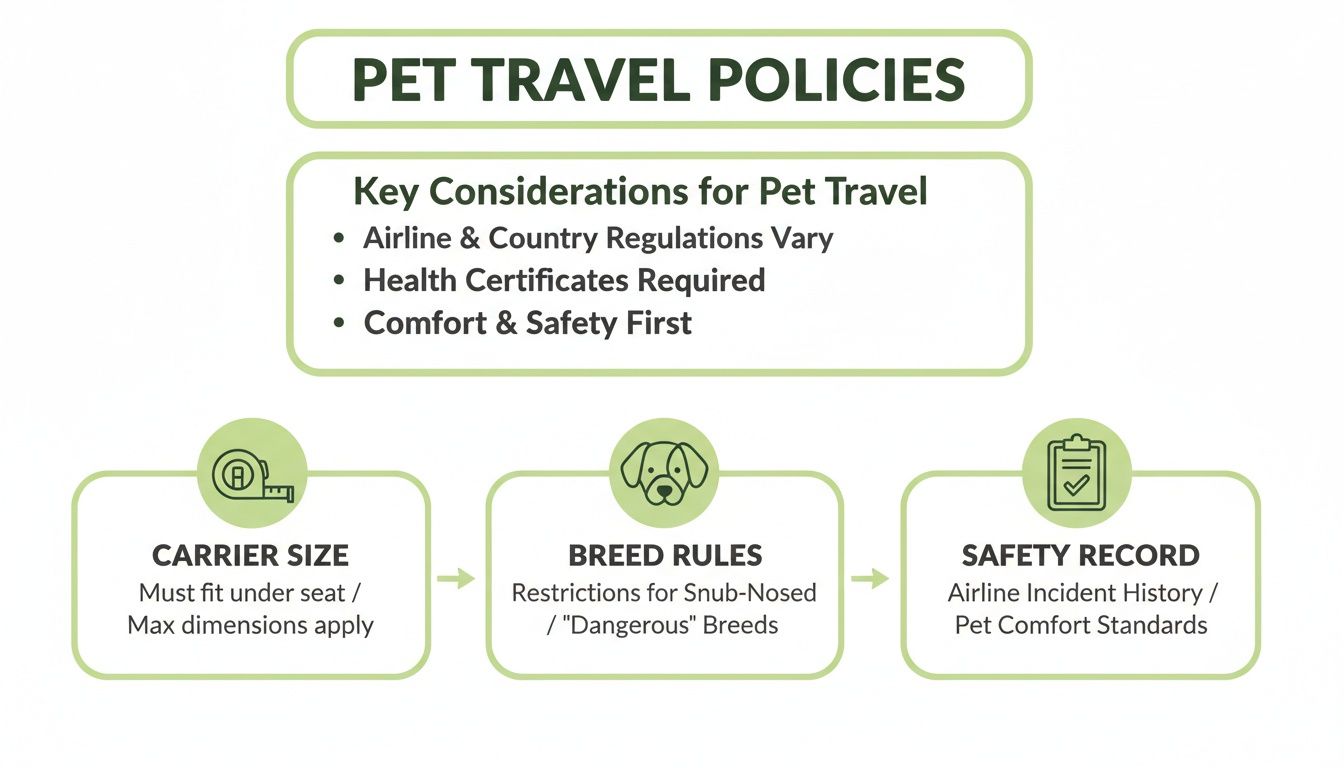
As you can see, while every airline is focused on safety, their rules on things like carrier size and restricted breeds can be wildly different. It really pays to check the fine print for your specific situation.
American Airlines: Flexibility for Military and Status Holders
American Airlines provides a reliable, coast-to-coast network that makes it a solid option for most travelers. Their standard in-cabin pet fee is $150 each way, which definitely puts them on the pricier side for domestic travel.
But where American really shines is in its specific accommodations. They have a well-defined policy for checking pets as cargo for active-duty U.S. military personnel and State Department employees traveling on official orders. This is a huge deal, as it’s a service most airlines have stopped offering to the public.
For a military family moving from North Carolina to California with their medium-sized Beagle, this checked pet service is a lifeline. American provides very clear guidelines on kennel requirements and temperature restrictions to keep animals safe. For everyone else, their 20 lbs combined weight limit for in-cabin pets is on par with Alaska, offering good flexibility.
United Airlines: A Cautious Approach
United's pet policies have changed a lot over the years, and their current approach is heavily focused on safety. For most domestic flights, they only allow small dogs and cats in the cabin. Their PetSafe cargo program remains paused for any new bookings.
So, if you're flying your small Pomeranian from Denver to Newark, United is a decent choice. The in-cabin fee is $125 each way. A key detail to know is that the under-seat space can vary depending on the aircraft, but their website has a tool to check the exact dimensions for your flight, which is really helpful.
Keep in mind that United's rules can feel a bit tight. They don't allow pets on flights to certain places (like Hawaii) and have very strict rules about connection times. This makes them a better fit for direct, non-stop flights with a small pet.
Navigating International Pet Travel with Top Airlines
Flying your pet across borders isn't just a longer trip—it's a whole new ballgame. Suddenly, you're juggling quarantine rules, country-specific health certificates, and complex regulations. You need more than just a pet-friendly airline; you need a partner with a long track record of managing the intricate dance of international animal transport.For these kinds of journeys, an airline's expertise can make or break the entire experience. You're looking for a carrier that doesn't just allow pets but actually specializes in getting them safely from one side of the globe to the other.
Lufthansa: The Gold Standard for Global Pet Movers
When people ask about international pet travel, especially for a complex, long-haul move, Lufthansa’s name almost always comes up first. They've built an entire system designed specifically to handle the unique stresses of global animal transport, making them a true leader in the field.
The crown jewel of their operation is the Lufthansa Animal Lounge at their main hub in Frankfurt. This isn't just a corner of a cargo warehouse; it's a massive, state-of-the-art facility staffed around the clock by veterinarians and professional animal handlers. At over 4,000 square meters, it’s a climate-controlled sanctuary where animals can rest, eat, and get proper care during a long layover.
If you're facing a relocation from the US to Europe, a dedicated, vet-staffed facility like the Frankfurt Animal Lounge is a game-changer. It takes away the single biggest worry in a multi-leg journey: what happens to your pet during the connection.
Lufthansa is widely considered one of the best airlines for international pet travel, particularly for anyone heading to or through Europe. They allow dogs, cats, and even birds in the cabin, with a combined pet-and-carrier weight limit of 8 kg. For larger animals, their checked baggage and cargo options can handle kennels up to 110 kg, perfect for big breeds like German Shepherds or Labradors. You can dig into the specifics of their policies with resources from experts like the team at Travel Ready Pets.
KLM Royal Dutch Airlines: An Expert in Trans-Atlantic Crossings
KLM is another European carrier that has earned a fantastic reputation for animal transport, putting it right at the top of the list for international flyers. Much like Lufthansa, KLM runs a dedicated animal hotel at its Amsterdam Schiphol hub, giving you peace of mind that your pet will be comfortable and safe during transit.
One area where KLM really shines is its detailed guidance for navigating different countries' entry requirements. Their website is packed with helpful resources, and their customer service agents are trained to handle the specific, often confusing, paperwork involved in pet travel.
- Real-world scenario: You're moving with two bonded cats from New York to Amsterdam.
- KLM's Advantage: KLM is one of the few airlines that allows two compatible pets of similar size (up to 14 kg each) to travel together in the same carrier in the hold. For animals that comfort each other, this can dramatically reduce their stress.
- Good to know: Their in-cabin weight limit is also 8 kg (18 lbs), putting them on par with Lufthansa as a great choice for smaller pets.
Comparing Long-Haul Cargo Capabilities
For flights stretching over eight hours, the quality of the cargo hold environment is everything. This is where you can really see the difference between a standard carrier and a top-tier international airline.
Both Lufthansa and KLM use pressurized, climate-controlled holds that keep the temperature and air quality consistent with the main cabin. Just as importantly, their ground crews are specifically trained in IATA's Live Animals Regulations (LAR), ensuring your pet is handled with care during the critical moments of loading and unloading.
Long-Haul Pet Transport Comparison
| Feature | Lufthansa | KLM Royal Dutch Airlines | British Airways |
|---|---|---|---|
| Specialized Hub Facility | Yes (Frankfurt Animal Lounge) | Yes (Animal Hotel at Schiphol) | No (Handled by IAG Cargo) |
| Primary Pet Focus | Global relocations, all sizes | Trans-Atlantic & EU travel | US-UK routes (primarily cargo) |
| Key Differentiator | Vet-staffed transit facility | Strong bonded-pair policy | Extensive experience with UK entry rules |
British Airways is another solid option, but they typically handle pet transport through their sister company, IAG Cargo. This means your pet often travels on a separate booking, and the process can feel less connected than it does with Lufthansa or KLM. That said, for direct routes into the UK, their deep knowledge of Britain's strict entry rules is a huge plus.
Ultimately, the best airline for your international move comes down to your specific route, your pet's needs, and how much hands-on support you want for such a big journey.
Your Essential Pre-Flight Preparation Checklist
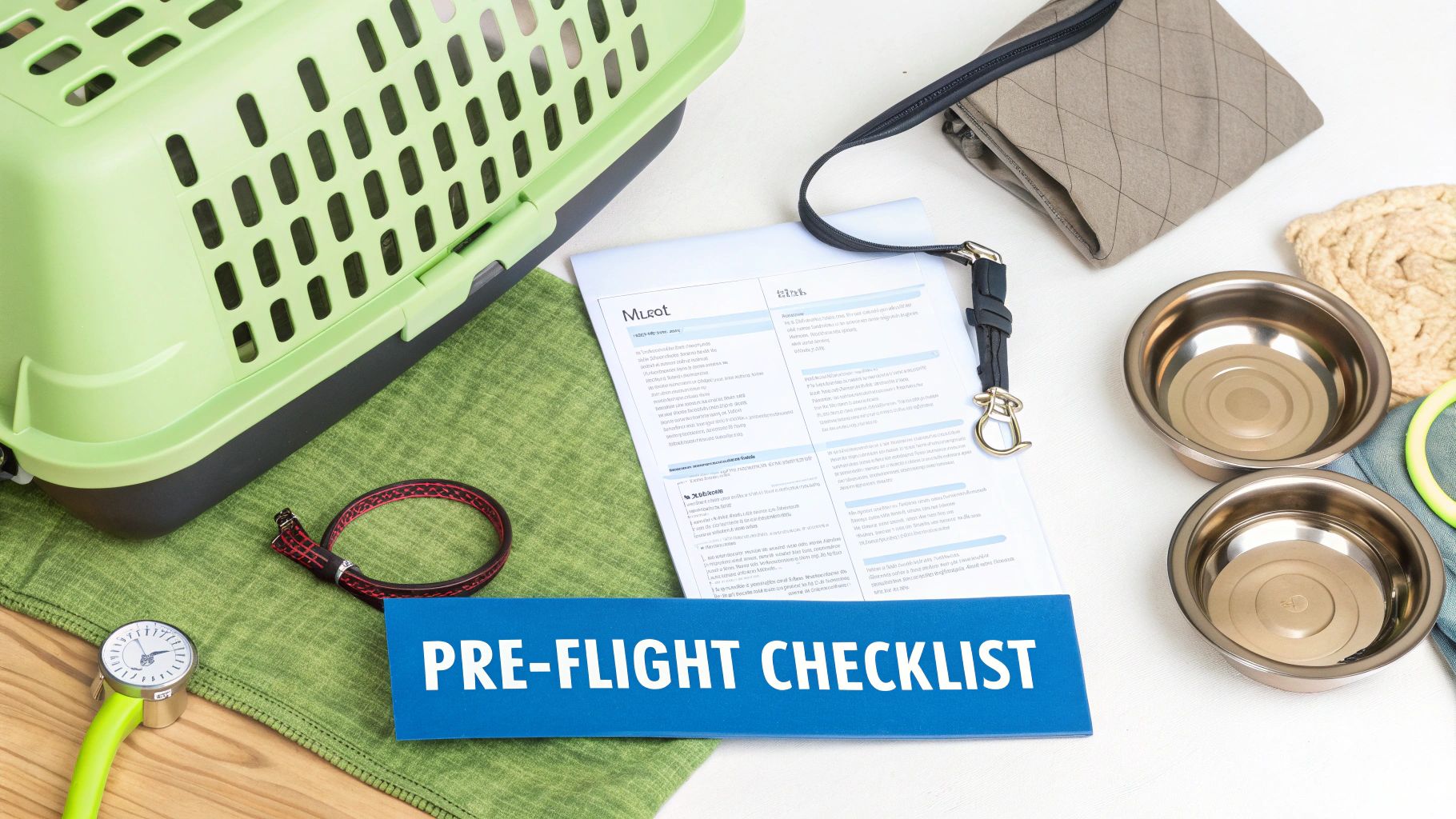
Getting your flight booked is a big step, but the real prep work starts long before you ever see the airport. A well-prepared pet is a calm pet, and following a solid checklist means nothing important gets forgotten in the chaos. This guide will walk you through the key preparations to make your travel day as smooth as it can be for both of you.
Your main goal here is to make a new, potentially scary experience feel as routine as possible. The trick is to start early and stay organized, which turns a potentially frantic scramble into a totally manageable process.
One Month Before Your Flight
Good preparation begins weeks, not days, before you fly. This first stage is all about getting your pet comfortable with the gear and getting your documents in order.
- Introduce the Carrier: Don’t just spring the carrier on your pet the day you leave. Place it in a common area in your house with the door wide open. Encourage your pet to check it out by putting treats, their favorite toys, or a familiar blanket inside. You want them to see the carrier as a safe, comfy den—not a sign that something scary is about to happen.
- Verify All Paperwork: Now is the time for a serious document check. For domestic flights, you'll almost always need a health certificate issued within 10 days of your trip and proof of a current rabies vaccination. International travel is a whole different beast, with complex rules that might include microchipping, specific blood tests, and import permits that can take weeks, or even months, to get approved. Double-check every single requirement with your destination's authorities and the airline.
A huge mistake people make is thinking a vet visit a month out will cover it. Most domestic health certificates must be issued very close to your departure date. Make sure you schedule that vet appointment accordingly to avoid a last-minute panic.
Two Weeks Before Your Flight
As your trip gets closer, it's time to shift your focus to finalizing the little details and making sure your pet is truly comfortable with their travel setup.
- Confirm Carrier Compliance: Go back and double-check that your carrier meets the airline's exact size and construction rules. They are incredibly strict about this, and you will be turned away at check-in if your carrier isn't compliant. To be certain, you can explore our detailed guide on airline pet carrier size requirements.
- Do a Trial Run: Put your pet in their carrier and just go for a short car ride. This gets them used to the feeling of motion and being enclosed in a safe, controlled way. Reward them with lots of praise and a treat when you're done to build a positive vibe around the experience.
- Assemble Your Pet's Travel Kit: Start putting together all the essentials you'll need on the actual travel day. This isn't just about food and water; it's about their comfort and having a plan for any little emergencies.
What to Pack in Your Pet's Carry-On
Your pet’s travel bag should have everything they need to stay safe and comfortable throughout the journey.
- Essentials: Pack collapsible water and food bowls, a small bag of their normal food (enough for a full day), and any medications they need.
- Comfort Items: A favorite small toy or a blanket that smells like home can make a world of difference. Absorbent pee pads to line the carrier are an absolute must.
- Documentation: Keep printed copies of their health certificate, vaccination records, and your flight confirmation in a waterproof folder. Don't rely on your phone!
The Day of Your Flight
The final 24 hours are all about creating a calm, predictable environment. Your pet can sense your stress, so do your best to stay relaxed and stick to their normal routine as much as you can.
Give them a light meal about 4-6 hours before the flight to help prevent an upset stomach, but make sure they have access to water right up until you head out. Most importantly, take them for a long walk or have a good play session to burn off any extra energy. A tired pet is much more likely to rest quietly during the flight—which is exactly what you want for the best airline to travel with pets experience.
Your Pet Air Travel Questions, Answered
Planning a trip with your pet is exciting, but it's natural for questions and worries to pop up along the way. To make sure you feel confident and ready, we’ve put together answers to some of the most common concerns pet owners have.
Getting these details sorted out can be the difference between a stressful travel day and a smooth, easy journey.
In-Cabin, Checked Baggage, or Cargo: What’s the Difference?
These three options are completely different experiences for your pet, so it’s important to know which one is right for you.
In-cabin is for small pets who can fit comfortably in a carrier under the seat in front of you. This is by far the least stressful way for them to fly, since they get to stay right by your side the whole time.
Checked baggage means your pet travels on the same flight as you, but in a separate, climate-controlled, and pressurized compartment. For cargo, your pet is handled by a specialized logistics team. This is often the only option for larger animals, pets traveling alone, or for certain international flights.
How Can I Make My Pet More Comfortable During the Flight?
A comfortable flight starts weeks before you even pack your bags. The key is to get your pet used to their travel carrier. Make it a happy, safe space by leaving it out with treats, favorite toys, and soft blankets inside. A good long walk or an energetic play session right before you leave for the airport also helps burn off some of that nervous energy.
Once you’re on the plane, resist the urge to open the carrier. Instead, you can offer plenty of reassurance by speaking in a calm, soothing voice. Most vets advise against sedating pets for flights because of potential health risks at high altitudes, so always check with your veterinarian for their professional opinion. For more great tips, read our complete guide on how to travel with pets.
One of the best things you can do for your pet’s comfort is to make the carrier feel like home. A simple blanket that smells familiar can work wonders to reduce their anxiety in a strange new place like an airplane cabin.
What Paperwork Do I Need to Fly with My Pet?
The paperwork you’ll need depends entirely on where you’re going. For travel within the U.S., you can almost always count on needing two main documents:
- A recent health certificate from a USDA-accredited vet, usually issued within 10 days of your flight.
- Proof that their rabies vaccination is up to date.
Flying internationally is a whole different ballgame and requires careful planning months ahead of time. You might need to deal with microchipping, specific vaccine records, import permits, and even a mandatory quarantine when you arrive. Always, always check the official government websites for your destination country to get the exact requirements.
Are Any Pets Banned from Flying?
Yes, for safety reasons, many airlines have rules about which pets can fly based on their breed, age, and health. The most common bans are for brachycephalic (short-nosed) breeds like Pugs, French Bulldogs, and Persian cats. These animals are at a much higher risk of breathing problems, so they often can't fly in cargo.
Some airlines might also have restrictions on breeds they consider aggressive. And you’ll find that very young puppies and kittens, usually those under 8 to 10 weeks old, aren't allowed to fly. It's absolutely critical to check the airline's specific policies on breeds and age before you book a ticket.
A smooth journey starts with the right gear. At Pet Magasin, we design TSA-approved travel carriers and accessories to keep your pet safe, comfortable, and secure from check-in to arrival. Explore our collection and travel with confidence at https://www.petmagasin.com.

Leave a comment