
Airline Approved Small Dog Carrier: A Quick Guide to Stress-Free Flying

Traveling with your furry co-pilot should be an adventure, not a headache. When you see the term "airline approved small dog carrier," it's not an official government stamp. Instead, think of it as a label indicating the carrier meets a universal set of common-sense rules that most airlines require to keep your pet safe and comfortable in the cabin.
Use this label as a helpful starting point, not a golden ticket.
What Does Airline Approved Really Mean for Your Dog Carrier
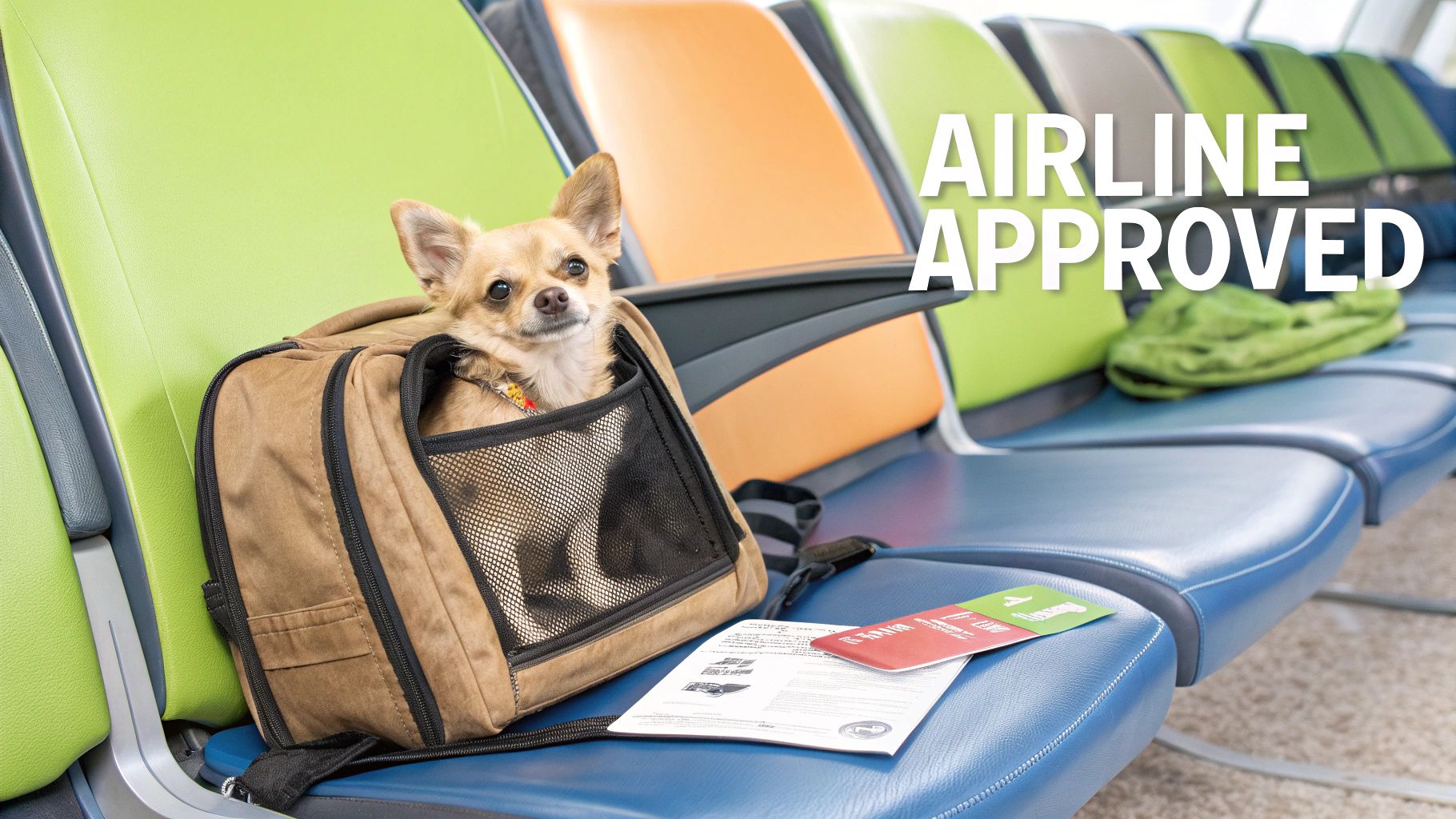
The phrase "airline approved" can be misleading. No single organization, like the TSA or FAA, gives carriers a universal seal of approval. Instead, it’s a term manufacturers use to signal that a carrier’s design meets the general requirements for in-cabin pet travel.
This means the carrier likely has the right size, ventilation, and security features. However, the final decision always rests with your specific airline. Each one has its own rules, so your first step is to check their policy directly.
The Foundation of an Approved Carrier
Treat your dog's carrier like your own carry-on bag—it must meet specific criteria to board the plane. For an airline approved small dog carrier, these fundamentals are non-negotiable and focus on your pet's well-being and security.
Here’s what you need to look for:
- Flexible Dimensions: The carrier must be small enough to slide and fit completely under the seat in front of you. This is why soft-sided carriers are the standard for in-cabin travel.
- Adequate Ventilation: Ensure it has mesh windows on multiple sides for good airflow. This is critical to prevent your dog from overheating during the flight.
- Secure Closures: Zippers must be escape-proof. Look for carriers with locking clips to stop a clever pup from nosing their way out.
- Leak-Proof Bottom: The base must be waterproof to contain any accidents, keeping the cabin floor clean.
With more people flying with pets, the global airline-approved pet carrier market has boomed, reaching USD 1.47 billion. Soft-sided carriers dominate, holding 59% of the market share because they are specifically designed to fit under airline seats. You can explore more data on this growing market to understand the trends.
To make your selection process easier, use this checklist.
Quick Checklist for an Airline Approved Carrier
Use this table to verify that your small dog carrier has the essential features required for in-cabin flight.
| Feature | Actionable Insight: What to Look For |
|---|---|
| Soft-Sided Design | Choose a carrier that can be gently compressed. This flexibility is essential for fitting under various airline seat configurations where hard carriers won't. |
| Under-Seat Fit | Before you buy, measure the carrier's dimensions and compare them against your specific airline's limits. This is the most common reason for being turned away. |
| Multi-Sided Mesh | Check for mesh on at least three sides. This provides vital cross-ventilation and allows you to check on your dog without opening the carrier. |
| Locking Zippers | Inspect the zippers. They should have clips or loops that lock together to prevent your dog from pushing them open mid-flight. |
| Waterproof Base | Confirm the bottom is waterproof. This is a non-negotiable feature for hygiene and prevents messes from seeping onto the cabin floor. |
| Padded Interior | Look for a carrier with a soft, removable base. This provides comfort for your dog and makes cleaning much easier after the trip. |
| Sturdy Handles/Strap | Test the handles and shoulder strap. You will be carrying your pet through the airport, so they must be strong and comfortable for you. |
Use this checklist as your pre-purchase guide. A carrier with all these features is a solid choice.
Why Soft-Sided Carriers Are the Go-To Choice
The key advantage of a soft-sided carrier is its flexibility. The pliable structure can be gently squished to fit into tight under-seat spaces—something a rigid carrier cannot do. This adaptability is precisely why they are the overwhelming favorite for in-cabin travel.
A great airline approved small dog carrier is a perfect marriage of the airline's strict rules and your dog's need for comfort. It becomes a safe little den for your pet, providing security and a sense of home while you're 30,000 feet in the air.
Your actionable first step is to choose a carrier labeled "airline approved." Your mandatory second step is to verify its features and dimensions against your airline's specific policy. A quick phone call or visit to their website will ensure a smooth trip.
Making Sense of Airline Pet Carrier Rules
Deciphering airline pet policies can feel overwhelming. The most important thing to know is that there is no universal "TSA-approved" or "FAA-certified" standard for pet carriers. Each airline sets its own rules. Your task is to find a carrier that meets the requirements for your specific flight.
This lack of a single standard means you must do your homework. While most airlines agree on the basics of safety and comfort, small differences in their rules can disrupt your travel plans. The good news is, these rules are all based on common sense.
The Under-Seat Rule: The Golden Ticket
The single most important rule is that the carrier must fit completely under the seat in front of you. This is non-negotiable. Your dog’s carrier is considered their carry-on bag and must be stowed securely during taxi, takeoff, and landing.
Because under-seat space varies by aircraft, airlines provide maximum dimensions.
- A common guideline is around 18 inches long x 11 inches wide x 11 inches tall.
- Actionable Step: Always check the specific dimensions on your airline's website before purchasing a carrier.
- Choose a soft-sided carrier. Its flexible top can compress slightly to fit into snug spaces without compromising your dog's comfort.
The main idea is simple: if the carrier is too big to slide all the way under the seat, it’s not coming in the cabin. This rule keeps the aisles clear for everyone's safety and ensures your pet is tucked away securely during the flight.
In-Cabin vs. Cargo: Two Completely Different Worlds
You must understand the difference between in-cabin and cargo travel. The carriers for each are fundamentally different and are never interchangeable.
For in-cabin travel, where your dog will be at your feet, you need a soft-sided carrier. These are designed to be flexible, easy to carry through an airport, and fit under the seat.
For cargo travel, your pet requires a hard-sided, IATA-compliant crate. These are built for maximum protection, with rigid walls and secure metal doors designed for the cargo environment. You can never use a soft-sided carrier for cargo travel, and a hard-sided crate is almost always too bulky for in-cabin use.
Carrier Features That Are Non-Negotiable
Beyond size, airlines have a checklist of mandatory features for in-cabin carriers. These are not suggestions—they are requirements for your pet's safety.
- Plenty of Ventilation: The carrier must have breathable mesh on at least two or three sides for proper airflow. This prevents overheating and helps reduce anxiety by letting your dog see out.
- A Leak-Proof Bottom: Accidents can happen. A waterproof base is mandatory to contain messes and maintain cabin hygiene.
- Escape-Proof Zippers: To prevent escapes, look for carriers with self-locking zippers or clips that stop a clever dog from nudging them open.
Airline rules have driven innovation in carrier design. Soft-sided models now command a 59% revenue share because they solve the under-seat fit problem. However, differing rules from major airlines still require diligence from pet owners—check dimensions, materials, and ventilation before you fly. You can see more on how these rules influence design by checking out the latest pet carrier market trends.
Before you shop, visit your airline’s "traveling with pets" page. This one step will give you the exact dimensions and rules you need to follow, guaranteeing a stress-free trip for you and your furry co-pilot.
How to Measure Your Dog for the Perfect Carrier Fit
Selecting the right size for an airline approved small dog carrier requires a balance: it must be spacious enough for your dog’s comfort but compact enough for the airline’s rules. A carrier that’s too small will cause stress, while one that’s too large may be denied at the gate. Your goal is to find a cozy den where your dog can stand, turn around, and lie down easily.
The Two Essential Measurements
You only need two key measurements. Grab a soft measuring tape and some treats to make the process positive for your dog.
-
Length Measurement: Measure from the base of your dog’s neck (where the collar sits) to the base of their tail. Do not include the tail. This gives you the minimum interior length needed.
-
Height Measurement: Have your dog stand straight and measure from the floor to the top of their shoulders. This gives you the minimum interior height needed.
The golden rule for a perfect fit is "Stand, Turn, and Lie Down." Your dog absolutely must be able to do these three simple things inside the carrier without any trouble. This isn't just about comfort; it's a standard that airline staff will often check for.
Adding Room for Comfort
Once you have your dog's measurements, add a few inches for comfort. A carrier matching their exact dimensions will be too restrictive.
Use this simple formula as your guide:
- Carrier Length: Your dog’s length + 2-4 inches.
- Carrier Height: Your dog’s height + 2-3 inches.
For example, if your dog is 15 inches long and 9 inches tall, look for a carrier that is approximately 17-19 inches long and 11-12 inches tall. This extra space allows them to shift positions and get comfortable. Critically, ensure these final dimensions still fall within your airline's maximum limits.
This visual breaks down the key decision points for selecting a carrier that will be approved at the gate.
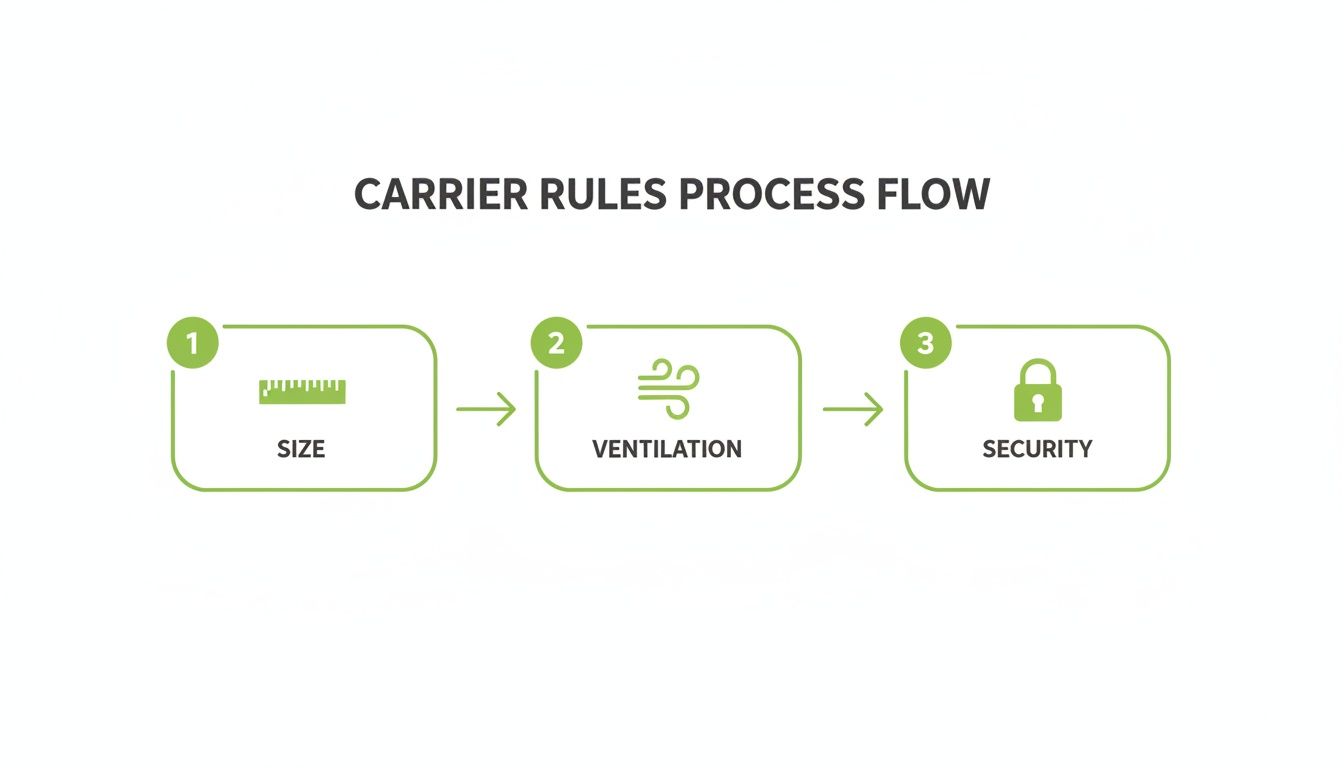
As the infographic shows, getting the size right is your first step. After that, confirm it has sufficient airflow and secure latches—these are non-negotiable requirements for air travel.
Tips for Measuring a Wiggly Dog
If your dog won’t stand still, use these actionable tips:
- Use a Wall: Have your dog stand next to a wall. Mark their shoulder height and tail base with a piece of painter's tape, then measure the distance between the marks.
- Team Up: Ask a friend to hold your dog steady with a toy or treat while you quickly take the measurements.
- Measure While They Sleep: If your dog is a heavy sleeper, you may be able to get the measurements while they are relaxed and still.
Taking a few minutes to measure correctly allows you to choose an airline approved small dog carrier with confidence, ensuring your pet has a safe and comfortable space for the journey.
Essential Features of a Great Airline Pet Carrier
You have your dog's measurements and the airline's rules. Now, look beyond the dimensions. The best airline approved small dog carrier combines smart design, durable materials, and thoughtful details that prioritize your dog’s safety and comfort. These features are what distinguish a basic carrier from one that provides true peace of mind.
A great carrier is your dog's secure, mobile den. Getting these features right will keep your dog calmer and make your journey smoother.

Ventilation and Visibility for a Calm Traveler
Excellent ventilation is a non-negotiable safety feature. A carrier with mesh windows on multiple sides provides two key benefits. First, it ensures proper airflow to prevent overheating in a stuffy cabin. Second, it allows your dog to see their surroundings, which can significantly reduce anxiety.
This visibility is also for you. You can easily peek in to check on your pet without unzipping the carrier and disturbing them, offering reassurance with just a glance.
Security Features to Prevent Escapes
Airports are chaotic, and an escape at 30,000 feet is a nightmare scenario. The best carriers are built with security as a top priority to keep your pet safely contained.
Look for these essential security features:
- Self-Locking Zippers: This is a must-have. These zippers cannot be nudged open from the inside by a persistent paw or nose.
- An Internal Tether: A short leash clip inside the carrier attaches to your dog’s harness, providing a crucial backup to prevent them from bolting out when you open the door.
- Durable, Chew-Proof Mesh: Ensure the mesh windows are made from a strong, claw-resistant material that can withstand scratching or chewing.
A well-designed carrier thinks ahead. It assumes that if there's a way for a pet to get out, they'll find it. Strong security features close those potential escape routes before they become a problem.
Comfort and Convenience for a Better Journey
Beyond safety, the best carriers include features that make the trip more comfortable for your pet and more convenient for you. A comfortable dog is a calm dog, and user-friendly features make navigating the airport much easier.
Prioritize these comfort-focused details:
- Plush, Removable Liner: A soft, padded base provides a cozy spot for your dog. A liner that is removable and machine-washable is essential for easy cleanup.
- Structured, Waterproof Bottom: A firm base prevents the carrier from sagging and gives your dog a stable floor. A waterproof lining is mandatory for hygiene.
- Multiple Entry Points: Carriers with both top and side-loading doors offer flexibility. A top-entry door makes it easier to place a nervous dog inside, while a side door lets them walk in willingly.
These practical additions show that a manufacturer understands the realities of pet travel. To see how these features come together in top-rated products, discover more about the best pet carriers for air travel in our detailed guide. Pet Magasin’s line of TSA airline-approved carriers is designed with these essential features in mind, ensuring your small dog travels safely and comfortably.
Your Pre-Flight Checklist for a Smooth Trip
A stress-free travel day begins weeks in advance. Your primary goal is to transform the **airline approved small dog carrier** from a strange object into a familiar, safe space. Your preparation will determine whether you walk into the airport with a calm dog or an anxious one.Start by placing the carrier in your living room with the door open. Toss treats inside, place a favorite toy in the back, or feed your dog their meals next to it. This process builds a positive association, teaching them that the carrier is a rewarding place.
Getting Your Dog Used to the Carrier
Once your dog enters the carrier willingly, begin zipping it up for very short periods—just a few seconds at first. Reward them with praise and a high-value treat, then let them out. Gradually increase the duration they spend inside to build their confidence.
Next, introduce motion. Pick up the carrier and walk around the house. When they are comfortable with that, take short car rides. These practice runs help normalize the sensation of being enclosed and moving, which is key to reducing anxiety on travel day.
Packing Your Pet’s Carry-On Bag
Organize your dog’s essentials into a dedicated bag for easy access at the airport.
- Health Documents: Keep a copy of your dog’s health certificate (most airlines require one issued within 10 days of travel) and rabies vaccination proof in a waterproof folder.
- Food and Water: Pack enough of their regular food for the travel day, plus extra in case of delays. A collapsible water bowl is a space-saving essential for hydration.
- Comfort Items: A small blanket or a familiar toy with their scent can provide significant comfort. Avoid squeaky toys.
- Cleanup Supplies: Line the carrier with a puppy pad. Pack waste bags and pet-safe wipes for any messes.
For extra peace of mind, consider tracking technology. Items like Airtag holders for pet carriers allow you to monitor your pet's location. For more practical advice, our guide on how to travel with pets offers a comprehensive checklist.
Navigating the Airport and TSA
Upon arrival, go directly to the airline's check-in counter, even if you have a mobile boarding pass. You must check your pet in, pay the fee, and have an agent verify your paperwork and carrier.
The security checkpoint process is straightforward if you know what to expect.
You will never be asked to put your dog through the X-ray scanner. The safety of your pet is a top priority for TSA agents, and their screening process reflects that.
When it's your turn, you must take your dog out of the carrier. Actionable Tip: Put your dog in a secure harness and leash before opening the carrier. You will carry your dog in your arms through the metal detector.
The empty airline approved small dog carrier will go on the conveyor belt to be X-rayed along with your other bags. After screening, find a quiet area to safely place your dog back inside their carrier before proceeding to your gate.
Common Questions About Flying with a Small Dog Carrier
Even with careful planning, last-minute questions can arise. Here are clear, actionable answers to the most common concerns.
What Does Airline Approved Actually Mean
"Airline approved" is a marketing term, not an official certification. It means the manufacturer has designed the carrier to meet the typical requirements for in-cabin travel, such as having soft sides, adequate ventilation, and secure zippers.
It is not a guarantee of acceptance. Every airline has its own specific size restrictions.
Your Action Plan: Use "airline approved" as a filter to find suitable carriers. Then, confirm the carrier’s exact dimensions against your specific airline's policy on their website. This is the only way to guarantee a smooth check-in.
In-Cabin Versus Cargo Carriers
No, you cannot use the same carrier for both. The requirements are completely different for safety reasons and are not interchangeable.
- In-Cabin Travel: Requires a soft-sided airline approved small dog carrier designed to fit under an airplane seat.
- Cargo Travel: Requires a rigid, hard-sided crate that meets IATA (International Air Transport Association) standards for protection in the cargo hold.
Using the wrong type of carrier will result in being denied boarding.
Required Documents for Domestic Flights
For most domestic U.S. flights, you will need two documents:
- A health certificate from your veterinarian, issued within 10 days of your travel date.
- Proof of a current rabies vaccination.
Keep these documents in a waterproof folder in your carry-on for easy access. While these are standard, always confirm with your airline if they have additional requirements. International travel involves much stricter regulations.
Getting Through Airport Security With a Dog
The TSA process is designed to be safe for pets. Your dog will never go through the X-ray machine.
Here is the step-by-step process:
- Before your turn, ensure your dog is in a secure harness and on a leash.
- When instructed, take your dog out of the carrier.
- Carry your dog in your arms through the metal detector.
- Place the empty carrier on the conveyor belt to be X-rayed.
- After clearing the checkpoint, move to a safe spot to put your dog back in the carrier.
Knowing this procedure beforehand will make the experience calm and efficient.
Can My Dog Sit On My Lap During the Flight
No. For the safety of everyone on board, FAA regulations require that your dog remain completely inside their carrier, stowed under the seat in front of you, for the entire duration of the flight.
This rule is strictly enforced during taxi, takeoff, and landing. While they can't sit on your lap, you can still reach down to offer a reassuring touch through a mesh window or speak to them calmly to help them feel secure.
Once you’ve landed, the next step is ensuring your pet is comfortable at your destination. If you're heading to Florida, there are great resources available. You can find helpful lists of booking sites for pet-friendly Florida vacation homes to find the perfect stay.
Traveling with your dog is an incredible experience. By preparing ahead and choosing a reliable airline approved small dog carrier, you can ensure the journey is as enjoyable as the destination. For carriers designed specifically for air travel, explore the collection from Pet Magasin. Our TSA airline-approved carriers provide the safety and comfort your pet deserves. Visit us at https://www.petmagasin.com to find the perfect travel carrier for your furry co-pilot.

Leave a comment