
Your Step-by-Step Guide to the Best Airline Approved Dog Carrier

Here’s the simple truth: an airline approved dog carrier isn't an official certification. It's a marketing term indicating the carrier was designed to meet common airline rules. It is not a guaranteed pass to fly. Your job is to verify that the carrier you choose meets the specific requirements of your airline for your flight.
What Does "Airline Approved" Actually Mean for You?
Think of the "airline approved" label as a helpful starting point, not a golden ticket. It signals that the manufacturer has considered typical airline requirements, but the final decision always rests with the airline you are flying with.
Every airline has its own rules for carrier size, weight limits, and materials. A carrier accepted by one airline could be rejected by another. This puts the responsibility on you to move beyond the label and verify the specific rules for your trip.
Core Features of an Airline Compliant Carrier
To ensure a smooth journey, you need a carrier with specific features focused on safety, security, and fitting into the tight space of an aircraft cabin. Here is your checklist of what to look for.
- Soft-Sided and Flexible Design: Your dog's carrier must fit under the seat in front of you. Choose a soft-sided carrier that can compress slightly to fit various under-seat dimensions without collapsing on your dog.
- Adequate Ventilation: This is non-negotiable for your dog's safety. Look for durable mesh windows on at least two or three sides to ensure constant, healthy airflow.
- Secure, Escape-Proof Zippers: To prevent an escape mid-flight, airlines require carriers that fasten securely. Prioritize carriers with self-locking zippers that won't accidentally slide open.
- Waterproof Flooring: Accidents can happen. A leak-proof bottom is essential to contain any messes, keeping the plane clean and your pet comfortable.
To make this even clearer, use this table as your shopping guide.
Quick Guide to Essential Carrier Features
| Feature | Actionable Insight for Your Purchase |
|---|---|
| Soft-Sided Construction | Measure your dog, then find a soft-sided carrier that matches both your dog's needs and the airline's maximum dimensions. Its flexibility is key. |
| Excellent Ventilation | Inspect the carrier for mesh panels on at least three sides. This ensures proper airflow and helps your dog stay cool and calm. |
| Secure Zippers & Latches | Test the zippers. Look for "self-locking" or "locking" zippers that require a deliberate pull to open, preventing escapes. |
| Waterproof Bottom | Remove the interior padding and check that the base is a single, non-porous piece of material. This is crucial for containing accidents. |
| Padded Interior | Ensure the interior pad is removable and machine-washable. This makes cleaning easy and ensures a comfortable space for your dog. |
Selecting a carrier with these features is your first step toward a successful trip.
The trend of "pet humanization" has driven a massive increase in demand for travel-friendly pet gear. The global airline-approved pet carrier market is now valued at USD 1.47 billion. This shows how many pet owners are committed to traveling with their furry companions. You can review more data on this market at dataintelo.com.
Mastering these basics empowers you to choose the right carrier. While the "approved" label is a helpful clue, your own research is what guarantees a smooth flight. If you're also traveling with a cat, the requirements are very similar. Get the specifics in our guide to choosing an airline approved cat carrier. Your goal is to find a carrier that meets all airline rules while providing a safe, comfortable space for your dog.
How to Navigate Confusing Airline Pet Policies
You've found a carrier labeled "airline approved." Don't stop there. That label is a starting point, not your final answer. The most critical step is to confirm that your specific carrier meets the unique rules of the airline you're flying with, as these policies vary significantly.
A carrier perfect for Delta might be rejected by United. You must do your own research for every flight.
Think of it this way: an "airline approved" carrier has the right safety features for air travel, but it must comply with the specific size and weight rules of your chosen airline. These rules can and do change, so always check before you book.
The Three Variables You Must Confirm
To avoid being turned away at the gate, you must verify these three critical details directly with your airline.
- Under-Seat Dimensions: This is the most important measurement. The space under airline seats varies by aircraft. Find the maximum carrier dimensions listed on your airline's pet policy page. A soft-sided carrier gives you a crucial advantage, as its flexibility allows it to fit into slightly smaller spaces.
- Combined Weight Limit: Airlines often cap the total weight of your dog and their carrier, typically around 20 pounds (9 kg). Weigh your dog inside their carrier before booking your flight to ensure you are under the limit.
- Breed Restrictions: Some breeds, particularly brachycephalic (short-nosed) dogs like Pugs and French Bulldogs, face specific restrictions due to potential breathing difficulties. Always verify your airline's policy for your specific breed, even for in-cabin travel.
The actionable takeaway is clear: prioritize a flexible, well-ventilated, and secure carrier that fits the specific dimension and weight rules of your airline.
Major US Airline Pet Carrier Policies At a Glance
Use this table as a preliminary guide, but your primary action is to visit the airline's official website for the most current rules before you book. Policies can change without notice.
| Airline | Typical Under-Seat Dimensions | Maximum Weight (Pet + Carrier) | Actionable Steps |
|---|---|---|---|
| Delta Air Lines | Varies by aircraft. Check your specific flight. | Varies by route; must fit comfortably under the seat. | Call reservations to book your pet, as space is limited. |
| American Airlines | 18"L x 11"W x 11"H (soft-sided) | Varies; carrier must fit under the seat in front. | Check breed restrictions and call to add your pet to your ticket. |
| United Airlines | 17.5"L x 12"W x 7.5"H (hard) or 18"L x 11"W x 11"H (soft) | No specific weight limit, but must fit under the seat. | Reserve your pet's spot early; flights have a strict pet limit. |
| Southwest Airlines | 18.5”L x 8.5”H x 13.5”W | No specific weight limit, but must fit under the seat. | Book your pet's reservation by phone immediately after booking your flight. |
| Alaska Airlines | 17"L x 11"W x 9.5"H (soft) or 17"L x 11"W x 7.5"H (hard) | 20 lbs | Call to book; pet spots fill up quickly on Alaska flights. |
| JetBlue | 17"L x 12.5"W x 8.5"H | 20 lbs | Book online or by phone and be prepared for a strict weight check. |
Again, this table is a reference. Confirm every detail directly with your airline before you commit.
Your Pre-Flight Action Plan
To prevent any surprises at the airport, implement this action plan. The number one rule is to always check the airline’s official pet policy on their website. Do not rely on third-party sources. Check before you book, and check again a week before you fly.
Remember that your trip involves more than just the flight. Prepare for every stage, including ground transportation, by understanding various travel policies in advance to avoid unexpected fees or complications.
Pro Tip: Once you find the pet policy on the airline's website, take a screenshot or print the page, ensuring the date is visible. If a gate agent questions your carrier, you will have dated proof that you followed their current guidelines.
Your Printable Pre-Flight Checklist
Use this checklist to ensure you have covered all your bases for a stress-free travel day.
- [ ] Confirmed Under-Seat Dimensions: I have checked my airline's website for their maximum carrier dimensions for my specific flight.
- [ ] Verified Weight Limit: I have weighed my dog and their carrier together to confirm they are under the airline's total weight limit.
- [ ] Checked Breed Restrictions: I have confirmed my dog's breed is permitted to fly in the cabin.
- [ ] Booked Pet Reservation: I have called the airline, added my pet to my reservation, and paid the associated fee.
- [ ] Packed Essential Documents: I have my dog's vaccination records and any required health certificates organized and accessible.
- [ ] Took a Screenshot: I have a digital or paper copy of the current pet policy for my travel date.
Following these steps will replace travel anxiety with confidence, ensuring you and your furry copilot are ready for takeoff.
Choosing the Right Carrier for Your Dog's Comfort
Meeting airline regulations is only half the battle; your dog’s comfort and safety are paramount. The best airline-approved dog carrier must also be a secure, cozy space that minimizes stress. Here's how to select a carrier that your dog will see as a safe den, not a cage.
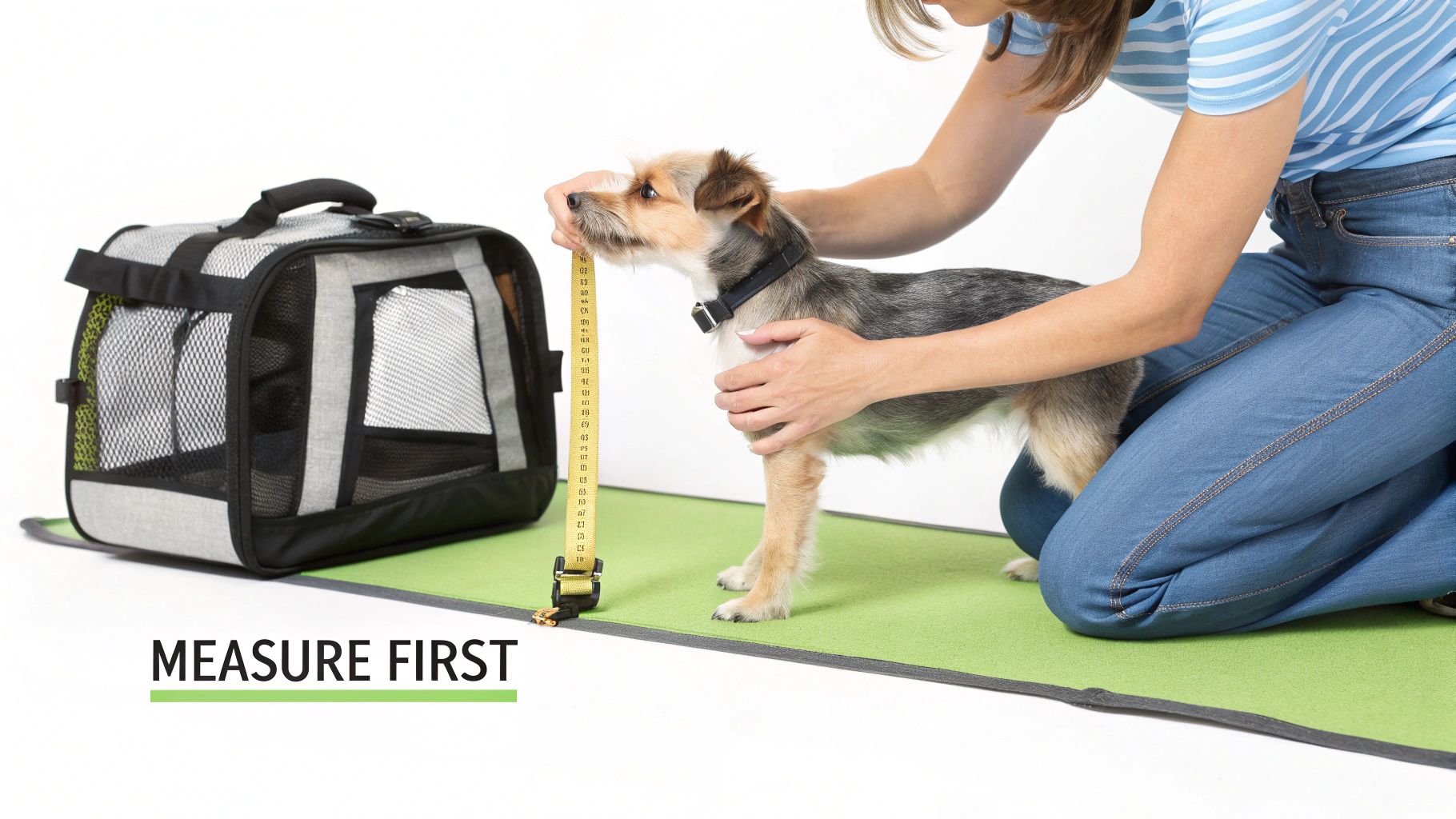
Proper sizing is crucial. Your dog must have enough room to stand up, turn around, and lie down comfortably. A carrier that's too small is stressful, while one that's too large can feel insecure during transit.
How to Measure Your Dog for a Carrier
Don't guess the size. Use a soft measuring tape to take two simple measurements for a perfect fit.
- Measure Length: With your dog standing, measure from the base of their neck (where the collar sits) to the base of their tail. Add 2 to 4 inches to this measurement to determine the ideal carrier length.
- Measure Height: With your dog standing, measure from the floor to the top of their shoulders (or to the top of their head if they have upright ears). Add 2 to 3 inches to this measurement to find the minimum carrier height.
These extra inches are non-negotiable. They provide the necessary space for your dog to reposition and remain comfortable, preventing them from feeling trapped. For a more detailed walkthrough, review our complete guide to airline pet carrier size requirements.
Soft-Sided vs. Hard-Sided Carriers
For in-cabin travel, the choice is clear. While hard-sided kennels are required for cargo, their rigid structure makes them impractical for the constrained space under an airplane seat.
Soft-sided carriers are the best choice for in-cabin flights. Their flexible design allows them to compress slightly to fit into tight under-seat spaces without collapsing on your pet. This adaptability is essential given the variability of aircraft configurations.
Market data confirms this preference. Surveys show 78% of pet owners prioritize features like ventilation and secure zippers. Furthermore, 70% of North American consumers specifically purchase soft-sided, airline-approved carriers designed for under-seat use. The demand is for premium carriers that are both compliant and comfortable. You can explore these trends in the full pet carriers market report.
How to Spot Quality and Comfort Features
When shopping, look for these specific features that directly contribute to your dog's safety and comfort during travel.
Essential Comfort and Safety Features Checklist:
- Durable Mesh Ventilation: Insist on strong, claw-proof mesh on at least three sides. This ensures excellent airflow, prevents overheating, and allows your dog to see their surroundings, reducing anxiety.
- Self-Locking Zippers: Manually test the zippers. A standard zipper can be nosed open by a determined dog. Self-locking zippers stay securely closed, adding a critical layer of safety.
- Plush, Removable Padding: The carrier floor should have a soft, comfortable pad. Confirm that it is both removable and machine-washable for easy cleaning in case of accidents.
- A Firm, Stable Base: A flimsy floor will sag, making the ride uncomfortable. Choose a carrier with a solid, waterproof base that provides stable footing for your dog.
- Convenient Pockets: Exterior pockets are essential for organizing and accessing travel necessities like a leash, treats, waste bags, and health documents.
By measuring your dog correctly, choosing a flexible soft-sided carrier, and verifying these key features, you will select a carrier that ensures a safe and comfortable journey for your best friend.
How to Prepare for a Smooth Travel Day
A calm travel day is the result of deliberate preparation that begins weeks in advance. The most important step is to acclimate your dog to their airline approved dog carrier, transforming it from a strange object into a familiar safe space. This will significantly reduce stress for both of you on the day of your flight.
Start by placing the open carrier in your living room. Let your dog investigate it at their own pace. When they show curiosity, reward them with praise and a high-value treat.
Next, toss a favorite toy or some treats inside to build a positive association. Your dog will begin to see the carrier as a place where good things happen, rather than a precursor to a stressful event.
Acclimating Your Dog to Their Carrier
Your next goal is to make the carrier a comfortable den. Place a soft blanket or an old t-shirt with your scent inside. Then, begin feeding your dog their meals inside the carrier. Start with the bowl near the entrance and gradually move it further back with each feeding. This technique establishes the carrier as a safe, rewarding personal space.
Success is when your dog voluntarily chooses to rest in the carrier with the door open. At this point, you have successfully created their personal travel sanctuary.
Once your dog enters the carrier willingly, start closing the door for a few seconds at a time, immediately followed by a treat. Gradually increase the duration the door is closed, always maintaining a calm and positive atmosphere. This step-by-step training teaches your dog that being enclosed is safe and temporary.
Your Pre-Flight Packing Checklist
Use this checklist to ensure all essentials are packed and organized, preventing last-minute stress.
- Essential Documents: Place vaccination records and health certificates in a waterproof folder. Save digital copies to your phone as a backup.
- Harness and Leash: A snug-fitting harness is mandatory for the security screening process. Remember that your dog cannot wear it inside the carrier during the flight.
- Collapsible Bowls: Pack one for food and one for water. Carry an empty water bottle to fill after you pass through security.
- Puppy Pads: Line the carrier's bottom with an absorbent puppy pad to contain any accidents and keep your dog dry.
- Familiar Comfort Item: A small, non-squeaky toy or blanket from home can provide a reassuring sense of security.
- Necessary Medications: Pack enough medication for the entire trip, plus a few extra days' supply. Include clear dosage instructions.
For a more detailed packing list, refer to our complete guide on how to travel with pets.
Tips for the Day of Travel
The morning of your flight sets the tone for the entire day. Start with a long walk or vigorous play session to burn off excess energy. A tired dog is more likely to rest quietly during the flight.
Limit food intake for a few hours before leaving for the airport to reduce the risk of motion sickness or accidents. Small sips of water are fine. Plan your timing carefully, including how early to arrive at the airport, to avoid rushing.
Finally, manage your own stress. Dogs are highly attuned to our emotions. Your calm demeanor signals to your dog that everything is under control. By preparing in advance, you can navigate your travel day with confidence.
Getting Through Airport Security and Boarding
The airport security checkpoint can be the most daunting part of your journey, but knowing the process transforms it into a manageable routine. With preparation, you and your dog can move through the TSA screening smoothly and confidently.
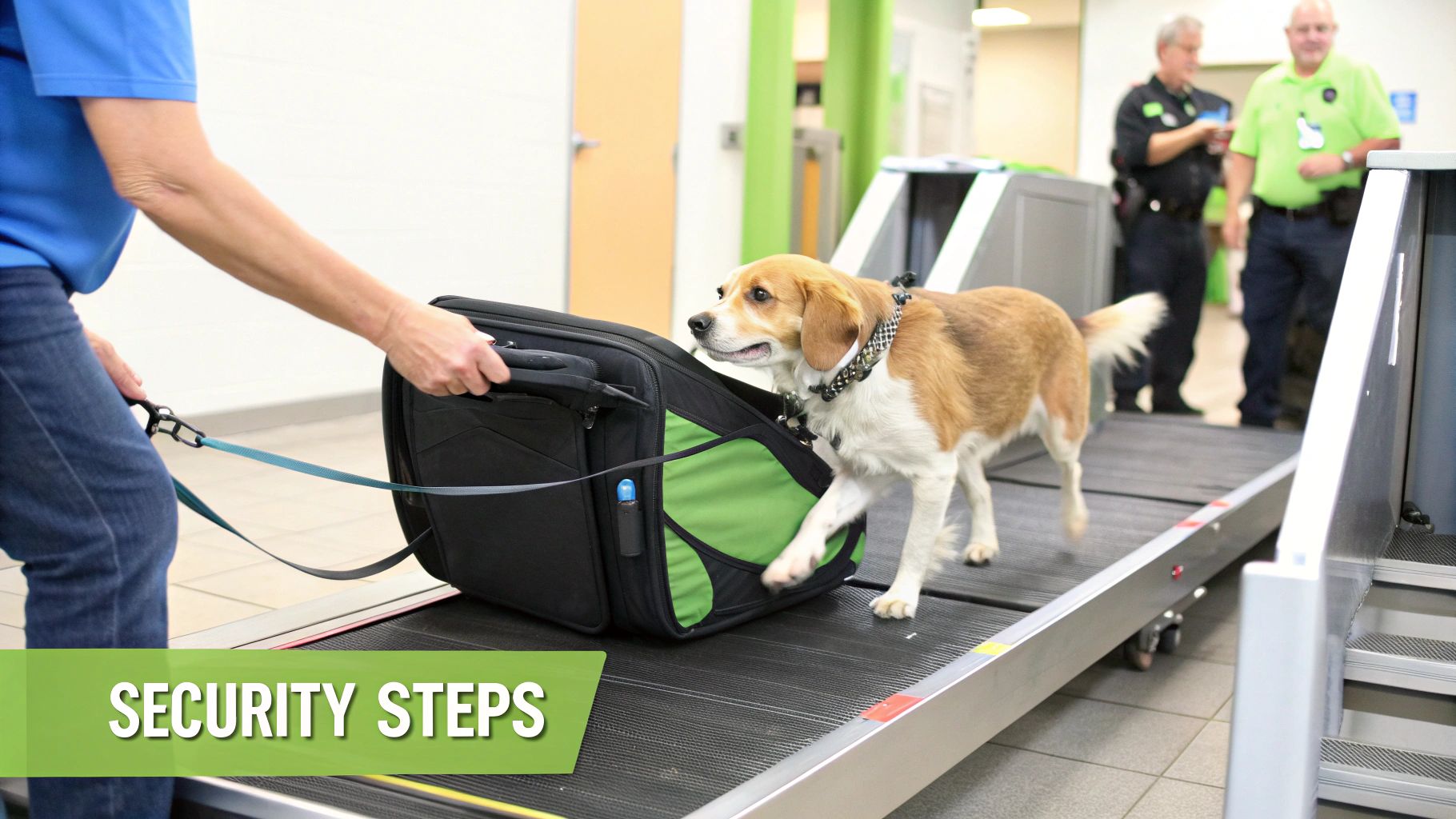
Here is the most critical rule: your dog will never go through an X-ray scanner. You must remove your dog from the airline approved dog carrier before the screening. The empty carrier will go on the conveyor belt, while you and your dog walk through the metal detector.
Mastering the TSA Screening Process
Follow this four-step process for a calm and efficient screening.
- Prepare in Line: While waiting, place your jacket, electronics, and liquids in a bin. Secure your dog's leash to a well-fitted harness before taking them out of the carrier.
- Empty the Carrier: Once it is your turn, place the completely empty carrier on the conveyor belt for X-ray screening.
- Walk Through Together: Carry your dog or walk them on a leash through the metal detector as directed by the TSA agent.
- Reunite and Repack: After screening, retrieve your carrier. Step aside to a quiet area to place your dog back inside and organize your belongings without rushing.
Crucial Tip: Always use a snug-fitting harness, never just a collar. A harness provides secure control and prevents a frightened dog from slipping free in a chaotic airport environment.
The Boarding Process and In-Flight Comfort
Once you are through security, the most stressful part is over. Most airlines allow passengers with pets to board with their designated group.
When you reach your seat, slide the carrier completely under the seat in front of you, where it must remain for the entire flight. Position the carrier to ensure the mesh windows are not blocked, allowing for proper air circulation.
Strategies for a Quiet and Calm Flight
Your responsibility during the flight is to ensure your dog remains quiet and comfortable. Implement these strategies to create a peaceful environment.
- Offer a Familiar Scent: Place a small blanket or an unwashed t-shirt with your scent inside the carrier for a soothing effect.
- Provide a Silent Toy: A non-squeaky chew toy can help alleviate anxiety and keep your dog occupied. Ensure it has no small parts that could be a choking hazard.
- Limit Water Before Takeoff: Offer water after security but avoid giving a large amount right before boarding to minimize the need for a potty break mid-flight.
- Use Calming Reassurance: If your dog becomes restless, speak to them in a low, soothing voice. Your calm presence is often enough to help them settle.
By following these actionable steps, you can confidently navigate airport procedures and ensure a comfortable flight for you and your dog.
Got a Few More Questions About Your Dog Carrier?
Even with thorough preparation, last-minute questions can arise. Here are clear, actionable answers to some of the most common concerns to help you travel with confidence.
Do I Really Need a Health Certificate?
It depends on your destination. For most domestic flights within the U.S. (excluding Hawaii), a health certificate is typically not required for in-cabin pets. However, for international travel, a health certificate issued by a licensed veterinarian is almost always mandatory, usually within 10 days of your flight.
Your action: Check your airline's specific policy for your route. If required, schedule a vet appointment within the specified timeframe.
Can I Just Buy My Dog Their Own Seat?
No. Federal Aviation Administration (FAA) regulations mandate that all in-cabin pets must remain in their airline-approved dog carrier, stowed securely under the seat in front of you for the entire flight.
Additionally, be aware that your pet carrier will count as either your personal item or your carry-on bag. Check your airline's baggage policy to avoid unexpected fees at the gate.
What About Sedating My Dog for the Flight?
Veterinarians and airlines strongly advise against sedating your pet for air travel. Sedatives can interfere with a dog's respiratory function and ability to regulate body temperature at high altitudes, posing a significant health risk.
Your action: Instead of medication, focus on positive carrier conditioning. Acclimate your dog to the carrier weeks in advance and ensure they get plenty of exercise before heading to the airport. A physically tired and well-prepared dog is naturally calmer.
What If My Dog Starts Making Noise?
Occasional whimpering is generally understood, but persistent barking can disrupt the flight. The best strategy is prevention. A dog that is comfortable in its carrier, has a chew toy, and is tired from pre-flight exercise is less likely to be vocal.
Your action: If your dog becomes fussy, speak to them in a calm, low voice. You can also try positioning your hand near the carrier's mesh window to offer reassurance. If the noise continues, politely ask a flight attendant if they have any suggestions.
Looking for a carrier that ticks all the boxes for safety, airline compliance, and your dog's comfort? Check out the travel collection from Pet Magasin. Our carriers are designed by pet lovers for pet lovers, with secure zippers, plenty of ventilation, and a soft-sided design perfect for fitting under a seat. Find the perfect travel buddy for your best friend at https://www.petmagasin.com.

Leave a comment